CHARACTERISTICS OF A CRITICAL REASONING PASSAGE
While writing argumentatively, the author’s principal objective is to persuade the reader about his/her point of view. A successfully presented argument convinces the reader about the author’s point of view.
In order to do so, not only does the author have to present his point of view, but he also needs to support it with reasons—after all, the reader needs to know why he should agree with the author’s points of view. Hence, the author has to provide enough support for his point of view in order to convince the reader. These supports may be in the form of reasons or evidences. The supports of an argument are also called as the premises of the argument.The structure of the argument is:
Because of these (reasons or facts), we should conclude this (claim/concIusion).
Consider the following examples:
(A) Abortion should not be allowed because we have no right to kill a human life.
The opposite argument for statement (A) would be:
(B) Abortion should be allowed because a woman has the right to decide what she wants to do with her body.
(C) Smoking and chewing of pan masala should be banned because they are harmful to the health of the consumer.
All the above arguments are in the form: “This because of that”.
Supports of an Argument
The supports of an argument can be visualised as the foundations on the basis of which arguments are made. They are similar to the foundations of a building—the stronger the foundation, the stronger the building. Similarly, the stronger the support for an argument, the stronger the argument.
Consider the following passage that appeared in a newspaper editorial. The passage below has a claim supported by reasons.
 Flexitime, or flexibility of working hours, has become popular amongst corporates in recent times.(7¾⅛ is the claim).
Besides giving employees a choice of their working hours, it allows them to exert more control over their working environment. This leads to increased job satisfaction and less employee turnover.
Similarly, there could be a passage having a claim supported by facts. (Please recollect that ‘Facts’ are StatementsZinformation that can be physically verified. They might prove to be true or false on verification.) Consider the following passage:
 Country X’s relations with Country Y have varied from being stormy and incordial at times to being icy cold and impersonal at other times. There have been periods in the histories of the two countries when their relationships have been dictated by the military maneuvers around their borders—for instance the times preceding the 1945, the 1957 and the Kampaundril wars—while at other times, the relationship has been cold and impersonal at best due to Country X’s constant refrain that Country Y has been instigating terrorism within it’s borders.
Let us now look at some additional points that you need to keep in mind while reading for the conclusion and the supports in a paragraph:
1. Try to identify the conclusion sentence/s within a paragraph. Many a time the conclusion sentence will be indicated by the use of signal words. While reading a CR paragraph, look for such words. Some of them are: therefore, thus, hence, so, in conclusion, as a result of in short, in sum, the point is.
 The consumption of tobacco is harmful to the health of the individual.
 The signal word hence at the beginning of the second sentence, indicates the oncoming conclusion.
2. If no conclusion or main claim is stated, you can construct it by finding the main question which the essay directly addresses.
Let us now work out a few examples in spotting Conclusions and Reasons.
Directions: For each of the arguments given below, write down the conclusion and the reasons.
1. If any government becomes tyrannical, then the people governed under that government have a right to revolt. The government of France has become tyrannical. Therefore, the people governed by the government of France have a right to revolt against it.
Conclusion:
Reasons:
2. I don’t care how many acting awards Salim Khan has won. He simply has no sense of acting. He looks like a dud in whatever roles he plays. Be it a romantic, action or a dramatic role, he simply is not able to act.
Conclusion:
Reasons:
3. If you haven’t tried our Pack and Chew’s Pastry, you simply must. It’s the best pastry in town. We make it the home made way. Besides, it’s good because we
use vitamin enriched materials.
Conclusion:
Reasons:
Having recognized that every Conclusion-Reason passage is composed of an argument supported by its set of reasons/facts, we need to look at two additional components which underlie every argument (Hence which are a part and parcel of every CR passage)—viz. Assumptions and Inferences.
What are Assumptions?
An assumption is the passage’s “must have.” In other words, if the assumption is not true, it follows that the conclusion is not true.
Assumptions can be defined as additional unstated evidence/information, which bridges the gap between the argument, its evidence presented and the conclusion. In other words, you can also look at assumptions as additional information that the author has assumed the reader already knows while reading the argument. It is best explained through an example.
Argument'. Since, India’s time zone is five and a half hours ahead of GMT, we can conclude that India is to the East of the United Kingdom.
The unstated assumption here is that if the time of a country is ahead of the GMT, it lies to the east of the United Kingdom. Another, unstated assumption here is that the United Kingdom follows the GMT.
The assumption is a support to the argument, which must be true. Else the argument will fall apart. In the best case, the argument is seriously weakened if the assumption that the author assumes is false.
How do we spot assumptions?
In order to deduce assumptions in an argument, you need to look for holes in the argument. Try to identify a missing support that would have the effect of providing a missing support to the argument. The author’s belief about an unstated assumption is that it need not be explicitly stated. He believes that his reader will automatically assume the missing assumption. Hence, he does not feel the need to write it explicitly in the passage.
In order to find the hole, ask yourself the following question:
Is the evidence/supporting logic explicitly presented in the argument sufficient so as to support the argument? Is any additional evidence/supporting logic necessary to Iustify the argument? Ifyes, an assumption has been made.
Once you have identified a hole, your next objective is to try to word the additional evidence/supporting logic that you need to assume for the argument to make sense. For this purpose, ask yourself the following question:
What additional evidence/supporting logic do I as a reader, need to assume for the argument to make sense?
The answer to the above question gives you a possible assumption. Before you accept that assumption, however, you might need to test whether your assumed assumption is valid or not. In order to do so, try to deny or negate the assumption.
What happens when you negate the assumption? Does it weaken your argument?
If yes, then your assumption is correct, i.e., in case the assumption is not true, then the argument makes no sense.
Hence, you have a valid assumption.If no, then the assumption you have identified is not correct, i.e., the argument continues to make sense even if the assumption is not true. In such a case, you should realise that your assumption is wrong.
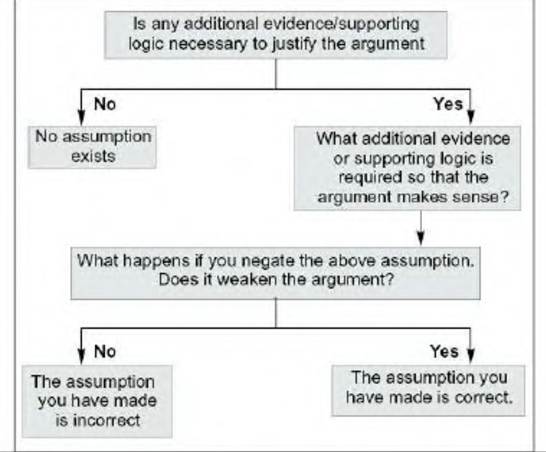
Fig. 5.1 Identifying an assumption in an argument
Let us now move on to the next issue—Inferences
What are Inferences?
An inference can be defined as an unstated extension of the argument. In other words, it can also be seen as an implied conclusion.The inference may be about the main point in the paragraph or it could be about a less central issue. This factor does not affect the fact that an inference is an implied conclusion.
The Cream of the Piece
Unlike assumptions which are the basis of the argument and hence, come before the argument, inferences come after the argument.
Figuratively speaking, imagine a 3 storey building as an argument. The assumptions can be seen as the foundation of the building. At the same time, an inference would be akin to the 4th storey of the building. While the building would not exist without a foundation, the shape and size of the 4th storey can be logically deduced from that of the third storey.
Further, unlike assumptions, which you have to find, an inference will show itself to you when you read the entire argument. Inferences emerge out of a combination of the statements in the paragraph. If all the statements in the passage are true, the inferences which emerge out of the combination of some or all of the statements must also be true.
The Cream of the Piece
The logic of an inference (or an implied conclusion) can be captured as follows:
IfA (statement in a paragraph) and B (statement in the paragraph) are true, then C (inference or the implied conclusion) is automatically true.
Hence, in order to check whether the inference you have drawn is correct, try to deny the inference.
re. given that A and B are true, C need not be true.
If this logic can be justified, then the inference you might have drawn is incorrect. On the other hand, if this logic cannot be justified, then the inference is correct.
As a recap of this section, we would like to remind you that in order to be able to solve a CR question, you should be reading the CR paragraph with four basic objectives. These are:
(1) What is the claim/argument made by the author of the paragraph?
(2) What are the supports the author is providing to the claim/argument?
(3) What are the assumptions the author is making while making the claim/argument?
(4) What unstated inferences/conclusions should you draw from the statements contained in the paragraph?
The principles elucidated above are principles associated with good reading of arguments. Initially, you will need to practice applying these principles consciously. Like any other activity, the more you apply these principles, the better you will become at them. You need to continue practicing these principles consciously till you feel that they have become a part of your reflexes. After that, all these principles will apply intuitively, i.e., you will be able to spot the claim, its supports, the assumptions as well as the inferences, as a reflex to the reading of the question. When you reach that stage, you will realise that you have become good at solving CR questions.
We now move on to the typical question types asked under CR.