An Alternative Approach to Labor-Augmenting Technological Change
The models presented so far in this chapter are all based on the basic directed technological change framework developed in Acemoglu (1998, 2002). Section 15.6 showed how 595
this approach can be used to provide conditions under which technological change will be endogenously labor-augmenting (recall that this type of technological progress is necessary for balanced growth).
An alternative approach to this problem is suggested in the recent paper by Jones (2005). I now briefly discussed this alternative approach.The models developed so far treat the different types of technologies (e.g., Nl and Nh in the previous sections) as state variables. Thus short-run production functions correspond to the production possibilities sets for given state variables, while long-run production functions are derived from the production possibilities sets as the state variables themselves also adjust. Jones proposes a different approach, building on a classic paper by Houthakker (1995). Houthakker suggested that the aggregate production function should be derived as the “upper envelope” of different techniques (or “activities”). Each technique or activity corresponds to a particular way of combining capital and labor (thus to a Leontief production function of these two factors of production). However, when a producer has access to multiple ways of combining capital and labor, the resulting envelope will be different than Leontief. In a remarkable result, Houthakker showed that if the distribution of techniques is given by the Pareto distribution (which we already encountered in the previous chapter), this upper envelope will correspond to a Cobb-Douglas production function. Houthakker thus suggested a justification for Cobb-Douglas production functions based on “activity analysis”.
Jones builds on and extend these insights. He argues that the long-run production function should be viewed as the upper envelope of different ideas generated over time.
At a given point in time, the set of ideas that the society has access to is fixed and these ideas determine the short-run production function of the economy. In the long run, however, the society generates more ideas (either exogenously or via R&D) and the long-run production function is obtained as the upper envelope of this expanding set of ideas. Using a combination of Pareto distribution and Leontief production possibilities for a given idea, Jones shows that there will be a major difference between short-run and long-run production functions. In particular, as in Houthakker’s analysis, the long-run production function will take a Cobb- Douglas form and will imply a constant share of capital in national income. However, this is not necessarily the case for short-run production functions. Then with an argument similar to that in Section 15.6, the economy will adjust from the short-run to long-run production functions by undergoing a form of labor-augmenting technological change.I now provide a brief sketch of Jones’s model, focusing on the main economic insights. As pointed out above, the key building block of Jones’s model are “ideas”. An idea is a technique for combining capital and labor to produce output. At any given point in time, the economy will have access to a set of ideas. Let us denote the set of possible ideas by  i and the set of ideas available at time t by
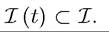 Each idea
 is represented
by a vector (ai,bi). The essence of the model is to construct the production possibilities of the economy from the set of available ideas. To do this, we first need to specify how a given idea is used for production. Let us suppose that there is a single final good, Y, which can be produced using any idea i ∈ I with a Leontief production function given by

where K (t) and L (t) are the amounts of capital and labor in the economy.
In general, the economy may use multiple ideas, thus K (t) and L (t) should be indexed by i to denote the amount of capital and labor allocated to idea i. However, I will follow Jones and assume that at any point in time the economy will use a single idea. This is a restrictive assumption, but it simplifies the model and its exposition significantly (see Exercise 15.30). The production function (15.50) makes it clear that α⅛ corresponds to labor-augmenting productivity of idea i and bi is its capital-augmenting productivity.Recall from Section 15.6 that the standard model delivers purely labor-augmenting technological change only under the (special) assumption of extreme state dependence or δ = 1 (cfr. Proposition 15.14). In this model, we also have to make a special assumption, which, following Houthakker, is that ideas are independently and identically drawn from a Pareto distribution. In particular, we assume that each component of the idea, ai and bi, are drawn (independently) from two separate Pareto distributions. Recall from Section 14.3 in the previous chapter that y has a Pareto distribution if its distribution function is given by 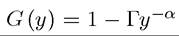 for some parameter α. The assumption that ai and bi are independently drawn from Pareto distributions then implies that
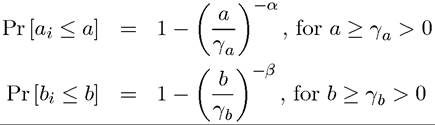
where α and β are strictly positive constants, and α + β > 1 (see Exercise 15.32 for the importance of this last inequality).
This Pareto assumption will play a crucial role in the result of this model. It is therefore appropriate to understand what the special features of the Pareto distribution are and why this distribution plays an important role in many different areas of economics.
The Pareto distribution has two related special features. One is that its tails are relatively thick (and for this reason, the variance of a variable that is distributed Pareto is infinite, see Exercise 15.31). The second special feature is that if y has a Pareto distribution, then its expected value conditional on being greater than some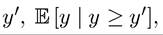 is proportional to y'. Thus
 loosely speaking, the Pareto distribution has a certain degree of “proportionality” built into it. The expectation of something better in the future is proportional to what has been achieved today. This makes it quite convenient in the modeling of growth-related processes.
Now, given this structure, let us define the function  as the joint probability α⅛ ≥ a and bi ≥ b. Denote the level of aggregate output that can be produced using technique i with capital K and labor L by
 Before we know
the realizations of ai and bi for idea i, this level of output is a random variable. Since the production function is Leontief, the distribution of Yi can be represented by the distribution function of this variable,  where the second line follows from the definition of the function G and the third line from (15.51) with
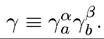 This implies that the distribution of
 is also Pareto (provided that

Let us next turn to the “global” production function, which describes the maximum amount of output that can be produced using any of the available techniques.
In other words, Let N (t) denote the total number of production
 techniques (ideas) that are available in the set I (t) (at time t). This equivalently implies that by time t there have been N distinct ideas that have been discovered. Since, by assumption, these N ideas are drawn independently, the “global” production function can be alternatively written as

where ) is also a random variable. Since the realization of the N ideas are random,
output at time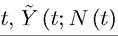 ), conditional on capital K (t) and L (t), is a random variable and
we are interested in determining its distribution. Here the fact that the N draws of ideas are independent simplifies the analysis. In particular, the probability that the realization of 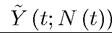 is less than y is equal to the probability that each of the N ideas will produce less than y. Therefore,

Equation (15.54) makes it clear that as the number of ideas N gets large, the probability that Y is less than any level of y will go to zero. This is simply a restatement of the fact that output will grow without bound, which here follows from the fact that the Pareto distribution has unbounded support. Therefore, we cannot simply determine the distribution
598
of output as N (t) → ∞. Instead, we have to look at aggregate output normalized by an appropriate variable, such as its “expected value” (and apply a type of reasoning similar to the Central Limit Theorem). Given the Pareto distribution, the normalizing factor turns out to beid="Picutre 2018" class="lazyload" data-src="/files/uch_group77/uch_pgroup317/uch_uch7364/image/image2016.jpg">, so that we can write
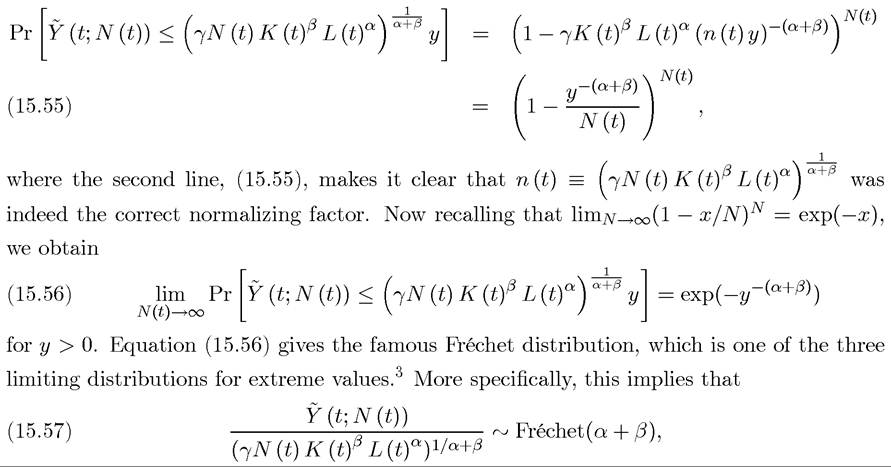
so that the global production function, appropriately normalized, converges asymptotically to a Frechet distribution.
This means that as N (t) becomes large (which will happen naturally as t → ∞ and more ideas are discovered), the long-run or the “global” production function behaves approximately like
where ε (t) is a random variable drawn from a Frechet distribution. The intuition for this result is similar to Houthakker’s result that aggregation over different units producing with techniques drawn independently from a Pareto distribution leads to a Cobb-Douglas production function The implications are quite different, however. In particular, since the long-run production function behaves approximately as Cobb-Douglas, it implies that factor shares must be constant in the long run. However, the short-run production function (for a finite number of ideas) is not Cobb-Douglas. Therefore, as N (t) increases, the production function evolves endogenously towards the Cobb-Douglas limit with constant factor shares, and as in the analysis in Section 15.6, this means that technological change must ultimately become purely labor-augmenting. Therefore, Jones’s model shows that ideas related to Houthakker’s
3In particular, a basic result in statistics shows that regardless of the distribution F (y), if we take N independent draws from F and look at the probability distribution of the highest draw, then as N → ∞, this distribution converges to one of the following three distributions: the Weibull, the Gumbel or the Frechet. In fact, the Frechet distribution is the most common one. See, for example, Billingsley (1995, Section 14).
derivation of a static production function also imply that the short-run production function will evolve endogenously on average with labor-augmenting technological change dominating the limiting behavior and making sure that the economy, in the long run, acts as if it has a Cobb-Douglas production function.
Although this is an interesting idea, and as we have already seen in Section 14.3, the Pareto distribution appears in many important contexts and has various desirable properties, it is not clear whether it provides a compelling reason for technological change to be laboraugmenting in the long run. Labor-augmenting technological change should be an equilibrium outcome (resulting from the research and innovation incentives of firms and workers). The directed technological change models emphasized how these incentives play out under various scenarios. In the current model, the Cobb-Douglas production function arises purely from aggregation. There is no equilibrium interactions, price or market size effects. Related to this, the unit of analysis is unclear. The same argument can be applied to a single firm, to an industry, or to a region. Thus if we are happy with this argument for the economy as a whole, we may also wish to apply it to firms, industries, and regions, concluding that the long-run production function of every unit of production or every firm, industry and region should be Cobb-Douglas. However, existing evidence suggests that there are considerable differences in the production functions across industries and they can not be well-approximated by Cobb-Douglas production functions (see the overview of the evidence on industry and aggregate production functions in Acemoglu 2003a). This suggests that the potentially promising approach related to aggregation of different activities or “ideas ’’used in Houthakker and Jones’s papers should be combined with some type of equilibrium structure, which will delineate at what level the aggregation should take place and why it may apply to (some) economies, but not necessarily to single firms or industries. This appears to be another interesting area for future research.
15.9.