Directed Technological Change without Scale Effects
This section shows that the market size effect and its implications for the direction of technological change are independent of whether or not there are scale effects. The market size effect here refers to the relative market sizes of the users of two different types of technologies, not necessarily to the scale of the entire economy, whereas the scale effect concerns the impact of the size of the population on the equilibrium growth rate.
The results in this section show that it is possible to entirely separate the market size effect responsible for the weak and strong endogenous bias results from the scale effect.
where λ ∈ (0,1]. In the case where λ = 1, the knowledge-based R&D formulation of the previous section applies, but now with no state dependence. When λ < 1, the extent of spillovers from past research are limited, and this economy will not have steady growth in the absence of population growth.
Let us also modify the baseline environment by assuming that totalis population, including the population of scientists, grows at the exponential rate n. With a similar arguments to that in Section 13.3 in Chapter 13, it can be verified that aggregate output in this economy will grow at the rate (see Exercise 15.15):

Consequently, even with limited knowledge spillovers, there will be income per capita growth at the rate n/ (1 — λ). As usual, this is because of the amplification to the externalities provided by population growth. It can also be verified that when λ = 1, there is no balanced growth and output would reach infinity in finite time (see Exercise 15.16).
The important point for the focus here concerns the market size effect on the direction of technological change.
To investigate this issue, note that the technology market clearing condition implied by (15.41) is (see Exercise 15.17):
which is parallel to (15.36). Exactly the same analysis as above implies that equilibrium relative technology can be derived as

Now combining this with (15.19)—which still determines the relative factor prices given
technology—we obtain

This equation shows that even without scale effects, the same results as before continued to hold. Summarizing this:
PROPOSITION 15.10. Consider the directed technological change model with no scale effects described above. Then, there is always weak equilibrium (relative) bias, meaning that an increase in H/L always induces relatively H-biased technological change.
Proof. See Exercise 15.8. ?
PROPOSITION 15.11. Consider the directed technological change model with no scale effects described above. If
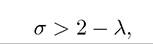
then there is strong equilibrium (relative) bias in the sense that an increase in H/L raises the relative marginal product and the relative wage of the H factor compared to the L factor.
15.6.