Political Regimes and Economic Growth
The centerpiece of our approach to the political economy of growth are the two mappings introduced at the beginning of Part 8 above, ρ (∙) and π (∙). Recall that these determine how political institutions shape economic institutions and how economic institutions map into allocations.
The latter has already been discussed to some degree in the previous chapter, though it would not be unfair to say that we do not yet have a full understanding of the consequences of different economic institutions (consider, for example, the debate on the implications of privatization, or what the implications of different contract enforcement practices will be on the exact investment behavior and welfare levels of different individuals in a society). Our understanding of the implications of different political institutions on economic outcomes is even more imperfect. Thus the mapping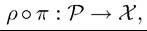 which determines
 how various combinations of political and economic institutions lead to different economic allocations is something we would like to (and should) learn more about.
In this section, I will briefly discuss the little that we know on this topic. Many different types of distinctions can be made among political institutions. Most scholars would probably start by thinking of the contrast between democratic and nondemocratic regimes. But there are many different types and shades of democracies. Democracy is typically defined by a set of procedural rules, for instance, by whether there are free and fair elections in which most adults can participate and there is free entry of parties. But this definition of democracy is quite encompassing. First, it leaves many distinctive institutional features of democracies unspecified. Democracies can be parliamentary or presidential.
They can use different electoral rules, giving different degrees of voice to minorities. Perhaps more importantly, there are different degrees of “free and fair” and “most adults”. In particular, most elections, even those in Europe or the United States, involve some degree of fraud and some restrictions on the entry of parties or candidates. Moreover, many individuals are effectively or sometimes explicitly disenfranchised. Political scientists consider Britain and the United States in the late 19th century to have been democratic, though only males had the right to vote. Few 1024people would consider the United States in the 1960s a nondemocracy, though many blacks were disenfranchised. This creates various different shades of democracy that one might wish to take into account. For example, Colombia has been a democratic country for over half a century according to most political scientists, though in many parts of the country elections are very far from “free and fair” and take place under the threat of explicit violence from paramilitaries. Over the same time period, the entry of a Socialist party into Colombian politics has been blocked by various legal and non-legal means, violating the “free entry” requirement. This discussion alerts us to the fact that we may want to draw distinctions between the degree of democracy and the types of democracies With these caveats in mind, one might be tempted to conclude that the label of “democracy” is so encompassing and nondescript as to become meaningless. This is not my view, however. I maintain that the distinction between democracy and nondemocracy is not meaningless, and in fact, it is a particularly useful starting point for our analysis of the effect of political regimes on economic outcomes and the dynamics of political regimes. Nevertheless, when we wish to understand why different democracies behave differently and also the contrast between democratic and nondemocratic regimes, it will be necessary to delve deeper and make systematic distinctions about the nature and functioning of different types of democracies.
The differences between nondemocratic societies are probably even more pronounced. China under the rule of the Communist Party since 1948 is an undisputed case of a non- democratic regime, but it is very different in nature from the oligarchic regime in place in Britain before the process of democratization started with the First Reform Act of 1832. In Britain before 1832, there were prime ministers and parliaments, though they were elected by a small minority of the population, those with wealth, education and privilege, who made up less than 10% of the adult population. Furthermore, the powers of the state never rivaled those of the Communist Party in China. The Chinese example is also different from military dictatorships such as that of Chile under General Pinochet or South Korea under General Park. Once we consider regimes based on personal rule, such as that of Mobutu in Zaire, and monarchies, such as the rule of the Saud family in Saudi Arabia, the contrast is even more marked.
Nevertheless, there is an important commonality among these nondemocracies and an important contrast between nondemocratic and democratic regimes, making these categories still useful for conceptual and empirical analysis. Despite all of their imperfections and different shades, democratic regimes, at least when they have a certain minimal degree of functionality, provide greater political equality than nondemocratic regimes. Free entry of parties and one-person one-vote in democracy are the foundations of this and ensure some amount of voice for each individual. When democracies are particularly well functioning, majorities will have some (often a significant) influence on policies—though they themselves may be constrained by certain constitutional restrictions. In contrast, nondemocracies, rather than representing the wishes of the population at large, represent the preferences of a subgroup of the population. In the previous chapter, I referred to this subgroup as the “elite,” and I will continue to do so here.
The identity of the elite differs across nondemocratic societies. In China, it is mainly the wishes of the Communist Party that matters. In Chile under Pinochet, most decisions were taken by a military junta, and it was their preferences, and perhaps the preferences of certain affluent segments of the society supporting the dictatorship, that counted. In Britain before the First Reform Act of 1832, it was the small wealthy minority that was politically influential.With this cautionary introduction on the distinctions between democracies and nondemocracies, what are the major differences between these political regimes? First, one might imagine that democracies and nondemocracies will have different growth performances. The first place to look for such differences is the postwar era for which we have better data on economic growth. Unfortunately, the picture here is not very clear. Przeworski and Limongi (1993) and Barro (1999) document, using cross-country regression evidence, that democracies do not appear to perform better than nondemocracies. Nevertheless, there is no universal consensus on this matter. For example, Minier (2004) reports results showing some positive effects of democratizations on growth and more robust negative effects of transitions to nondemocracy on growth. Persson and Tabellini (2007) argue that once one distinguishes between actual democracy and the probability of democracy surviving, there is a significant effect of democratic survival probabilities on economic growth. All in all, however, the bulk of the available evidence supports the conclusions of Przeworski and Limongi (1993) and Barro (1999) and suggests that, on average, democracies do not grow much faster than nondemocracies (at least, once one controls for other potential determinants of economic growth). This is, at first, a surprising and even perhaps a disturbing finding. One might have expected significantly worse growth performances among nondemocracies, since this group includes highly unsuccessful countries such as Iraq under Saddam Hussein, Zaire under Mobutu, or Haiti under the Duvaliers.
Despite these nondemocratic “basket cases” of growth, there are plenty of unsuccessful democracies, including India until the 1990s and many newly independent former colonies that started their independence period as electoral democracies (though, often quickly falling prey to coups or personal rule of some strongman). There are also many successful nondemocracies, including Singapore under Lee Kwan Yew or South Korea under General Park, or more recently China. Thus to understand how different political institutions affect economic decisions and economic growth we will need to go beyond the distinction between democracy and nondemocracy. One idea, which I will argue is useful in thinking about these distinctions, is that of dysfunctional democracies, that is, the possibility that some democracies are functioning in a very different, and inefficient, manner than we typically envisage. I will further argue that a particularly important reason why democracies might be dysfunctional is because they are captured by elites despite the fact that on paper they are supposed to provide ma joritarian decision-making and political equality. According to this definition, a democracy will be “captured” when its modus operandi—its purpose of creating greater political equality than a typical nondemocratic regime—fails. Captured democracies are one example of the more general typology of dysfunctional democracies. Another one might be highly populist democracies, where a strongman, such as Juan Peron in Argentina or Hugo Chavez in Venezuela, receives majority support but pursues policies that are detrimental to economic growth. This discussion therefore suggests that a satisfactory understanding of the relationship between democracy and growth, and more generally, that between political regimes and growth, necessitates an analysis of how different political regimes function and why some democracies might become captured or take the populist route. I will discuss some possible answers to these questions in Section 23.5.If there are no marked growth differences between democracies and nondemocracies, are there other significant policy or allocational differences? On this question, there is even more controversy than on the effects of democracy on growth. Rodrik (1999) documents that democracies have higher labor shares and interprets this as the outcome of greater redistribution in democracies. He shows that the same result holds both in cross-sectional and in panel data regressions. Acemoglu and Robinson (2006a) summarize a range of case studies showing how democracies do indeed pursue more redistributive policies and how this has an effect on the distribution of income, for example, on the share of capital in national income or on the overall extent of income inequality. Acemoglu (2007b) also shows that nondemocratic regimes often adopt different regulations, for example, erecting greater barriers against entry of new businesses. Finally, Persson and Tabellini (2004) document major differences in fiscal policy between different types of democracies. In contrast, Gil, Mulligan and Sala-i-Martin (2004) use cross-sectional regressions to show that a range of policies, in particular overall government spending and spending on Social Security, do not differ between democracies and dictatorships. Based on this, they argue that the distinctions between democracy and nondemocracy or between different shades of democracy are not useful in understanding policymaking and the extent of redistributive policies that societies adopt. Overall, therefore, there is no consensus in the literature on whether democracies pursue significantly different fiscal policies and whether this has a significant impact on the distribution of resources in the society. Nevertheless, the evidence in Rodrik (1999) and some of the evidence summarized in Acemoglu and Robinson (2006a) do indicate that, at least in some cases, democracies pursue significantly more redistributive policies than nondemocracies, and we can take these differences as our starting point, at least as a working hypothesis. Nevertheless, it is useful to bear in mind that the differences in policy between democracies and nondemocracies, even if present, appear to be much less pronounced than one might have expected on the basis of theory alone. I will argue in Section 23.5 that the same factors that are important in thinking about why democracies do not grow much faster than nondemocracies are likely to be important in understanding why policies in democracies and nondemocracies do not differ by much (for example, captured democracies are unlikely to pursue highly redistributive policies). However, before turning to these issues, we need a more systematic analysis of how political institutions influence the economic organization and the economic outcomes of a society. This will be the topic of the next two sections.
It should also be noted at this point that the comparison of democracies to nondemocracies over the postwar era might be overly restrictive. When we look at a longer time horizon, it seems to be the case that democracies have significantly better economic growth performance. Most of the countries that industrialized rapidly during the 19th century were more democratic than those that failed to do so. The comparison of the United States to the Caribbean or to Peru, or of Britain and France to Russia and Austria-Hungary are particularly informative in this context. For example, the United States, which was one of the most democratic societies at the time, was not any richer than the highly nondemocratic and repressive Caribbean colonies at the end of the 18th century, and a range of evidence in fact indicates that the Caribbean colonies may have been significantly richer than Northeastern United States throughout the 17th and 18th centuries. Even when we compare the United States to Peru, which is another repressive, nondemocratic colony, there is no strong evidence that throughout the 17th and 18th centuries, the United States was much richer, or in fact any richer, than Peru. However, the 19th and 20th centuries witnessed rapid growth in industrialization in the United States and stagnation in the entire Caribbean area and in Peru, as well as in much of the rest of South America. This historical episode therefore suggests that the more democratic societies may have been better at taking advantage of the new investment and growth opportunities that came with the age of industrialization at the beginning of the 19th century. The contrast of Britain and France to Russia and Austria-Hungary is similar. Even though the former two countries were already richer at the beginning of the 19th century than their Russian and Austria-Hungarian counterparts, the income differences were small. Differences in political institutions were much more marked, however. Britain was already on its way to becoming a parliamentary democracy and France had already undergone the Revolution of 1789 and was becoming a much more representative society. Britain and France adopted pro-growth policies throughout much of the 19th century, even when this was costly to existing landowning elites, whereas Russia and Austria-Hungary explicitly blocked industrialization in order to protect the economic and political interests of their landowning aristocracies.
Long-run regressions, such as those discussed in Chapter 4, are also consistent with this pattern and show a significant effect of a broad cluster of institutions on economic growth. While we cannot confidently say that this represents the effect of political institution on growth, this cluster of institutions comprises both political and economic elements and it is likely that the growth-enhancing cluster of institutions could not exist without the political institutions supporting economic institutions encouraging investment and free entry.[LII]
Finally, even though the effects of democracy and nondemocracy on growth might be less clear-cut than we would have liked, there are certain other regularities that are worth noting. The evidence seems to indicate quite strongly that political order is much more conducive to economic growth than political instability. A range of papers, for example, Alesina and Perotti (1993), Alesina et al. (1996), and Svensson (1998), find a negative and significant effect of political instability, as measured by assassinations or civil unrest, on economic growth. Even more clear are the negative effects of civil wars on economic growth. Many of the big growth disasters in Africa over the past half century have been associated with civil wars and infighting among different warlords, such as in Angola, Mozambique, Rwanda, Ethiopia, Sudan, Sierra Leone and Liberia. Therefore, even if the effect of the exact shade of democracy on growth is still unknown, there is strong evidence that political factors, at least in their extreme form, have an effect on the economic opportunities available to individuals and thus on economic growth. Exercise 23.1 gives an example of conflict between two groups within a society that creates instability and leads to economic crises and bad economic performance.
I next turn to a theoretical investigation of how we might expect different political institutions to affect economic policies and economic outcomes. I will then enrich this framework to shed light on why the relationship between political regimes and economic growth may be more complex than one might have originally expected.
23.2.