Schooling Investments and Returns to Education
We now turn to the simplest model of schooling decisions in partial equilibrium, which will illustrate the main tradeoffs in human capital investments. The model presented here is a version of Mincer’s (1974) seminal contribution.
This model also enables a simple mapping from the theory of human capital investments to the large empirical literature on returns to schooling.Let us first assume that T = ∞, which will simplify the expressions. The flow rate of death, ν, is positive, so that individuals have finite expected lives. Suppose that (10.2) is such that the individual has to spend an interval S with s (t) = 1—i.e., in full-time schooling, and s (t) = 0 thereafter. At the end of the schooling interval, the individual will have a schooling level of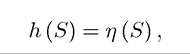
where η (∙) is an increasing, continuously differentiable and concave function. For t ∈ [S, ∞), human capital accumulates over time (as the individual works) according to the differential equation
(id="Picutre 1235" class="lazyload" data-src="/files/uch_group77/uch_pgroup317/uch_uch7364/image/image1233.jpg">
for some gh ≥ 0. Suppose also that wages grow exponentially,
(
with boundary condition w (0) > 0.
Suppose that

so that the net present discounted value of the individual is finite. Now using Theorem 10.1, the optimal schooling decision must be a solution to the following maximization problem

Now using (10.6) and (10.7), this is equivalent to (see Exercise 10.3):

Since η (S) is concave, the objective function in (10.9) is strictly concave.
Therefore, the unique solution to this problem is characterized by the first-order condition
Equation (10.10) shows that higher interest rates and higher values of ν (corresponding to shorter planning horizons) reduce human capital investments, while higher values of gw increase the value of human capital and thus encourage further investments.
386
Integrating both sides of this equation with respect to S, we obtain

Now note that the wage earnings of the worker of age τ ≥ S* in the labor market at time t will be given by

Taking logs and using equation (10.11) implies that the earnings of the worker will be given by
where t — S can be thought of as worker experience (time after schooling). If we make a cross-sectional comparison across workers, the time trend term gwt, will also go into the constant, so that we obtain the canonical Mincer equation where, in the cross section, log wage earnings are proportional to schooling and experience. Written differently, we have the following cross-sectional equation

where j refers to individual j. Note however that we have not introduced any source of heterogeneity that can generate different levels of schooling across individuals. Nevertheless, equation (10.12) is important, since it is the typical empirical model for the relationship between wages and schooling estimated in labor economics.
The economic insight provided by this equation is quite important; it suggests that the functional form of the Mincerian wage equation is not just a mere coincidence, but has economic content: the opportunity cost of one more year of schooling is foregone earnings.
This implies that the benefit has to be commensurate with these foregone earnings, thus should lead to a proportional increase in earnings in the future. In particular, this proportional increase should be at the rate (r + ν — gw).As already discussed in Chapter 3, empirical work using equations of the form (10.12) leads to estimates for γ in the range of 0.06 to 0.10. Equation (10.12) suggests that these returns to schooling are not unreasonable. For example, we can think of the annual interest rate r as approximately 0.10, ν as corresponding to 0.02 that gives an expected life of 50 years, and gw corresponding to the rate of wage growth holding the human capital level of the individual constant, which should be approximately about 2%. Thus we should expect an estimate of γ around 0.10, which is consistent with the upper range of the empirical estimates.
10.3.