CHAPTER ELEVEN The Promise and Limits of the Antifraud State
Philip Schrag's account of battling consumer fraud was not all doom and gloom: the Department of Consumer Affairs achieved some early victories that he took care to document. Schrag was proudest of its takedown of Vigilant Protective Systems (given the moniker “Foolproof Protection, Inc.” in Counsel for the Deceived).
Created in 1968, this firm operated throughout New York City and its environs, selling residential burglar alarms to low-income African American and Puerto Rican families. Vigilant's African American sales force monitored police radio to learn about residential robberies. While the sense of personal violation was still fresh, they paid calls on victims. After commiserating about “soaring crime rates,” the salesmen offered to install state-of-the-art alarm systems connected to the closest police precinct for a free thirty-day trial. If customers chose to keep the alarm, they would pay a monthly leasing fee of $14 ($20 if a fire alarm was included in the package), but would retain the right to cancel at will, and could expect regular maintenance as necessary. Sales agents further promised that the company would never use court process to collect in the case of nonpayment.Every one of these claims was false. The company installed low-grade alarms made of cheap components that rang only in the apartment, and that burglars could easily disable. Contractual fine print, which many Spanishspeaking customers could not read, committed lessees to three-year contracts with no right of cancellation, did not reference a trial period, and specified that lessees would owe legal fees if Vigilant had to go to court to compel payment. Vigilant's lawyers always pursued court judgments in cases of nonpayment, often on the basis of “sewer service”—not supplying legal notices to nonpaying customers, but rather metaphorically chucking those notices into the sewer so that its debtors did not learn about hearings.
The company soon became New York City's fifth most-active plaintiff. Its salesmen also ignored a New York installment sale law that required distribution of a card that alerted customers, in both English and Spanish, of a three-day cooling-off period for consumer contracts. Here was an updated version of the nineteenth-century lightning-rod sales routine and the abusive tactics honed by Holland Furnace Company.Vigilant's president, Sol Rosen (“Sam Stone” in Schrag's memoir), had extensive experience with this kind of marketing scheme. After spending a chunk of the 1950s selling deceptive food-freezer plans, he started up a finance company that bought debt contracts from predatory urban merchants. Vigilant took his techniques of deception to a new level of sophistication. It was a subsidiary of a publicly traded holding company that skirted disclosure requirements in its financial reports; the holding company had managed to attract $1.5 million in working capital from four major New York banks, secured by its customer accounts, as well as an exclusive deal with a major department store to showcase its alarms.
All of Rosen's ventures encountered pressure from antifraud regulators. In each case, Rosen adopted the common strategies of accommodation and retreat. He accepted a plea deal against the freezer plan corporation that included dismissal of pending criminal charges, and later allowed the finance company to go out of business. Within months of its launch, Vigilant faced an investigation by the New York Bureau of Consumer Fraud and Protection. That case ended with a consent decree, in which Rosen pledged to discontinue objectionable marketing practices. He and his salesmen ignored its terms.
Schrag and his colleagues succeeded in putting Vigilant out of business by 1971, but only by eschewing time-consuming enforcement tools, such as seeking an injunction against the company. There were several twists and turns in the story, including coordination of lease cancellations by almost four hundred customers on the grounds that they had not received notice of their “cooling off” rights, a threatened business license revocation, and complex negotiations that resulted in a very tough settlement agreement.
The key point is that after the DCA received evidence of the firm's ongoing violations of the settlement, it threatened a parallel investigation of the department store that marketed Vigilant alarms and facilitated extensive press coverage about the case, which hurt the reputations of the department store and banks that kept Vigilant afloat. These tactics led to a bankruptcy filing in July 1971 and stimulated enough public uproar that the district attorney brought criminal charges against Sol Rosen.1Success in this case depended on creative maneuvers akin to the policy innovations that antifraud activists and organizations had concocted since the mid-nineteenth century, from the sandwich-board warnings about Peter Funks in antebellum auction districts, to postal fraud orders and “sundry frauds and humbugs” features in nineteenth-century magazines, to the NACM's prosecution fund, to the SEC's stop orders and the Better Business Bureau's NIPI declarations. As the implementation of consumer protection reforms in the 1960s and 1970s reinforced appreciation for the shortcomings of reliance on traditional legal mechanisms, opponents of business fraud continued to experiment with alternative enforcement strategies.
The takedown of Vigilant Protective Systems incorporated several approaches that mirrored the long history of American antifraud efforts. One move was to rely on the disinfecting power of public exposure. A second was to find new ways to exert pressure on the business infrastructure that allowed deceptive firms to function, described by Philip Schrag as “commercial synapses.” These support-service providers included advertising agencies, media outlets, law firms, banks, accounting firms, and insurance companies. Finally, antifraud bureaucracies looked for ways to reinforce the capacity of disgruntled consumers and investors to vindicate rights on their own, such as by informing Vigilant customers that they had a right to cancel their contracts and encouraging them to do so.
These strategies all had limitations; but each, in at least some contexts, was a meaningful weapon against commercial deceit.Officials who turned to such tactics retained a conviction that the state had an obligation to protect investors and consumers from duplicitous marketing. Among American conservatives, there was a contrasting impulse to challenge antifraud measures as regulatory overreach, as just one more example of failed statism. This viewpoint found adherents within the realm of business selfregulation, and especially among a newly invigorated vanguard of conservative intellectuals. Elements of this perspective gained ground among some progressive policy elites as well, setting the stage for profound reconfigurations of antifraud policies in the final quarter of the twentieth century.
Exposing Deceit in the Civil Rights Era
Philip Schrag used the term “direct action” to describe the creative maneuvers against Vigilant Protective Systems, evoking the civil rights demonstrations that had been roiling American society since the 1950s. This idiom surely came readily to mind because of Schrag's earlier experience as an NAACP attorney. Perhaps reflecting his socialization into the legal fraternity, the New York City consumer advocate did not think to reference an even more vigorous style of collective protest deployed to pressure notorious business cheats just one hundred miles to the southwest.
In Philadelphia, the Consumer Education Protective Association (CEPA) had refined the art of securing justice for consumers, including fraud victims, through an assertive style of community self-help informed by militant unionism. This cooperative organization was founded by Max Weiner, a former realestate broker and finance company manager who had seen the predatory side of urban marketing practices. In addition to provision of consumer education tailored for the inner city, the group urged low-income Philadelphians to inform its unpaid staff members about retailers who engaged in bait advertising, phony oral promises, abusive credit terms, and other prevalent consumer frauds.
When staffers viewed complaints as meritorious, they advised the consumers in question about how to pursue informal redress. If satisfactory adjustments were not forthcoming, CEPA sent delegations of its members to accompany individual complainants in further efforts to seek accommodation. The next step involved picketing operations, which members committed to join as a condition of receiving assistance themselves. Uncooperative business owners could look forward to the arrival of CEPA members “equipped with placards, leaflets, and sometimes loudspeakers,” who would “march in front of the place of business, protesting the injustice and explaining it to passersby” (Figure 11.1). From 1966 through the mid-1970s, CEPA coordinated scores of public protests against finance companies, car dealerships, furniture stores, and other retailers and service providers, both in Philadelphia and outlying communities.2CEPA had the wherewithal to pursue targeted businesses for weeks and even months, garnering extensive media attention. The local African American daily, the Philadelphia Tribune, furnished close coverage, and other local publications ran features on the cooperative and stories on specific boycotts, with state and national outlets also taking note. This publicity drove additional consumer complaints to CEPA. It also magnified the pressure that CEPA could bring to bear on local firms, which enabled it to negotiate hundreds of settlements a year and sometimes persuade the city district attorney to file criminal fraud charges. The amounts refunded through CEPA interventions rivalled those of the consumer protection agencies created by state and local govern- ments.3 By the early 1970s, CEPA had set up branches in Des Moines, Cleveland, Baltimore, and Washington, DC, with community activists in other cities explicitly patterning separate organizations on Max Weiner's template.4
Recognizing the antipathy of most business owners to unflattering publicity, some law enforcement personnel adopted analogous hard-edged tactics.
The most flamboyant was Marvin Zindler, a deputy in the Harris County, Texas, sheriff's office tasked in 1971 with heading up a new consumer fraud division. Treating “consumerism” as “up there with God, country, and motherhood,” and having “an uncanny flair for publicity,” Zindler wielded his own sledgehammer at Houston businesses accused of deceptive practices. In cases of even small-scale misrepresentations, he coerced businesses into compromises by threatening publicized arrests. Former work as a newspaper photographer and public relations officer in the sheriff's office had given the “nattily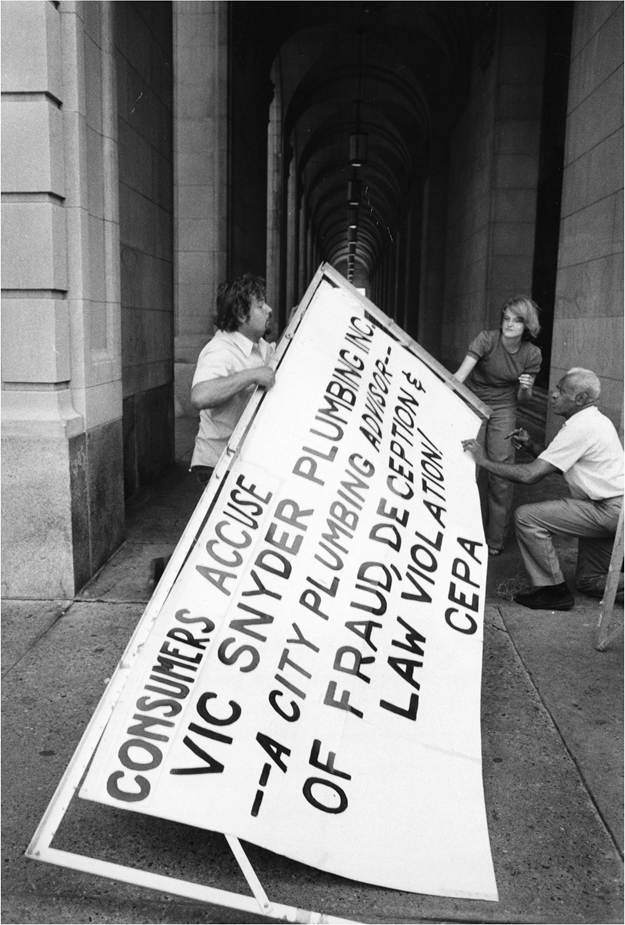
Figure 11.1: CEPA activists prepare a picket sign, August 1976. George D. McDowell Philadelphia Evening Bulletin Collection, Temple University Libraries, Urban Archives.
attired” deputy a wide network among local journalists, as well as insights about how to command public notice. The son of a wealthy Jewish retailer, Zindler had a chip on his shoulder as a result of perceived anti-Semitic slights, as well as an insatiable desire for public recognition. “I want the public to know I'm here to help them,” he explained to one journalist, “and the crooks and cheats to know I'll get them.” He made his threats realistic by initiating 1,300 criminal fraud cases in the first year of the consumer fraud unit and informing television stations whenever he was on his way to make an arrest, so that cameras could record it for the evening newscast. Even though Houston prosecutors viewed his cases as unwinnable and local judges threw out most charges that went forward, fear of bad press led most businesses to agree to consumer settlements, which was always Zindlers goal. This approach attracted thousands of complaints and fawning profiles from local and national journalists.5
Business owners did not take kindly to such treatment, whether applied by community consumer groups or a maverick law-enforcement official. San Francisco’s Consumer Action faced a libel suit from one car dealer outraged by a demonstration. CEPA faced several lawsuits seeking to enjoin them from continuing their pickets; during one moment of widespread inner-city riots, it confronted a mayoral emergency proclamation banning public pickets of more than twelve persons. Marvin Zindler attracted deep enmity from the Houston business establishment. After a new Harris County sheriff took office in early 1973, business groups exerted their own pressure, successfully campaigning for Zindler's firing (Figure 11.2). American law and journalism nonetheless proved hospitable to this form of antifraud discipline. The courts tended to give direct action by consumer organizations a wide berth, so long as they framed their motives narrowly around the redress of specific, defensible consumer grievances. Judges accepted assertions of free-speech rights by protestors of commercial injustice, in part because ordinary legal process did such a poor job of handling fraud allegations.6 And although Marvin Zindler lost his handcuffs and badge, within weeks of his dismissal he started a new career as a reporter for the local ABC television station. Using a consumer affairs segment to retain access to a complaint phone line, he continued to excoriate “usurious merchants, unscrupulous auto mechanics, four-flushing house-siding salesmen and other con artists” in the same florid style.7
During this era, media action lines proliferated at urban newspapers and broadcast stations, because they tended to attract readers, listeners, and viewers. Numbering over four hundred by the late 1970s, they were headed by a consumer-affairs journalist, but relied on corps of college-student volunteers and middle-class housewives. Although they handled citizen complaints of all kinds, a portion of their work involved allegations of false advertising or de-
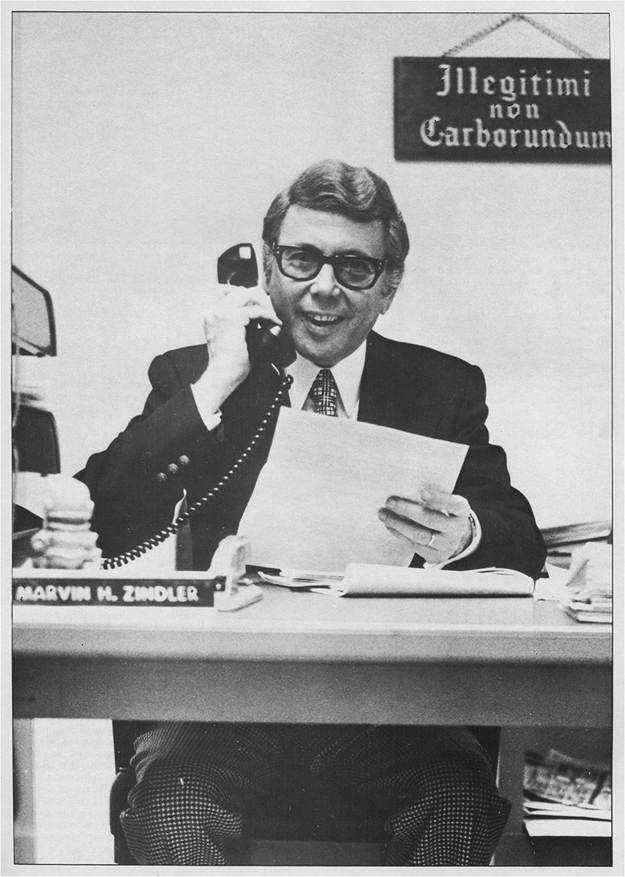
Figure 11.2: Houston Sheriff Marvin Zindler in his office. Reprinted from Texas Monthly, Feb. 1973, with permission.
ceptive marketing. As with consumer protection agencies, these media departments focused on solving problems through mediation, though always with the threat of a negative newspaper column, radio spot, or television news segment hovering in the background.8 Very few American cities boasted a crusading figure such as Zindler, even if they possessed a media action line. Nor did every metropolitan area have a savvy neighborhood-based defender of consumer rights such as CEPA. Small towns and rural areas were even less likely to possess such guardians. Where they put down roots, however, they offered meaningful assistance to victims of consumer fraud and some measure of populist deterrence.
Pinching off Commercial and Financial Synapses
The idea of placing regulatory pressure on business counterparties of duplicitous firms hardly originated with the New York City DCA. One of the foundational premises of the “truth in advertising” movement had been to close off access of fraudulent advertisers to reputable publications. From the inception of the New Deal, federal securities regulation looked to law and accounting firms to police the truthfulness and completeness of registration statements and financial reports. In the wake of the quiz show scandals of the late 1950s, the FTC also brought some deceptive practices cases against advertising agencies as well as their clients.9
Before 1965, however, antifraud agencies rarely sought to target ancillary firms as a systematic strategy to constrain deceptive behavior by business principals. Thus the SEC steered clear of efforts to pursue sanctions against the lawyers who furnished services to fraudulent stock promoters unless they helped to plan and execute scams. The FTC's experience in going after advertising agencies nonetheless hinted at how a tough-minded regulatory posture could percolate through corporate practice. At the Westinghouse Corporation, for instance, closer FTC scrutiny prompted new internal rules for the development of ad campaigns. All comparative performance claims would henceforth have to “be certified by an accredited independent laboratory” and the firm's ad agency would have to keep affidavits of certification on file.10 A growing number of regulatory agencies soon embraced the tactic of attacking business fraud through the professional gatekeepers who either facilitated it or looked the other way.
The SEC led the way in developing aggressive enforcement actions against fraud-abetting professionals, prompted by a series of cases in the 1960s that came to light as a result of corporate bankruptcies. The typical story involved corporate management who relied on legal opinions or auditor certifications to shield themselves from liability for violating securities laws—perhaps for misleading financial reports, or for delays in release of corrected financial data until after the closing of a corporate merger. Troubled by these instances in which gatekeepers skirted professional obligations, SEC lawyers explored ways to initiate charges against the lawyers and accountants who had blessed deceptive practices.
The pivotal case that encapsulated this more aggressive enforcement posture was SEC v. National Student Marketing, brought in 1971. The SEC had already pursued criminal charges against two auditors some years earlier for their actions in the run-up to the bankruptcy of a franchise vending machine company. But only in National Student Marketing did SEC lawyers charge partners in a “major law firm... that had an international reputation,” and only in this case did the SEC articulate an expansive interpretation of the legal obligations owed by attorneys and accountants when they learned of material misrepresentations by corporate clients. In 1967 and 1968, executives at the National Student Marketing Corporation approached several large-scale corporations about their business model, which was to use part-time college students to create buzz about consumer products on campuses. The company's management used oral agreements as the basis for booking revenues on their financial statements; when most of the oral agreements fell through, they did not disclose the news, but instead rushed to complete several corporate mergers, made possible by the company's inflated stock price. Executives carried out this deception over the objections of the corporation's accountants, but with the assistance of its attorneys. For SEC staff lawyers, this case suggested the importance of laying down two basic principles of professional responsibility: attorneys and accountants had to correct financial estimates and projections as soon as they realized they were false or mistaken; they also had the “obligation to bring [such information] to the attention of the authorities” if their clients refused to act on their advice.11
The federal courts ruled for the SEC in National Student Marketing. With consumerism in the ascendancy, and with an embattled Nixon administration seeking to deflect political pressures by appointing antifraud hawks as SEC commissioners, staff lawyers felt that they could press forward with the opinion in this case as a guide. Their determination was only reinforced by several large-scale business failures in the early 1970s, including the Penn Central Railroad, Equity Funding, and Home-Stake Oil. These debacles all involved evidence of widespread securities fraud and each cost investors hundreds of millions of dollars. As a result, the SEC initiated a series of fraud and nondisclosure proceedings in the 1970s against leading New York law firms and the nation's most influential accounting companies.12
The avowed point of these proceedings was to buck up the legal and accounting professions, so that their members would be “more stand-upish with their clients and say no when they needed to say no.” Leading architects of enforcement at the SEC, such as Irving Pollack and Stanley Sporkin, took close note of the rapid growth in the securities markets during the 1960s and were horrified by the extent of professional abdication in some of the era's bigger business failures. These developments led them to conclude that the SEC would never have sufficient resources to monitor and police the markets on their own. The only sensible approach, as one long-time staff lawyer recalled the emerging bureaucratic consensus, was to “create incentives for the people who were at the access points to the market... the brokers/dealers of the world, the investment bankers of the world, the lawyers and the accountants— and encourage them to police themselves.” Accountants had to act in accordance with their duties to the investing public; corporate lawyers had to remind themselves that their client was in fact the corporation, not senior executives, and that the SEC, “with its small staff, limited resources, and onerous tasks is peculiarly dependent on the probity and the diligence of the professionals who practice before it.”13 Such diligence might cut off access to the financial services required for any large-scale investment deception.
The rapid expansion of mutual funds and other institutional investors during the 1960s and early 1970s, moreover, meant that a greater proportion of disgruntled bond- or shareholders had the resources to pursue legal avenues of redress. Plaintiffs' lawyers soon explored potential causes of action against defendants with sufficient assets to make civil lawsuits worth filing. After corporate bankruptcies, professional gatekeepers had the great advantage of still possessing assets that one might attack, as did creditors, investment banks, brokerage firms, and corporate directors in their personal capacity. These participants in the securities markets faced an increasing number of fraud-related civil suits, especially after the sharp stock market correction of the late 1960s. SEC regulators and plaintiffs' attorneys kept a close eye on test cases, piggybacking on each other's arguments and scrutinizing judicial opinions for indications of how to proceed with fraud allegations.14
In addition to pushing for expanded liability for legal counsel and accounting firms, the SEC's enforcement staff also concocted novel disciplinary mechanisms. One option was to suspend or bar individual lawyers or accountants from practicing before the commission, which in most cases would preclude individuals from working on any securities-related filings. But the SEC tended to focus on remedies that would change how firms conducted core activities. Always conscious of tight budgets, SEC lawyers preferred negotiated consent decrees to litigated cases. During the late 1960s and early 1970s, the dramatic growth in demand for corporate auditing had fostered rapid consolidation in the accounting industry, which in turn generated, as the SEC's head accountant later described it, “managerial and control problems of unprecedented magnitude.” This diagnosis of auditing shortcomings shaped settlement priorities. SEC officials demanded that accounting firms commit to more searching internal supervision of auditing procedures, as well as regimes of continuing education and training for its accountants and “peer review” of its work by expert third parties. Such requirements obviated the common defense that in signing off on misleading financial statements, a firm's employees had acted on their own, without the knowledge or consent of superiors. Regulators also sought to infuse organizational culture with a stronger commitment to professional obligations and legal compliance—to gatekeeping in the public interest.15
Within America's legal, accounting, and corporate establishments, the new enforcement landscape occasioned loud complaint, which paralleled earlier critiques of innovative antifraud techniques. Objections focused on the alacrity with which the SEC was willing to “sully the reputations of leading figures of business, finance, accounting, and the bar,” as well as the use of coercive negotiating tactics that compromised due process rights. Legal scholars, securities lawyers, and accounting specialists further raised the specter of unintended consequences. Attorneys might refuse to work for companies with financial difficulties, lest honest mistakes take on a different gloss if the businesses failed; or they might dissuade management from attempting “novel, although perfectly proper, transactions that could be the daring, imaginative business moves necessary to realize substantial profits.” Executives would have to devote far more time to scrutiny of reporting statements, thereby diverting focus from managerial challenges. Fearful about the new limits to attorneyclient confidentiality, they might also shy away from asking counsel about thorny disclosure questions, foreclosing the possibility that corporate lawyers would be able to head off proposed actions that might constitute illegal mis- representation.16 Within the accounting world, some observers raised concerns that extension of liability to auditors would lead them to reject “more challenging audit assignments,” and that demands for more detailed reporting of complicated financial data might lead to “disclosure pollution”—the provision of so much information that investors would become lost in a sea of numbers and clarifying footnotes.17
Elite discontent prompted institutional pushback, which fed a more general antiregulatory fervor in American politics. By the late 1970s, the federal courts began to restrict the SEC’s most expansive efforts to saddle gatekeepers with liability for corporate misrepresentations. SEC commissioners appointed by Presidents Carter and Reagan, such as Harrison Williams and John Shad, also toned down enforcement tactics and redirected priorities toward the investigation and prosecution of insider trading.18
In the short term, however, the campaign against professional facilitators of deception in the securities markets had significant institutional ramifications. Nudged by the Securities Law division of the American Bar Association (ABA) and the Bar Association of New York City, law firms moved to tighten internal oversight of securities work. They adopted “more cautious procedures for dealing with the complex issues that frequently arise under the federal securities laws,” sought “to inculcate a degree of independence in responding to client pressures,” and required “a review of legal opinions and registration statements by at least one additional partner.”19
Stung by years of intense criticism, the accounting profession agreed in 1972 to the creation of a new Financial Accounting Standards Board (FASB). Unlike its predecessor, FASB would have full-time members and professional staff. Chastened later in the 1970s by yet more corporate reporting scandals and congressional inquiries that raised fears of direct federal control over accounting standards, the industry further strengthened mechanisms of selfregulation. In 1977, the American Institute of Certified Public Accountants made professional certification more stringent. It also imposed three-year peer reviews of internal quality controls at member firms and compelled periodic rotation of the main partner in charge of a corporation’s external auditing.20 Such internal governance mechanisms served as counterweights against insistent client requests that law and accounting firms approve misleading financial communications.
The Reach of the Class-Action Lawsuit
Several of the civil securities fraud cases brought against ancillary parties in the 1960s and early 1970s were class actions, in which lawyers filing the suits purported to act on behalf of all similarly situated investors. Those attorneys took advantage of a 1966 restatement of the rules of federal civil procedure, which made such cases much easier to pursue. Under the revised Rule 23, lawyers could bring a civil suit on behalf of multiple individuals so long as they had sufficiently comparable claims, their allegations raised comparable issues of law, and a consolidated hearing would enhance “judicial efficiency.” The outcomes of post-1966 class actions pertained to all members of the relevant class, including parties not named in the suit, unless they asked to be excluded in a timely fashion.21 For consumer activists disappointed by the record of regulatory agencies, the class action beckoned as a way for consumers and investors to defend themselves. It seemed to offer a way around one of the biggest impediments to curbing many business frauds—the small losses typically inflicted on any individual victim, which often did not justify the expenditure of resources necessary to seek redress. Like the securities plaintiff’s bar, several public-interest lawyers began experimenting with consumer fraud-related class actions in the 1960s, drawing on experiences with civil rights suits premised on the tactic.
A 1964 case brought by a young Los Angeles attorney on behalf of the city’s taxi riders suggested the potential for this form of collective lawsuit. The case involved rigged meters on the city’s Yellow Cabs. In 1963, former maintenance employees alleged that for several years, the company had “deliberately set meters to run fast,” resulting in systematic overcharges of between 3 and 5 percent. These charges were aired by a Miami cab company hoping to break into the Los Angeles market, which at that point remained a regulated monopoly. An eventual grand jury investigation cleared Yellow Cab owners of intentional deceit, as they had bought the company well after the meter rigging had occurred. But public testimony to the Los Angeles Board of Public Utilities created an extensive evidentiary trail about the episode.22
Able to draw on this record, the young lawyer, David Daar, filed a civil suit, taking advantage of a little-used provision for class actions that had been part of California civil procedure since the 1870s. Yellow Cab persuaded a state Superior Court judge to deny certification of the class, on the grounds that cheated taxi riders had suffered varying losses, and that there would be no way to identify wronged individuals or precise amounts lost, and so no way to apportion refunds. The state Supreme Court, however, reversed this ruling, accepting Daar’s argument that the class action existed for such situations, that “separate actions would be economically infeasible,” and that the basic issues of law and fact were the same, even if the precise amounts at issue were not. Daar eventually wrung a negotiated settlement out of the company that incorporated innovative remedies. Because direct compensation to millions of people was impossible, Yellow Cab instead agreed to reduce its fares by a total of $1.2 million over the following seven and a half years, and to allow Daar to serve, along with the city’s taxi regulator, as co-monitor of the company’s compliance with the agreement.23
News of Daar’s victory circulated among consumer groups, prompting keen interest in class-action lawsuits as a means to furnish restitution to the victims of business fraud. The basic idea of enabling victims of relatively small-scale frauds to band together to pursue relief attracted support from both militant and more moderate consumer groups. If “business firms can bilk in bulk,” the New York City consumer activist Mark Green argued, then consumers “should be able to... sue [them] in bulk so that the penalty fits the offense”24
It quickly became clear, however, that consumer fraud class actions would confront high legal hurdles in most jurisdictions. Concerned about a deluge of lawsuits, the US Supreme Court placed several barriers in the way of litigants trying to bring fraud-related class actions in the federal courts. For plaintiffs relying on interstate transactions to establish federal jurisdiction, each member of the class had to have a claim in excess of $10,000. The court also held in a 1974 case that plaintiffs' attorneys would have to exercise diligence in locating and notifying potential class members, which hiked pretrial costs.25 These rulings did not foreclose securities fraud class actions. The New Deal securities statutes established federal jurisdiction regardless of amounts at issue, and the Supreme Court eased the path for many suits in 1979, when it ruled that private litigants could rely on the factual determinations of SEC enforcement proceedings as bases for their own suits, which reduced discovery costs. The legal environment was sufficiently hospitable to securities class actions that law firms began to specialize in them, encouraging a steady increase in filings.26 By the late 1970s, initial filings and multi-million-dollar settlements in such cases had become commonplace.27
Attempts to bring consumer fraud class actions, however, ran into bigger legal obstacles. The $10,000 threshold for the establishment of federal jurisdiction created a key hurdle, for few individual claims reached this amount. Unlike California, most states did not possess ready mechanisms for class actions, and those that did often had cumbersome procedural rules that hindered would-be consumer fraud litigants. The judiciary in both federal and state courts also tended to be skeptical of claims that the victims of consumer frauds met the essential characteristics to justify class actions—that they had parallel legal complaints, that they constituted an ascertainable class who could learn about court proceedings, and that claims were specific enough that courts could oversee compensation. Aware of these issues, consumer advocates looked to statutory solutions, for which a bevy of legal scholars soon offered ideas. Beginning in the late 1960s, their proposals for consumer protection legislation included calls for Congress and state legislatures to relax the definitional standards for consumer fraud-related class-action suits and to widen the range of remedies, including the fluid prospective restitution that California courts accepted in Daar v. Yellow Cab2
Some federal consumer protection laws, such as the 1968 Truth in Lending Act and the 1975 Magnuson-Moss Warranty Act, widened the door for class actions. The Truth in Lending Act did not require a minimum amount at issue, and also called for a low standard of proof—just a showing that merchants had not provided mandated information to customers. Demonstration that merchants had misled customers, or that purchase decisions had only occurred because of the lack of disclosure, was not necessary. The burden on plaintiffs thus resembled the situation in many securities fraud cases. This statute also mandated minimum awards of $100 to winning plaintiffs and allowed for generous attorney fees. As a result, legal counsel for consumer debtors filed thousands of class-action suits, many brought because they offered the best means of redressing the small-scale individual harms caused by deceptive marketing. Although some federal judges balked at certifying the largest proposed classes on the grounds that the resulting multi-million-dollar awards would impose too much harm on defendants, hundreds of suits were successful. According to many close observers of consumer issues, these cases helped to foster general compliance with the legislation by the late 1970s.29
The Magnuson-Moss Act established minimum standards for warranties of consumer products worth more than $10, including use of clear language and a ban on deceptive disclaimers and exceptions. In order to limit pressure on the federal courts, the legislation encouraged corporations to create informal dispute resolution mechanisms to handle warranty-related complaints. But it also established an avenue for federal class-action suits, so long as each individual claim exceeded $25, the class numbered one hundred or more persons, and the amounts at issue totaled $50,000. Federal judges, however, ruled that Magnuson-Moss class actions had to name one hundred specific plaintiffs and that plaintiffs had to pay for notice to the affected class. These impediments stymied all but a handful of warranty-related class-action filings.30
Consumer groups and several members of Congress hoped to lower the jurisdictional hurdles to consumer fraud-related federal class actions, but proposals to create a more plaintiff-friendly federal mechanism never became law. During the early 1970s, the Nixon administration deflected political momentum by calling for a limited class action that would only become available once the FTC had declared a business practice to be deceptive.31 Later that decade, class-action reform become bound up with the drive by Ralph Nader and a coalition of public interest organizations to create a Consumer Protection Agency (CPA), which would have had the authority to represent consumer interests before federal agencies. As Nader envisaged it, the CPA would counterbalance business interests in regulatory rule-making and enforcement processes, prodding bureaucracies to act in the public interest. Both the proposed CPA and calls for streamlining federal consumer class-action lawsuits became lightning rods for corporate executives, who mounted furious campaigns to thwart them. To opponents such as US Chamber of Commerce president Richard Lesher, consumer class actions gave “ambulance-chasing” lawyers the capacity to shake down legitimate firms that might have done nothing but innocently violate some “obscure government rule.” Such arguments resonated with enough moderate Senate Democrats to keep the liberalization of class actions from becoming law.32
Supporters of consumer class actions fared better in the states, even though only a few created procedural mechanisms to facilitate these suits.33 California remained a leader in this regard. The state legislature revised its class-action framework in 1970, allowing notification of class members by public advertisement. Shortly thereafter, the state Supreme Court reaffirmed its approbation of class actions in a case that involved two hundred consumers who each alleged fraud by the same seller of freezer food schemes. Although the customers had purchased a variety of plans, the court certified the existence of a class because of a consistent pattern of falsehoods by company agents. (Establishing commonality among plaintiffs was eased by the fact that company training included memorization of the required sales pitch.) Several other states moved in California’s direction, including Ohio, Illinois, and even New York, which before a legislative reform in 1980 had been unreceptive to consumer fraud class actions. Within these states, private class actions became a more viable means of redress.34
Regardless of how open a state’s legal system was to consumer class actions, they proved less common than suits on behalf of investors. In part, this difference reflected a greater difficulty in identifying defendants with the capacity to make restitution. But it also resulted from evidentiary challenges. Plaintiffs’ attorneys confronted the same problems in consumer fraud cases that so often bedeviled prosecutors. One could not always expect a would-be competitor to assist in bringing forward public testimony of a cab company’s meter-rigging, nor an offending company to have its sales staff repeat, word for word, the exact same lies to every customer. When large-scale consumer fraud class actions were successful, they often relied on the investigative capacities of the antifraud state, a pattern exemplified by the 1977 engine-switching affair at General Motors.
Beset by deteriorating labor relations and facing sharp competition from European and Japanese imports, General Motors also struggled with quality control during the mid-1970s. Nonetheless, it retained a dominant position in the US market, which encouraged managerial complacency.35 In 1976 GM executives decided to equip 1977 Oldsmobiles with Chevrolet engines, without informing consumers that the higher-priced make had a lower-priced engine under the hood. (Dealers received a cryptic notice of an engine change that did not announce the substitution of a Chevy power train.) The company may have been responding to production problems caused by an underestimation of consumer demand for powerful engines, as it claimed; or it may have been seeking to cut costs.
Either way, GM traded on customer expectations cultivated through a halfcentury's worth of product differentiation and brand management. For almost thirty years, Oldsmobile had advertised that its higher sticker price paid for a higher-quality car, including the distinctive V-8 “Rocket” power train. Oldsmobile headquarters even had a large sign on its roof proclaiming that the building was the “Home of the Rocket Engine.”36 Within months of GM's production shift, some owners learned of the switch, either because they were mechanics who fiddled with their new engines, or because they had to take in cars for needed repairs, only to discover that Oldsmobile dealerships lacked parts for Chevy engines. State and local consumer protection agencies soon received a “thunder of protests,” prompting widespread investigations. One of the first was undertaken by the Consumer Fraud Division of the Illinois attorney general's office, which soon ascertained the nationwide scope of the engine swaps.37
Recognizing the depth of anger among his constituents, Illinois Attorney General William Scott filed a $40 million class-action suit in federal court on behalf of all affected American car owners. The value to individual consumers overcame the usual roadblocks to federal consumer class actions, and Scott could marshal the resources of his office to sustain evidence gathering and meet notice requirements. This move triggered seventy additional suits, including more than twenty filed by other consumer fraud agencies and a further twenty-five private class actions. Forty-one attorneys general also joined the Illinois filing. In response, GM lawyers insisted that its engine swap reflected a longstanding industry practice to exchange components as business conditions warranted. Confronted with withering publicity and formidable legal opposition, however, GM took steps in April 1977 to inform all of its customers about the engine switch, giving them the option of exchanging their “Chevy- mobiles” for new cars, “less 8 cents a mile for wear and tear.” Then, in late 1977, the car manufacturer agreed to a further $40 million settlement with Attorney General Scott, lead negotiator for the public class actions. The corporation denied any culpability for deception, but committed to furnishing a $200 payment to all affected car-owners, as well as a three-year supplemental engine warranty.38
This settlement, however, represented just the end of the first phase of legal jockeying over the Chevymobile. Only half of eligible owners accepted the settlement, with some plaintiffs standing “on the principle of the thing.” As Joe Siewek, the retired Chicago mechanic who first brought the issue to the attention of the Illinois attorney general's office, put it, “people should be told what they are paying for.... I bought something and I didn't get my money's worth.” One private class action challenged the settlement, convincing an appeals court that the agreement did not gain the assent of all parties to the dispute. This ruling opened the way for a 1981 jury trial on the remaining class action, which culminated in a partial victory for the plaintiffs. Car owners who had purchased Chevymobiles before GM disclosed its engine switch would be entitled to $550 payments. After GM appealed this decision, it accepted a 1984 settlement that reduced its monetary obligations to $400 per holdout.39
Such victories led consumer activists and like-minded legal scholars to retain some faith in postsale legal remedies as ways to discipline misleading or fraudulent selling. In the right circumstances, action by consumer protection agencies, criminal fraud prosecutions, civil suits, or some combination thereof furnished a measure of justice to victims of economic deceit, and some degree of deterrence. But in the fifteen years after Kennedy's Message to Congress on consumer issues, there were enough cautionary tales to convince many leading scholars of consumerism that preventive strategies offered the best return on scarce antifraud resources.
Two large-scale studies commissioned by the Department of Justice's National Institute of Law Enforcement and Criminal Justice put the stamp of officialdom on this viewpoint. The first of these, a Survey of Consumer Fraud Law produced in 1978 by lawyers Jonathan Sheldon and George Zweibel, catalogued the shortcomings that had cramped retrospective fraud enforcement. Although the authors singled out class actions pressed by state attorneys general as one promising regulatory arena, they advocated greater focus on the requirement of effective “presale disclosures” and the granting of more expansive cancellation rights.40
The second study, Consumer Fraud: An Empirical Perspective, written the following year by Jane Schubert and Robert Krug, analyzed a large sample of complaint files to government consumer protection agencies. Schubert and Krug assessed the nature of complaints, patterns of how they moved through bureaucracies, and their outcomes. Most “transactions gone bad” involved low stakes and required great effort to achieve any resolution. The social scientists thus recommended efforts to restructure the framework of consumer transactions. The goal, they argued, should be to empower consumers, whether through cooling-off periods, improved standards for warranties, or requirements of more effective information disclosure. Insofar as governments focused on postsale mechanisms of redress, the most sensible option was to improve mediation services at consumer protection agencies.41 These studies signaled a tempering of aspirations for tackling consumer fraud, a judgment that only so much was possible in the context of American justice. They offered a coda to an era of regulatory governance born amid great anticipation and concluding with pleas for trimmed sails and curtailed aspirations.
Reinvoking the Regulatory Filters of Markets
For skeptics of concentrated state power, disenchantment with antifraud policies was to be expected. In some quarters, the expansion of the antifraud state during the New Deal and post-World War II decades had always occasioned suspicion or outright antagonism, as had expanded governmental authority over other economic realms. As the impacts of statutory reforms and enforcement campaigns accumulated, antifraud regulations attracted the critical attention of political scientists, legal scholars, and economists. This social science research was part of a more general inclination to appraise the shortcomings of modern regulatory governance, and shared a common intellectual touchstone—the implications of economic self-interest for political behavior. Many scholars who took a close look at the evolution of American regulatory institutions worried that regulated businesses invested far more effort in shaping policy than the rest of society. No other constituency cared more about regulatory outcomes, nor possessed comparable resources to shape the details of regulatory statutes and engage with administrative decisionmaking. The technocrats charged with carrying out regulatory missions also came in for close scrutiny, because they had incentives to care more about building administrative empires or currying favor with regulated businesses than upholding broader interests. According to the academics who studied regulatory institutions, policymakers had to worry about the dual threats of regulatory capture from without and administrative inefficiency from within.
This analytical indictment emerged from every direction of the American political compass. If there was one academic text that framed the trope of regulatory capture and set the parameters of specific agency studies, it was Marver Bernstein’s 1955 monograph Regulating Business by Independent Commission. A centrist and Princeton University political scientist, Bernstein stressed that even if powerful business interests were neither the architects of regulatory frameworks nor the puppet masters of regulatory officials, their structural advantages allowed them, over time, to bend regulatory decision-making to their liking. Drawing on extensive archival research for his 1963 monograph, The Triumph of Conservativism, radical historian Gabriel Kolko came to similar conclusions. Arguing that large corporations had dictated the Progressive-era creation of national regulatory agencies, Kolko charted a line of interpretation adopted by activists Ralph Nader and Mark Green from the left, and economist George Stigler and legal thinker Richard Posner from the right. The range of perspectives that raised tough questions about the regulatory performance of federal agencies gave the resulting scholarship greater force than if censure had come from just one end of the political spectrum.42
The voluminous Cold War-era scholarship on American economic regulation primarily examined oversight of prices, rates, and entry in specific industries, including railroads, trucking, airlines, broadcast communications, and energy. There were, however, numerous investigations of deceptive practices regulation by academics and policy analysts within regulatory institutions. These studies put forward three overlapping critiques. The first raised questions about the benefits of antifraud policies. Several scholars argued that the impulse to strike at misrepresentation generated regulatory broadsides at “trivial” aspects of modern capitalism. Efforts by the FTC to define deceptive practices and then police those boundaries came in for the harshest scrutiny. The FTC prioritized such deceptions as inaccurate characterizations of synthetic fiber content in clothing, claims of sales discounts from misleading price anchors, and promotions that included “free” items. Between 1964 and 1968, more than half of FTC cease and desist cases addressed allegations of mischaracterized textile contents or misleading claims about a product's country of origin. But few FTC enforcement actions showed that a significant proportion of consumers were influenced by such claims or viewed themselves as harmed by them. By the mid-1960s, the lack of thoughtful priority-setting had become a common concern among scholars who examined the FTC's antideception work. In 1969, both the Nader Report and the ABA Committee that reviewed the FTC excoriated the Commission on this score.43
Several scholars raised questions about the supposedly beneficial impact that antifraud regulation had on commercial practices and consumer behavior. These academics took note of often-toothless FTC cease and desist orders, pervasive difficulties in making criminal fraud cases stick, and overwhelmed consumer protection staffs. In addition, some studies found that the most basic tool of the antifraud state—improved disclosure to redress buyers' informational disadvantages—had grave limitations. Information provision about credit terms under the Truth in Lending Act serves as an important case in point. As state and federal officials implemented these requirements, a number of social scientists assessed business compliance and the impact of the new rules on consumer choice. Compliance improved over the course of the 1970s, partly because of low barriers to legal challenges by consumers if sellers had not supplied mandated disclosures. But mere disclosure often did not influence buying decisions. Many consumers found disclosed credit information to be confusing. Even clear understanding of credit terms did not matter much at the time of sale compared to availability of credit and perceived capacity to make payments. As one Los Angeles banker noted at the time of the Truth in Lending Act's passage, “What concerns most people is the amount they have to pay each month,” regardless of the interest rate.44
Evaluation of information disclosure regimes in other consumer arenas raised similar cautions. In a host of contexts, social psychologists found that consumers paid minimal attention to disclosed information if they were unaccustomed to comparison shopping, or if disclosures used complex language, presented a mass of details, or did not have obvious relevance for a purchasing decision. If prospective buyers did comprehend the basic meaning of disclosures, their retention of that information proved ephemeral and rarely shaped purchasing selections.45 Studies by legal sociologists also suggested that disclosure did little to protect the urban poor from abuses, absent robust consumer markets that furnished meaningful competition.46
Skepticism about the value of mandatory disclosure regimes extended to analyses of investment markets, though here the most vociferous criticisms came from conservative scholars. The typical individual investor, critics aimed to show, lavished about as much attention on detailed historical accounting data as consumers paid to complicated disclosures of credit terms. Instead, investors relied on the advice of brokers and market letters, the opinions of friends, and recent price movements. During speculative booms like that of the late 1960s, investors paid scant attention to the prospectuses and registration statements of new firms. In periods of both boom and bust, the decision to reelect corporate directors did not represent careful appraisal of performance or fidelity to corporate interests, but was rather a “meaningless ritual” in which “the chief executive officer usually dominate[d] the process” and “apathetic” investors ratified the CEO's hand-picked slate. As compared to individuals, institutional investors took far more note of mandated disclosures. But they preferred analysis of industry trends, macroeconomic forecasts, and overall market movements rather than detailed inquiry into the corporations' SEC filings.47 Investors in interstate real-estate properties proved even less inclined to scrutinize information required by the 1968 Interstate Land Sales Full Disclosure Act, which often came in convoluted reports “that confuse[d] many potential purchasers by their complexity.” High-pressure sales tactics continued to generate ample demand for sham Sun Belt developments throughout the 1970s.48
The second major critique of antifraud regimes highlighted their substantial direct and indirect costs. The former were the easiest to see. Someone within corporate management and the staffs of smaller businesses had to gather the information required by consumer disclosure regulations and then prepare notices, forms, and reports. Employees had to receive training on the new regulatory environment and their responsibilities to give customers correct forms and appropriate information. In sales involving the extension of credit, mandatory disclosure meant “additional time” to complete transactions, because “loan officers or credit department employees” had to sit down with customers and “explain how rates are computed and how other provisions of the [truthin-lending] regulation affect him.” This sort of “bureaucratic red tape” increased overhead expenses, which translated into higher prices for goods and services.49 Compliance with the disclosure regime for public securities was far more costly, involving charges for external auditors, legal reviews, printing, and distribution of reports to far-flung investors. Once the SEC initiated fraud- related enforcement actions against independent auditors and law firms, moreover, liability insurance for these professionals became far more expensive, necessitating higher fees for corporate clients.50
The collateral consequences of consumer and investor protection efforts raised deeper reservations. Disclosure mandates erected barriers to entry for would-be newcomers. Constraints on marketing practices or capital raising strategies curbed competition. This trade-off raised sharp dilemmas for a regulatory agency such as the FTC, which encompassed two missions in profound tension. It had the responsibility to uproot the deceptive practices that constituted “unfair methods of competition.” But it also had the obligation to promote robust competition, which generated cheaper prices for consumers. The SEC faced a similar conflict between combating misrepresentation and facilitating the transformation of savings into capital formation. State and local consumer protection agencies faced analogous quandaries.
For detractors of antifraud regulation, Cold War-era regulatory agencies had sacrificed vigorous competition on the altar of sanctimonious policing of commercial candor. The legal scholars Gregory Alexander and Richard Posner developed this line of argument in separate indictments of the FTC. Writing in the mid-1960s, Alexander painstakingly documented the commission’s disproportionate antagonism to aggressive marketing by discounters. The firms that most eagerly embraced advertising hullabaloo hoped to drive price-conscious consumers through their doors. These same businesses were the ones that most frequently elided descriptions of a goods’ place of origin, or fought to gain the notice of consumers through offers of FREE! gifts or bonuses, or described sales promotions in ways that exaggerated discounts. Alexander did not reject the value of FTC policing of retailing “honesty.” But he stressed that in hard cases, the FTC investigators and hearing examiners who handled deceptive practices cases too often ignored the impact of their actions on competitive conditions, thereby harming consumers in the very attempt to lend them a regulatory helping hand.51
Posner's analysis of the FTC, which he completed while a member of the ABA's 1969 investigatory committee, was even more scathing. Then a quickly rising star in the legal academy, Posner had spent several years as a staff attorney for FTC Commissioner Philip Elman, who had developed his own critical appraisal of the agency. Like Alexander, Posner depicted most FTC cease and desist proceedings as “nitpicking” and characterized its fictitious pricing cases as “harassing discounters.” His greatest complaint, however, was the systematic burden that the FTC placed on young firms seeking to develop new products or services that would furnish cheaper substitutes for established offerings, often through importation, technological invention, or organizational innovation. Hundreds of postwar businesses had to cope with FTC investigations that scrutinized their advertising claims for novel wares, often at the behest of incumbent firms looking to beat back threats to their market share and profitability. These investigations, Posner maintained, cost upstarts millions in legal fees and had a chilling effect on competition.52
The financial economists and legal scholars who portrayed securities regulation as misguided and ineffective emphasized a different set of ancillary harms. To be sure, the expenses associated with public offerings could shut out some businesses from the public capital markets. By the 1960s, onerous disclosure requirements for bond issues had driven half of corporate debt placements off public exchanges. And the decision after the 1961 Special Study of Securities Markets to narrow registration and disclosure exemptions made it harder for some smaller companies to attract financing. But a bigger problem was the danger that formal disclosures might themselves become misleading. As of the early 1970s, filings to the SEC still had to eschew discussions of earnings projections and market forecasting, because these estimates represented opinions rather than historical measures of performance. But sophisticated investors demanded forward-looking assessments as a basis for decision-making, and SEC filings did not furnish that analysis.53
The third element in the intellectual challenge to antifraud regulation involved a reconsideration of the possibility of checking commercial and financial chicanery through the workings of markets. Did consumers and investors really need a paternalistic state that compelled information disclosure and disciplined wayward firms that strayed off the path of candor, especially through administrative sanctions such as cease and desist orders? Richard Posner, for one, had more confidence in the balancing pressures of competitive marketplaces. Consumers, he insisted, were not hapless dupes. They made reasonable
assessments of economic options and relied, in a world of newfangled technologies and financial arrangements, on the “advice” of “information brokers” who had expertise about specific products and services. If on occasion consumers did get taken in, they “would learn from unhappy experiences.” Sellers had plentiful reasons to worry about their reputations, which prevarication and imposture would soil. Even in impersonal markets, competitors could and would police one another, responding to false advertising with publicity campaigns to “correct any misrepresentation” and call out the miscreants. For the ever more complex world of securities, the economist George Benston and the securities law professor Homer Kripke placed their faith in the reputational considerations of intermediaries such as auditors, investment bankers, and financial analysts. Mindful of long-term interests, these experts “would afford investors protection from fraudulent or misleading financial statements in the absence of government disclosure regulations.”54
The critics of antifraud regulation recognized that the most vigilant marketplaces were still prone to misrepresentation and outright swindles. But the appropriate policy response for the dodgy seller who posed as a reputable dealer, or the intermediary who traded on his reputation, was criminal prosecution, not administrative rules and investigations. One sees in such arguments a return to the premises of nineteenth-century approaches to business fraud—reliance on the hardening impact of tough experience or the instructive guidance of Consumer Reports (rather than the Argus-eyed trade journal editor); meeting misleading claims with “disparaging” comparative advertising (rather than combating the product counterfeiter with advertising pleas to look for the genuine article's trademark); trusting to the good auspices of the financial analyst and auditor (rather than the august investment banker whose most important asset was his good name).
Amid the heady days of consumerism, Elizabeth Hanford and many other political elites had proclaimed that in the United States, “caveat emptor” was dead. At essentially the very same moment, Richard Posner had offered as a full-throated rejoinder, “long live caveat emptor” Posner capped off his 1969 flaying of the FTC by calling for its abolition, because the costs that it imposed exceeded whatever social benefits it conferred. He suggested that the loosening of common-law evidentiary standards to establish liability for commercial deceit had been a fundamental policy error, as had the construction of administrative processes to police those more easily demonstrated violations of truthfulness. As a result, the best option was to uproot these costly mistakes. The most strident opponents of the American disclosure regime for securities regulation adopted a similar stance toward the SEC.
This envisaged radical return to the legal premises that structured nineteenth-century American marketplaces never had much of a chance. No highly regarded politicians stepped forward with proposals to repeal the Federal Trade Commission Act, the New Deal securities statutes, or the state legislation and local ordinances that had dotted America's institutional landscape with consumer protection agencies. If prominent elected officials had made such overtures, consumer organizations and labor unions would have howled in opposition. Even so strident an advocate of unregulated competition as the economist Milton Friedman carved out exceptions for duplicity. “There is one and only one social responsibility of business,” Friedman argued in his bestselling 1962 book Capitalism and Freedom—“to increase its profits so long as it stays within the rules of the game, which is to say, engages in open and free competition without deception or fraud.”55 Nonetheless, many of the assumptions that undergirded conservative critiques of the antifraud state increasingly shaped policymaking within it.
This shift reflected the waxing influence of economics within antifraud agencies and government more generally. Beginning in the early 1970s, American business elites pushed for greater reliance on economic analysis in regulatory decision-making. The Chamber of Commerce, Business Roundtable, and National Association of Manufacturers all viewed such analysis as a way to constrain intrusive and expensive rules on workplace and product safety, environmental impacts, and consumer protection. As the Nixon, Ford, and Carter administrations grappled with the inflationary forces set off by the Vietnam War and the 1973 oil crisis, they all asked for careful appraisals of the costs imposed by government regulations. At those agencies with antifraud missions, leaders were also confronted with the criticisms leveled by Posner, Kripke, and others. As a result of these pressures, regulatory officials moved to hire more economists, to direct resources toward offices responsible for economic research, and to consult with advisory committees that included academic economists. The experts empowered by these developments advocated strategic planning processes and the use of formal assessments of benefits and costs to structure priority setting.56
More rigorous engagement with economic analysis percolated up to the highest levels of antifraud agencies, especially at the national level. One can see this intellectual process at work at the FTC, where Robert Pitofsky spearheaded a reorientation of antideception strategy that reflected Posnerian empiricism and logic. Like so many other post-World War II antifraud regulators, Pitofsky was a lawyer. After serving as executive director of the 1969 ABA inquiry into the FTC, where he collaborated with Posner, he became director of the FTC's Consumer Protection Division in 1970, a position he held until 1974, when he accepted a law professorship at Georgetown University. In 1978, President Carter nominated him to serve as an FTC commissioner, with the expectation that he would bring a moderating influence to bear on consumer protection issues. Pitofsky had received a basic grounding in economics as a New York University undergraduate, and undertook a self-taught crash course in more advanced principles when he started his legal career with a practice that defended corporate clients facing antitrust suits. At Georgetown, he delved into the economic dimensions of antitrust and trade regulation and helped to shape early research agendas within the law and economics movement (an emerging group of academics who wished to bring rigorous economic analysis into legal decision-making).57
This perspective suffused Pitofskys approach to policing consumer fraud. The FTC, he argued, should remain committed to curbing marketing deceptions, but only those that harmed consumers, threatened trust in the marketplace, and generated misallocation of economic resources. There should be no more piddling cases prompted by puffery or promotional razzmatazz that allowed discounters to gain a foothold in “concentrated” retail markets, and perhaps no action against deceptive marketing for the lowest-priced goods. In such cases, the commission should trust the disciplinary and educative functions of the market. Thus, Pitofsky advocated that the FTC partially return to the standard of caveat emptor, because consumers could spot the most obvious “exaggerations and distortions.” If false claims led to purchases of the cheapest goods, consumers would learn to avoid such impositions. The marketing of major corporations that reached national audiences deserved closer scrutiny; so too did advertising that targeted vulnerable populations, such as children and the elderly.58
This philosophy of more restrained and targeted antifraud regulation also shaped the federal government’s responses to the demonstrated weaknesses in mandatory information disclosure. Drawing on findings from social psychology and economics, regulators and legislators sought to improve the design and implementation of disclosure standards. By the mid-1970s, social scientists, officials at antifraud agencies, and legislatures had all joined a debate about how to reduce excessive costs to businesses and better tailor the content and process of information provision so that it was more useful to relevant investors and consumers. A number of policy reforms ensued, including the SEC’s Rule 175 on “Forward-Looking Statements,” adopted in 1979; the SEC’s development of a framework for integrated corporate disclosure, proposed in 1981; and the Truth in Lending Simplification and Reform Act, which passed Congress in 1980. Each of these reforms sought to ensure provision of relevant information and to moderate administrative burdens. The “Forward-Looking Statements” rule facilitated corporate release of earnings projections by giving corporations that made good-faith forecasts a legal safe harbor against fraud suits based on incorrect predictions. Based on a decade's worth of studies and hearings, integrated disclosure reduced information overload and cut compliance costs by eliminating duplicative filing requirements. The Truth in Lending reform lessened legal risks faced by creditors by limiting the reach of private class actions. But it also authorized the Federal Reserve to create standard forms in the hopes of improving the comprehensibility and salience of consumer credit disclosures.59
More self-conscious applications of cost-benefit screens did not foreclose extensions of regulatory authority. The FTC adopted its holder in due course rule in the mid-1970s, and then placed a national spotlight on predatory marketing in the funeral business, leading to a funeral price disclosure rule that overcame ferocious industry opposition to curb the most abusive rip-offs.60 Greater respect for market dynamics, however, signaled an important turning point in the history of American fraud policing, part of a broader skepticism about regulatory authority that would drive several decades of deregulatory fervor.
Better Business Bureaus and the Fraying of Self-Regulation
Even before Ronald Reagan's electoral victory in 1980 solidified the influence of market-based predispositions in American government, the more populist dimensions of a conservative revolt against activist government had important implications for self-regulatory institutions. To appreciate this aspect of renewed American faith in unleashed capitalism, we need to return to the postWorld War II endeavors of the Better Business Bureaus. Those efforts always had significant limits. But insofar as the BBBs developed working partnerships with government antifraud agencies, they fostered smoldering resentments among their more conservative members that anticipated the wider revolt against regulation.
Ongoing efforts by BBB leaders to cultivate a brokering role among government antifraud agencies, militant consumer groups, and business groups exposed an organizational fault line along geographic and generational divides. BBB officials from the South and Southwest, along with some newly appointed executives elsewhere who had corporate backgrounds, blanched at the strategy of accommodating consumerism. According to local BBB heads such as Dan Berry of Nashville, Richard McClain of Houston, Ralph Smathers of Miami, and Jim White of Phoenix, the organization's troubles resulted from not embracing the views of the business establishment and becoming too focused on racket-busting. The Sun Belt faction, characterized by one of the older guard as “the younger conservative chaps in our group,” hoped to attract greater backing from business by offering full-throated critiques of both overreaching government and paternalistic consumer groups, and insisting that robust selfregulation was the only workable constraint on commercial speech. Influenced by the tide of Goldwaterism sweeping over the Sun Belt, these voices saw no reason to give any ground to consumerism.61
The conservatives called on the BBBs to restrict their assistance to government prosecutors. By building cozy relationships with public regulatory agencies, these leaders maintained, BBB officials had cultivated too much of a reputation as de facto policemen, compromising their relationships with the business community. James Stephens was insistent on this point. “We in Atlanta,” Stephens confided to Dan Berry in a 1965 letter,
have long ago decided that our local problems can best be handled on a local basis and without the assistance of the FTC, SEC,... Food and Drug Administration, or whatever.... We do not receive one dime from the government and don't want any of their money. By the same token, we don't want any of their publicity. We are supposed to speak for business Our conversations should be business conversations, and our files should be business files, and our information should be business information, and our reports should be business reports, and our standards should be business standards If we are to play cops and robbers,
then I think we should change the misnomer we call a slogan, ‘Private Enterprise In the Public's Interest,' to ‘Business Supported Agencies for the Purpose of Squealing on Business.' ”
For Stephens, the only appropriate stance for the Bureaus was to remain “BUSINESS SPONSORED and BUSINESS ORIENTED.” This perspective meant that BBBs needed to treat their files with greater respect for confidentiality and limit use of publicity as a sanction against firms, because exposes only heightened the pressure for more regulation. Wherever possible, Dan Berry implored, the Bureaus had to “solve our problems within the Bureau family and not, in a mood of haste or despair, run to outside agencies.”62
BBB leaders who adopted this approach committed themselves to lobbying against new consumer legislation and to recruiting businesses targeted by such initiatives. One policy arena that attracted their attention concerned proposals in many local jurisdictions to ban door-to-door selling. Several local BBBs opposed the bans, arguing that one should not “cut off an arm to cure a boil,” and that self-regulation of direct selling was a more appropriate means of addressing deception within the industry. After Kenneth Barnard's retirement in 1963, the Chicago BBB went so far as to inform businesses such as Encyclopedia Britannica and Avon of their efforts, and even to suggest that the National Association of Direct Sellers might assist in convincing its members to join BBBs in their marketing territories.63
Throughout the late 1960s and early 1970s, the Bureau's strategic response to consumerism vacillated. In 1970, Woodrow Wirsig, who had been an editor at Printer’s Ink before taking the reins at the New York City BBB, publicly threw down the gauntlet to the consumer movement. Speaking at a national conference on consumer affairs, Wirsig characterized activists in both government and nonprofit organizations as whipping up “an atmosphere of hysteria” and creating “costly government bureaus” on the basis of “hunch and emotion.” He further insisted, like Richard Posner, that consumers were not “helpless, ignorant, constantly in need of protection.” At the end of his remarks, over one hundred executives in attendance gave him “loud applause,” signaling the approval of the corporate establishment.64
Wirsig's speech, however, prompted a series of attacks by consumer groups and governmental officials on the BBB network. New York City's Commissioner of Consumer Affairs, Bess Myerson, dismissed the local BBB as incapable of separating itself from the firms it was supposed to police, and as “protecting] a lot of bad guys.” Ralph Nader offered an even bleaker assessment, maintaining that “most local Better Business Bureaus—our own in Washington included—have been miserable failures.” The sparks between BBB leaders and consumer activists prompted several in-depth stories by journalists at national newspapers such as the New York Times, the Washington Post, and the Wall Street Journal, all of which raised serious questions about BBB performance, anticipating the various criticisms leveled in the Rosenthal Report. The Bureaus, which since their inception had enjoyed fawning press because of close cooperation with establishment media, had never before faced this kind of sustained scrutiny. Dissemination of the Rosenthal Report only intensified negative press.65
The depth of public censure put many BBB officials on the defensive, as did the Nixon administration's moves to make the FTC a more effective regulator of deceptive practices, and the burgeoning number of state and local consumer protection agencies. For a time, these trends strengthened the hand of more moderate BBB reformers. As a result, the reorganization of BBB structures, implemented in 1971 and 1972, was overseen by former St. Louis BBB manager John O'Brien and Elisha Gray, chairman of the Whirlpool Corporation, both of whom called for the organization to improve its role in consumer protection. O'Brien went so far as to bring in one of Nader's Raiders, Dean Detter- man, to assist in the organizational revamp. In some local BBBs, governance boards emulated this move, appointing new leadership directly out of the consumer movement. These actions would have been inconceivable as recently as the 1960s. Thus the New York City BBB shifted its resources toward consumer outreach and instituted a much tougher screening process for potential business members, while becoming more willing to sanction wayward members through expulsion, and even to publicize such internal policing.66
The conservative faction, however, continued to influence key policy decisions, reflecting the country's post-1968 political shift to the right and the growing assertiveness of corporate interests devoted to the tenets of market fundamentalism. In the late 1960s, for example, a two-year nationwide BBB investigation documented a trend among Sears's appliance departments to adopt bait and switch methods. But an eventual National BBB bulletin on the inquiry—a communication produced for BBB insiders—ignored the question of whether incentive structures and sales training contributed to problematic marketing practices. Some years later, similar complaints about Sears culminated in an FTC investigation and 1976 consent decree. In the intervening years, the Chicago BBB soft-pedaled the situation with Sears whenever customers or other bureaus inquired about it, insisting that BBB policy precluded discussion of ongoing governmental investigations that had not reached a final determination.67
Conservatives also forced out John O'Brien within two years of his taking the helm of the new Council of BBBs, replacing him with a CBS television executive. Allied with the largest national advertisers, they won a key debate over the constitution of the National Advertising Review Board, which in the end included only ten representatives of the public interest among its fifty members. Once the NARB had begun to function, they then relied on its operation to fend off calls for more stringent regulation of advertising by both the FTC and FCC, despite complaints by consumer activists about slow process, insufficient independence from corporate America, and a dearth of outreach to increase awareness and attract more consumer participation. Selfregulation of national advertising remained firmly in the hands of the business community.68
Conservatives also pushed through a national policy that allowed members to display BBB affiliation on store windows and in advertisements and to create a series of formal arbitration programs. These changes facilitated business recruitment, but also threatened to exacerbate adverse selection problems, because firms that used aggressive marketing had reason to join a BBB in order to flash its seal of approval. The second initiative also furthered the goal of moving dispute resolution outside the state, extending the BBB's capacity to deflect consumer dissatisfaction.69 A 1973 marketing brochure that the Chicago BBB sent to prospective members made this point explicit, characterizing its consumer complaint mechanism as a “safety valve” and “a shock absorber.”70 As proposals for a federal Consumer Protection Agency lost steam in the mid- 1970s, advertising self-r egulation settled back into a channel of business influence.
The narrative of advertising self-regulation during the Cold War era reinforces the common pattern of interaction between regulatory pressures and the relative willingness of business elites to commit resources to nongovernmental mechanisms of commercial standard-setting and policing. The degree of support for the BBBs, financial and otherwise, tended to vary directly with the degree of threat that business leaders perceived from regulatory policy. In the face of the emerging consumer movement of the 1960s and early 1970s, and the associated rise of consumer protection measures by government, the business community made a concerted attempt to revamp the Bureaus, through reorganization, increased funding, and more aggressive provision of services to consumers.
The intensifying legalism of BBB operations also underscores the susceptibility of self-regulatory mechanisms to procedural values. In the early twentieth century, the first local groups of advertising professionals that formed to police marketing practices called themselves vigilance organizations. Deep into the twentieth century, some insiders still referred to their work in terms of “vigilante” policing. But rights consciousness was not only the province of civil rights activists, women's rights advocates, or postwar consumers. Business managers demanded their right to be heard and, if necessary, appeal to a forum of their peers, when BBBs questioned their business practices. As a result, the self-regulation of commercial speech lost some of its comparative advantage, relative to the state, in flexibility and institutional agility.
The experience of the BBBs in the mid-twentieth century further suggests the possibilities of, and the barriers to, genuine bureaucratic autonomy within self-regulatory institutions. Bestowed by the Great Depression with a corps of dedicated professionals, the BBBs fashioned an uneven independence during the 1940s and 1950s, allowing them to become significant regulatory protagonists. Drawing on their expertise and taking advantage of constrained enforcement budgets at antifraud agencies, BBB officials claimed the status of quasilawmakers and quasi-r egulatory police. If one imagines a dodgy retailer visiting a savvy lawyer in 1958 to ask about the law of commercial misrepresentation, the BBBs would likely have come up in the discussion of both relevant rules and enforcement probabilities. For a time in the early 1970s, it even looked as if BBB leaders might forge deep bonds and shared strategy with figures in the consumer movement. There was not so much conceptual ground between the midlevel BBB manager who expressed contempt for merchants “whose technique is to trade upon and exploit human ignorance and credulity, and who as an automobile ‘Medicine Man' pitches his ‘snake oil' by mass advertising to today's Mortimer Snerds,” and the young devotees of Ralph Nader.
The opportunity to build such linkages, however, ran afoul of two unfavorable contingencies. First, the BBB leaders most amenable to such partnerships were the ones who had seen what a collapse of public confidence looked like during the 1930s, who recognized that healthy markets and public trust depended on robust regulatory infrastructures, and who had learned to work with the modern regulatory state. But that group hit retirement age just as the dilemmas posed by consumerism demanded creative answers. Second, the newer generation of officials were shaped by the rejuvenated conservatism of the Sun Belt, which viewed markets as separate from and threatened by governmental regulation. Never a monolithic entity any more than other institutions of similar complexity, the BBB network of the 1970s had to navigate a profound political shift to the right. With that shift came renewed belief in free enterprise as a product of nature and an intensified impulse to deploy selfregulation as a shock absorber of consumer complaints and a safety valve against pressures for more stringent governmental action.
****
In 1979, University of Wisconsin legal scholar Stuart Macaulay published a searching appraisal of the previous decade's formal expansion of legal protections for consumers. Macaulay wanted to assess how a major law had changed the nature of commercial transactions and the day-to-day practice of law. He initially chose the 1975 Magnuson-Moss Warranty Act and, with the help of a law student, conducted about a hundred interviews with Wisconsin lawyers to inquire about its impact. After some preliminary discussions, Macaulay realized that he would have to widen his scope to include all consumer protection- related matters. So few lawyers had heard of the new statute that specific inquiries about it would yield little salient evidence. Indeed, most attorneys knew very little about any of the consumer protection laws and regulations that had tumbled out of Congress, state legislatures, and regulatory bodies in Washington, DC, and Madison. The majority of interviewees did report some experience with consumer complaints; those in larger firms had defended businesses facing investigations by consumer protection agencies. In all such controversies, the lawyers focused on securing settlements, seeking to resolve disputes in a way that would “restor[e] social relations” without anyone losing dignity. Every so often, the formal shift toward caveat venditor intruded on interactions between a seller and an unhappy buyer or a state regulator, nudging negotiating leverage away from the seller. Business lawyers also did their best to help clients “comply with the disclosure requirements” that had multiplied since the 1960s. But throughout Wisconsin, legal and economic culture proved resistant to consumer protection reforms. These findings prompted Macaulay to wonder if one should view “most of the individual rights created by consumer protection laws... as primarily exercises in symbolism.” Proponents of antifraud reforms, on this reading, “gained the pretty words in the statute books and some indirect impact, but the practice of those to be regulated was affected only marginally.”71
Given the practical constraints on the most ambitious legal articulations of caveat venditor, this way of framing the historical significance of midtwentieth-century American antifraud policies has obvious appeal. One must be leery, however, of equating consequences with aspirations. One must also consider the full mosaic of antifraud policies. For all of the antifraud state's limitations, the myriad educational efforts, wide-ranging extensions of legal obligations, sprouting of antifraud bureaucracies, deepening of regulatory networks and self-regulatory institutions, unprecedented attention to the frauds that victimized the poorest Americans, fashioning of novel enforcement tools, and periodic marshaling of targeted enforcement campaigns had a collective impact that exceeded the sum of the parts.
That impact added up to fraud containment. From the first days of the New Deal through the oil shocks and stagflation of the 1970s, the American economy continued to furnish ample opportunities for commercial imposture and misdirection. But whenever the scale of deception and fraud raised major hackles, there was sufficient political will and regulatory capacity to clamp down on offenders. The worst securities fraud and most abusive business opportunity scams led to prosecutions and convictions (even if penalties sometimes struck observers as modest, given the harms inflicted). By the 1970s, such enforcement actions included mechanisms for at least partial restitution to victims.72 Regulators eventually shut down the Holland Furnace Company, Vigilant Protective Systems, and a host of similarly abusive firms.
Furthermore, the accumulated weight of antifraud efforts left a more diffuse imprint on social norms. All the declarations about the harms caused by business fraud deepened the discourse of consumer rights. Proliferating invocations of consumers as the bearers of rights that society was bound to respect encouraged the development of self-help strategies by CEPA and Consumer Action, as well as the crusading investigations of consumer reporters such as Marvin Zindler and the willingness of trial lawyers to take a chance on fraud- related class actions.73 The broader climate of disapproval for commercial deceit also gave those more vigorous tactics legitimacy, increasing the pressure on the businesses that encountered leaflet-distributing pickets, embarrassing profiles on the six o'clock news, or fraud-related mass litigant civil suits.
Still, there were ironies. To the extent that the mid-twentieth century antifraud state contained fraud in the short to medium term, it lessened longer- term commitment to regulatory efforts. As institutional frameworks built greater trust in economic communication, there was always the danger that investors and consumers would become less wary and that political elites would see less need for investments in fraud policing. And as policy elites emphasized from different points on the political spectrum, no regulations come without costs. The most stringent rules and toughest enforcement against marketplace deceptions curbed competition, in part by pinching back the limbs and muffling the voices of would-be entrepreneurs. That trade-off would strike the arbiters of US regulatory policy as unacceptable in the closing decades of the twentieth century, with profound implications for American thinking about the always vexing problem of business fraud.