Classification of urinary incontinence
Urinary incontinence is defined as the complaint of involuntary loss of urine, which could be a urethral or extra-urethral loss (8).
Classification of urinary incontinence:
1.
SUI2. UUI
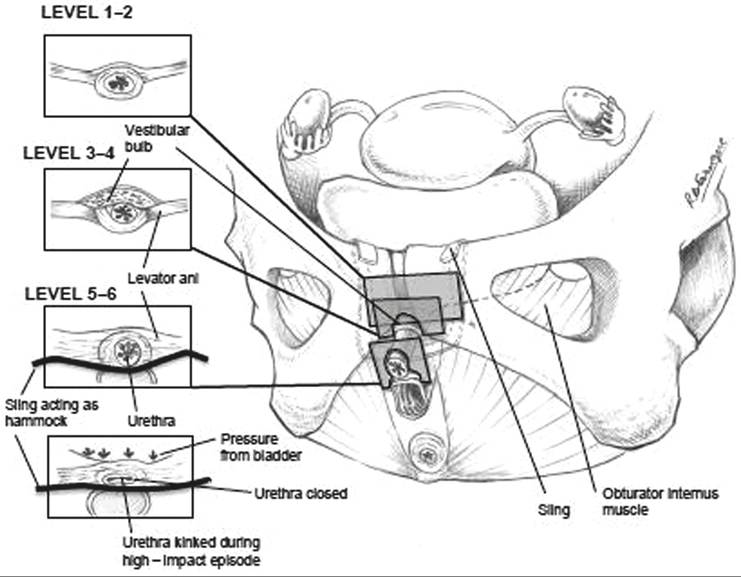
Figure 57.1 Anatomy of the urethra in relation to other pelvic structures.
3. MUI
4. Other:
a. Transient causes (‘DIAPPERS’):
Delirium
Infection—urinary
Atrophic urethritis and vaginitis
Pharmaceuticals
Psychologic disorders, especially depression
Excessive urine output (e.g. from heart failure or hyperglycaemia)
Table 57.1 Efferent pathways and neurotransmitter mechanisms that regulate the lower urinary tract
| Parasympathetic postganglionic axons | Acetylcholine | M3 muscarinic receptors | Bladder contraction |
| Parasympathetic postganglionic nerves | Release ATP nitric oxide | Excite bladder smooth muscle Relax urethral smooth muscle | |
| Sympathetic postganglionic | Noradrenaline | β3-adrenergic receptors | Relax bladder smooth muscle |
| neurons | Activates α1- adrenergic receptors | Contract urethral smooth muscle | |
| Somatic axons in pudendal nerve | Acetylcholine | Nicotinic cholinergic receptors | Contraction of the external sphincter striated muscle |
Restricted mobility
Stool impaction
b. Urethral diverticulum
c. Vesicovaginal fistula
d. Ectopic urethrae.
In this chapter, we shall be focusing on mainly three types of female urinary incontinence commonly encountered in clinical practice:
• UUI is the complaint of involuntary leakage accompanied by or immediately preceded by urgency.
• SUI is the complaint of involuntary leakage on effort or exertion, or on sneezing or coughing.
• MUI is the complaint of involuntary leakage associated with urgency and also with effort, exertion, sneezing, and coughing (9).