Raising awareness
The implementation of clinical governance entails not only embedding structures and processes for promoting quality of care but also shaping the thinking and behaviour of staff and enhancing their knowledge of issues pertaining to quality.
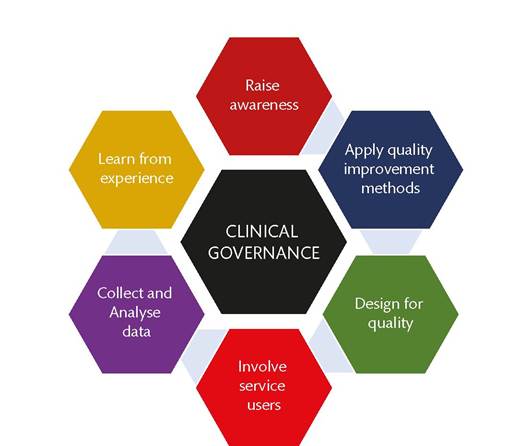
Figure 5.1 The domains of clinical governance.
Dimensions of quality
There are six dimensions of quality in healthcare and health systems (1, 2):
1. Effective—ensure that delivery of care is supported by evidence (see ‘Clinical effectiveness').
2. Efficient—deliver healthcare in a manner that optimizes the use of available resources and avoids waste.
3. Accessible—delivery care in a timely manner and ensure that service users can physically access this service without difficulty.
4. Patient focused—deliver care in a manner that takes account of the preferences and aspirations of individual service users and their culture.
5. Equitable—ensure that care does not vary in quality because of personal characteristics such as gender, race, ethnicity, geographical location, or socioeconomic status.
6. Safe—in the delivery of healthcare, ensure that the risk of harm to service users is minimized.
These should not be treated as stand-alone silos but as pieces of a jigsaw that fit together to constitute one entity.
Raising awareness of patient safety
Historically, the individual clinician at the sharp end was blamed when a patient safety incident occurred—this was the ‘person approach' to patient safety, which nurtured a culture of blame. With the emergence of risk management, there was a gradual shift from this approach to a ‘systems approach' in which causation of patient safety incidents is attributed not to individuals but to loopholes in the organization's defences. It is arguable that while the systems approach shuns the blame culture, it could shy from holding individuals accountable for patient safety.
A ‘bionomic' approach has been advocated as an alternative way of conceptualizing patient safety (3). This paradigm, which is adapted from ecosystems, places more emphasis on the relationships between the individual at the sharp end and other components of the system; the individual is seen as an intrinsic component of the system rather than an adjunct.
Conceptualizing patient safety in this way lays the foundation
for a fuller appreciation of the importance of human factors, non
technical skills, and safety culture in the delivery of safer healthcare.
Human factors and non-technical skills
The systems approach to patient safety has its roots in engineering where the ultimate aim is to optimize standardization and minimize reliance on fallible human effort. Interventions designed on this basis include guidelines and protocols, perioperative safety checklist (to ensure that the correct person has the correct operation at the correct site) and other checklists. In the bionomic approach, the value of checklists and protocols is recognized but emphasis is placed on individual and group attributes of the clinical team such as communication skills, leadership, teamwork, and situational awareness. Situational awareness is the attribute of being aware of what is happening in the environment; understanding the importance of ongoing events and making projections based on this understanding. A range of factors including fatigue, task saturation, miscommunication, and loss of attention could compromise situational awareness. Situational awareness is particularly important in high-risk, dynamic environments such as the operating theatre and the delivery suite (4).
These cognitive, social, and personal attributes are referred to as non-t echnical skills: they complement technical proficiency and are just as important. The term ‘human factors approach' is applied when these individual characteristics are combined with environmental, organizational, and task factors to understand, protect, and promote patient safety.
An example of how this approach can be applied in obstetrics and gynaecology was described by Stanhope and colleagues (5).Safety culture
An organization's safety culture is the totality of values, attitudes, competencies, and behaviours within the organization that reflect its commitment to the protection of patient safety. Clinicians should take it that they have a professional responsibility to nurture a culture of safety in their workplace. Tools and strategies have been developed for assessing and improving safety culture, but culture is a complex construct and the adoption of an integrated, multifaceted approach gives the best chances of success in shaping safety culture (6).
Resilience
Resilience is the ability of a team or organization to consistently maintain the quality of its performance in the face of evolving challenges and constraints. Policies, protocols, and guidelines have their use but resilience requires more than these (7). An organization that adopts the bionomic approach to quality, implements an integrated quality management programme (as facilitated by the RADICAL framework), and emphasizes organizational learning is likely to have a high degree of resilience.