Treatment methods
Destructive therapy
Popular in the United States during the 1970s and 1980s, cryotherapy was introduced into clinical practice by Crisp and colleagues (26) and has been used in many countries for several decades.
Where the equipment and gas supply is assured and when the preconditions for destructive therapy (Box 62.1) have been met it is a reasonable choice of therapy. It has few serious complications, and although described as causing relative discomfort it is usually well tolerated without the need for local infiltration so that it may be performed as an outpatient procedure or in a rural clinic. The capital equipment necessary is inexpensive, although the price of gas and the cost of transporting the gas cylinders are quite variable. Cryotherapy gas tanks are large and are heavy (10-15 kg) and thus difficult to transport. They require refilling relatively frequently. At a clinical level, the major disadvantage of cryotherapy, and all destructive techniques, is the lack of tissue to allow histological examination. Finally, cryotherapy treatment takes considerably longer (approximately 15 minutes from start to finish) than thermal coagulation or LLETZ, each of which may be completed in a minute or two, although local anaesthetic infiltration may add a minute to LLETZ. Cryotherapy had become very popular as part of a see-and-t reat approach to screening and management in many LMIC in the last decade but difficulties with maintaining a cheap and reliable supply of carbon dioxide has limited its popularity.Details of standards in cryocautery equipment and how to perform the procedure as well as details of sterilization procedures are contained in the World Health Organization technical specifications document ‘Cryosurgical equipment for the treatment of precan- cerous cervical lesions and prevention of cervical cancer' (27).
Thermal coagulation (aka cold coagulation)
Cold coagulation is a misnomer and should properly be called thermal coagulation.
The probe is heated electrically and reaches temperatures of 100-12O°C (28). It was named cold coagulation to discriminate it from radical diathermy which reached temperatures of 300°C. The method was introduced to clinical practice by Kurt Semm in Kiel in 1966 and was used widely throughout Europe in the 1970s and 1980s. Much of the published work on cold coagulation came from the United Kingdom, in particular from Ian Duncan's unit in Dundee (28-30). It was not widely used in North America where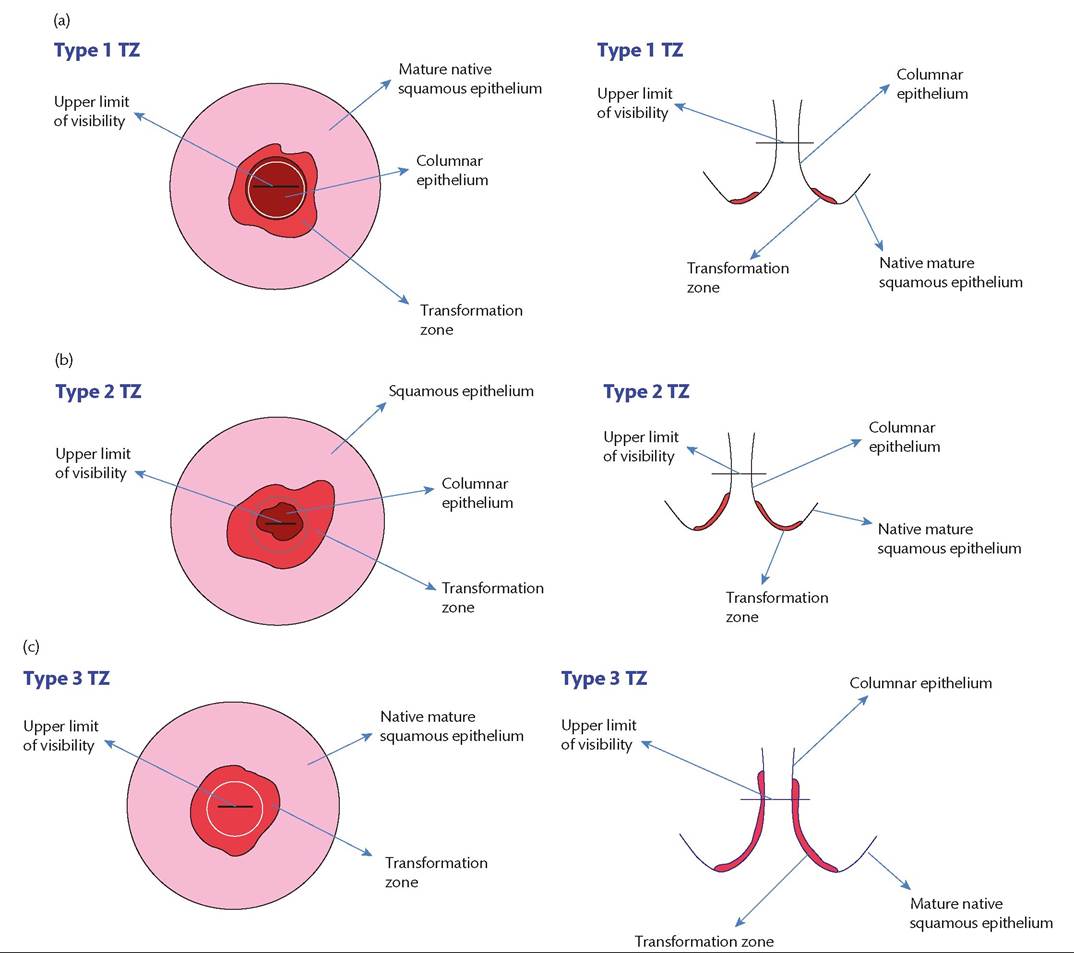
Figure 62.2 Illustration of global cervical cancer rates.
Reproduced with kind permission of Sankaranarayanan International Agency for Research on Cancer (WHO) Lyon, France 2016.
Table 62.2 The Swede score
| I0 I | F | F2 | Score | |
| Aceto uptake | Zero or transparent | Shady, milky (not transparent not opaque) | Distinct, opaque white | |
| Margins/surface | Diffuse | Sharp but irregular jagged 'geographical' satellites | Sharp and even difference in surface level including 'cuffling' | |
| Vessels | Fine, regular | Absent | Coarse or atypical | |
| Lesion size | <5 mm | 5-15 mm or 2 quadrants | >15 mm or 3-4 quadrants or endocervically undefined | |
| Iodine staining | Brown | Faintly or patchy yellow | Distinct yellow | |
| Total score | Maximum 10 |
Reproduced from Strander B, Ellstrom-Andersson A, Franzen S, Milsom I, Radberg T (2005).
The performance of a new scoring system for colposcopy in detecting highgrade dysplasia in the uterine cervix. Acta Obstet Gynecol Scand. 84(10):1013-1017 with permission from John Wiley and Sons.Table 62.3 Treatment choices for cervical intraepithelial neoplasia
| Technique | I Recommendation |
| Excision | |
| LLETZ (aka LEEP) | Universal application |
| Laser excision | Universal application |
| Straight wire excision (SWETZ) or needle excision (NETZ) | Some type 2 or 3 TZs Glandular disease Suspicion of microinvasion |
| Hysterectomy | Rarely appropriate |
| Cold knife conisation | Suspicion of glandular disease or microinvasion |
| Destruction | |
| Thermal coagulation | CIN grades 1 and 2 All type 1 TZs Some type 2 TZs No suspicion of cancer, glandular disease, previous treatment, or uncertainty about the grade of abnormality |
| Laser ablation | As for 'Thermal coagulation' |
| Cryocautery | As for 'Thermal coagulation' |
cryocautery and then laser ablation were the destructive methods of choice. With thermal coagulation the intracellular water reaches boiling point and the cells necrose. It achieves tissue destruction to a depth of 4-7 mm (31). The method fell out of popularity (32) when LLETZ was introduced but is now being reconsidered because of its apparent advantages over cryocautery and because excisional techniques are not considered feasible in remote regions by relatively untrained staff in poorly equipped facilities without the necessary additional resources (e.g.
histopathology services and the very occasional need for general anaesthesia). Thermal coagulation has better success rates than cryosurgery, is quicker to perform with similarly low complication rates, and does not require refrigerated gas. The procedure takes less than 2 minutes to complete and is usually performed without either general or local anaesthesia, it appears to be well tolerated. Finally, although the energy is produced electrically, newer thermal coagulation units are battery operated and can provide sufficient battery power for 30 procedures before recharging is necessary.Box 62.1 Conditions for destructive treatment
• The TZ must be fully visible (i.e. type 1 or 2 TZ) and accessible (type 1 or shallow type 2 TZ).
• The TZ must be small enough to be covered by the destructive method probe.
• Invasive disease must be ruled out.
• There should be no suspicion of glandular disease.
• There should be no disparity between cytology and colposcopy.
• There should not have been a previous treatment of the cervix.
• There should not be upper or lower genital tract infection (relative contraindication).
• The patient should not be pregnant.
• The patient if recently pregnant should be greater than 3 months postpartum.
Excisional methods
There are several ways of removing the TZ and these include hysterectomy, cold knife excision (aka cone biopsy), laser cone, LLETZ, and other variations of electrosurgical excision, for example, straight wire excision of the transformation zone (SWETZ) which is an alternative to LLETZ, laser, or cold knife excision when performing a type 3 excision (33).
Although hysterectomy is widely used as a method of excising CIN this is nearly always inadvisable. For women with precancerous lesions, hysterectomy offers no advantage to local excision of the lesion and for those women in whom unsuspected invasive disease is revealed at hysterectomy, the patient will have been poorly served.
After a simple hysterectomy it is not possible to offer the appropriate radiotherapy regimen and radical hysterectomy is also not possible.Cold knife cone biopsy
The oldest method of local excision, cold knife cone biopsy, is still widely used, especially where colposcopy facilities and or expertise is not available. The technique leaves a relatively large cervical defect and will often remove more tissue than is necessary. The procedure is usually performed under general anaesthesia. A suture or sutures are often used to achieve post-excision haemostasis. It is associated with well-recognized short- and long-term complications including primary and secondary haemorrhage, cervical stenosis, and incompetence. It may be worth considering cold knife excision for a type 3 excisions with glandular or microinvasive disease. But otherwise cold knife excision has no advantage over LLETZ or laser excision and is associated with greater morbidity and long-term pregnancy- related complications than the other excisional techniques (34).
Large loop excision of the transformation zone
LLETZ is the term coined in the early 1980s to describe excision of the TZ using a low-voltage diathermy loop of thin wire usually with blended diathermy under local anaesthetic cover. The term was coined to discriminate it from the small loops which Rene Cartier used for taking biopsies and it is from his technique that LLETZ (aka LEEP) was developed. It was developed in Bristol (United Kingdom) in the early 1980s (35). LEEP is a term that was introduced after the introduction of LLETZ to the United States and was purportedly coined to describe loop electrosurgical excisions of the TZ and for other lower genital tract lesions. In truth, it is identical to LLETZ.
Principles of electrosurgery
Electrosurgery has been used for over a century to both cut and coagulate tissue. The discovery by Faraday that muscle doesn't contract when contacted by very high-frequency alternating current (i.e.
>100 kHz) means that it is possible to perform safe passage of electricity through controlled circuits in the human body and to utilize the localized point of contact effect to achieve cutting or coagulation or a combination (blend) of the two. Electrosurgical energy operates at frequencies of over 300 kHz.The technique is simple and easy to learn, but is best learned in vitro using moist ox tongue or some other meat or electroconductive tissue (e.g. Play-Doh).
The technique of LLETZ (aka LEEP) has been described elsewhere (35). After removing the TZ it should be transferred to the attendant who may transect it and pin it to a cork board before immersion in
at risk of persistent/recurrent disease (42, 43). Post-treatment HPV testing is the most sensitive test, has the best negative predictive values, and is the best test of cure.
Complications after LLETZ
In the short term, complications after LLETZ are mild. These include light per vaginal bleeding, mild discomfort, and a little discharge. The bleeding during the first 2 or 3 weeks is not usually more than at normal menstruation. This is providing the cervix was not inflamed at the time of LLETZ. Severe bleeding or symptoms suggestive of a secondary infection (bleeding greater than that seen during menses, discharge, pain) are uncommon and should precipitate immediate return to the clinic service.
It is entirely biologically plausible that excision of part of a reproductive organ is likely to compromise its function. Since Kyrgiou et al.'s review in 2006 there has been a plethora of publications reporting conflicting evidence about the risk of premature labour after excisional treatment for cervical precancer. The most recent review of the evidence would suggest that removing a small type 1 TZ is associated with an insignificant increase in subsequent pregnancy- related complications whereas removing a large amount of tissue using any method will cause a significant increase in subsequent pregnancy-related complications (34, 36-39).
The type 3 excision
Although type 3 excisions, especially large ones (37), are associated with an increase in the risk of subsequent pregnancy-related complications (primarily premature labour), they are sometimes necessary. Examples would include the type 3 TZ with suspected HSIL, glandular disease, or even suspected microinvasion. Performing a type 3 excision is not as simple as a type 1 excision and may require general anaesthesia, depending on how large and how long the excision needs to be, access to the cervix, and patient compliance. Sometimes a large long loop will be perfectly adequate, sometimes a straight wire excision (SWETZ), although this takes longer (33). Finally some colposcopists (but not the author) prefer to remove the type 3 TZ by way of a ‘top hat' technique whereby the TZ is removed in two pieces. After the initial pass removes the ectocervical component, a second and smaller loop removes the upper part of the endocervial TZ.
The evidence from the 29 randomized controlled trials in the Cochrane meta-analysis (40) suggests that there is no overwhelmingly superior surgical technique for eradicating CIN except that cryotherapy appears to be a relatively ineffective treatment of high grade disease.