Adapting Recreation Opportunities
Camping
Camping, mountaineering, and hiking are among the many outdoor adventure activities available to children with disabilities. The National Park Service maintains information on park accessibility and amenities across the United States.
The America the Beautiful—National Parks and Federal Recreation Lands Pass is available to any blind or permanently disabled U.S. citizen/per- manent resident, and allows free lifetime admission to all national parks for the individual and up to three accompanying adults. Accompanying children under the age of 16 are free. It is obtained at any federal fee area or online at http://store.usgs.gov/pass and allows a 50% reduction in fees for recreation sites, facilities, equipment, or services at any federal outdoor recreation area.Boy and Girl Scouts of America each run inclusion programs for children with disabilities. Opportunities also exist in dozens of adventure and specialty camps across the United States. Some are geared to the disabled and their families, allowing parallel or integrated camping experiences for disabled children. Participation requires few adaptations, and the Americans with Disability Act has been instrumental in improving awareness in barrier-free design for trails, campsites, and restrooms. Parents should evaluate the camps in regard to the ages of the participants, medical support, and cost. Often, camps are free or offer scholarships and may provide transportation. Some camps will have diagnosis-specific weeks, such as CP, spina bifida, muscular dystrophy, and so on. A nice summer camp resource is www.mysummer- camps.com.
There are accessible recreational vehicles (RVs) available for rent as well as purchase. Many manufacturers will customize their RVs during the production process. A number of travel clubs exist across the United States and have Web sites giving information on accessible campsites with an RV in mind.
In addition, many have annual gatherings of their members at a chosen campsite. One good Web site is www. handicappedtravelclub.com.Fishing
Fishing can be enjoyed by virtually anyone, regardless of ability. One-handed reels, electric reels, and even sip-and-puff controls allow independent participation. A variety of options exist for grasping and holding rods as well. These range from simple gloves that wrap the fingers and secure with Velcro or buckles to clamps that attach directly to the rod, allowing a hand or wrist to be slipped in. Harnesses can attach the rod to the body or to a wheelchair, assisting those with upper limb impairments. There are devices that assist with casting as well for individuals with limited upper body strength or control. Depending on the level of expertise and participation of the fisher, simple or highly sophisticated tackle can also be had (84,85).
Both land and sea fishing opportunities are accessible to the disabled. Piers are usually ramped and may have lowered or removable rails for shorter or seated individuals. Boats with barrier-free designs offer fishing and sightseeing tours at many larger docks. These offer variable access to one or all decks, toilet facilities, and shade (84).
Hunting
Adaptations to crossbows and rifles have made hunting accessible for many. The crossbow handle and trigger can be modified for those with poor hand function. Stands for rifles and crossbows are also available for support. Many hunting ranges have incorporated wheelchair-accessible blinds.
Dance
Dancing has become more popular in the able-bodied and disabled populations over the past 10 years. The wheelchair is considered an artistic extension of the body, and many dances have been adapted for the movement of the wheels to follow the foot patterns of classical ballroom dancing. Wheelchair dancing was first begun in 1972 and pairs DA and AB individuals in a variety of dances. Recreational opportunities and competition are available in many states, with classes including duo-dance featuring two wheelchair dancers together, group dancing of AB and wheelchair competitors in a synchronized routine, and solo performances.
Wheelchair dance sport has been a recognized sport within the Paralympics since 1998, although it is not currently included in the program. International competition in wheelchair dance has been around since 1977. In addition, ballet, jazz, and modern dance companies offer inclusion for children with disabilities.Martial Arts
Martial arts classes will include children with a variety of disabilities. The classes can be modified to allow skills at the wheelchair level in forms, fighting, weapons, and breaking. Children are taught self-respect, control, and can advance through the belt system. They are also taught basic self-defense in some settings. There are many different styles of martial arts, and parents should check within their communities for available resources. Equipment adaptations are not needed for this activity.
Scuba and Snorkeling
Freedom from gravity makes underwater adventure appealing to individuals with mobility impairments. Little adaptation to equipment is needed to allow older children and adolescents with disabilities to experience the underwater world. Lower limb-deficient children may dive with specially designed prostheses or with adapted fins, or may choose to wear nothing on the residual limb. Similar to those with lower limb weakness or paralysis, they may use paddles or mitts on the hands to enhance efficiency of the arm stroke. Of particular importance is the maintenance of body temperature, especially in individuals with neurologic disability, such as spinal cord injury or CP. Wet or dry suits provide insulation for cool or cold water immersion. They also provide protection for insensate skin, which can be easily injured on nonslip pool surfaces, coral, and water entry surfaces.
It is crucial that individuals receive proper instruction by certified dive instructors. Most reputable dive shops can provide information and referral. The Handicapped Scuba Association is an excellent reference as well. Disabled divers are categorized based on level of ability.
They may be allowed to dive with a single buddy (as with AB divers), two buddies, or two buddies of which one is trained in emergence rescue techniques. Although there is no particular exclusion from diving based solely on disability, a number of medical considerations may preclude scuba diving, including certain cardiac and pulmonary conditions, poorly controlled seizures, and use of some medications. Discussion with the primary care physician and with dive instructors should precede enrollment or financial investment. Scuba diving has also been used as adjunctive therapy in acute rehabilitation programs (86).Music
Music has been used both as a therapeutic tool and as a means of artistic expression. Attentive behavior was increased in children with visual impairments who participated in a music program (87). There are many options for children who want to play music. Adaptations may be as simple as a universal cuff with a holder for drumsticks or as sophisticated as a computer program to put sounds together to form a musical piece. Two such computer programs are Fractunes and Switch Ensemble. Drumsticks can have built-up rubberized grips. Straps or a clamp may be used to hold a smaller drum onto a wheelchair for a marching band. Woodwind and brass instruments can be fitted with stands and finger pieces adapted for one-handed playing. Mouthpieces may have different angulations to allow easier access for those who have trouble holding the instrument. Some musical instrument makers, including Flutelab (www.flutelab.com), have become quite creative in how they can adapt their instruments. Other individuals have learned to play instruments such as the guitar with their feet (Fig. 5.3).
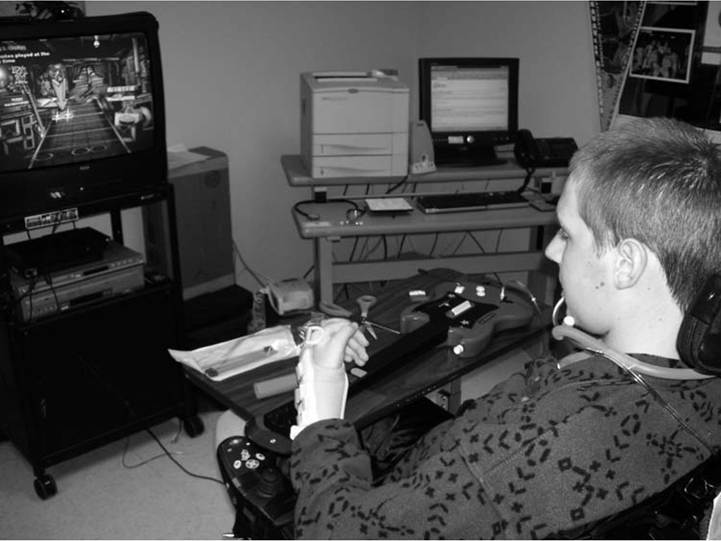
Figure 5.3 Musical instruments and their video game likenesses may be adapted for use by those with limited strength.
Hippotherapy and Horseback Riding Therapy
Therapeutic horseback riding, or hippotherapy, has been popular in Europe since the 1950s and spread to the United States in the late 1960s.
It uses the rhythmic motions and warmth of the horse to work on the rider's tone, range of motion, strength, coordination, and balance. The movement of the horse produces a pattern of movements in the rider that is similar to human ambulation (88). The rider may sit or be placed in various positions on the horse's back or, alternatively, may perform active exercises while on horseback.There are two recognized treatment options: instructor-directed, recreational horseback riding therapy (HBRT) and licensed therapist-directed hippotherapy. HBRT is directed by nontherapist riding instructors and assistants, and follows the North American Riding for the Handicapped Association's (NARHA) curriculum for riding therapy. It encourages the development of sensorimotor and perceptual motor skills, utilizing the developmental riding therapy methods described by Spink (89). Children are challenged to maintain balance and posture in all body positions as the horse walks and the instructor encourages them to reach and use their upper limbs in a variety of exercises (90). Hippotherapy is directed by a licensed health professional and focuses treatment based on the impairment and functional limitations of children with neuromuscular dysfunction. The horse is considered a therapeutic tool to improve language or gross motor function, including walking, posture, balance, and mobility (91).
Children with any of a variety of disorders that affect muscle tone, strength, or motor skills may benefit from this form of therapy. These disorders include but are not limited to CP, myelodysplasia, cerebral vascular accident, traumatic brain injury, spinal cord injury, amputations, neuromuscular disorders, and Down's syndrome. A careful screening of individuals with spinal pathology should be performed to rule out instability prior to participation. This screening includes the Down's syndrome population, in whom 15% to 20% has atlantoaxial instability (92). In addition, children with a poorly controlled seizure disorder may be excluded.
Cognitive or behavioral impairments should not be so severe that they place the rider or others at risk.Many potential physical, cognitive, and emotional benefits of hippotherapy have been reported. These include improvements in tone, posture, balance, strength, gait, hygiene, attention, concentration, language skills, self-confidence, and peer relations (88,93) Most studies have evaluated the effect on the CP population and children with developmental disabilities. Benda et al noted improvements in back and hip muscle symmetry using remote surface electromyography in children with CP following an eight-minute training session on the horse, as compared to children who sat for eight minutes on a barrel. Unfortunately, the study did not evaluate if these improvements persisted once therapy was completed (94). Sterba studied the effect of an 18-week training session of riding three times a week on children with different types of CP. Significant improvements in the Gross Motor Function Measure (GMFM) were reported. Progress was noted in all dimensions of the GMFM: lying and rolling; sitting; crawling and kneeling; standing; and walking, running, and jumping during therapy. At six weeks following completion of the program, only dimension E (walking, running, and jumping) had continued improvement, with the other domains returning to baseline (95). In a separate area of study, boys with attention-deficit hyperactivity disorder (ADHD) and/or learning difficulties demonstrated decreased frustration, physical aggression, and difficulties with authority relations after participating in HBRT (96).
Resources
North American Riding for the Handicapped Association (NARHA)—www.narha.org
Aquatic Therapy
Water has been an important therapeutic medium for centuries. In pool therapy, the water's intrinsic buoyancy nearly eliminates the effects of gravity. Therefore, less effort is required for movement and the weight borne on the limbs is minimized. As recovery progresses, activity in the water can be graded to provide varying amounts of resistance. The water temperature can also be therapeutic, with warmer water producing muscle relaxation. Finally, children often view the pool as fun rather than therapy and are often encouraged by the ability to perform movements in the water that they are unable to do on land (97).
The most common indication for pool therapy is muscle weakness, although gains are also noted in range of motion, coordination, endurance, and normalization of tone. It has been recommended for children with CP, neuromuscular disorders, spinal cord injuries, myelodysplasia, arthritis, brain injury, stroke, burns, fractures, and even asthma (97). Children as young as neonates may benefit (98). Aquatic therapy, however, is not indicated for everyone. Caution should be used in children with hypertension or hypotension, open wounds, infective skin lesions, fever, or temperature instability (97). It is contraindicated for children with uncontrolled seizures or excessive fear of the water, or whose cognitive status poses a safety risk for themselves or others.
There are a variety of approaches in aquatic therapy, including Bad Ragaz, Watsu, Halliwick method, Sequential Swim Techniques (SST), and task-specific approaches (99,100). Bad Ragaz is based on proprioceptive neuromuscular facilitation using active and passive techniques (101). The Watsu approach is an energy-release technique in which a body segment is moved while the rest of the body is allowed to drag through the water, thus providing stretch (102). The Halliwick method and SST work on distinct movement patterns with a specific goal, such as swimming. The task-specific approach includes activities such as ambulation (103).
A review of the literature supporting aquatic therapy in children contains little Class 1 evidence. Most studies are small in sample size and fall within level 4 and 5 evidence (104). One study with Class 2 evidence demonstrated improved vital capacity and water orientation skills (standing in the water, floating, and swim positions) in kindergarteners with CP who participated in a six-month aquatic program compared to controls in a land-based program (105). In a recent study by McManus et al, children between the ages of 6 and 30 months with delayed functional mobility completed an aquatic therapy program as part of early intervention (EI). There was a significant improvement in motor skills compared to the control group, who received traditional EI therapy services based on the Gross Motor Subsection of the Mullen Scales of Early Learning. The study was limited by the sample size, variety of diagnoses, and the lack of more accepted testing as accomplished by the GMFM or Peabody (106). The adult literature has more evidence-based support of aquatic therapy, and the same types of studies will need to be replicated in the pediatric population.
Aquatic therapy programs are now offered through many hospital programs as well as local facilities such as the Young Men's Christian Association (YMCA) and Young Women's Christian Association (YWCA).
Yoga/Tai Chi Chuan
Yoga is a mind-body movement therapy with the following components: body mechanics, including breathing skills (pranayama) and simple postures (yogasanas); fitness (sithilikarana, vyayama, and suryanamaskar); and meditation. It has been demonstrated that physiologic changes in the body can be achieved through breathing manipulation, postures, and cognitive control (107,108). There are many different types of Hatha yoga currently being practiced in the United States, each with a different emphasis on the various components.
Studies in the pediatric population have focused primarily on typically developing children, although some have evaluated the effect on those with mental retardation, ADHD, visual impairment, physical impairment, and asthma. The current research has been classified at the 2B level or lower. Primary drawbacks in the studies have been the lack of randomized controlled studies, absent or poor reporting of adverse events, and the wide variety of Hatha yoga protocols used for treatment (109). The existing literature suggests that there can be improvements in mental ability, such as attention, motor coordination, emotional control, and social skills, in children with ADHD or mental retardation (107,110). There was a positive impact in typically developing children on spatial memory, reaction time, motor planning, motor speed, heart rate, and focused attention (109). Children with visual impairments demonstrated less anxiety and children with physical impairments regained some functional ability, with improved flexibility and balance (111). Children with asthma improved their forced expired volume (FEV), peak flow rate, and distance walked in a 12-minute time period, as well as reported decreased symptoms and medication use (112,113).
Tai chi chuan, or tai chi, has been practiced in China for centuries and has recently gained popularity in the United States. It is a low-intensity exercise with flowing, controlled movement patterns emphasizing semi-squatting postures, balance, relaxation, flexibility, and regulated breathing. Like yoga, it works to balance the mind and body. There are various styles, including Chen, Yang, Wu, and Sun (114).
Most studies of tai chi have been completed in the elderly population and suggest some benefit for overall balance and prevention of falls, strength, flexibility, reduction of blood pressure, memory, and emotional well-being, with decreases in depression and anxiety (114,115). Studies in the treatment of rheumatoid arthritis have been limited by poor methodological quality, and do not definitively support the use of tai chi as a treatment (116). In their review of the literature, Lee et al discussed the possible adverse effects of increased pain in the knee, shoulder, and back, yet acknowledge possible improvements in disability index, quality of life, depression, and mood in the rheumatoid population. There are few studies in the pediatric population. One study presented by Yu-Feng Chang et al. noted improvements in asthmatic children in their forced vital capacity (FVC), FEV1, and peak expiratory flow at rest and post-exercise after completing a 12-week tai chi program. There was no significant change in their reported symptoms when compared to the control group (117). Further studies are needed to delineate the benefit of this therapy in the pediatric population.