Sports for Fun and Competition
Archery
With the exception of the adaptive equipment, archery is essentially unmodified. It is a popular recreational and competitive activity in which individuals with virtually any disability can participate (Fig.
5.4).Equipment
Trigger release or release cuff: Designed for individuals with a poor grasp or weakness, it assists in the smooth draw and release of the bowstring. Its use is permitted in sanctioned competition only by those with tetraplegia from cerebral palsy or a spinal cord injury.
Wrist and elbow supports: Provide support and stability for the bow arm.
Standing supports: Give the wheelchair user a choice between sitting and standing while shooting.
Bow supports: Provide support and stability of the bow for individuals with weakness or a poor grasp. Its limited use is permitted only in USCPAA competition.
Crossbows and compound bows: For recreational use primarily, although compound bows are allowed in USCPAA competition.
Mouth pieces: Allow archers with upper extremity impairments to draw the bow string with the mouth (36).
Resources
Physically Challenged Bowhunters of America, Inc.: http://pcba-inc.org
Grand National Archery Society (UK): www.gnas.org U.S. Disabled Archery Team: www.da-usa.org
Baseball
Miracle League is a program facilitating participation of disabled children in a baseball-like activity. In Miracle League play, every player bats once per inning, all base runners are safe, each player scores a run before the inning is over, and the last batter up gets a home run. AB peers and community volunteers assist DA players. Each team and each player wins every game. Another form of the sport is Push N Power Baseball, which utilizes hockey sticks and balls in combination with traditional baseball rules. When unable to catch, pass, or pick up the ball, verbal responses are substituted.
Little League baseball also has a division called Challenger, which encourages participation by cognitively and physically challenged children. Teams may have up to 20 players, and may be played as Tee Ball, coach-pitched, or player-pitched.Equipment
Sports wheelchair, baseball, glove
Super Sport: Upper extremity prosthesis designed for ball sports (37)
Unihoc hockey sticks and balls
Resources
Miracle League: www.miracleleague.com
Push N Power Baseball rules: http://www.geocities. com/CollegePark/Lab/5515/BASEBALL.html
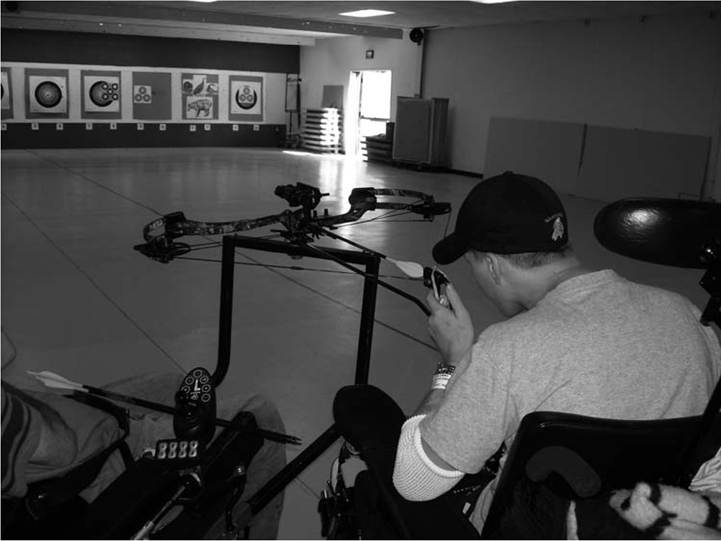
Figure 5.4 Minor adaptations allow participation in bow sports.
Little League: http://www.littleleague.org/Learn_More/ About_Our_Organization/divisions/challenger.htm
Basketball
Basketball may be played either as an ambulatory or a wheelchair sport. Teams of five play on a regulation basketball court following National Collegiate Athletic Association (NCAA) rules, with only slight modifications to accommodate the wheelchairs. The National Wheelchair Basketball Association (NWBA) uses a classification point system during competition. A junior program was developed by NWBA with four divisions, each having different age requirements, ball sizes, court measurements, time restrictions, and basket heights. It is a popular sport spanning all disabilities. Adapted versions with no contact, no running, no dribbling, and/or lower baskets are useful for developing skills (36).
Equipment
Sports wheelchair, basketball
Super Sport: Upper extremity prosthesis designed for ball sports
Resources
National Wheelchair Basketball Association: www. nwba.org
International Wheelchair Basketball Federation: http:// iwbf.org
Bowling
Recreational bowling may include the use of standard lanes with gutter guards (bumpers) and the use of lighter-weight balls. Rules for competitive bowling may be divided into three divisions: AWBA, Special Olympics, and USCPAA.
Lane measurements, rules, and bowling balls are the same as in the AB population under the AWBA. However, assistive devices, such as a handle ball, bowling stick, and bowling prosthesis, are allowed. Under the Special Olympics, target bowl and frame bowl are also allowed. Target bowl uses regulation pins, a two-pound bowling ball, and a carpeted lane that is half the regulation length. Frame bowl uses plastic pins and ball and a shortened lane. Under the USCPAA, there are four divisions with a ramp or chute allowed. Other rules follow the AWBA recommendations.Equipment
Handle ball: A bowling ball with a spring-loaded retractable handle for individuals with poor finger control.
Bowling stick: A two-pronged stick similar in appearance to a shuffleboard stick.
Bowling ramp/chute: A wooden or metal ramp from which bowlers can push the ball down using their hands, feet, or a head stick.
Bowling prosthesis: Attaches to a standard prosthetic wrist and fits into one of the holes of the bowling ball. It has a release mechanism activated by stretch on the expansion sleeve.
Resources
American Wheelchair Bowling Association: http:// awba.org
Cycling
Cycling is immensely popular as both a recreational and competitive activity. A variety of adaptations are possible to make cycling accessible to a whole range of abilities. Children’s tricycles may have blocks, straps, or shoe holders attached to pedals. Backrests and harnesses can be added to the seat to aid in positioning and stability. Adult-sized tricycles can be similarly adapted (Fig. 5.5). Specialized terminal devices for upper limb prostheses make grasping handlebars easier, and both brakes can be controlled by one hand for safety. Recumbent cycles afford maximum trunk support for recreational use by those with poor balance as well as by AB riders. Arm-driven units, which attach to the front of a wheelchair frame, are available with as anywhere from 3 to 48 speeds. Finally, a variety of tandem cycles or tandem conversion kits are on the market.
These range from simple tandems to hybrid hand and leg cycles that allow DA and AB to ride together.Handcycles are arm-driven cycles with rowing or push-pull drives that assist individuals with lower limb impairment or absence. While used for recreation as well, competitive cycling is a rapidly growing sport. Handcycle races may be held in isolation or in combination with bicycling races. In 2004, handcycling was introduced as a Paralympic sport; triathlons that combine swimming, wheelchair racing, and handcycling are increasingly including junior competitors.
Resources
United States Handcycling Federation: http://www. ushandcycling.org
Adaptive Adventures: www.adaptiveadventures.org World Handcycling: www.worldhandcycling.com
Football (American)
Rules for wheelchair football vary from league to league. There is one national competition, the Blister Bowl, which is held in California. There are six players per team, one of whom must be female or tetraple- gic. The asphalt field measures 60 by 25 yards and is divided into 15-yard segments. Play follows NCAA rules and is similar to touch football, with players advancing the ball by running or passing. All players
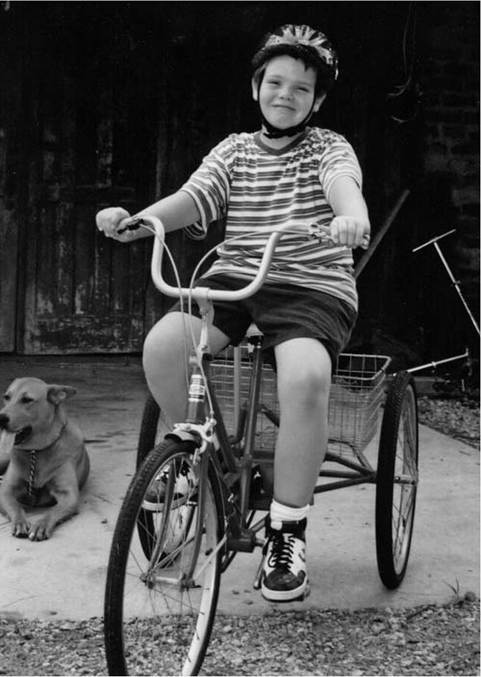
Figure 5.5 An adult-sized tricycle allows a disabled child to join on family rides.
are eligible receivers. Four 15-minute quarters are played. Participants primarily include individuals with amputations, CP, spinal cord injury, and les autres. Wheelchair football is not yet recognized as an “official” sport. The game also may be played on a basketball court indoors.
Equipment
Sports wheelchair, regulation football
Resources
Universal Wheelchair Football Association: http:// www.rwc.uc.edu/kraimer/PAGE1.HTM
Hockey
Floor hockey is, in some respects, similar to ice hockey. It is played in a gymnasium with a minimum playing area of 12 ? 24 meters and a goal at each end. Teams are composed of six players, who play three nine- minute periods.
The puck is a felt disc, and hockey sticks are wood or fiberglass rods. Games may be either ambulatory or played from wheelchairs. A similar sport, poly hockey, uses a hard plastic puck, a smaller plastic version of the conventional ice hockey stick, and a playing area measuring 12 ? 24 meters at a maximum. Canada has further developed a version for power wheelchair users using a three-inch plastic ball rather than a puck and following National Hockey League (NHL) rules. Sledge hockey (sled hockey in the United States) is played on a regulation-sized ice rink using a standard puck or small ball and short sticks called pics. Players are seated on a sledge, which is an oval-shaped frame with two skatelike blades and a runner. Pics are used to propel as well as to advance the puck or ball (Fig. 5.6).Equipment
Hockey sticks/pics, puck/ball, goals, helmet, knee pads, elbow pads, shin guards, sled
Resources
United States Sled Hockey Association: www.usa- hockey.com/ussha
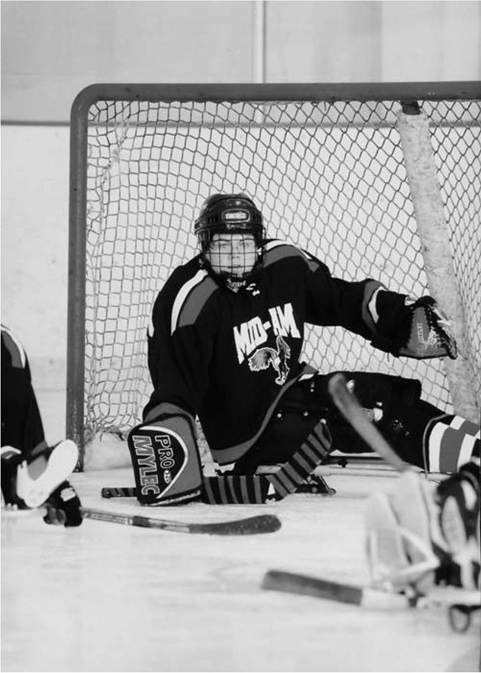
Figure 5.6 Sled hockey is as fast-paced and thrilling as its ablebodied counterpart.
Quad Rugby
Quad r ugby combines aspec ts of basketba l l, hockey, and soccer into an exciting sport developed for tet- raplegic individuals. It is played with a volleyball on a regulation-size basketball court with goals at both ends measuring 8 ? 1.75 meters. Teams consist of four players in manual wheelchairs, who play four eight-minute quarters. Players are classified from 0.5 to 3.5 in 0.5 increments, based on increasing arm function and trunk control. The combined point value of players on the floor may not exceed 8.0 at any time. The ball must be advanced over midcourt within 15 seconds of possession, and the ball must be bounced or passed within 10 seconds. A goal is scored when two of the player's wheels cross the goal line with the volleyball under control. Penalties may result in loss of possession or a trip to the penalty box, depending on the infraction.
Equipment
Volleyball, gloves, straps (trunk, legs, feet)
Quad rugby wheelchair: Must have antitippers
Resources
International Wheelchair Rugby Federation: www. iwrf.com
Canadian Wheelchair Sports Association: www.cwsa.ca United States Quad Rugby Association: www.quad rugby.com
Racquetball
Racquetball may be either an ambulatory or a wheelchair sport. It is played on a regulationsize racquetball court and follows the rules of the American Amateur Racquetball Association. There are novice, intermediate, open, junior, two-bounce, and multiple-bounce divisions. It is recommended that players using wheelchairs equip their chairs with roller bars or wheels under the footrest and with nonmarking tires. Racquetball is another of the sports in which DA and AB players can play side-by-side.
Equipment
Standard racquet: A built-up grip or wrapping the handle to the player's hand may be required for those with grip difficulties.
Standard balls, lightweight sports wheelchair
Resources
USA Racquetball: www.usra.org
Road Racing
As running has increased in popularity as a recreational and competitive sport, DA athletes have formed their own running clubs and begun to participate in a variety of road races. Training is usually done on the road or a track. For the wheelchair road racer, rollers are also available. The racing chair is placed on the rollers allowing for free-wheeling and training indoors. The rules for road racing are no different between the AB and DA populations: Whoever crosses the finish line first, wins. DA athletes are placed in functional classes to make the competition more equitable. Power wheelchairs are not permitted in competition. Distances range from the one-mile fun runs to full marathons. Many of the well- known AB marathons now include one or more wheelchair divisions. The longest wheelchair race to date is the Midnite Sun Wheelchair Marathon, which covers 367 miles from Fairbanks to Anchorage, Alaska.
Equipment
Sports wheelchair: Customized racing wheelchairs are available for serious athletes; three-wheelers are most popular.
Gloves
Resources
DS/USA: www.dsusa.org
Cerebral Palsy International Sports and Recreation Association: www.cpisra.org
BlazeSports www.blazesports.org
Wheelchair Sports USA: www.wsusa.org
Adaptive Adventures—www.adaptiveadventures.org
Skiing: Alpine
In the past 30 years, adaptive skiing has grown immensely in popularity. With the advances in adaptive equipment, all disability groups can participate in this sport. Skiing techniques include three-track, four-track, and sit skiing. Three-trackers use one ski and two outriggers, thus creating three tracks in the snow. Outriggers are essentially modified Lofstrand crutches with short skis attached with a hinge. They provide additional balance and steering maneuverability. Single-leg amputees and individuals with hemiplegia are often three-trackers. Four-trackers use two skis and two outriggers. In those with spasticity or poor leg control, a ski bra can be attached to the ski tips. This will prevent the ski tips from crossing. Individuals with muscular dystrophy, spina bifida, paraplegia, and CP typically use four-track skiing. Sit skiing utilizes a mono-ski or bi-ski and two outriggers. All disability groups can sit ski. A tether, which allows the instructor to slow the skier down, is required until the sit ski is mastered. Tethers can also be beneficial during instruction in the ambulatory population. Competitive racing includes slalom and downhill courses.
Equipment
Outriggers, skis, ski bra, ski boots
Ski hand/All-Terrain Ski Terminal Device: specialized terminal device for upper limb amputees
Ski leg: A variety of ski-specific lower extremity pros- theses are available.
Resources
United States Ski and Snowboard Association: www. ussa.org
U.S. Ski Team: www.usskiteam.com
Ski Central: http://skicentral.com
Sitski: www.sitski.com
Skiing: Nordic
Standing skiers can often participate in Nordic (cross country) skiing with standard equipment, sometimes modified to accommodate prostheses or braces. Sit skis are also available as in alpine skiing, although the ability of the participant to self-propel is often limited by the weight of the equipment. Tethers may be used to assist in forward movement. Biathlon is a sport consisting of cross-country skiing and target shooting.
Equipment
Outriggers, skis, ski boots, sit ski
Ski hand/All-Terrain Ski Terminal Device: specialized terminal device for upper limb amputees
Ski leg: A variety of ski-specific lower extremity pros- theses are available.
Resources
United States Ski and Snowboard Association: http:// www.ussa.org
U.S. Ski Team: www.usskiteam.com
Soccer
There are very few modifications to the actual game, and the rules of the United States Soccer Federation are followed. The modifications include seven players on a team, a smaller field measuring 80 ? 60 meters, and occasionally, a smaller goal. These modifications result from fewer participants in a given area. A smaller goal is indicated in the CP population in whom mobility impairments make a larger goal more difficult to defend. Crutches have been allowed for some competitors with lower extremity amputations who do not use a prosthesis (Fig. 5.7).
Equipment
Regulation-size soccer ball
Super Sport: Upper extremity prosthesis designed specifically for ball handling
Resources
American Amputee Soccer Association: www.ampso ccer.org
Top Soccer: www.usyouthsoccer.org/programs/TOP Soccer.asp
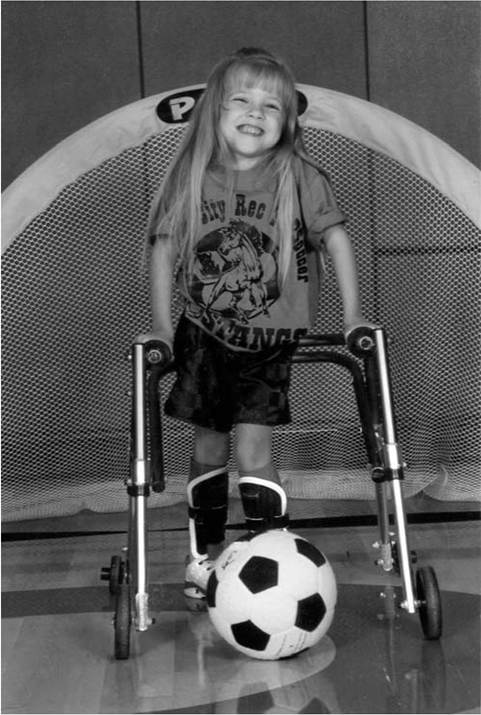
Figure 5.7 Soccer can be played by ambulatory children with gait aids, or by power-wheelchair users utilizing larger balls at indoor facilities.
Softball
Dwarf softball is played according to the rules of the Amateur Softball Association without any modifications. The Special Olympics offers a variety of competitive events, including slow-pitch softball and tee-ball. Wheelchair softball is also available primarily for individuals with spinal cord injuries, amputations, CP, or les autres conditions. It is played on a hard surface with the pitching strip 28 feet from home base and other bases 50 feet apart. Players must use a wheelchair with a foot platform and are not allowed to get out of their chairs. Ten players make up a team, and one of the players must be tetraplegic. The WS/USA point classification is used, and total team points on the field may not exceed 22. A larger ball is used, eliminating the need for a mitt, which would interfere with propelling.
Equipment
Softball, mitt
Prostheses: Upper extremity terminal devices that fit into a mitt or substitute for a mitt are available. A set of interlocking rings can also be attached to the bottom of a bat, allowing an adequate grip by a prosthetic hand.
Resources
National Wheelchair Softball Association: www.wheel- chairsoftball.org
Swimming
Swimming is a universal sport in which all disability groups may participate. Numerous competitive events are offered across the United States. These include races of a variety of distances in freestyle, breast stroke, backstroke, butterfly, individual medley, freestyle relay, and medley relay. Classification systems have been developed by each DA sports organization to divide participants into classes based on impairment. In addition, swimmers are grouped according to gender and age. Flotation devices are often recommended, although only allowed in competition in two USCPAA classes. Flotation devices include tire tubes, inflatable collars, waist belts, life vests, head rings, water wings, and personal flotation devices. The use and choice of device is dependent on swimming ability, swimming style, and experience (Fig. 5.8).
Equipment
Flotation device, lift, or ramp
Prosthetics: Includes swim fins attaching to lower extremity prosthetic sockets and swimming hand pros- theses. These are generally not allowed in sanctioned competition.
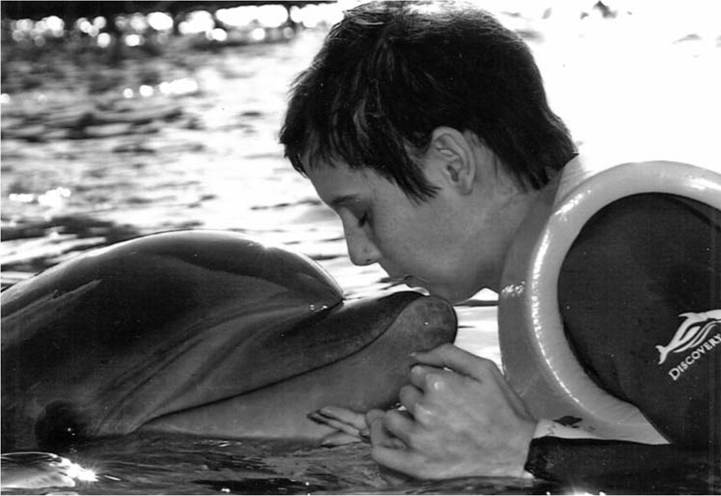
Figure 5.8 Water sports are made easier with flotation devices supporting weak limbs.
Resources
USA Swimming's Disability Swimming Committee: http://www.usaswimming.org
Table Tennis
Only slight modifications involving the delivery of the serve differentiate this sport from AB competition, which follows United States Table Tennis Association rules. The only equipment modifications allowed are to the paddle and, in the case of dwarf competition, floor raisers to make up for height differences. In recreational play, side guards may be added to the table to keep the ball in play longer.
Equipment
Velcro strap or cuffs: Allow correct placement of the paddle in the player's hand.
Regulation-size table, paddles, ball
Resources
U.S. Disabled Athletes Table Tennis Committee: http:// www.midy.com/~usatt/parapong/
Tennis
Wheelchair tennis is played on a regulation-size tennis court as either a singles or doubles game. Players are allowed a maximum of two bounces before the ball must be returned. Scoring and other rules follow the United States Tennis Association guidelines. Players are broadly divided into two groups: paraplegic and tetraplegic. Within these divisions, players compete in subdivisions based on their skill. This sport is open to all disability groups. When a wheelchair user plays against an AB opponent, the rules of each one's sport applies to their respective side of the court.
Equipment
Sport wheelchair, tennis racquet, straps (trunk, legs, feet)
Racquet holder: Ace wrap or taping may provide additional support of grip strength if needed. Alternatively, a racquet holder orthosis may be beneficial.
Resources
United States Tennis Association: www.usta.com
International Tennis Federation: www.itftennis.com/ wheelchair/
Track and Field
Track and field events are some of the most popular of the adapted sports competitions and involve individuals from all disability groups. Track events may be ambulatory or at the wheelchair level. Ambulatory and wheelchair events range in distance from 10 meters to a full marathon, and take place on a typical track. Running, walking, and hurdles are all included in the ambulatory division. Power and manual wheelchair slalom races are available in the Special Olympics.
Field events typically include shot put, discus, javelin, long jump, and high jump. The USCPAA has also developed seven events for those athletes who are more physically impaired. These include the distance throw, soft discus, precision event, high toss, thrust kick, distance kick, and club throw. In the distance throw, athletes throw a soft shot as far as possible. The soft discus is similar to the conventional discus, except that the discus is made of a cloth material. For the precision event, six soft shots are thrown at a target, with points awarded for accuracy. The high toss involves throwing a soft shot over a progressively higher bar. Athletes have three attempts to clear the height. In the thrust kick, athletes kick a 6-pound medicine ball away from them, with their foot in constant contact with the ball. The distance kick is similar; however, it uses a 13-inch rubber ball and allows the athlete to initiate a back swing with the foot prior to striking the ball. For the club throw, an Indian club is thrown as far as possible.
Equipment
Racing gloves
Sport wheelchair: Custom-designed racing chairs are available for the serious athlete.
Throwing chair: Provides a stable platform from which athletes may throw
Resources
BlazeSports: www.blazesports.com
Wheelchair Sports USA: www.wsusa.org Special Olympics: www.specialolympics.org