BASIC CONSIDERATIONS
Acute leukemia, lymphomas and brain tumors are most common malignancies in childhood, accounting for ~60- 80% of all cancers in this age group with minor age-wise differences (Table 20.1).
Brain tumors are commonest non-hematological solid neoplasms in children, though most of them are benign or low-grade malignancies.Amongst others, tumors of embryonal tissue, e.g. neuroblastoma, Wilms' tumor, retinoblastoma and hepatoblastoma are more common in infancy and early childhood, while bone or soft-tissue sarcomas and gonadal tumors dominate in adolescents. Malignancy is rare in newborns, commonest being undifferentiated leukemia, neuroblastoma, sacrococcygeal teratoma, retinoblastoma and Wilms tumor.
General Concepts in Etiology
Malignancies denote unregulated growth of normal or abnormal tissue. Precise mechanisms for this dysregulation
is not well established in most cases, though probably relate to two factors-Genetic predisposition and adverse Environmental influences.
Genetic factors: Normal or abnormal cell growth is regulated by two types of genes-Proto-oncogenes, which promote cell growth, and anti-oncogenes or tumor suppressor genes, which regulate the functions of protooncogenes. Any event, which alters the balance between proto-and anti-oncogenes may cause cancers. Some well-known examples are:
• Activation of proto-oncogenes, e.g., neuroblastoma or non-Hodgkin's lymphoma.
• Disruption of tumor suppressor genes, e.g., retinoblastoma.
• Creation of fusion genes, e.g., Ewing's sarcoma.
• Chromosomal abnormalities, e.g., trisomies (leukemia), deletions (Wilms' tumor) or translocations, e.g., Burkitt's lymphoma or chronic myeloid leukemia.
• Fragile chromosomes with excessive tissue breakdown, e.g. Bloom syndrome, Fanconi's anemia.
Genetically predisposed malignancies tend to be familial, early-onset and usually bilateral. Pediatric malignancies are more likely due to genetic factors, arising from tissues which are not directly exposed to environment, e.g. blood, brain, etc. Second malignancies are common in these cases.
Environmental factors may act directly or by uncovering an underlying genetic error. Some common adverse environmental factors are:
• Physical agents, e.g., ionizing/ultraviolet radiation.
• Chemical agents, e.g., smoking, tobacco, drugs, etc.
• Toxins, e.g., asbestos (mesothelioma), pesticides, etc.
• Infections, e.g. HBV, HCV, EBV, Papova virus, etc.
• Dietary factors, e.g. low-fiber diet (colon cancer).
Malignancies due to environmental factors are more common in adults, tend to be unilateral and non-familial, arising from tissues which are directly exposed to environment, e.g., lungs, oral cavity, gut or genitourinary tract.
General Clinical Indicators
Clinical manifestations of childhood malignancies vary according to the type, site and extent of disease, though important warning signals include:
a. Unexplained hematological abnormalities, e.g., anemia, thrombocytopenia and leukopenia or leukocytosis.
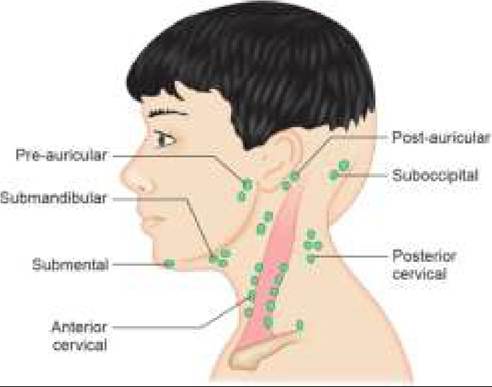
b. Unexplained masses or swellings, e.g., abdominal mass, mediastinal mass, lymphadenopathy or soft-tissue swellings.
c. Unexplained systemic features, e.g., failure to thrive, prolonged pyrexia, diarrhea, bone pains, organomegaly, hypertension, neurological defects.
d. Miscellaneous signs, e.g., leukocoria, exophthalmos, opsoclonus, etc.
General Principles of Diagnosis
Diagnosis of malignant disorders usually rests on histopathological studies in biopsy specimens or blood, supplemented by immunological and cytogenetic studies to appreciate the etiological basis, decide the treatment plan and predict the outcome. Genetic studies also help to predict the risk of some malignancies in siblings and other family members of a child with malignancy.
Each case also needs thorough search for local and/ or metastatic spread of disease (staging of the disease) by appropriate radioimaging, nuclear or PET scans and if necessary, aspiration/biopsy from the suspected site of spread, e.g., lymph nodes or bone marrow.
General Principles of Management
Management of cancers is a team work, best handled by experts, e.g. pathologists, medical oncologists, surgeons, radiotherapists, psychologists and ancillary staff, including nurses. Broadly, it may be divided into three components:
a. Specific therapy involves surgery, chemotherapy, radiotherapy and immunotherapy, depending on the histopathological type, location, extent and character of tumor. Standard guidelines are available for management of specific tumors, discussed in respective chapters, though more effective and less toxic protocols are evolving.
- Conventional chemotherapeutic agents for malignancy generally include—(a) Antimetabolites, e.g., methotrexate, 6 mercaptopurine, cytarabine, (b) akylating agents, e.g., cyclophosphamide, ifosfamide, (c) antibiotics, e.g., doxorubicin, daunomycin, bleomycin, (d) vinca alkaloids, e.g., vincristine, vinblastin, (e) enzymes, e.g. L-asparaginase, and
(f) others, e.g., etoposide.
- Biological agents, e.g. immunotherapy, biological response modifiers or endogenously occurring molecules are being increasing used in management of cancers. Common examples include retinoic acid in acute promyelocytic leukemia, monoclonal antibodies, e.g. anti-GD2 antibody in neuroblastoma and non-Hodgkin lymphoma, tyrosine kinase inhibitors, e.g. imatinib mesylate in chronic myelogenous leukemia, etc.
- Molecular targeted therapy: Recognition of molecular mechanisms in cancer process has led to development of specific antineoplastic therapies, with advantage of minimum toxicity to normal tissues unlike conventional drugs. Many of the new biologic agent therapies, such as imatinib and rituximab, fall into this category.
b.
Supportive therapy with adequate nutrition, fluid and electrolyte balance, prevention of infections and other complications, as well as psychological support.c. Management of emergencies: Oncological emergencies may be tumor-specific or non-specific and may be present at the time of diagnosis or arise during the course of therapy (Table 20.2), some of them are as follows:
- Tumor lysis syndrome (TLS) is a triad of—(a) hyperuricemia, (b) hyperkalemia, (c) hyperphosphatemia with/without hypocalcemia, due to rapid release of intracellular metabolites at a rate that exceeds renal excretory capacity.
TLS is common in bulky tumors, e.g. lymphomas, or soon after initiation of chemotherapy due to rapid cell necrosis and should be anticipated in a case with-(a) poor urine output, and (b) elevated LDH and uric acid levels.
Prevention of TLS involves: (a) adequate hydration (minimum 3000 ml#8725;m2#8725;day) with/without diuretics, (b) alkalinization of urine with NaHCO3 (50-75 mEq/L) to increase uric acid excretion and (c) allopurinol therapy (PO 10 mg/kg/day).
- Hyperleukocytosis, i.e. TLC gt;1,00,000 cells/mm3), is seen in 5-20% of acute leukemia, leading to: (a) TLS, (b) CNS leukostasis with headache, seizures or papilledema, (c) pulmonary leukostasis with dyspnea or corpulmonale, (d) peripheral leukostasis, e.g. priapism or gangrene.
These cases need aggressive hydration, alkalini- zation of urine, allopurinol and partial exchange/ leukopheresis.
- Superior vena caval syndrome (SVCS) is an indicator of SVC compression due to mediastinal tumors, usually seen in lymphomas and neuroblastoma.
SVCS present with signs of: (a) tracheal compression, e.g., persistent cough, dyspnea or stridor, (b) SVC compression, e.g., facial edema/cyanosis, conjunctival suffusion, neck veins engorgement and prominent chest collaterals, (c) vagal/ recurrent laryngeal nerve compression, e.g. hoarseness of voice, and (d) esophageal compression, e.g.
dysphagia. These cases may evolve in few hours and signs are more prominent in flexed-neck position.TABLE 20.2: Important oncological emergencies and their management
| Complications | Causes | Treatment |
| a. Infections | ||
| Nosocomial infections | Diagnostic Z therapeutic procedures | Asepsis, antibiotics |
| Opportunistic infections | Chemotherapy, BM* suppression | Antibiotics |
| b. Hematological | ||
| Severe anemia | Hemorrhage, BM* involvement | Packed cells transfusion |
| BleedingZthrobocytopenia | BM* involvement | Platelets transfusion |
| Neutropenia | BM* involvement | Antibiotics, G-CSF |
| DIC | Sepsis, tumor factors | Plasma, platelets, heparin |
| Thromboembolic episodes | Leukostasis, vaso-occlusion | Partial exchange, leukapheresis |
| c. Mechanical | ||
| Raised intracranial pressure | Brain tumorZmetastasis | Steroids, shunt, anticonvulsants |
| Superior vena cava syndrome | Mediastinal mass | Radiotherapy, steroids |
| Spinal cord compression | Spinal mass | Radiotherapy, steroids, laminectomy |
| d. Metabolic | ||
| Hyperuricemia | Tumor lysis syndrome | Hydration, urine alkalinization, allopurinol |
| Hyperphosphatemia | Tumor lysis syndrome | Diuresis, oral Al (OH)3, stop alkalinization |
| Hyperkalemia | Tumor lysis syndrome | NaHCO3, insulin, exchange resins |
| Hypercalcemia | Bone metastasis | Hydration, steroids, mithramycin, diphosphates |
| Hyponatremia | SIADH | Fluid restriction, Na++ supplements |
| e. Systemic complications | ||
| Hepatotoxicity | Liver metastasis, drugs | Supportive, stop toxic drug |
| Nephrotoxicity | Drugs | Supportive, stop toxic drug |
| Skin lesions | Drugs | Supportive, stop toxic drug |
| f. Late sequelae | ||
| Pulmonary dysfunction | Drugs, radiation | - |
| Leukoencephalopathy | Radiation, drugs | - |
| Endocrinal dysfunction | Drugs, radiation, surgery | - |
| SterilityZ infertility | Drugs, radiation, surgery | - |
| Secondary cancers | Drugs, radiation | - |
| Deformities | Surgery | - |
*BM: Bone marrow
Immediate diagnosis with CT/MRI and empirical radiotherapy with/without steroids may be life-saving before definite diagnosis.
20.2