Burn Assessment
Burns can result from thermal, chemical, and electrical exposure. Most burns occur as a result of fire or flame (46%). Scald injury occurs in 32%, hot object contact in 8%, electrical in 4%, and chemical in 3% (124).
However, predominant burn etiology varies with age. For example, scald injuries are most common in children under 4 years of age (129,130), and contact burns disproportionately affect children under 5 years of age (127,130). In older children, burns are more likely to occur as a result of playing with matches or other flammable material (130,131). Children, especially boys ages 10-14 years, have the highest injury rate related to fireworks (132).A burn evaluation must include an assessment of the severity of the burn (Fig. 14-7). One may observe different burn severities within a single injury. Often, the center of the burn is more severely injured than the periphery.
Also critical in evaluating burn severity is an assessment of the amount of body area involved, or percentage of total body surface area (TBSA) burned. Increased mortality is associated with a larger TBSA burned, though survival rates have improved considerably over recent decades. In a study of 1,150 hospitalized children from 1991-1997, those with 0% to 59% TBSA burns had a mortality of 0%, and those with 60% to 100% TBSA burns had a mortality of 14% (133). Standard charts, such as the Lund and Browder charts, are available for estimating burned surface areas for children of various ages (Fig. 14.8). The standard adult “rule of 9s” (9% for each upper extremity and head, 18% for lower extremities and anterior and posterior trunk) applies to adolescents but does not apply to small children, who have relatively larger heads and smaller limbs. Another option is to estimate the palm size of the affected child as 1% of their TBSA although this approach may be less accurate (134). Of all individuals burned, the ABA estimates that over one-third have greater-than-10% TBSA burns and 10% have greater-than-30% TBSA burns (124).
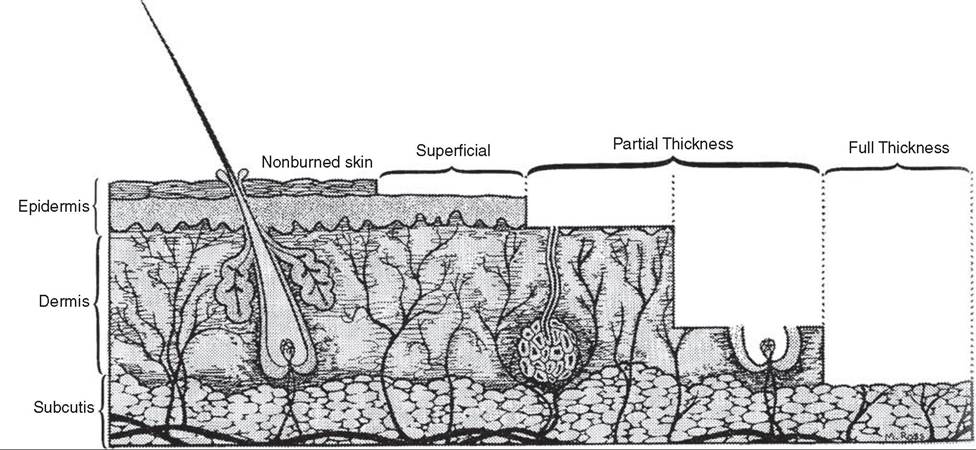
Figure 14.7 Classification of burns by severity.