Electrodiagnostic Studies
Nerve conduction and electromyography are an extension of the clinician’s physical examination and a useful tool for the localization of lesions within the lower motor neuron. In addition, electromyogramy (EMG) and nerve conduction studies help guide further studies, such as muscle biopsy, by providing information about the most appropriate muscle site for biopsy.
With spinal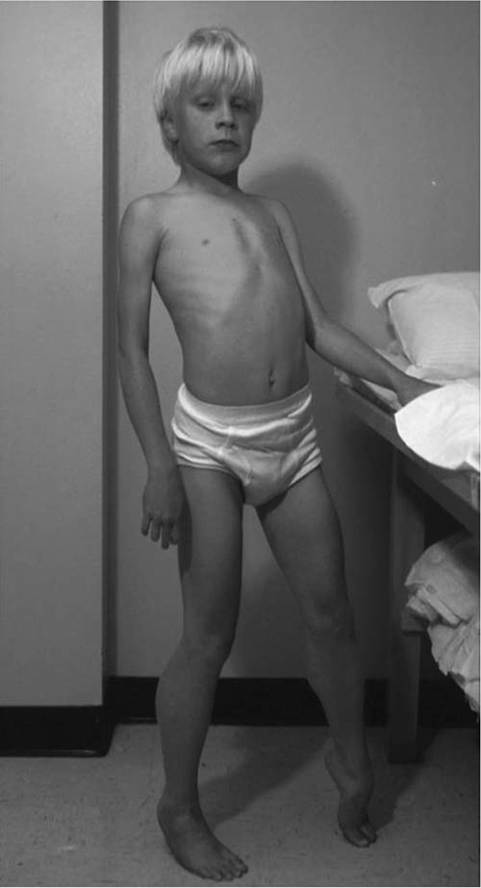
Figure 12.8 Trendelenburg or “gluteus medius” gait pattern in a male with Duchenne muscular dystrophy. Note the lateral lean over the stance side due to hip abductor weakness; ankle dorsiflexion weakness necessitates swing phase in circumduction for clearance.
muscular atrophy, an electrodiagnostic evaluation can allow the clinician to defer muscle biopsy and proceed with molecular genetic studies of the survival motor neuron gene. Electrodiagnostic studies in patients with CMT help to categorize the neuropathy as either primarily demyelinating or axonal, and such information may help focus subsequent molecular genetic analyses for a more cost-effective approach. In patients with suspected CMT and positive family histories with genetically confirmed diagnoses, the diagnosis of CMT may be confirmed in the clinic by a simple, reliable, and relatively inexpensive nerve conduction study.
A thorough discussion of the role of electrodiagnosis and neuromuscular disease is provided in the chapter on pediatric electrodiagnosis.