ENTERQViRAL INFECTIONS (NON-POLIO)
Enteroviral infections are caused by a large group of RNA viruses, which typically inhibit the intestinal tract. These infections include 3 distinct subgroups—(a) polioviruses, (b) echoviruses and (c) coxsackieviruses A and B, each with various serotypes.
Non-polio-enteroviral infections are usually caused by echo 4, 6, 9, 11, 30, coxsackie-A9, 16 and coxsackie B
2- 5 viruses, most prevalent being echovirus 9.
Epidemiology: These viruses are widely present in soil and sewage water, sourced from human reservoirs and infection spreads via fecooral route or as droplet infection. Outbreaks are common in summer season, specially in overcrowded settings, e.g. slums, day-care centers, etc.
Clinical spectrum of these infections varies from asymptomatic infection to non-specific febrile illness to serious systemic illnesses (Table 10.37).
Diagnosis of enteroviral illness should be considered in any febrile illness with rash or mucosal lesions, specially
TABLE 10.37: Clinical spectrum of enteroviral infections during outbreaks. Confirmation requires—(a) viral cultures from rectum swab or stools, throat and other infected sites, e.g. CSF, followed by serotyping, (b) PCR test for early diagnosis, and (c) serological studies, i.e. neutralizing antibody titers, for retrospective diagnosis. Treatment is non-specific and supportive. steroids are contraindicated. No vaccine is available, though passive prophylaxis with human immunoglobulins may be useful during nursery outbreaks with virulent strains.
Some common and important enteroviral infections in Indian children are as follows:
Hand-foot-mouth disease (HFMD) is the commonest enteroviral illness in infants and toddlers, usually seen as localized outbreaks in winter season.
Etiologically, most cases are caused by coxsackie A16 or Enterovirus A71, though other serotypes have also been implicated.
Clinically, HFMD present with acute onset of: (a) oropharyngeal ulcers, and (b) tender vesicular lesions over dorsum of hands/feet, bony prominences like knee/elbow, palm/soles and buttocks, after incubation period of 3-7 days (Fig. 10.11). Presence of lesion over palm and soles is characteristic in HFMD. Fever is rarely prominent and does not last for gt;24-48 hours. Patient is most infectious during the first week.
Most cases recover within 7-10 days and complications are extremely rare, though interstitial pneumonia, myocarditis or aseptic meningitis/ encephalitis have been reported in few cases.
Diagnosis is clinical, though virus may be isolated from oropharynx and stools for 4-6 weeks.
Management is supportive with assurance about self-limiting nature of disease, analgesics and topical soothing agents, e.g. zinc-calamine lotion over skin or anesthetic mouth paints. Adequate nutrition and hydration must be ensured as children avoid oral intake due to ulcers.
Herpangina, is a self-limiting illness due to Echovirus 9, characterized by: (a) sudden onset of fever, headache and vomiting, (b) oropharyngeal discrete vesicles/ ulcers with erythematous base, (c) morbilliform or petechial
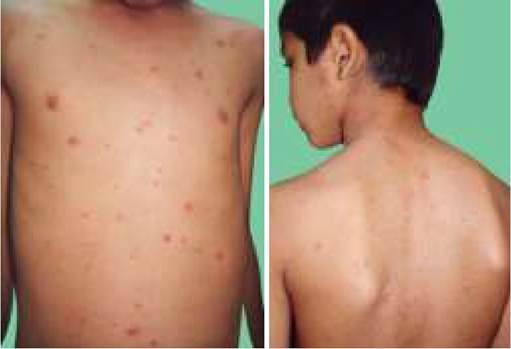
Fig. 10.11: Hand-foot-mouth disease: (A) Skin lesions; (B) Oral ulcers.
rash in some cases. Most cases recover spontaneously in
3- 5 days, though some may develop aseptic meningitis. Acute hemorrhagic conjunctivitis, due to echovirus 70, presents with epidemics of viral conjunctivitis during post-monsoon season, characterized by-red-eye, conjunctival follicles and sub-conjunctival hemorrhages. Conjunctival discharge is highly contagious and epidemic spreads via hand-fomite-eye route. Recovery is spontaneous in 3-5 days, though rarely complicated by keratitis/corneal ulcers and polyradiculoneuropathy.
Pleurodynia (Bornholm disease), due to various serotypes of coxsackie B, is a self-limiting epidemic illness, presenting as acute high fever and severe spasmodic chest pain that is aggravated on deep inspiration. Pleural rub is common but effusions are rare. Most cases recover spontaneously in 1-3 days, though some may develop aseptic meningitis or pericarditis/myocarditis.
10.23