Evaluation of a child presenting in the health care involves four key components, often referred with acronym HELP, i.e. History, Examination, Logical deduction and Plan of investigation. Present chapter outlines broad guidelines regarding history-taking, the first step in evaluation process.
Mukesh Agrawal
History taking in Pediatrics is an art that can only be perfected by practice. While the broad principles of history-taking in children is same as in adults, two important differences are noteworthy: (a) pediatric history is usually a third-party history from the parents, subject to adulteration by their own concerns, beliefs and emotions, (b) history-taking in children cannot be custom-made and must be tailored according to the age with different points of emphasis in different age groups, and (c) it also includes some unique and additional aspects, e.g.
perinatal, developmental, dietary and immunization histories.General considerations: A good history needs a reliable informant, good rapport with child and informant, appropriate questions and questioning techniques, correct interpretation of responses and proper documentation of information. Some important prerequisites for good history are as follows:
• Environment: History must be recorded in a quiet and comfortable setting to ease the anxiety of patient with due concerns to the privacy. Adolescent Girls must be interviewed only in presence of a female nurse or relative.
• Rapport-building: Development of good rapport with child and parents is essential to get reliable information and useful strategies include: (a) greet and introduce yourself, (b) address the child with name, (c) establish good eye-contact, (d) converse in a empathetic manner, (e) listen attentively without unnecessary interruptions, (f) avoid distractions, e.g. phone calls, and (g) assure them about confidentiality.
• Informant: Children are often accompanied by both parents and sometimes with relatives, all eager to provide their own versions of history which may be contradictory. A good history is often influenced by intellect and emotions of informant. Mother is the usually the most reliable and preferred informant.
In case of acute event, e.g. seizure or fall, the history must be recorded from the person who actually witnessed the event, if possible. Hearsay history must be avoided. Older children often provide good history and must be offered to tell their concerns, privately if necessary.• Questioning must be in a conversational rather than interrogational manner. Begin with open- ended questions, e.g. “What is wrong...quot; to allow the informant to narrate the history in her/his own words without unnecessary interruptions. Subsequently, identify the points which need clarification and use close-ended questions to get the desired answer,
e. g. quot;Is it the first time.quot;. Ask about each complaint separately to ensure accurate response. Let the parents/child choose the language for conversation and use a mutually acceptable interpreter, if necessary. Generally follow the broad sequence of history-taking, as discussed here, to avoid missing any important information. However, move over to the next question if child / parent becomes agitated or upset in response to some question, unless the information is vital to immediate intervention.
• Interpretation: Responses from the informant are often influenced by their concerns, intellect and emotions. Listen carefully to the informant's narration of events and answers to close-ended questions. Also observe his/her behavior and non-verbal clues, e.g. hesitancy, avoidance to answer, change in tone or attitude or lack of concern. However, don't argue, ignore or embarrass the informant or laugh on answers.
• Documentation: Correct documentation of the history is essential not only for future reference but also for legal purpose. Record the history in pre-structured format as soon as possible, though preferably after the interview is complete to avoid interruptions in narration. Avoid abbreviations as much as possible and use diagrams, etc. to depict pictorial information, e.g. distribution of rash. Date and time of historytaking must be clearly stated.
• Closure: At the end of interview, ask for any other concern that the parents have and praise them for nice history or action they have taken before coming to you. Answer their questions and concerns, as truthfully as possible.
Components of history taking: While the emphasis may vary in individual case according to the age and expected clinical problems, a general protocol of history taking in children should include following components - (Table 30.1):
1. Demographic data is essential not only for the purpose of identity but to assist in differential diagnosis and follow-up.
• Name must be recorded fully and correctly to establish the identity, specially to avoid problems in matters related to medico-legal and insurance issues. Addressing the child with name also helps to develop a rapport with him.
• Age must be recorded in completed time-units appropriate for age, i.e. in hours during first 3 days of life, in days during later neonatal period, in months till 1-2 years of age and then in years. Apart from a part of identity, age also assists in the differential diagnosis due to age-wise differences in prevalence of many diseases, e.g. genetic disorders.
• Gender must be recorded carefully, specially in cases of newborns and ambiguous genitalia. In later case, the child may be labelled as Bisexual, rather than assigned a gender preferred by parents. Apart from a part of identity, gender also assists in the differential diagnosis due to sex-wise differences in prevalence of many diseases, e.g. X-linked recessive disorders.
• Religion and caste information, though a sensitive issue sometimes, helps in considering the possibilities of diseases common in certain ethnic groups, e.g. sickle cell anemia in Tribals or Thalassemia in Sindhis.
TABLE 30.1: Components of pediatric history
1. Demographic data
2. Presenting complaints
3. History of present illness
4. System-review
5. Past history
6. Family history
7. Perinatal history
8.
Dietary history9. Immunization history
10. Developmental history
11. Personal history
12. Socio-economic history
13. Environmental history
• Address must be recorded as complete postal address with contact phone number, to assist in follow-up. Residential information also helps in differential diagnosis as some diseases have well defined geographical distribution, e.g. Kala-azar in Bihar.
2. Presenting complaints, also termed as chief complaints, form the seed of clinical history, enlisting the main reasons for seeking medical care. Important aspects of writing these complaints are as follows:
• All presenting complaints must be recorded chronologically in a list format, including brief telegraphic description along with duration. A short adjective to convey the character of complaint, e.g. acute, progressive, severe, etc. may be added (Table 30.2).
• Each complaint must be recorded in the exact words of informant and not in medical terms, e.g. write bluish discoloration rather than cyanosis. However, unnecessary description may be truncated for the sake of brevity.
• All major complaints which developed after the onset of illness must be included, even if some of them have been resolved by now, either spontaneously or after treatment. In chronic illnesses, e.g. nephritic syndrome, chief complaints may be structured to include whole duration of illness, rather than limiting to presenting complaints. In some cases, e.g. cerebral palsy, this section may begin since birth.
• Include a known and documented diagnosis before listing the complaints to assist in analytic process. For example, begin with quot;A known case of Nephrotic syndrome, presents with....quot; However, any diagnosis, told by parents but not substantiated by documents must be considered with caution, to avoid diagnostic bias.
3. History of present illness, also termed as ODP (Onsetduration - progress) history, is an expanded description of presenting complaints, along with record of trivial complaints ignored in previous section and important negative histories to exclude associated problems.
Important aspects of writing history of present illness are as follows:• It should be written in a concise but flowing narrative or story format, elaborating each complaint separately with emphasis on characteristics and course of the illness (Table 30.3).
• It should begin with a statement demarcating the onset of illness, e.g. quot;baby was apparently alright till.... days backquot;
• Details of any investigation or treatment received during the course of illness must be included, after checking with records. However, any information

TABLE 30.3: Exploratory key points in history of present illness
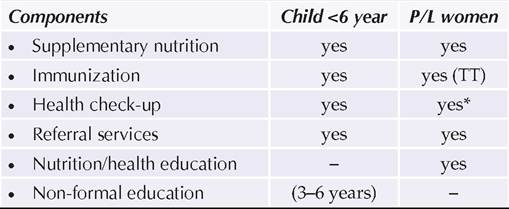
prior to the onset of first complaint must be recorded in the past history.
4. System review is the fishing expedition to search for missed complaints, considered too trivial by the parents and omitted unintentionally. A quick system review helps to identify involvement of other organs/systems, either incidentally or as complication of the presenting illness. Important components of system review include:
• It should be relevant to broad differential diagnosis, based on the history of present illness.
• It should be quick but comprehensive, covering common complaints related to organ/systems other than those recorded earlier (Table 30.4). Any new positive and significant history, discovered during system review, must be recorded in detail.
• Negative histories must be recorded, only if relevant.
5. Past history must include details of all significant health events prior to the onset of present illness with special emphasis on: (a) major illnesses, (b) hospitalization, medications or transfusions, (c) injuries or surgical interventions, and (d) allergic or other adverse events. Important points in the past history are:
• Any event that occurred in the past but continues to affect the health significantly, e.g.
post-stroke hemiplegia must be included in the present than in past history.• Attempt should be made to strengthen past history with review of previous health records
6. Family history aims to identify genetic as well as shared environmental risk factors, which can influence child health. Getting a reliable family history may be challenging as parents often tend to hide embarrassing facts and must be reassured about the confidentiality. Important aspects of family history are as follows:
• Enquire about similar illness in other family members, indicative of common genetics or shared environment, e.g. infection or toxin exposure.
• Prepare a family tree or Pedigree chart (Fig. 11.7) including three generations-siblings, parents and grandparents, to assess the possibility of genetic basis and mode of inheritance.
• Search for similar illness in unrelated household members, e.g. servants, etc., which may suggest environment basis of disease, e.g. tuberculosis.
Contact may be further specified as household contact or close-contact, who is not a household member but shares an enclosed space, e.g. workplace for extended periods during the day in preceding 3 months.
• Assess the psychosocial environment of the family with special reference to marital conflicts, psychiatric illnesses, substance abuse and child rearing practices.
30
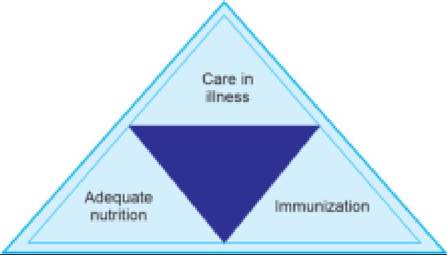
7. Perinatal history is more relevant in infants and young children with congenital malformations or unexplained chronic diseases and includes:
• Antenatal history related to: (a) maternal age, nutritional status and general health problems, (b) consanguinity (Ch 11.3), (c) obstetric history, (d) antenatal care and investigations; (e) potential exposure to infections, drugs, toxins or radiation, and (e) significant prenatal complications, e.g. eclampsia, gestational diabetes, etc.
• Birth history must include: (a) place of delivery, (b) mode of delivery, (c) obstetric complications, e.g. meconium staining, (d) need for neonatal resuscitation, and (e) gestational age and birth weight.
• Immediate postnatal history must include information about: (a) early infant feeding, (b) postnatal complications, e.g. sepsis, jaundice, seizures, etc. (c) intensive care admission, and (d) day of the discharge from the hospital.
8. Dietary history aims to differentiate dietary malnutrition from organic causes of failure to thrive. Focus of this history must be relevant to the age, with basic information about: (a) feeding in early infancy, (b) complimentary feeding or weaning, and (c) present diet with special reference to caloric and protein intake. Important aspects of dietary history are as follows:
• In infants below 6 months, concentrate on the history related to early infant feeding with special emphasis on Type of feeding, e.g. breastfeeding or/Top feeding, appropriateness of breastfeeding practices (Ch 5.2.4), problems encountered during breastfeeding (Ch 5.2.5), reasons for top-feeding, if applicable, and mode of topfeeding, e.g. bottle.
• In children from 6 months-2 years, concentrate on the history related to complimentary feeding along with a quick review of early infant feeding, with special emphasis on age of introducing weaning foods, adequacy of weaning in terms of quality and quantity, problems encountered during weaning and whether breast-feeding has been continued. (Ch 5.5).
• In children gt; 2 years, concentrate on the current food intake in terms of proteins and calories apart from a quick review of the early infant feeding and weaning. (Ch 5.7 - 5.8)
• Dietary intake must be calculated by 24-hour recall method, for two different time-periods to assess the cause-effect relationship between diet and disease - in 24 hours before recording the history and 24 hours before the onset of present illness.
• Post-history, actual dietary intake must be calculated by using nutritional value of common Indian feeds (Tables 5.9-5.10) and compared with reference nutritional requirements for the chronological age, predominantly for energy and proteins (Table 5.1),
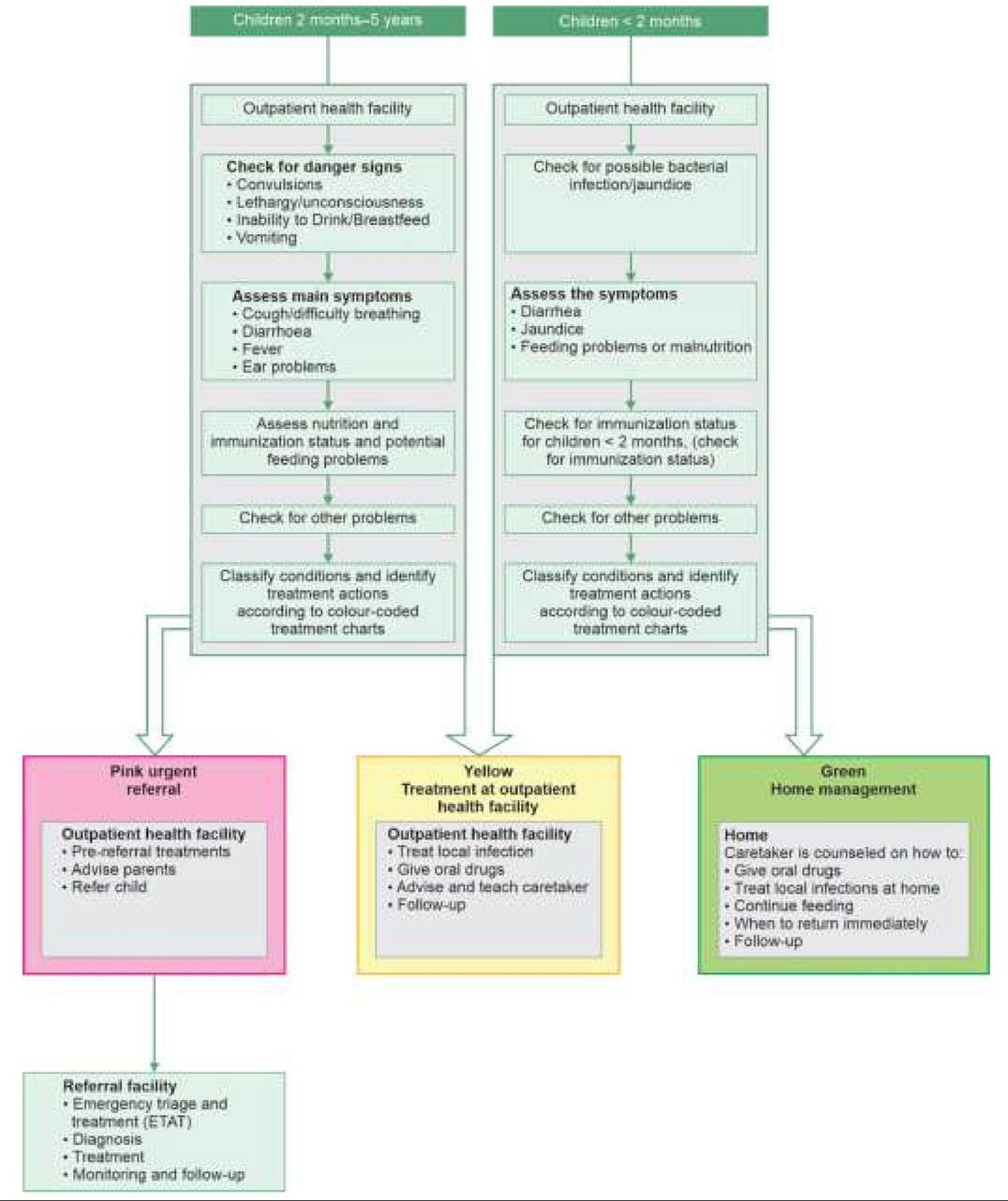
to find out the deficit, if any. Table 30.5 provides a simple, back-of-the-envelope calculation to assess nutritional requirements for proteins and calories in children, using expected weight.
• Information must also be obtained regarding staple diet, intake of micronutrient-containing foods, general appetite and food-fads or intolerance.
9. Immunization history aims to evaluate the role of vaccine-preventable diseases or adverse reactions to vaccines in causation of present illness. It should be cross-checked with records, if available. Main emphasis should be to record the receipt of vaccines as per national immunization schedule, to be followed by additional vaccines (Tables 9.3 and 9.4). Find out about any adverse event following a vaccine dose or any relationship with presenting illness.
10. Developmental history is age-dependent, more relevant in cases with neurological or developmental problems or the risk-factors for the same, e.g. perinatal insult. Important aspects of the developmental history are as follows:
• Developmental history must record achievement of various milestones in four major fields - Gross motor, Fine motor, Social-adaptive and Language, along with the age of attainment (Table 30.6).
• Age of attainment must be compared with expected norms, with due consideration for normal physiological variations.
In cases with presenting complaints suggestive of neurodevelopmental problems or risk factors, development history must include details about all major milestones in different fields, starting from early neonatal period to get an idea about the age from which milestones began to falter.
In other cases, begin with milestones that the child should have achieved by present chronological age. Ifyes, than the development is most likely normal and further enquiry about earlier milestones is probably unnecessary as the general order of the appearance of milestones is fairly constant. If no, find out the last major milestone achieved in each field by going in backward order of development to assess the developmental age.
In cases with delayed milestones, assess whether milestones are uniformly delayed in all the fields
TABLE 30.6: Developmental history: Key milestones in different fields

(global delay). Isolated delay in one or two fields (developmental dissociation) is usually due to non- neurological causes, e.g. hearing impairment (delayed language), severe malnutrition (gross motor delay).
• In cases with abnormal development, find out if the some milestones were never gained (developmental delay) or if they have been lost after the initial achievement (developmental regression). Regression of milestones is an important clue to neurodegenerative disorders.
• In school-going children, academic performance and social interaction with other students are also useful indicators of development.
11. Personal history is more important in older children and adolescents and must include information about:
(a) eating habits and food fads, (b) bladder and bowel control, (c) sleeping patterns, (d) temperament and behavioral problems, and (e) menstrual history in girls.
12. Socioeconomic history aims not only to identify the risk factors for causation of disease but also to decide appropriate diagnostic, therapeutic and rehabilitative interventions, acceptable and affordable by parents. Three important components of social history include parental—(a) educational status, (b) occupation, and (c) income. Modified Kuppuswami classification (Table 30.7) can be used for more objective assessment of socioeconomic status, though not necessarily required in all cases.
13. Environmental history must search for risk factors in various components of indoor and outdoor environment including: (a) Overcrowding, as assessed by the size and

*Adjusted for inflation 2023
number of rooms in house vis a vis the family size, (b) airquality as assessed by ventilation, pollution by cooking fuel, passive smoke, construction activity or chemic/ toxic fumes, (c) water-quality as assessed by questions related to the source, storage and purification method for drinking water, and (d) general sanitation as assessed by questions related to the hygiene awareness and practices, specially during food preparation/consumption and excreta disposal.
Analysis: At the end of this session, history should be re-arranged and analysed in details to identify the:
• Organ or system involvement, as far as possible;
• Probable etiology of illness, e.g. infection, metabolic, traumatic, etc.
• Nature of disease process, e.g. acute, chronic, progressive, static, etc.
• Severity of the disease process.
• Focus of examination and investigations.
Analysis and interpretation of common symptoms and related information obtained during the history has been discussed in relevant chapters of this book.
BIBLIOGRAPHY
1. Shifana A. Economic parameter of modified Kuppuswamy socioeconomic status scale for the year 2023. Indian journal of forensic and Community medicine, Available at https:// www.ijfcm.org/html-article/19332.