HENOCH-SCHONLEIN PURPURA (IgA VASCULITIS)
Henoch-Schonlein purpura (HSP) or Anaphylactoid purpura is the commonest vasculitis syndrome as well as the commonest cause of non-thrombocytopenic purpura in children.
Etiopathogenesis: HSP is an acute IgA-mediated vasculitis of small vessels, with presence of IgA and C3 deposits in skin, GIT and renal vasculature.
Tissue damage is probably caused by release of cytokines, e.g. TNF- and IL-6, following immune activation. Most cases are preceded by viral or streptococcal upper respiratory infections and some HLA types (B34, DRB1*01) have been linked to the increased risk of disease.Clinically, HSP is most common between 2-8 years of age, in males (2:1) and during winter months. Onset may be acute or insidious, with/without preceding prodromal non-specific illness.
Skin lesions are hallmark of HSP, beginning as pinkish macules and papules, which rapidly evolve to palpable purpura, with typical distribution in dependent parts, i.e. legs and buttocks below the waist or loose connective tissues, e.g. eyelids, scrotum and dorsum of foot and hands (Fig. 24.4). These lesions, which are typically palpable, tend to appear in crops for 1-2 weeks and fade after 1-2 weeks with gradual color change from red gt; purple gt; brown. Edema of the affected parts may precede or co-exist with purpuric lesions.
Other manifestations include: (a) GIT involvement (50-70%) with crampy abdominal pain or bleeding due to mesenteric vasculitis, (b) joint involvement (~80%) with arthritis of knee/ ankles due to synovial effusion but
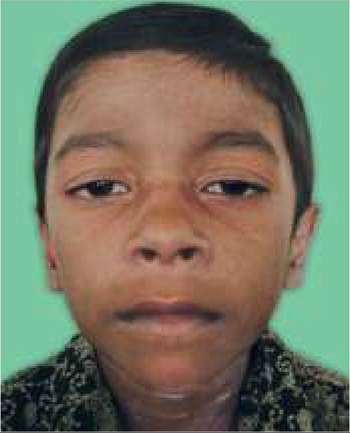
Fig. 24.4: Henoch-Schonlein purpura.
TABLE 24.10: Diagnostic criteria for Henoch-Schonein purpura
• Palpable Purpura with
• Any one of the following:
- Abdominal pain (acute, diffuse, colicky)
- Arthritis or arthralgia
- Tissue biopsy s/o predominant IgA deposits
- Renal involvement (proteinuria/hematuria/RBC casts) #9830;Abridged from EULAR/PRINTO/PRES criteria 2010
without articular damage, (c) renal involvement (20-80% cases) with hematuria, or proteinuria due to glomerular injury; and rarely, (d) others, e.g. encephalopathy, pulmonary hemorrhage, etc.
Most cases recover spontaneously within 2-3 weeks, but ~10% may relapse intermittently for 1-2 years.
Diagnosis is largely clinical, based on the presence of palpable purpura without coagulopathy or thrombocytopenia, and at least one of the systemic features or predominant IgA deposits on biopsy, as per EULAR/ PRINTO/PRES criteria 2010 (Table 24.10).
Skin biopsy reveals leukocytoclastic vascultitis with granulocytes in the walls of arterioles or venules, though not necessary in all cases and recommended only in atypical ones to exclude other causes of vasculitis, e.g. ANCA-associated vasculitis.
Other laboratory abnormalities include anemia, leukocytosis, raised ESR and hypergammaglobulinemia. ANA and RF are negative. Serial urine examination is indicated during acute phase for early detection of renal involvement.
Treatment is supportive, including: (a) bed rest to avoid further edema or purpuric lesions, (b) mild analgesics, e.g. paracetamol for pain control, and (c) monitoring and treatment for renal or GIT complications.
Steroids are not indicated, except in cases with acute GIT or CNS complications or persistent renal
damage. IV Immunoglobulins, plasmapheresis and immunosuppressive therapy have been used in severe and/or chronic cases.
Outcome: Nephritis is an important complication in 1-2% and all recovered patient should be periodically followed-up for renal disease for several months. Risk of recurrence of HSP is 15-60%.
24.4.2
More on the topic HENOCH-SCHONLEIN PURPURA (IgA VASCULITIS):
- HEMORRHAGIC FEVERS (Fever with Petechiae/Purpura)
- Streptococcal TSS
- Agrawal M.. Textbook of Pediatrics. 3rd ed. — CBS Publishers,2025. — 973 p., 2025
- Etiopathogenesis
- Chronic kidney disease
- 18 Autoimmune Disease in Pregnancy
- Focal Segmental Glomerulosclerosis