Visual Impairments
Visual impairments are common in children with CP, with a reported prevalence of 39% to 100% (41).
The inherent difficulty in doing an ophthalmologic exam on children with varying degrees of cognitive and motor impairments makes it difficult to determine the precise incidence of visual disorders.
Strabismus is the most commonly reported visual disorder, but a wide variety of other disorders have been described. Some visual deficits demonstrate a relationship to the underlying etiology, such as retinopathy of prematurity in premature infants, cortical visual impairment in hypoxic ischemic encephalopathy, and homonymous hemianopsia in hemiparesis. One study demonstrated a relationship between visual deficits and severity of CP as measured by the GMFCS (42). In this study, children in each level of the GMFCS had visual deficits 10- to 70-fold higher than those reported in the general age- matched pediatric population. Children with milder CP, GMFCS level I to II, had visual deficits that resembled neurologically normal children with strabismus and amblyopia. Children with the most severe CP were at greatest risk for high myopia, absence of binocular fusion, dyskinetic strabismus, severe gaze dysfunction, and optic neuropathy or cortical visual impairment.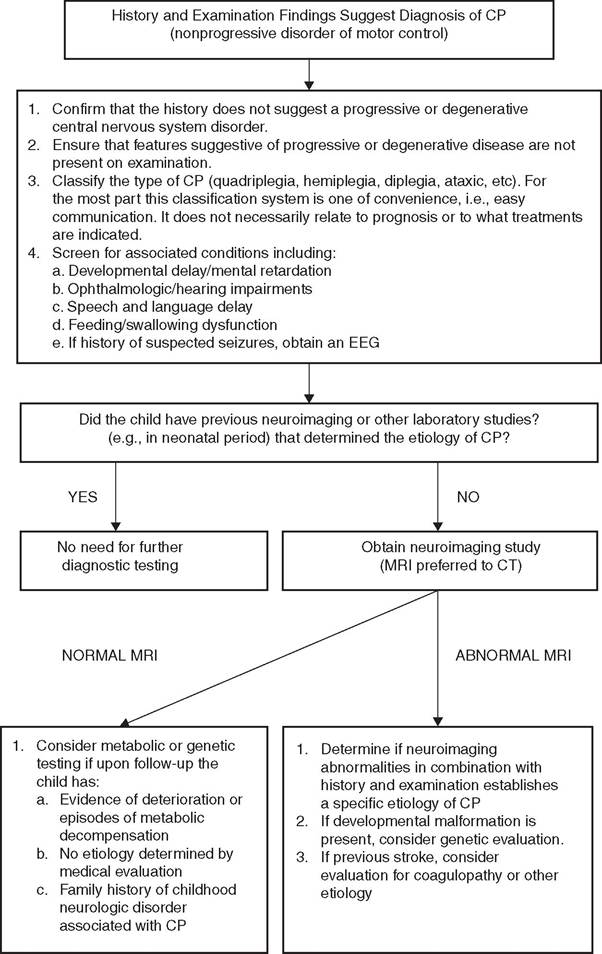
Figure 8.8 Algorithm for the evaluation of the child with cerebral palsy. (Reprinted with permission from: Aswal S et al. Practice parameter: Diagnostic assessment of the child with cerebral palsy. Report of the Quality Standards Subcommittee of the American Academy of
Neurology and the Practice Committee of the Child Neurology Society. Neurology. 2004;62:851-863.)
More medical literature on Medic.Studio
More on the topic Visual Impairments:
-
Infectious diseases -
Internal diseases -
Obstetrics and Gynaecology -
Pediatrics -
Veterinary medicine -
-
Conflictology -
Ecology -
Economy -
Finance -
History -
Law -
Medicine -
Philosophy -
Religious studies -