A New Non-classical Concept for a Testable Realist Interpretation of the Wave Function
Agazzi believed, however, that this view cannot provide a definitive solution to the ontological problem of the nature of micro-objects. He pointed out, with extraordinary intuition, the need to introduce in microphysics concepts that are new not only because they represent the result of a new combination of classical concepts, but also because they are able to replace their classic components with something new.
As he emphasized again some years later:Only by inventing some new concepts, that is, new in this fundamental sense, we could possibly overcome the present uneasy state of affairs, which is not related to the regret of losing the old concepts, but to the lack of new concepts capable of adequately replacing them (Agazzi 1988).
It seems really surprising that in the same year in which Agazzi emphasized the need of a new philosophical concept to solve the problem of wave particle duality, Franco Selleri proposed a realistic interpretation of the wave function of quantum mechanics based on the introduction of such a new concept. This was the concept of empty wave, later replaced by that of quantum wave, which can be considered as a sort of synthesis with respect to the three different concepts of duality between waves and particles that had been proposed by the main founders of quantum theory.
That notion was reminiscent in the first place of Einstein’s point of view: the founder of relativity, despite having reintroduced in physics a corpuscular theory of radiation by his famous hypothesis of light quanta, believed that interference and diffraction phenomena were not explicable on the basis of a purely corpuscular theory, but required also a wave to accompany and guide the quanta in their motion. But the fact that all the energy was concentrated in the quantum, and that the wave associated with it was consequently devoid of this fundamental property, led Einstein to introduce for such a wave the term ‘Gespensterfelder’ (ghost field).
When de Broglie, with his wave theory of matter, then extended the duality from radiation to matter, in an attempt to overcome the contradiction due to the “existence” of an entities without the properties that characterize any other physical object, like his pilot waves, he found no other way to ensure their reality, than attributing to them an extremely small portion of energy, almost entirely localized in the corpuscles (de Broglie 1927). But since no one has been able so far to reveal this very small amount of energy, the typical objection to de Broglie’s waves is that they are metaphysical rather than physical.
A third conception bearing significant similarities to the preceding one, but also unable to achieve an adequate empowerment towards classical notions, was introduced by Bohr, Kramers and Slater in their attempt to reformulate a purely undulatory theory of radiation in opposition to the corpuscular hypothesis of light quanta (Bohr et al. 1924). This was the concept of virtual wave, to which these authors attributed the fundamental characteristic of carrying neither energy nor momentum and of producing only “stimulated transitions” in the atoms the wave interacted with. Atomic transitions would thus allegedly occur in open violation of the laws of conservation of such physical quantities, since any given atom could pass from one energy level to another, without any energy exchange with the electromagnetic field. The concept of virtual wave, however, was soon abandoned as a result of the experiments by Bothe and Geiger (1924) and by Compton and Simon (1925), who provided a decisive confirmation of Einstein’s hypothesis of the corpuscular nature of radiation.
None of the above authors therefore, while elaborating concepts quite similar to that of quantum wave, succeeded in formulating a really new concept: neither Einstein, who having contributed more than any other to the definition of the concept of energy, and turned it into the central notion of physics modern, found contradictory to assert the existence of objects without this fundamental property; nor de Broglie, who after establishing the wave theory of matter, could not conceive waves without energy and momentum, and proposed to ascribe them an uncontrollable amount of the previous properties; nor Bohr, Kramers and Slater, whose virtual waves had been introduced as an alternative to the corpuscular hypothesis of light quanta, and who after the failure of their purely undulatory theory of radiation prudently replaced it with Born’s probabilistic and strictly corpuscular interpretation of the wave function of 1926, before Bohr’s dualistic solution of the complementarity principle.
Selleri’s paper of 1969 already contained the basic elements of the decisive conceptual turning point in the interpretations of the wave particle duality, of which Agazzi had clearly highlighted the need in the same year.
Starting from Einstein’s and de Broglie’s realistic conception that waves and particles exist objectively, and from the fact that experiments show beyond any reasonable doubt that all the energy, momentum, angular momentum and charge are closely associated with the particle, Selleri asked what could be an entity existing without being associated with any directly observable property. He considered unsatisfactory de Broglie’s response that all physical properties would be primarily associated with the particle, but that a small fraction of them, so small as to have escaped all possible observations, is associated with the wave. He then proposed that “even if devoid of any physical quantity associated with it”, and therefore not directly observable, “the wave function can still give rise to observable physical phenomena” (Selleri 1971: 398). He pointed out that we do not measure energies, momenta, or similar physical quantities only, but also probabilities, as in the case, for example, of the average life of an unstable physical system. According to Selleri, the wave function could therefore “acquire reality independently of the associated particles, if it could give rise to changes in the of transition probabilities of the system it interacts with” (ibid.).
On the basis of this new idea of a non-classical wave, he proposed the first version of his experiment for detecting the physical properties of quantum waves. To this end he considered a piece of matter composed of unstable entities, such as nuclei, atoms or excited molecules, traversed by a flux of neutrinos. The experiment then consisted in measuring the average life of such entities under these conditions, and comparing them with the average life of the same entities in the absence of any particle flux.
If any difference was observed, the only logical explanation, according to Selleri, was that such difference was due to the action of the wave function, since neutrinos are particle that interact very weakly and only few of them, in the best case, can interact with the piece of matter (ibid.).Some years later Selleri improved his original idea by the experiment shown in Fig. 1 (Selleri 1982): instead of a flux of neutrinos we have photons emitted by a Laser, and we have no longer a piece of matter composed of unstable entities, but a laser gain tube LGT. Moreover we have two detectors DT and DR and a semireflecting mirror SM. The latter behaves in the same way as the double slit: the particle is propagated in one direction only, depending on whether it has been transmitted or reflected by SM, whereas the wave, according to Selleri’s hypothesis, is both transmitted and reflected.
Selleri proposed to focus on the cases in which DR, located along the reflected beam, detects a photon: this means that in the transmitted beam only the quantum
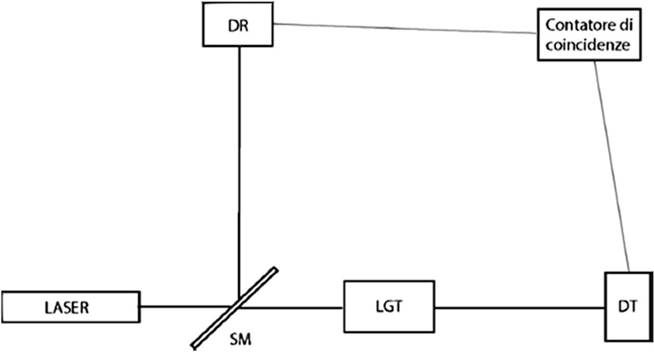
Fig. 1 Selleri’s original experiment on quantum waves
wave is present. According to Selleri’s hypothesis, however, the wave can reveal its presence by generating the stimulated emission of photons; these in turn can be detected by DT) after passing through the laser gain tube LGT, whose molecules are at an excited level corresponding to the wavelength of the incident wave. In this way the coincidences between the detection of DT and DR would reveal the propagation of a quantum wave, transmitted by SM. The space-time propagation of these entities could be studied by verifying whether the DT-DR coincidences disappear when an obstacle is placed in the transmitted beam in front of LGT. According to Selleri, a positive result of this experiment would have shown that “something having neither energy nor momentum but that can produce transition of probabilities propagates in space and time.” (ibid.)
Louis de Broglie, welcomed and endorsed Selleri’s idea as an important attempt
to obtain a more satisfactory interpretation of wave mechanics than that presently adopted, confirming the idea that guided me when in 1923-24 I proposed the basic conceptions of wave mechanics (de Broglie 1969).
However framed this new idea within his old classical conception of the pilot wave: “The experiment you propose to prove the existence of this wave will be of great interest to prove the existence of this very weak (tres faible) wave, which carries the particles” (ibid.).
Selleri’s realist interpretation was received with great favor a decade later by another great opponent of the Copenhagen interpretation, the philosopher Karl Popper, who joined to it unconditionally, abandoning its original statistical and closely particle-like interpretation:
Franco Selleri has suggested, continuing the work of de Broglie, that waves without particles may exist. The consequences (of this proposal) would seem to be revolutionary. They would establish in place of the “complementary” character of particles and waves (wavicles) the interaction of two kinds of real objects: waves and particles (Popper 1985). But neither de Broglie nor Popper, while expressing the greatest interest and appreciation for the hypothesis of quantum waves, grasped the essential novelty of this concept, which instead was perfectly understood by Agazzi, since it was an instance of the radically new concepts of which no one before him had so lucidly pointed out the need in order to resolve the contradiction arising from the wave particle duality.
In his contribution to a volume of Italian studies on the foundations and philosophy of physics (Agazzi 1988), Agazzi noted that this conceptually new hypothesis of quantum waves was important for its refusal of the symmetrical nature of duality, and different from the classical approach of de Broglie:
The essential novelty of this concept is represented by the acceptance of de Broglie’s realist interpretation of the wave-particle duality, but not of the symmetrical nature of this dualism. In Selleri’s approach both particles and waves are simultaneously real, but the latter can be characterized only by its relations with the particles, i.e. by the observables properties of producing interference and stimulated emission.
Such a possibility implies an ontological priority of particles over waves, which therefore belong to a weaker level of physical reality, containing objects which are sensible carriers of exclusively relational predicates (Agazzi 1988: 73).Several experiments have been proposed for this new realistic interpretation of the wave function, whose interest, as pointed out by Agazzi, is twofold: on the one hand they allow to test this realist interpretation against the Copenhagen one, experimentally discriminating between two different philosophical interpretation of a given physical theory, an opportunity without a precedent in the history of science. On the other hand, these experiment could also provide the opportunity to control the well known axiom of the reduction of the wave function. Concerning this last point Agazzi noticed that by using the properties of quantum waves it seemed possible to ascertain the paths followed by a photon within an interfero- mentric device, revealing at the same time the interference pattern in the distribution of their recordings, a possibility utterly excluded by the reduction postulate.
Thus it seemed possible to establish an important connection between the wave-particle duality and the other fundamental problem of quantum measurement. Unfortunately, however, none of the experiments carried out so far has revealed the assumed properties of quantum waves, nor refuted the postulate of reduction.
4