Theories and Models in Cognitive Science
As we may recall, cognitive science brings together various scientific disciplines: psychology, philosophy, anthropology, linguistics, artificial intelligence, neurosciences, etc.
Besides identifying the field's common objective as the science of cognition, it has not been an easy task to find some methodological unity among these sciences. But at least naming the field science of cognition was important. This signed a difference with the traditional names of the field: knowledge theories in English, gnoseologia in Latin, theorie de la connaissance in French, and wis- senschaften in German. This name allowed the field to take a naturalistic turn, although a specific one: Indeed, the science of cognition could import concepts and methods from more formal and experimental sciences. For instance, Chomsky (1957) saw linguistic theory as modelling a grammar of a competence as sorts of automata. Newell and Simon (1994) identified a theory of intelligent cognition as a computable manipulation of symbols. For Bechtel (2005), a cognitive theory had to explain the mechanisms of the brain. These formulations gave the discipline a shared naturalist paradigm: A theory of cognition was to be formalized in a physical computational paradigm.Dennett (1978) and Hamad (1994) criticized the exclusivity given to the “computational” view of cognition. It was a too limited and reductive approach. With Marr (1975), Pylyshyn (1984), and Newell (1994), Dennett proposed and a more integrated view of the science of cognition. For him, the cognitive sciences are a type reverse-engineering. A cognitive science enquiry must build at least three distinct explanatory stances for this reverse-engineering. And although these stances were named differently by these authors, they can be recategorized as (a) representational, (b) functional, and (c) physical types of explanations.
The definition of these three types of explanations is quite specific although many variations are to be found in each cognitive science.The classical understanding of these “stances” is that they are points of view regarding cognition. All three have different explanatory purposes. The first stance sees cognition as goal-oriented representations that are expressed in a non-formal language. The second one sees cognition as a set of operations and states and expresses them in a formal mathematical and computational language. And the third one sees cognition through its physical implementation. For Dennett, all three stances together contribute to the construction of a theory of cognition.
In this view, these stances correspond perfectly with the general definition given to the concept of models. And here, we shall also understand them as models. They are mediators in building a theory of cognition. A cognitive theory is not a single autonomous model working in one particular point of view. It is rather a set of models that interact in some manner so as to offer an overall theory of cognition.
We illustrate this multi-model approach of cognition by means of a case study: Jean Petitot’s (2009) analysis of the cognitive perceptual Kanizsa triangle illusion. His approach contains three main models. The first one is built out of natural language sentences expressing the phenomenological representation one has of the illusion, such as: I see 3 circles and angles creating black and white triangles, among which a black lined incomplete triangle and a full white lineless triangle, etc.

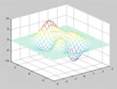
The second model expresses this perception of the triangle into algebraic, geometrical, and dynamical structures (equations on real numbers, force, energy filters, etc.), as represented by the following graph:
Finally, the third model shows the neural implementation underlying the cognitive operation.
For instance, the model identifies the optical and neuronal components of the visual pathway that are activated or inhibited; it describes the path of signals in many brain areas, their neural interactions, the motor control centres, etc.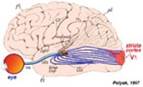
There have been many critiques of these distinctions regarding stances or models. We agree with many of them. The concepts are very general and fuzzy. But whatever the type and number of possible models, what appears clearly from an epistemological point of view is that the cognitive sciences build theories that are not just a single and controlled set of related formal and axiomatic languages expressing mathematical structures. These theories are in fact a collection of models where each one has a specific semiotic form, be it a natural language, a mathematical language or even an iconic form, for instance. The models interact with one another and they contribute, each in their own sphere, to the building of a specific theory. As McClelland regularly reaffirms: “Models are research tools that have their strengths and weaknesses, like other tools we use as scientists” (McClelland 2009:12).
4
More on the topic Theories and Models in Cognitive Science:
- Theories and Models in Cognitive Science
- Scientific Realism, Theories and Models
- Three Classes of Models
- The Content of This Volume
- Conclusion
- Contents
- References
- Conclusion
- Abstract
- Agazzi E. (ed.). Varieties of Scientific Realism: Objectivity and Truth in Science. Springer,2017. — 411 pp., 2017