Quantum-wave nature of the social phenomenon
For the current state of the world to become more clear, we need in the words of Vernadsky, develop a completely realistic view on the noosphere and hyper organic nature of social connections.
But working out of such a view is not an easy task. The problem is that the major categories, which we need to operate in this analysis, such as “spirit”, “mind-logos”, “mind-negative”, opinion”, “science”, “knowledge”, “psychology”, “reflection”, “intelligence” and others, are considered to be known, and they are too often arbitrarily used in regard to psychological representations only. However, according to G. Hegel (Encyclopedia of the Philosophical Sciences), their nature and the notion, the only important, are not being researched [55, 187]. The measure to which this fact complicates the study is evident from the way researchers approach to defining the nature of the social world.The fact that today there is no unity of views on the nature of the social world, even more to it, there exist diametrically contrasting approaches to its definition, is quite well known. For example, P. Sorokin says in his work Man. Civilization. Society that the social phenomenon is a social connection with a psychic nature that is implemented within the consciousness of an individual, going beyond its content and duration at the same time. This is what many call “the social soul”, this what others call civilization and culture, this is what others define through the term” the world of values” unlike the world of things, which form the object of study of natural sciences. Any interaction between whoever it occurs; if it is of a mental nature (in the above mentioned sense of this word) is a social phenomenon [170, 39]. He also wrote that all social relations were caused by a thought [170, 531].
However, E. Durkheim (The Division of Labor in Society) contradicts him by saying that social facts are not only qualitatively different from the facts of mental, but their substrate is different as well, they develop in another environment and depend on other conditions.
It does not mean that they are not mental facts in some way, i.e. they are in some ways of thinking and action. He also stressed that we even have rejected bringing typical for them immateriality sui generis to the complex, non-materiality of psychological phenomena.When revealing the positive connection of mental and social facts,
E. Durkheim states that the first (mental. - V.B.) ones are the susceptible matter that has not yet formed, and which changes under the social factor. He stressed that “sociologists have attributed a more direct role in the genesis of social life to the mental factor, i.e. the states of consciousness, being just transforming social phenomena, were mistaken for purely mental facts.. He also cited other evidence of the same provisions, the most important of which was the liberty of social facts in relation to the ethnic factor, which belongs to the psycho-organic environment, and that the social evolution can not be explained with mental examples only.
Our attempt to establish the nature of the social world by analyzing the epistemology of the term “social” was not successful as well. The notion “social” as a characteristic of one of the sides of social life was introduced by Karl Marx. In scientific works by K. Marx and
F. Engels in the analysis of society, its processes and relationships two terms were used: the public gesellschaftlich) and the social (sozial).
K. Marx and F. Engels used the concept “social”, “public relations”, etc., when it was about society in general, about the interaction of its sides: economic, political, ideological, etc. When investigating the nature of human relations, person to person, towards the factors and conditions of life, human position and role in society, they applied the notion “social”, “social relations” [See: 122, 489, 126, 7, 128, 25, 131, 167, 137, 488]. In their works, “social” was often identical with the notion of “civil”. Interaction of people within the framework of a certain social relatedness (family, class, etc.) was related to the notion “civil”.
In developing of the theory of society, the historical materialism, Marxist scholars started to identify the concepts of “public” and “social”. Here the specificity of “social” in its narrow sense, i.e. as the subject of sociology, was naturally lost. The opposite opinion prevailed in Western Europe and the United States, where the empirical sociology was dominantly developing. Here, when the question about the development of general sociological theory had aroused, the concept of “societal” (sozietal) was introduced, which was used to characterize the society as a whole, the entire system of social relations (economic, social, political, etc.).
According to Spencer, the relations between people mainly belong to the type of super organic phenomena. In his Principles of Sociology, he writes: “I thought it was necessary to draw attention to the fact that over the organic evolution there constantly occurs a new and a higher type of evolution that I would call super organic”. There are several types of it. Each one is determined by the characteristics of that animal realm in which it is observed. Spencer begins his review with the insects and finishes it with studying of typical human phenomena [See: 94, 209].
In the Soviet science the absence of clear distinction between notions of “public” and “social” was to some extent due to some language traditions. In the Russian language the terms “public” and “civil” were commonly used. Under such circumstances, the notion of “social” was viewed as a synonym to the concept of “public” and the term “civil” treated was related to jurisprudence. With the development of sociological science in the USSR, the term “social” acquired self-importance. It started to be more often viewed as a particular aspect of public relations [See: 174, 27].
We disagree with this definition of social, i.e. it lacks a reference to the specificity of the social aspect, which means that in this case the term remains vague. Thus, the practice of using the term “social” is disappointing.
It is impossible to establish specific quality of the concept, which distinguishes it from other concepts. However, as we see, the term “social” is in continual formation. A striking evidence of this is the replacement of the synonym to notion “social” with the concept of “public”, and “public” with “societal” etc. The metamorphosis observed and experienced by the term “social” suggests that there is a tendency for it to take its place in the system of philosophical categories.If we try to take a look at the social nature of the material from the position of different platforms of vision of the word we will be found in a familiar situation and will have to shape the theological, idealistic and materialistic points of view on the subject of research. For all known reasons, we will not consider the theological approach to determining of the nature of the social world in this research.
Idealist position on this issue is well seen in the works of thinkers of the Enlightenment. And their point of view rightly deserves much more attention, because at this stage of development of public opinion, the above mentioned concept started to attain philosophical content and scientific plaque, that is why they can greatly help us reveal the true image.
Several approaches have been developed here. One of the strongest, of course, is an approach to the nature of the social world, developed by G. Hegel (Encyclopedia of the Philosophical Sciences), who did not recognize it other than the self-developing World Spirit, which in its true nature should be understood as the pure activity [57, 96]. He also remarked that the spirit’s absolute definition is the active mind [57, 372]. However, the spirit exists in the form of knowledge for it as well. This particular moment G. Hegel emphasizes that the mind is the direct knowledge and belief [55, 186]. We must draw attention to the fact that G. Hegel uses multiple categories to identify the material from which emerges the social world.
Human consciousness, educated or scientific consciousness, to be exact, is the true social nature, so claims a significant number of researchers of the problem of the social. One of them was Jean-Jacques Rousseau, who in his work The Social contract or the Principles of Political Rights, underlines that enlightened social consciousness creates the unity of understanding and will in the social world, and hence the right contest the parts will appear, and finally the greatest strength of the whole will emerge [See: 188, 432].The reference to the class nature of social body formation, which we are used to go into in similar situations, will not help either. In this way e the origin of the social world was explained, i.e. from a position of class approach, for the purposes of ideological struggle. In the course of ideological analysis, although the various parts of it were described and analyzed, the need in their differentiating was merely satisfied; however the very notion of species and its subspecies, as well as its nature and substance, remained uncomprehended and unrevealed.
Thus, in philosophical and sociological literature the stable perspective on the nature of the social world has not yet been established. It is linked to the way of life, activity, action, public relations, public and individual consciousness, noosphere, knowledge, divine substance, etc. But neither of these positions can suit for the simple reason that there is no guidance on specificity of substance of the grounds, i.e. we can not distinguish it from others. As K. Marx says, “the explanation, in which there are no instructions on differentia spezifica (specific difference. - VB), there is no explanation” [See: 120, 229]. We are clearly caught in the semantic impasse.
The way towards the justification of specificity of the nature of the social world should, in our opinion, come, from the source of production of social phenomena, i.e. from the side of attribute properties of a living human organism.
So let us return to the mediation stage of the material and spiritual components of human structure. It represents, speaking the Hegelian language, the “quality knot” of the objective world, sustainably and naturally related phenomenological, noumenological and social worlds in a coherent unity. Its nature corresponds with all of the three realities. Here is our vision of the nature of the link of mediation. It needs to be mentioned that in the methodological part we talked about the fact that the social should be regarded to as things. But, as you know, “the thing is the power that can only be caused by another power. So, in order to explain the social facts, energies, capable of producing them, should be found, as E. Durkheim (The Division of Labor in Society) wrote.
Here we have the reverse case, when there is energy, and a thing and nothing need to be explained, the social world as integrity under this notion. In other words, we need to cut this energy knot by philosophical means into structural parts and provide evidence of our version of the nature of the social world. And the beginning of our philosophical analysis is the justification of the criterion for separation of energy interactions.
Our methodological tool of their separation is based on the fundamental laws of self-motion of the universe. This means that we put forward a working hypothesis that the criteria for the separation of the above mentioned processes are the vectors of displacement of the input substance. Above we have shown that these are only two. One, conditionally, in the horizontal plane, and another in the vertical, again conditionally. In the horizontal occurs the process of interaction of the material and spiritual foundations of the Universe, and in the vertical happens the displacement of the universeum between Micro - Macro - and mega levels.
We should proceed from the fact that this power unit appeared in the structure of a human organism at the stage of mediation, which had been formed in the course of the dialectical interaction of the psycho-physical and the psychological. This means that in the course of subsequent philosophical analysis of the problem, there is a need for the sense of the notion “the intelligent” to be researched, within which all of the contradictions of “quality knot” disappear.
The content analysis of the concept of “social” should be set off for a while as originally we are dealing not with the social world itself, but with a particular type of energy, from which it arises. In this regard, here we have to consider the movement of the nature of the notion “intellectual” as an independent whole. Algorithm of self-development of a concept as a whole is presented in the Hegelian Science of Logic. Then we have nothing to do but to reveal the essence of the concept of “intelligent” according to the logical scheme of existence: phenomenon or being - the reality. Let us get to the Summary of the above mentioned stages of self-development of the concept “intelligent”. We should start with considering of the essence of the “intellectual” as a reflection of the universum in itself. In other words, the essence, taken primarily as a direct, is a presence of being of reason, opposed by the other available being of the same reason: it is only a significant being in contrast to the irrelevant.
With all of the above, it follows that the essence of the intellectual should be regarded to as the original form of the universe, subjected in living substance and thus opposes it as essential. In content the intellectual is a new quality that arises on the basis of organic synthesis of the physical and spiritual universes. We are led to such a conclusion by dichotomous view of reason of the world. Their functional condition, we will consider as entelechy. This does not contradict this of notion of “entelechy, which was put into it by the founders of philosophy, Aristotle for instance and others. We have very limited information concerning entelechy. Everything we have today is what the works by Aristotle, Leibniz, a few representatives of vitalist direction in the world philosophical thought, provide us with.
In Aristotle’s “metaphysics” energy means action, the transition from possibility to reality, and entelechy means the end result of this transition. However, in most cases he does not hold this distinction and uses the terms “energy” and “entelechy” as synonyms. The existence of the essence of the “intellectual” is bound to the worry of a human soul, which is the expression of its essence in the form of attribute human qualities.
It should be remarked that a specified moment is the transition of the essence of the “intellectual” into its existence as a human reflexivity, which is an extremely important and fragile moment for all the further analysis of problems of the social world. Thus, intelligence manifests itself in our world by entelechy, since, as G. Hegel (Science of Logic) wrote, identifying of oneself is already a personal activity [48, 184]. The next movement of the “intellectual” from the existence to the phenomenon, to Hegel’s mind (Political Writings), is the transition into something completely opposite, so it is infinite, and this coming of the opposite from the infinity or its nothingness is a jump, and the existing image in its revived power is primary for itself, before it realizes its relation to the strange [51, 274].
Here, when considering the structure of the concept of “intelligent”, we analyze only the dialectics of material and spiritual reasons. We have already mentioned that such a mutual transition is basically possible and necessary even in the living substance. To ensure constant interaction of these grounds in the structure of human man’s personal identity two functional organs have been shaped. They are well known to psychologists. From the perspective of the material component it is psychophysical, and from the spiritual it is psychological.
Philosophers know about their separate existence and have recorded it in the idea of spiritual duality. One part of it exists as unconscious and as such that is drawn into the life cycle through intuition, and the other as conscious or theoretical. For example, F. Sche- ling wrote that the intelligence was double productive: either blindly and unconsciously, or freely and deliberately: it is unconsciously productive in contemplation of the world, and deliberately - in creating of the ideal world [205, 182].
Once, G. Hegel (Encyclopedia of the Philosophical Sciences) also pointed to the dualistic nature of the spiritual when he wrote: “Knowledge (conscious. - V.B.) now comprises the subjective mind and objective mind (unconscious. - V.B.) is now based on knowledge [57, 310]. F. Scheling even criticized G. Hegel for despising the unconscious, skipped it and actually described the theoretical spirit.
Reference to this fact is found with S. Frank, who believed that the inner world of a human is heterogeneous, it contains concerns or feelings of the “peripheral”, “external” type, associated with physical senses of pleasure, bitterness, fear, etc., but there also are deep concerns that reveal the nature of the human nature better. Frank defined the worries of the first kind as emotional and second as spiritual [See: 189, 7].
Even the mathematician Poincare, for example, pointed to the existence of the two types of mind (conscious and unconscious), each of which conforms to the laws of its own dynamics, each of which performs different functions with limited possibilities of interference in the activities of one another. So the problem now is to show the organization and operation of the mediation organ. In the existing literature, we can only find its general characteristics that always come down to one and the same, the human soul. For example, G. Hegel (Aesthetics) wrote on this issue that we had considered a special reality in its closed specificity as a something positive. But this independence is subject to rejection inside of a living creature, and only an ideal spiritual unity within the solid organism retains the power of positively correlation with itself. The soul should be understood as this perfection, assertive even in its rejection. Therefore, if there is a soul inside of a body, then this is a phenomenon of assertive character. A soul, though, manifests itself as a power resisting the independent embodiment of members, but it is what creates them, because it includes what is found as the outside forms and states as inner and perfect beginnings. Thus, the external includes that internal with his positive sense; the external, remaining only the externaw, would be nothing but abstraction and one-sidedness [58, 131].
Substantial element of consciousness is represented by the so- called “intelligible matter”. The process of its comprehension by psychologists reflects a long-standing fruitful L. Feuerbach’s idea of the existence of consciousness for the consciousness and consciousness for the being, developed by L. Vygotsky. This idea at different times and from different points has been mastered by A. Leontiev, A. Zaporozhets, V. Zinchenko, S. Rubinstein and other psychologists. N. Bernstein for example, introduced the concept of human movement and its biodynamic tissue. When adding the biodynamic tissue to the number creating consciousness, we get two-layer fabric or a two-level structure of consciousness. The layer of being is formed by the biodynamic tissue of movement and action and by sensual tissue of image. Reflexive layer is formed by the value and meaning.
All components of the proposed structure are already arranged as objects of scientific research. Each of these components is subject of numerous studies, discussions regarding their nature, properties; more ways of their analysis are searched for. Of course, each of these entities has been studied both independently and in a broader context, including studying in the context of the problem of consciousness, but they were not presented as integral components of its structure” [77, 189]. So, in the course of preliminary analysis, we came to understanding of the necessity to recognize the hypothesis that energy is the intermediate product, which includes the material and spiritual in the human structure, successful. But this energy is not infinite. It is generated by senses, i.e it has the origin of information. In light of this hypothesis we consider the following statement by M. Syetrov very important “the essence of information cannot be understood without considering it as a special form of energy processes”. This is reflected in the developing functional energy theory of information “Description of information mechanisms at various levels, writes M. Syetrov, indicates that the information above all has energetic and functional nature” [161, 77].
S. Lazarev, in his turn, writes: “Any object in the Universe can be considered a process, while any process is also an object. In every process and object oscillatory movements occur from the information unity to the physical differentiation. Physical differentiation should strictly correspond to the spiritual unity. The prerequisite for the development of these two opposites is the presence of the third element that provides for the unexposed presence of one opposite in the other. This role is carried by the energy, which is a mediator, determining the development of the Universe” [107, 32].
The problem, as we see, is quite difficult, but the time required for its solution. We are, of course, not claiming for its final withdrawal from the stage of being a subject to philosophy and psychological science; we still would venture to suggest another working hypothesis for its solution. Its essence is, and we will adhere to the fact that the mediation organ comprises, naturally, as the physical and spiritual components, of two parts of the original intermediate form of substance of the universe: matter, known in modern psychology as “living tissue”, and information that is at the stage of mediation in a particular form (knowledge), namely in the form of energy momentum.
It has been shown that the interaction process occurs in the form of weak electromagnetic interaction. The magnetic field is guided by the will of a human. A human as a creature gifted with the ability to create the new, which has consciousness and will, is the only of all living creatures “makes its living the subject of his/her own will and consciousness” [134, 93]. Let us emphasize another opinion. The essence of it is that the mediation process is actually a human process, which is nothing else than just a physiological or mental life. Mediation takes place in the biological organism as an interaction of psycho-physical and psychological components [See: 105]. Psychologists know that psycho-physical component is related to human feelings, while a psychological one is connected with meanings. The impulses are initiated either by the “aim reflex” (instinct) or the ‘will criterion’ (consciousness). The above mentioned process of the psycho-physical and the psychological interaction in human body was fully described by M.Amosov [See: 5, 52-53].
In addition, it is known that energy transfer from the structural condition into the phenotypic one is accompanied by energy release while the reverse transition from the phenotypic into the structural one takes it from the outside. R. Abdieiev noted in this respect, that “information processes are impossible without energy consumption”. The fact was also confirmed in the course of solving the well known Maxwell’s demon problem. Writing a book or storing information in the form of a drawing requires certain amount of energy. Similarly, in the animate nature recording information e.g. genetic information will not be gratis [1,178]. Even in the physically quiescent state the human being consumes 2000 cal. a day, which is a payment for information processes in the human body.
Information flows, resulting from the interaction of the biological organism with the environment, consist of food intake and assimilation (structural information), on one hand, and the perception of different operational (social, scientific and technological, spectacular, musical, etc.) information, on the other.
However, not every living substance is capable of assimilating phenotypic information. It should develop this ability in the course of its ascending evolutionary process. There is a scientific hypothesis, saying that “at some stage, where living substance acquires 15-20 billion neurons, the biological development is replaced by the non-biological one” [87, 8]. Thus, biocenose changes into anthropogenesis.
Moreover, living substance acquires new qualities, since every neuron has its field, all of them are connected, organized by conductors. It’s a computer of conductors. This is the way the field life form emerges. It can perceive information from outside, determine it, adapt, reproduce and multiply it. The field life form does not have mechanical borders. V. Kaznacheiev wrote, that “it may both stay in protein-nucleic life and leave it” [87, 8].
The appearance of the idea of the field life form primary in the human is the turning point in the research to rationalization of the social world nature itself, because we deal here with the explanation of the qualitative leap in the living substance evolution, which has suddenly turned into the rational living substance. It took less than 0.25 per cent of evolution time according to the most rigorous calculations!
Thus, there is an evolutional breakthrough! “In connection with it, it should be assumed that in the two kinds of living substance in the Earth’s biosphere combined (before a certain point in evolution) its protein-nucleic form’s properties and functions dominated”, wrote V. Kaznacheiev. The field form joined the first one becoming its inalienable though not predominant part. The neuron brain mass of huminides increases. Further psycho-physiological intellectual brain activity cannot take place, exclusively due to the existing neuronal- synaptic links. The field form of neuronal links becomes a necessity. Those special huminides in which the change of living substance form’s functional dominant takes place turn into the human predecessors and following that into the human. (the second leap of around 40 thousand years ago according to Ya. Rogynskyi)” [87, 8].
Therefore, it is hard to overestimate this point. This is the peak of substantiating the nature of the social world. At last, we have found the movement and the material that lead living substance out of its boundaries and turn it into rational living substance. The latter acquires specific attributive quality of subjectivizing the original nature and begetting the social world. It is weak electromagnetic pulses that create force fields. The legitimacy of this mainstream theoretical position concerning the nature of the intellectual in the being was proved by the long-term research results obtained in the biophysical laboratory at the Institute of Clinical and Experimental Medicine under the Academy of Medical Sciences of the USSR. V. Kaznacheiev holds, “Studying ultra-weak radiation in human cells and tissues for many years we arrived at the conclusion that human tissue culture emanates electro-magnetic field particles. It can be assumed that for a cell the emanation is an inevitable vital function, i.e. the fields are specific kinds of electro-magnetic fields. They serve as an inner system of information transfer for the cell itself, a system, which is indispensable for the cell’s life. It is not once that such assumption has been voiced. Obviously, it is a universal regulation of spreading living substance in the cosmos” [87, 28].
A living substance, especially an intellectual one, contacting the surrounding environment, even more precisely, cosmic environment, may receive diverse products, among which is, first of all, the penetrating proton stream, the Universe’s main “building material”. As a result, it becomes active, collects and distributes in the biosphere the energy received in the form of radiation, ultimately transforming it in the Earth environment into the free energy capable of executing work. It means that we have found the conditions for an intellectual living substance to create the social world [See: 105].
It is reasonable here to take a closer look at the oriental philosophy, particularly, Daoism. Lao Tsy is known to have suggested a cosmological theory, according to which “Dao” gives birth to “chi” (energies), followed by “the form” and “substances”, after that, there appear “all things” [See: 194, 83]. This approach is typical of contemporary physics where energy may be prior to substance. [See: 155, 18-19]. The social world, as we can see, is not an exception. On the other hand, living substance is exposed to the photon radiation field, which also has an effect on it. The number of photons in the Universe is 109 or 1010 times as high as the number of protons. [See: 87, 28]. It means that the human getting in touch with the surrounding environment, filters cosmic substance - energy - information flows, as the jelly-fish filters sea-water, extracting the necessary elements from it and doing a useful job of cleaning the sea at the same time.
The very processes of assimilating the external material by the living substance to produce the social world are truly original. A case in point is the proton stream assimilation as the process of arousing the meaning which is present in the objective form of the Universe in the human organism. According to G.Hegel’s thought (Encyclopedia of the Philosophical Sciences), the fact that instead of the influence of external causes for the organism we have found the definition of arousal by the external potencies is a significant step towards the true knowledge of organism [56,504].
In physical terms, the interaction is a kind of resonance of an individual’s inner force field oscillation and the oscillation of the external energy-information field of the social unit (group, team, ethnic community, nation and, ultimately, humanity). The mechanism of selfarousal of an individual -social group energy interaction was named “passionarity”. L. Gumilyov gave a detailed description of the mechanism, understandably, in terms of his creative application of Gurvich’s field theory concerning ethno-genesis phenomenon [See: 137].
In this respect, it is important to remember that all genetic information of a bio-system is concentrated in a macromolecular package, and isolating the necessary information and structuring it in the sequence of exchange processes is determined by the dynamic field function. The bulk of chemical transformations in a cell estimated as 1011-1012 reaction acts per second is regulated by the function directing the cell’s fields and materializing through chemical chain reactions [See: 87, 57].
The above given model of the Universe self-evolution in levels suggests that with an impulse from cosmic consciousness the macrolevel enriches, conversely, with an impulse towards the bases of the cosmic consciousness the macrolevel commits its sense to the universe. Thus, it appears that the macrolevel, at which the living substance’s biota develops, as an inseparable unity of irrational and rational, is a gigantic quantum-vacuum pump of a membrane type in the Universal organism to pump through universal material, providing at the same time its transformation. Whereas the transformation process is a Universe transition from materialization phase to dematerialization phase. Considering, that the macrolevel, like the universum as a whole, is of quantum nature every emerging thing in it is bound to have quantum nature and pulsate in the rhythm of the membrane structure described above. If the hypothesis further proves true, then the social world is needed by the universum as a vital organ to make its self-development possible. In all probability, social worlds are organs of self-motion of the universe. What it all is really like, is still to be found out. But there is a good reason to believe that the reverse process occurs in the anti-world, where the dematerialization phase turns into the materialization phase. Then the circle closes, because there is an available self-motion mechanism of universum.
Meanwhile, let us investigate the notion of “intellectual” in the being. The transition of the essence of “the intellectual” into its own being is therefore a process, the consequences and preconditions of which differ only in form. This transition has the two opposite meanings; on the one hand, each of its members represents a moment i.e. it is something transitional from the immediate to a different one so that each member is something fixed; on the other hand, each of the opposite phenomena also has the meaning, that they beget each other and is envisaged by each other. So each of the sides is a motion.
Mind, acquiring the form in the phenomenon, is also the determination of its meaning; cause and action, both sides of the relation constitute another meaning of “the intellectual.” The unity of form as a relation of being in the being is, first of all, formation, transition of one distinctness of being into another one, more precisely, it is an interesting for us process of form transition from subjective (psychological) into objective (psycho-physical), which, in its turn, having gained a certain degree of maturity, starts producing the field form of rational living substance’s existence.
From the material considered on the next stage of the essence of “the intellectual” follows a very important conclusion that the selfdetermination of rational living substance in the field form has the shape of objective exterior, and as Hegel writes (Science of Logic), it is at the same time identical to itself, it is an absolute contradiction [50, 227]. Thus, solving the dialectical contradiction between the psychophysical and psychological or sensual consciousness and the rational process of experiencing and realizing is an inexhaustible source of material for the social world formation. Nevertheless, let us continue studying the movement of the essence of “the intellectual” on the next step of the reality stage. According to the G.Hegel theory, reality is the unity of essence and existence; the essence devoid of appearance and the phenomenon devoid of its basis, i.e., undetermined constancy and diversity devoid of stability, find their truth in this unity. Reality is “efficiency (activity)/* efficiency (activity) is not only one of reality predicatives, but its attribute. Inefficient (inactive) reality is a contradiction in determination.
Thus, this absolute form makes it visible within itself and defines it as an attribute. It can be directly inferred from the history of philosophy that the result of the formation of “the intellectual” or its attribute is egregor under which we shall understand a pulsating force field. As such a field emerges on the basis of human thinking processes, it may well be regarded as a thinking ether. Owing to it, the Earth humanity is able to finally break through myriads of external dependences and rise to the space. So, in egregor we have the moment of synthesizing the physical and the spiritual or the phenomenal and nominal worlds into a specific material out of which the social world emerges. The latter, as it follows from the available literature in philosophy, is an ether branch of the basic substance’s being.
In the semantic terms, the product under consideration, as G. Hegel (Philosophy of Law) notes, is ever disappearing and selfrepresenting phenomenon, a light ether body disappearing immediately after formation, it is not a subjective intelligence, not an accidence of it, but the rationality itself, like the real, but the way this very reality is ideal and endless and immediately in its being its own opposite, namely, non-being; thus the ether body representing extreme terms is real as a notion; but in order to preserve the essence of the body, its ideal quality must directly come to naught as well as apparent direct connectedness of one and another, the appearance and the death. This average term is fully intelligent, it is subjective and exists in individuals of intelligentsia, but in its flesh character it’s generally objective, and that subjective being for the directness of this essence’s nature is given directly as objectivity. This idealized average term is the language, a mind’s tool, a child of an intelligent creature [54, 291].
Egregor is persistently studied only by esoteric philosophy, which understands it as society’s consciousness as opposed to individuals’ single consciousnesses. Egregor is a combination of the phenomenal and nomenal, a revelation of the system of ideas in certain conditions of the phenomenal world that is the world of external manifestations. For instance, V. Shmakov writes, that “the aggregate of group member consciousnesses is something actual in fact in esoteric tradition it is referred to as egregor. So, egregor is a natural aggregate of actual consciousnesses of all group members” [207, 261]. At the same time the family consciousness is what he calls the simplest egregor. [See: 207, 274]. Alongside, he finds economic, political and other types. [See: 207; 267-269, 279, 283-285]. The given product is a specific force field sometimes described in literature as a functional culture element or a specific formation of ether type. Such “whole” was characterized by K. Marx as “a special ether defining the weight of everything that appears in it” [125,733]. This “whole” is “the beginning” in V.Lenin’s opinion as well [See: 109, 318].
Further, beyond any doubt the theoretical thought created by the humanity is its most rational kind. The thought is of energo-infor- mational nature, which is consistent with the basic nature of our world. On one hand it is the product of the human’s goal-oriented theoretical or intellectual activity, on the other hand, it carries in quantum-vacuum form the sensual information about objects and processes taking place not only within the borders of our Universe, but also far beyond it. It is the theoretical thought that raises the world evolutional process to the cosmic level, gives it special geological importance and total character. Today it is quite clear that the thought, including a theoretical one, is the outcome of neutron interaction process in human brain, now available for studying by contemporary science. The process in question is, first of all, dealt with by quantum bio-energo-informatics on the grounds of researching brain substructures exchanging weak and ultra weak energo-infor- mational signals. Due to its achievements there is an opportunity to take a fresh look at the phenomenon of telepathy, telekinesis, clairvoyance (extrasensory perception), bio-location, poltergeist, levitation, reincarnation, etc.
For electron neutron process is an energy cloud, a spot with an individual pattern and weight. And, naturally, with their magnets gravitational and photon copies inimitably filling the space called noosphere. This is how a thought goes beyond the head. This is how it becomes material. This is the mechanism of its influence on the global order. Let us recall: “Each thought influences the course of global development.” It is not too early to point out that the lepton electro-magnetic hypothesis about material carriers of physical fields in the form of leptons (light elementary particles beginning with electrons) and their subclass of microleptons (beginning with neutrino) looks rather attractive. According to the hypothesis, the surrounding space is known to be penetrated by microlepton waves conveying the world lepton gas flow. In opinion of its creator B.Iksakov: ”There are standing lepton waves around all bodies”, they are quantum holograms inserted in one another and imitating the bodies’ geometry and structure. Each hologram contains full information about a body being its “information double” [82, 15].
In physical terms the phenomenon in question develops at the macrolevel as a social world having been naturalized by the the personality in the objectivized form. Personalities themselves are its main architect and builder. The above given arguments increasingly convince us that we have properly defined the nature of the second nature as a corpuscular wave field producing rational living substance.
Having analyzed the change in the essence of the intellectual along the chain of existence - phenomenon or being - actuality we have highlighted the regulations of its transition from one state to another, which is based on effective sense transformation. We have also directly arrived at the interpretation of our understanding of the previously defined category in order to record its aforesaid most essential properties, natural connections and relations. Thus, from all stated above we conclude that “the intellectual” notion model can be described as follows (See: fig. 2.1).
So we suggest a working definition of “intellectual” category, which, in our opinion, should be understood as a way of free energy release by the human in the process of mediation of the dialectical interrelation of the substantial and the spiritual fundamentals of the universum representing internally tense entelechian form at the beginning, later developing in the phenomenon as a total reflexive process manifesting itself in reality by means of pulsating specific ener- go-informational egregor force field.
In terms of ontology of the intellectual we can observe that in the sphere of the material at the current stage of mediating the fundamental interaction between the material and the spiritual, rejection of a part of energy in the signal form can occur, while in the sphere of the spiritual rejection of a part of knowledge during the stage of transition from sense to structured information is possible. Thus, egregor is the very energo-informational field or force field, of which the social world pattern is created. It is a substance of the social world. In the pure form It has per se neither matter (substance), nor spirit (intellect). They exist here in a modified form as a natural unity. It is the universum objectivized by the human. Paradoxically, the universum has turned itself inside out. First it transformed from the objective state into the subjective one having taken shape of a human
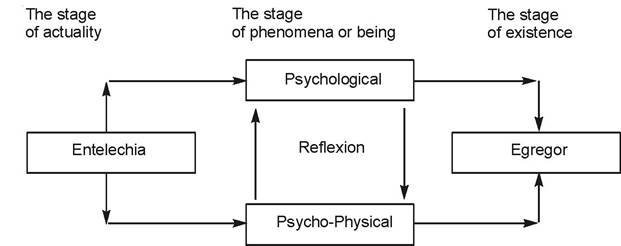
Fig. 2.1. The structure of philosophical category "intellectual"
organism, then it started objectivizing itself intensively into the social form.
Ontologically, egregor is a weak electromagnetic interaction of material parts flowing out of human brain enriched by intellectual parts i.e. pieces of knowledge. The social world fabric is made of this material of quantum-wave origin. V.Vernadsky repeatedly emphasized the idea of special states (organization types) of space-time phenomenon connected with the vital activity of living organisms, living substance.
The egregor producing process then coincides with new knowledge production, that is, it emerges when the universum transits from its spiritual to the material state. In the same case, movement developing along the line of “material-spiritual”, energy consumption by the human body from the environment occurs. Egregor represents itself in the phenomenon as a pulsating energo-informational field. Double nomination here is not coincidental. In terms of structure, it consists of energy quanta and the semantic quanta. After determining the elementary particle representing egregor in the being the double nomination will be surmounted. Technically, the aggregate force field is made up of intellect products, which are rejected by separate individuals. A force field constitutes itself by the weight of energy and Semantic charge acquiring a stable structure. But as they are pulsating elements, they form highly dynamic functioning systems. In reality the process of both self-generation and self-destruction of such social systems is constantly taking place, as lepton molecules (mother-child, a couple in love, predator-prey, political parties, religious sects and world religions, god, etc.). They form more powerful fields, the biggest of which is force field or energo-information field of the Earth, existence of which is currently beyond any doubt. In practice, it has several names. Here we have only theoretically explained the legitimacy of its existence.
As energy-force field self-production is a natural process, while explaining the regulations of its self-manifestation and functioning one should proceed from the general thermodynamics regulations. It is time we expanded the borders of thermodynamics to the Semantic process energy state and modified its conclusions concerning intellectual energy forms. The world is singular that is why the same laws and regulations work at the same organizational levels. Depending on the universum self-movement phase, only the form of its external manifestation changes. We are about to confirm V.Vernadsky’s idea
that in different branches and at different hierarchical organizational levels of the Universe using different types of material-energy flows extremely diverse living substance forms based on different field forms exist. Particularly, this point means that there exists a specific form of rational living substance with electromagnetic species field. In this way we also prove P.Sorokin’s genius idea reading: “the most complex civilization forms derive only from developed human psychic life” [170, 490].
V. Skarbnikov also points out the existence of objectively programmed general physical regulations of space-time local sphere, in which the conditions for the appearance of rational living creatures are formed. Particularly, he writes: “As a result of the cosmic whole evolution there emerge the living substance and rational living substance; the appearance of specific, most complex organization forms of cosmic material flows in certain local spheres in the framework of space-time Universe organization becomes objectively possible” [87, 33].
We intend to prove further the above stated hypothesis. Though disputable, it nevertheless does not contradict the functional definitions of life previously formulated by A.Kolmogorov and A.Liapunov.
At this point, the basic law, according to which the philosophical category “intellectual” self-develops, can be formalized. The essence of this law is that free energy released by humans into the cosmic environment, on reaching critical amounts caused by the forces of external compression in Earth conditions begets a general planetary life form of a new quality, which should be called social. Te latter is the product of individual pulsating fields integration. It should be specially emphasized that, rational living substance evolutionally grows from the biosphere, which means that it is such natural body as the “initial” living substance. Thus, rational living substance can also be studied by natural science.
Therefore, in the course of human vital activity a specific formation called by V. Nalimova and Zh. Drogalina “semantic field” is built and functions stably. They write: “a lot of terms must have been earlier assumed to denote the problem area being considered in terms of the unconscious and the verbal diversity indicate that the authors attached more importance to particular separate components of this exclusively broad field making their own emphases. S. Freud called it subconscious; Jung preferred collective unconscious; for James it was a stream of consciousness (free associations); for Biuk - cosmic consciousness; Bergson used the term “’intuition”; Husserl -transcendental phenomenology; Whitehead - the category of eternal objects, Popper - the third world; Assagioli - subpersonality; Leibnitz - the idea of a dark psyche in which our mind’s sense dozes; Hegel - self-developing spirit... Plato called it the world of ideas” [144, 365-366]. Our national scholar S. Krymsky’s thought-forms (archetypes) can also be added here.
Apparently, in the short run scientists, most likely, bio-physicists will reveal the substantive basis of the social world. In all probability, it will be the bit as a unit of information quantity which is becoming increasingly predominant in the field of informatics. We cannot exclude the perspective of recognizing a nooman as the elementary particle of the social field. This particle is now strenuously sought not only by cyberneticians but also by psychologists [See: 77,104]. Scientific practice has time and again proved that the very fact of setting the goal to discover the particle is another proof of its objectivity, importance and existence as goals are never set unless there are prerequisites of achieving them.
Further, humanity expects one more breakthrough in the future, which must take place owing to the rapid accumulation of intellectual potential by the planetary mankind. In this respect, the statement that “if the cooperation of billions of cells in human brain may capacitate our consciousness” is true, then it is even more reasonable to assume that the cooperation of the whole humanity or its part may condition what Comte called supra-human supreme creature. And it is clear that the efforts at creating artificial intelligence is a necessary preparatory step on the way.
The universum’s “effective nodosity” considered above in the structure of rational living substance, is strictly defined, as we now understand, by the term “vital activity” of a human body in this case. “Vital” ingredient, as it can be inferred from the previously stated hypothesis, reflects the interaction between the material and the spiritual, where as “activity” reflects generating free energy capable of working for the formation of social environment. It was as early as in Bhagavad Ghita that we found the idea that “this world is connected with action”.
Thus, “effective nodosity”, which has a gigantic energy potential, is the integration of the first nature, the human and the second nature. This “effective nodosity” is a derivative of the fist-born (original) state of universum. With this approach to the human we bring into accord derivative discrete values-energy quanta which are in line with the possible universum states: natural and artificial, objectivized and subjectivized, observable and non-observable, visible and invisible.
However, energy in general, to say nothing of ameliorated intellectual one cannot be the basis for the Universe because it is observed and measurable. Its basis should be thought to be non-existence being in the state of non-observability, which is a potential ground for reality, the property of which is observability [See: 185].
For the human possessing “effective nodosity” and different kinds of energy, multiple and instant entrance both into the physical sphere and the Semantic vacuum sphere becomes available. In keeping with its fundamental needs by means of energy fluctuations (influence) it alternatevly gives photon or the semantic vacuum (possibly both at the same time) sufficient for producing photons or the semantic vacuum particles amount of energy, which has not been given a name so far. In such a way the vacuum universum state becomes observable after being unavailable for any observation. And it is later by means of further subjectivizing (modifying) that in a biological organism the universum finds the exit to the surrounding environment. It happens due to the special process of objectivizing a person’s inner meaning.
Thus, characteristic of the social world is that its basis is an intellectual energy of the human as a rational living substance which emerged in the course of dialectical interaction of the physical and the semantic vacuum in the structure of a biological body. It means that its nature is a derivative from the intermediate product - psychic energy of a living substance, in which Nothing and Something have already undergone a transformation, and are creating a new reality known as social. In its turn, it is just a transitional moment in the universum self-evolution. In such a way the universum multistage self-motion mechanism works. Being multi-stage is an attributive property of the universum providing its exit into Something (being) and returning into Nothing (basis).
Thus, we can finish our analysis of the social world. But before we do it let us set out the most important conclusions from the revelations above. Essentially, they run as follows. Firstly, we have surmounted the diversity of views on the nature of the social world. For what we had to single out, the two biogenesis levels: that of a primitive living substance and that of an rational living substance. The transformation of the former into the latter has been demonstrated.
Secondly, corpuscule-wave nature of the social world has been proved. It means that the social movement form seamlessly merged with other lower universum motion forms. The similarity with Heitler - London quantum theory of chemical bonds formulated in 1926-1927 by W. Heitler and F. London is evident. Consequently, we can conclude that the regularities of living organism self-evolution as a whole hold true for the social world.
Thirdly, in the course of our analysis we have found out that the rational living substance, human, is characterized by the field form. On these grounds the hypothesis about existing specific field form of generic humanity life, based on the contradiction of the total character in the structure of the universal base of Universe was substantiated.
Fourthly, the philosophical category “intellectual” has been defined as a means of producing free energy capable to realise work beyond the human body. At the same time the human body becomes an implement of producing social world based on intellectual energy.
Fifthly, it has been theoretically proved that biological life lies in psychic substance, while generic human life, creating essentially different in its formation and functioning principles social world, lies in intellectual one. Furthermore, the human race in order to maintain the necessary vital level creates collective intelligence, which finally carries it beyond the bounds of the Earth. The humanity strives to reinforce this function at the expense of creating artificial intelligence. Now we can turn to considering the essence of the social world.
2.3.