The essence of the social world
The essence of the social world should be understood as its intrinsic meaning manifesting itself in the unity of its diverse and controversial forms of being. While a social phenomenon is some kind of manifestation (expression) of the social world, external immediately given forms of its existence.
As the social world is a totality, comprehension of its nature is the main object of philosophy, precisely, such a specific branch as social philosophy. Previously, comprehension of the nature of the social world was realised by sociology. From theoretical sociology we know that the nature of social phenomenon has been differently interpreted and there has been no agreement in this respect so far. F.Giddings writes that professor Ludwig Gumplovich attempted to prove that true elementary social phenomena are conflicts, mixings and assimilations of different ethnic groups. Novikov expanding the generalization goes further, stating that social evolution is, by its nature, a progressive conflict modification made by the community with the conflict transforming from physical struggle to intellectual conflict as a result. Professor de Greef considering the problem in a different way finds agreement to be a specific social phenomenon feature, thus, measuring social progress by conscious agreement replacing coercive authority. Gabriel Tarde, the author of some interesting original researches, which left their mark on the realm of psychological ideas, proves that the primary social fact lies in the phenomenon inheritance prior to any kind of mutual assistance, division of labour, or agreement. Professor Emile Durkheim arguing against Tarde’s conclusions tries to prove that essential social progress and, consequently, primitive social phenomenon consists in subjecting every individual intelligence to external activities, thinking, and feelings [2, 301].There is no clarity in this respect in the works of contemporary authors regarding the issue in the light of the object of sociology. For instance, W.Outhwaite sees the social in the notion of “social reality.”, N. Smelser sees it in the phenomemon of “society and social relations”, V.Ivanov relates it to the notion of “social relations”, V. Yadov to the category of “social community”, Zh. Toschenko and V. Boykov believe “civil society” to be the main object of sociology, while M. Komarov totally abstracts his mind from the objective meaning of social bonds and thinks that initial social elements are “durable forms of these relations, more precisely, typed or standardized aspects of social relations, in which unstable and varying social reality seems to reinforce” [95, 37].
Finally, there have been numerous attempts to define this concept. One of them was made by the group of “Sociology” book authors. The book by the Russian scholars edited by G. Osipov and published in 1990 states that “the social” is the combination of social relation properties and peculiarities integrated by individuals or a community in the course of common activity (interaction) in certain conditions manifesting itself in their interrelationship, in their attitudes to their social positions, to the events and processes of social life [174, 27]. This typical vague formula of the social adds nothing essential for understanding the nature of the social world.
Paradoxically, the above mentioned notion is not found in the Philosophical Encyclopedia at all, and among 150 terms including the adjective "social” such as: “social pathology”, “social pathology norm”, “social pathology of signs”, “social physics”, “social physiology”, “social deviation”, “social dismemberment”, “social illnesses”, “social instinct”, “social reactions in animals”, etc. the notions “social movement” and “social movement forms” are absent. Admittedly, there is one mention of “social movements” but in the meaning of “popular movements.” So far, social matter movement form (we shall keep to widespread terminology) are usually limited to general considerations of manufacturing, productive forces, production relations or statement of the fact that within society there are social systems of different order.
At the same time it can be inferred from the economic and philosophical heritage of K. Marx and F. Engels that the cause of “the social” is social division of labour, which they initially believed to be the clue to understanding the whole history of social development and the explanation of the origin of social or “personal relations” later on. It is in their works that the social appears as, first of all, “human attitude of a human to human” [134,154].In German Ideology the classics of marxism clearly stated the idea of isolating individuals’ activity in relation to their own corporal organization,“alongside their attitude to the nature and one another” [121, 24]. They saw the specifics of social relations in the fact that labour process allows special relations connected with living conditions and expanded reproduction of the individual as labour force and the personality, that in these relations people act as personalities, subjects, individuals expressing certain attitudes of a human to human, “personal relations,” attitude of a person to a group, a community, the society etc. [See: 121,438-441; 130, 181-183, 243-244, 586-587]. V. Lenin also made an important conclusion about a practical identity of a human to human used to “signify social or human attitude of a human to human” [See: 111, 14].
Social philosophy proved that “the social” is not a synonym to “the societal”. It is a widely shared position in theoretical works [See: 174, 25-26]. This fact should be accepted as positive. However, in practice, unfortunately, very often the above mentioned notions are still equated, which naturally results in logical mistakes and misunderstanding. Among those who contributed to revealing specific features of “the social” are contemporary researchers such as: Ye. Anufri- iev, G. Arefieva, V. Andruschenko, A. Bychko, I. Bychko, P. Gnatenko, G. Zaichenko, Ye. Ilienkov, M. Mamardashvili, S. Franko, N. Mikhaili- chenko, V. Shinkaruk, V. Pazenko, M. Mokliak, I.
Popova, M. Rutkevych,L. Sohan’, M. Lukashevych, A. Gorodetskyi, A. Gorak, O. Gugnin, V. Kutsenko, L. Malyshko, I. Moroz, F. Prokofiev, I. Tsekhmistro, L. Chinakova, V. Davydovych, Ye. Tykhonova, B. Grushin, Ye. Golo- vakha, N. Panina, I. Kon, V. Nesvitovskyi, L. Abalkin, K. Buslov, I. Bekeshkina, V. Bakharev, L. Bondarenko, Ye. Bystrytskyi, Ye. Don- chenko, T. Tytarenko, O. Kyseliova, O. Krutova, S. Vovkanych, Yu. Volkov, V. Volovych, V. Volovyk, V. Voronkova, K. Gryschek, A. Ruchka, T. Dorokhova, T. Zaslavska, V. Rogovin, V. Khyzhniak, A. Shokhin and others; and dissertation research authors such as I. Bakshtein, S. Asaiev, A. Baidelginov, V. Ladeischikov, V. Grekh- nev, V. Muliava, O. Plaksina.
We are deductively approaching the nature of the social world. For us the nature allows its alternative being, it means that it can be actualized in its potential forms given empirically. To put it another way, the nature does not emerge by itself or as a result of external factors, it is the formation of the functional relations of the social world itself. Therefore, based on the facts and details described earlier, in the existance of social world we have to find something that during the reflexive entrance into ourselves becomes its essence, because the latter is always viewed as the functional aspect of the phenomenon.
However, in our research, as it was mentioned before, we are going not from the existing social world to the essence, but from the first nature through the person to the second nature; therefore, we have to find another method of explaining the essence of the social. G. Hegel (Science of Logic) points out the principal possibility of such direction of the research. According to him, the basis, on the one hand, is the basis as the reflected into itself definition of the content typical for the present existence, which it founds; and, on the other hand, it is from what the present existence should be understood; (in reality as Hegel points out) it is vice versa, we go from the present existence to the basis, and the basis is understood from the present existence [48, 88].
According to this explanation, the social phenomenon easily and conveniently comes out of its basis.It is clear that for the procedure chosen by us we need other categories and a new type of logic for proof development. The second case is that the results of our explanation of essence of the social phenomenon and the result obtained before by other researches should coincide. Moreover, it is even better, for we have a reference point, which other researchers, such as K. Marx and his contemporaries, interested in this problem, did not have. Over all, we become more and more convicted that the approach of studying the social world through the prism of a person is very promising. It has become possible thanks to the theoretical reconstruction of the process of formation of human man’s personal identity and thanks to the validation of it as the basis of the social world.
At this, the over-consciousness of a person is an intellectual product that got the shape of a notion. The latter is the noumenal element that starts to exist separately. Therefore, beyond the human organism this material and spiritual body gets the original shape and exists in a different environment; and because of that it displays new, not found earlier, attributive qualities of universum. This is how the process of personal partial rejection of individual life from its source occurs. So, we will discuss the fate of this strange product as the initial moment of self - creation of the social world. This specific product is stated in philosophy under the notion of “social”. At that, the difference between “intellectual” and “social” lies only in the fact that the first is the alienated (rejected) product of one human body and the second is the joint functioning of these alienated (rejected) products in the external environment, which we call social. During the integration of the intellectual products created by separate individuals into the organic system that functions in a different environment the change in their quality takes place.
Usually the appearance of new qualities of the substance happens upon the change of existence. Therefore, the answer to the stated question should be searched in the notion of “social”.Again, we have to go back to Hegel theory about the essence of the notion in order to research the self-motion of the essence of “social” in three stages, namely: the existence of the phenomenon or the essence of the reality. In other words, we will have to do the same analysis of the change of substance that we have done in respect of the notion of “intellectual” with the only difference being that in this case the self - development happens not inside of the human body, but in the external environment, where different factors play their role.
We judge by the fact that at the stage of existence the essence of “social” becomes the collective energy field that appeared on the basis of the integration of the individual force fields, i.e. the products, which we called the above-consciousness. As the self - consciousness has created it as a notion and rejected it in the form of energetic impulse beyond the head of the person, it mediates as the notion for other members of the force field and “such mediacy is the intellect” [48, 73].
The mechanism, thanks to which the transpersonal product is received, is the action. This action is understood here under the interpretation given to it by the psychological science. Earlier we have underlined the circumstance that psychology considers the category of “action” to be its main subject. It is important for us to emphasize the psychological definition of the content of this category. As V. Zinchenko and E. Morgunov write, “the action is the live form similar to the organic system, where not only its typical features develop, but where the (functional. - V.B.) organs, which such system lacks, are arranged and developed” [77, 94-95].
Based on such definition of the category of the “action” by the psychologists, we view the integration of the above-consciousness of the individuals as the intellectual interaction of people among themselves. In other words, here we deal with the spiritual form of communication of the subjects of the historical action among each other on the “subject - subject” principle. Such a process corresponds to the meaning of the term “Verkehr” introduced in the work German ideology by K. Marx and F. Engels. Communication as the event of intersubjective character is studied by M. Kagan in the work World of communication. He wrote, that “not the exchange of ideas and things happens in the process and in the result of communication, but the transformation of the state of each partner into their mutual acquisition. Communication creates oneness and exchange keeps the detachment of its members” [84, 150].
It will be only fair to note that G.Zimmel in his sociological works was the first to point out that the communication was the key notion of social life [See: 148, 150]. M. Weber views the separate individual and his action as the prime element, as the “atom” of the social world. He (Selected Writings) writes, that we call the action of a personality (despite what is typical to it-external or internal character. It comes down to noninterference and tolerant acceptance), if and because the acting individual or individuals connect the subjective meaning to it. We call “social” such an action, which, based on a predicted by the persona or personae meaning, corresponds to the action of other people and focuses on them [34, 602-603].
T. Parsons put the action into the basis of his social system, and he turned the person into the doer. According to T. Parsons, action is some process in the “active subject - situation” system, which has the motivational meaning for the acting individual or, in case of the collective, individuals that make it up. This means that the orientation of corresponding processes of action is connected with the achievement of satisfaction or avoidance of trouble from the side of the corresponding active subject no matter how specific it looks from the point of view of the structure of this personality. Only because the attitude towards the situation from the side of the subject of action will have the motivational character in this understanding, it will be viewed as the action in the exact meaning.
The theory of interpersonal interaction of people, proposed by N. Smelser (Sociology), appeared in order to explain the importance of this moment in the life of the planetary humanity. He states as its components G. Homans’ theory of exchange, G. Mead’s and G. Blum- er’s symbolical interactionism, E. Gofman’s management of impressions and S.Freud’s psychoanalytical theory [See:168, 133].
The sociology studies not only rational action (which has clearly acknowledged goal, means, results and benefit), but the traditional action (the action based on the formed habit or custom), the value- rational action (according to the duty or the belief) and the affective action (the action based on the emotional condition). In the work “Protestant ethics and spirit of capitalism”, Weber turns to the exploration of irrational ethical and religious motives of the appearance of the capitalistic relations [See: 40, 37].
K. Marx, studying the problem of alienated (rejected) labour, also has found the category of interaction of people in the process of the generic life of a person. In connection to this, he wrote that “we got the notion of alienated labour(alienated life) based on political economy, as the result of the movement of the private property. However, the analysis of this notion shows that even though private property acts as the basis and the reason of the alienated (rejected) labour, in reality it is, vice versa, its result, similar to the fact that gods initially are not the reason, but the result of the deception of human intellect. Later this attitude transforms into the attitude of interaction” [134, 97]. At that, the Marxism interprets the social action as the form or the means of the solution of social problems and contradictions, in the basis of which lays the conflict of interests and needs of the main social forces of the given society [See: 133, 410]. According to the vision of the marxism, the social action is prepared by the social movements that are managed by the certain programs and ideology. The developed social movements create their organizationsparties, associations, political unions etc.
In the available literature the moment of exit of the social beyond the human body as its basis for the stage of existence was noticed a long time ago and was interpreted by such notions as “archetypes” or universal images and models for comprehension of the world, “incomprehensible structures”, S. Freud’s “It”, W. Diltheyel’s “understanding”, C. Jung’s “collective unconscious”, E. Durkheim’s “civil religion”, M. Weber’s “communicative action”, V. Vernadsky’s “noosphere”, D. Uznadze’s “attitude”, P. Anokhin’s “action acceptor”, M. Bernstein’s “image of desired future”, P. Fres and S. Mosk- ovichi’s “scheme”, V. Pushkin’s “informational model”, L. Gumilyov’s “passionarity”, “nation’s mentality”, “nation’s spirit”, “nation’s state of mind” etc. Therefore, it is no coincidence, that their studies as a rule were restricted to the attempts to establish the extent and the forms of influence of the collective intellect upon the individual one. The influence of the individual on the collective was less examined. The latter was often analyzed through the prism of the leadership in a group, videlicet for the solving of morphological, but not functional tasks.
E. Durkheim, for example, trying to realize what the society that does not transcend anything, but that self - transcends all of its members is based on, finds the source in the unity of feelings towards the goal and the ideals and calls it “civil religion” that connects people by the force, which cannot be ruined by the technological progress.
The moment of interaction looks very convincing according to L. Gumilyov, who wrote “the collective feeling that lights up at the meeting expresses not only what is common between all the individual feelings. As we showed, it is something absolutely different. This is the result of common life, the product of actions and contractions that happen between the individual consciousnesses. And if it reflects in every one of them, it is due to that special energy, which has the collective origin. If all the hearts beat like one, this is not because of random or present agreement, but because they are moved by the same force and in the same direction. Everybody is inspired by everyone” [64, 418].
Thanks to the fact that there exists O.Donchenko’s work Societal mentality, we do not have to bring more detailed arguments of display of the essence of “social” on the stage of existence. It is connected with the fact that in the work mentioned above the author analyses this moment as the event of societal mentality, which is viewed by her as “archetypes, societal behavioral attitudes, the tendencies of social processes development” [70, 36]. It is important to pay attention to the fact that when S.Freud legitimized the analysis of unconscious in the structure of a person, and C. Jung took this problem beyond the single person and proposed a theory, it was Uznadze who opened the mechanism of formation of unconscious. When Freud turned to the ontogenesis of unconscious, and Jung showed its phylogenesis, Uznadze and his followers tried to make its parametric description, and it was O. Donchenko who tried to show its action as a system that self- develops on the side of collective whole. At that, O. Donchenko is absolutely right, when she writes that “from the moment of entrance of the scientific worldview into the sphere of acknowledgement of the possibility of separate and independent existence of the material substance (the brain) and the mentality (consciousness and different forms of unconscious), the new turn of humanitarian science begins, prepared by the achievements in the field of natural sciences” [70, 25].
It is important to keep in mind M. Weber’s warning (Selected Writings) as to the fact that not all types of action, including external, are “social” in the sense accepted here. The external action cannot be called social, when it is oriented only on the behavior of the physical objects. The internal attitude carries the social character only in the case when it is oriented on the behavior of the others [34, 625]. This action is not so much the internal product of a person as it is its interaction with external structures of the society. It is worthwhile to quote P. Shtompka’s definition of the action; he writes (Sociology of Social Change) that action is the attributive notion; it generalizes certain qualities of the social factory, this “actually real reality” of the social world. It is the place, where the structures (possibilities for operations) and the agents (possibilities for action) meet; it is the synthetical product, the combination of structural circumstances and abilities of the doers. Thus, the action is conditioned twice: “from above” by the balance of constraints and limitations and also by the resources and the possibilities provided by the existing structures; and “from below” by the abilities, talents, skills, knowledge, subjective relations of the members of the society and of the organizational forms, where they unite into collectives, groups, social movements etc. However, the action cannot be narrowed down to either this or the other; in relation to both levels (totality and individuality) it creates a new, emerging quality [208, 274].
The dialectics of categories “action” and “interaction” has not found its scientific explanation until now. Many researchers intuitively feel that only upon conceptual explanation of their connection it will be possible to come to the new understanding of the social reality of such science as, for example, sociology. Y. Volkov writes about this in his article “Basic notions and logics of the social paradigm” [See: 43, 22-33].
The essence of social on the stage of existence appears before us as the interaction of the individual intellects, which we view as the “social intellect”, unlike the intellect of the individual. L. Gumilyov described the mechanism of this interaction through the notion of “passionarity” (from Latin “passio” - passion), under which he understood “the effect created by the variations of this (intellectual. - V.B.) energy as the specific quality of people’s character”. He also emphasized that “passionarity is the character dominance, inexpugnable inner desire... for the activity directed to the achievement of any goal” [64, 33].
By its origin, this is the throbbing energy object of the total character. From it, before us, the field form of life appears and it creates the social world within our planetary system. In practice, the theory of action has formed and is developing; it spined a circle from Buckley to Archer and became richer. Herewith, the theory of action is starting to be realized as the central problem of sociological theorizing. This is acknowledged not only by its founders, but also by other authors who think, that “in some time it promises to become that theoretical field, where one can expect considerable advancement” [209, 254].
Now let us have a look at what is going on with the field form of intellectual life at the stage of event. At this stage of self - development of the notion of “social”, we finally can explicate the essence of the social world, i.e. “show what it is in real existence” [48, 561].
It is necessary to dualize the interaction into its components. One of them is inside the live physical human organism, and it is expressed as its main attributive quality-human activity; another one is represented by the varied sum of activities of people or by the integrative activity that make up the category of the generic life of humanity. L. Feuerbach brought into social studies the notion of “gender”, “generic life”, “generic essence”. He thought that generic essence allowed each separate individual to accomplish oneself in uncountable number of different individuals.
Let us look at the correlation of individual and generic activity. Their unity lies in the fact that both of them are the conscious vital activity of a person, by the means of which the first nature provides through itself the existence creating at the same time the second nature. Therefore, K. Marx, studying the person through the prism of the second nature, is absolutely right when he views the activity of a person as the essence of his life, and the work as the main attributive quality of the human organism, as the “substance of a person” [See: 130, 62].
K. Marx, having separated the category of labour, and the latter he viewed as the “positive creative activity” [136, 112-113], was able to separate such a “system of systems” that could explain the interaction and subordination of all its “subsystems” and to find the really working system that operated according to the laws of a single whole organism [See: 122, 133-134].
This profound idea about the essence of the social event was expressed before K. Marx by the contemporary of G. Hegel, the original French thinker, Saint-Simon. He was one of the first scientists in pre-Marxian sociology to determine that the unification of people into a whole organism is done not only under the influence of philosophical, religious and moral principles, but, in his opinion, it was done on the basis of socially useful labor activity. The labor activity was viewed by him as the natural need that set up connections between people.
K. Marx explained the origin of the generic life of a person through the prism of alienated work (rejected labour). He showed how the collective form of life in practice becomes the specific form of support of vital activity of a person. “The alienated work (rejected labour) of a person rejects from him 1) the nature, 2) the person him/herself, his/ her personal active function, his/her vital activity and due to this it rejects the gender from a person: it turns the generic life into the means of support of individual life for a person” [134, 92].
With this in mind, he also warned that the “society” could not be presented as the opposition to the abstraction of the individual. “The individual is the social being. Therefore, any expression (manifestation) of his life, even if it is not presented in the direct form of collective, is done alongside with the other displays of life and is the manifestation and the confirmation of the social life. The individual and generic life of a person are not something different; however, based on the necessity, the means of existence of individual life can be either more special or general manifestation of generic life, and the generic life can be either more special or general individual life” [134, 119].
The moment of partial alienation (rejection) of individual life or free activity in the form of alienation (rejection) of work (labour) is fixed in the structure of a person as a qualitatively new fundamental feature - the need for communication and for the exchange of activity with other people. Now, another person becomes highly necessary for the intellectually developed person as his/her non organic continuation for the organization of common productive life. At this, the self-assertiveness of a person as a conscious generic being, that is a being that treats gender as his own essence or treats himself as the generic essence, is fixed in the existence as the practical creation and the processing of physical world by the means of division of collective labour.
Therefore, in reality the essence of social is viewed as the exchange of activity between a separate person and social groups, classes and finally humanity. The exchange brings the individual needs of a person and material objects from the sphere of individuality to the sphere of collectivity, i.e. into the sphere of live social interactions. The exchange of activity and later of the goods led to the necessity of qualitative and quantitative analysis in social life. In order to realize these functions, the need for science and money appeared.
The interaction of people among each other by virtue of the social environment has the features of violence against a person, because “the social fact is only recognized by that external forced power, which it has or can have over the individuals” [34, 418]. Here it is necessary to research particularly the level of obligation of fulfillment of the demands of the social environment, because this is the activity of compression force, without which the interaction of people is impossible and so the creation of the social world; it is necessary to research where this boundary is broken and the violence against a person takes place, which suppresses his development.
At the same time, this unity of form as the correlation of existence is above all the formation in the existence, the transition of one of existence into another, and if to say more specifically, this is the process of transition of the subjective form of “social” into the objective form and vice versa and we are interested in this process. A person usually thinks that only the need forces him to adapt to the really existing, and sometimes hostile world opposed to him. In reality this unity with the world should be recognized not as the forced relation, but as the rational relation. To solve this problem means to explain the way of their interaction.
In the course of everyday life, people, communicating with each other, have been creating a certain type of social relations. These connections between people provided their common life and the development of the social organism. This is why throughout all stages of history of humanity people were eager to develop and to support in each representative of a new generation the personal need for communication with others and the need for mastery of the most effective means of communication for the given culture. However, until the certain period of time this was like a side product of their activity.
L. Feuerbach was the first to notice it. For him the connection between people is, according to the accurate definition of K. Marx, “the inner, dumb wholeness that connects the multitude of individuals with the help of natural connections” [134, 266]. According to L. Feuerbach, the force that combines “I” and “You” is the love of person towards person. However, the Marxists did not praise him for that, even though K. Marx considered that L. Feuerbach “committed a heroic deed”, when he put the “social attitude of a person towards a person as the main principal of his true materialistic theory” [134, 154]. K. Marx and his followers considered that this attitude was practical, the one that appeared in the collective productive activity of people, and that it was not the born feeling of wholeness of “I” and “You”. It is possible to see in their position the vulgar materialism and the denial of spiritual stimuli in the life of people.
Only with the beginning of the industrial phase of development, the communication and its product, social relations, have become the subject of special theoretical analysis. Thus, in German ideology, as we know, it was specifically highlighted that in the process of production people “had to get into relation between each other” and this practical communication “created - and has been recreating everywhere - the existing relation” [119, 411]. V. Lenin, in his turn, also underlined that people “enter into communication” in the process of collective practical activities, and certain social relations form [110, 343], however, people themselves do not realize, what kind these relations are, and get into the direct dependency on the character of these relations.
From the quantum-wave nature of the second nature it comes out that the new reality - the generic social life appears before us as the soft dynamic social field. P.Shtompka in his work Sociology of social changes characterized it like this: “the social reality appears to be the interindividual (interpersonal) reality, in which the network of connections, favors, exchange, and relations of personal loyalty exist. In other words, it is the specific social environment or matter that connects people between themselves. Such interpersonal field is in constant movement; it expands and shrinks (for example, when individuals enter it or leave it), intensifies and loosens (when the quality of connection changes, for example, from acquaintance to friendship), thickens and diffuses (when it has the leader or when the leader loses his position), mixes with other segments of the field or distances from them (for example, when coalition and federation form or when people simply gather together)” [209, 27-28].
M. Kagan, when characterizing the interrelation of communication and social relations, wrote that between them “there exists an interaction, but it is described not in the terms of “form” and “content” or “personification”, but in terms of “process” and “product”. Communication is a real activity that develops in a process, and the social relations are the type of connection of its members that becomes the structure of society and, while forming in the process of practical communication of people, it also conditions it” [84, 136]. Moreover, referring to K. Marx, he points at another aspect of interaction of communication and social relations - the conscious purposefulness of communication (as the form of activity of the subject) and the non-conscious spontaneous power of social relations that rules over the subjects. M. Kagan finishes the characteristic of their peculiarities with the reference that the third aspect of dialectic of communication and social relations is comprehended by means of connection of notions, such as “spontaneous” and “mediated” or “direct” and “incidental”.
His conclusion about the fact that “the goal of communication, in whichever forms it takes place, is to create unity (or to increase the level of unity) by the acting subjects with the help of their common efforts, preserving the unique individuality of each” [84, 163] is very important for us.
On the stage of reality the social, as well as the intellectual, considered earlier, appears as the unity of its essence and existence that becomes seen due to the attribute. From the available literature, it becomes clear that the result of formation of “the social”, or its attribute, is the collectivism as the general principle or the way of common activity of people. Its formation is necessary for the humanity to break away from the infinity of external dependencies and to create within itself the mechanism of self - development of the social organism.
K. Marx wrote that the social as the means of common activity of people will create “the totality of human manifestation of life” [134, 119]. V. Lenin pointed that the social side of material process is the unification, grouping and organization of employees [109, 178].
At the beginning of the XXth century, V. Ivanov in his contemporary reality finds “non-deceiving sings that point to the fact that the individualistic division of people is only the transitional stage of humanity and that the future appears under the sign of universal collectivism” [78, 98]. According to his beliefs, the time of the closest social cohesion and of the new forms of the collective conscious is coming. At that, the highest level of human coexistence is, at his point of view, not the organization, but the collegiality. This thought is represented in the works of contemporary researchers. Y. Volkov and V. Rogovin insist on this [See: 44, 7]. Many other authors think that the category of the “social” should be viewed as the argumentation... of collectivity” [See: 142, 25]. In such way, having researched the change of essence of the “social” on the three stages: existence, event and reality, we have theoretically recreated the self - development of the social as some integrity. Thanks to this, we have come really close to the moment of interpreting of our understanding of the specified notion, and to the moment of pointing out the most important features, typical connections and relations. However, let us imagine first the heuristic model of self - development of the notion the “social”. It has the following look (See: fig 2.2).
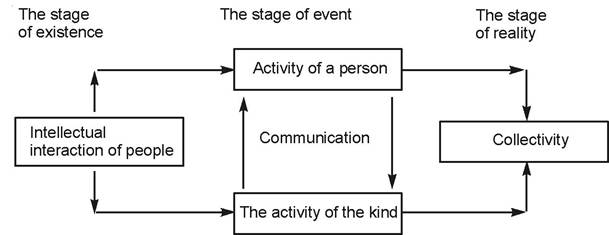
Fig. 2.2. The structure of the philosophical category of “social”
As it comes out from the facts stated above, the “social” is the notion that shows the means, with the help of which the universum (and the humanity is only its generalized subjective image) presents itself in the conditions of Earth. The meaning of it lies in the fact that originally the universum is the quantum-corpuscular (energy) field that pulsates, which appears on the basis of integration of intellectual (organic) energy of individuals that manifests in the existence as the total process of exchange of activity between people that shows and states itself in practice by the way of collectivism. It is apparent from this why all the moral systems of the world turn around mutual understanding, justice, unity and solidarity of the members of general life process.
Theoretical perception of the essence of the social world leads us to the formalization of the main law of its development, because “the law and the essence are the homogenous forms” that express the enhancement of the perception of events and the world by a person. We have all the grounds to think that the main law of self — development of the social world is the intensification of the process of exchange of activity between people and to view the strengthening of cooperative beginnings in the life of planetary humanity as its natural practical result. However, we cannot stop the research of the essence of the “social” on this, because the category of the essence will give us the possibility to specify more notions important for the given research. Thus, in the life of people the content of the “social” appears to be the social event. At this, we will underline that the activity, the relations, the connection, the process are only its various factors. The general definition of the “social” leads to its dissection into social connections and social processes that can be viewed as its static and dynamic aspects. It is necessary to consider that social connection is any type of relations between people based on the exchange of activity that happen in any of its forms: live or material.
The social science has determined the varieties of forms of social interaction. The most common one is friendly help, stable common activity; episodic collaboration; contacts, mutual provision of information; side interrelation (for example, through the product of labor); neutral relations; contraction to one another; antagonism, struggle. It is necessary to point out that in modern social and political literature the relations of people on the account of personal production and recreation received the name of social relations in a qualified sense. Therefore, the duality in the understanding of content appears in practice and also the border line of specifity of usage of the notion “social”. Let us pay attention to the fact that, on the one hand, the social relations are the relations that appear in the process of communication of people between each other, and, on the other hand, these are the relations of production and reproduction of a person as the product of the specific activity of people directed on the support of the transition from the first to the second nature. It is clear that in the theoretical research of such level this is principally unacceptable.
Using the deductive method of research of the problem, we can act two-way: either to bring the new term into the theoretic research that would accentuate this distinction or to refer to one of the known terms explaining its place and meaning in the deducted system. In our opinion the second way will be more effective, because it will be the mutual agreement of the known process as the moment of production and reproduction of a person.
Since the process of production and reproduction of a person is the anthropogenesis that organically comes out from the biogenesis and naturally goes into noosociogenesis; and therefore, it can be defined with the term “anthropologic”. At this, the anthropologic sphere precedes both material and spiritual production.
This means that we research the social relations only in wide sense of the word. From this point of view, even the informal contacts between people on the basis on any aspect of self-development either of a single person or the humanity are the social connection. Connections grow into processes if they bring with them any changes. If the formal or informal interaction of people leads to the enforcement of connections between them, then the moment of development appears. This moment is called the process of social formation. The solidarity is the source of its maturity. The increase of the level of solidarity is viewed by us as the progressive tendency in the formation of the social, and the decrease is viewed as the regressive one. Now we have to research the specifics of the content of the field form that appears in the existence of the rational living substance or, in other words, the social world, which is the same.
2.4.