Behavioural changes and external signs
The bitch
Bitches usually have one or two ocstrous cycles a year and during the ∣κτiova at one time. The ova enter the infundibulum of (he uterine tube and are transported down the uterine lube bv muscular contractions and
*
by the movements of the cilia of the epithelial lining.
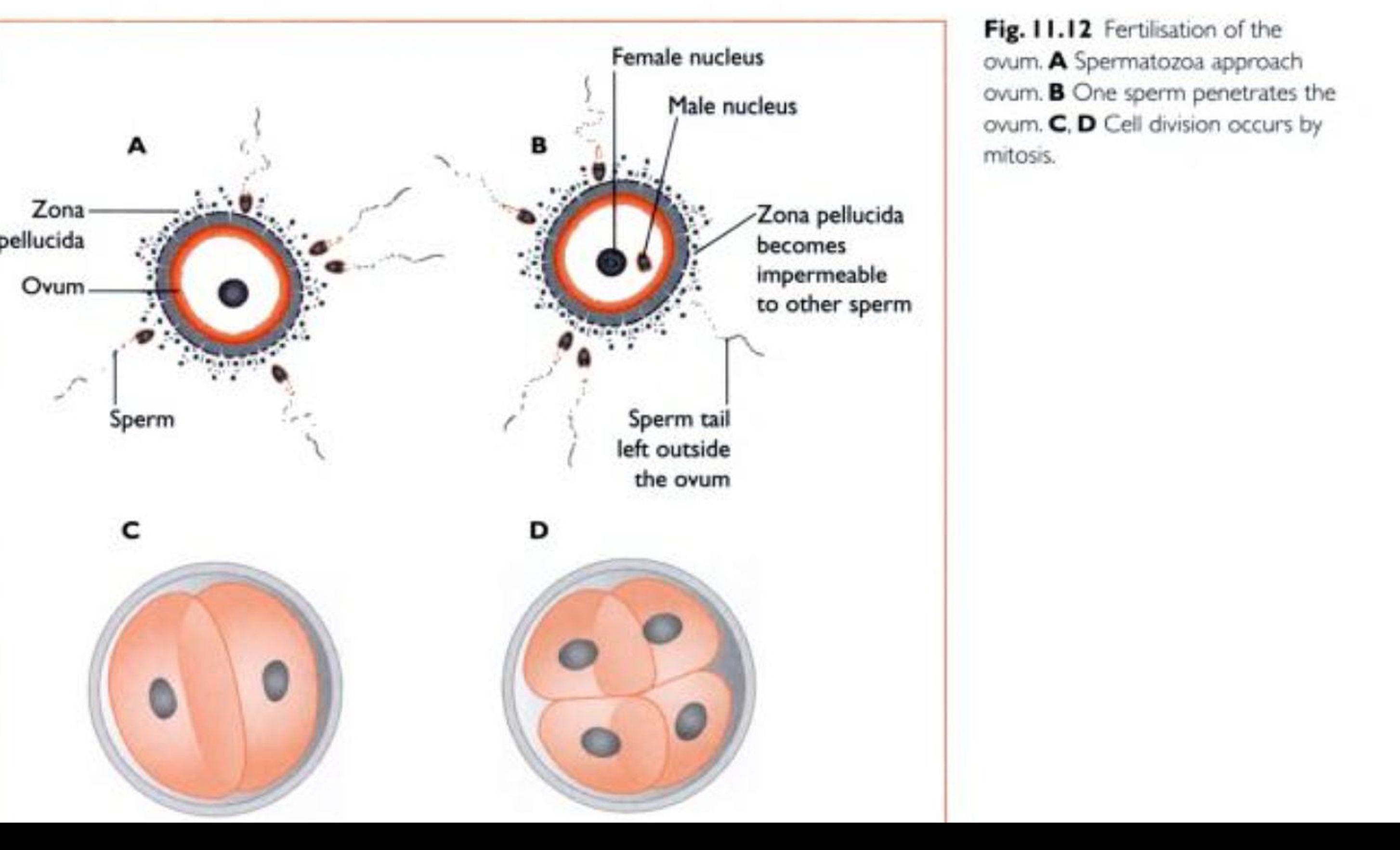
After mating, sperm from the male travel up the female tract and fertilisation takes place within the upper part of the uterine tube. Il is thought that sperm may live for as long as 7 days within the tract, relying on the correct environment within the uterine lube to survive. During this period the outer acrosoιne of the sperm (I ig. 1 1.4) releases enzymes which arc able to break down the zona pellucida of the ovum. Each ovum is then penetrated by one sperm, which results in a fertilisation reaction, preventing fertilisation by any other sperm (l∙,ig. 11.12). The fertilised ovum is now referred to as a ∑ι∣f∣ote and cell division begins within a few hours of fertilisation.
Cell division occurs bv mitosis (sec Ch. 1); one cell divides into (wo. two into four, and so on. The stage in which the cells arc too numerous to count is called a morula. A Iluid-Iilled cavity develops inside the morula and the structure becomes a blastocyst. During this time the ball of cells is Free-Iloating and moves slowly down the tract towards the uterine horns.
Implantation
Oncc in (he uterine horns, the blastocysts arrange themselves al equal distances along the horns and may even cross from one horn to another to achieve equal spacing - a process known as trans-utcrine miι∣ration. They then attach to the wall of the horns by
invading and partly destroying the hypertrophied endometrium, so that they are securely implanted. Iinplnntniioii occurs between 14-20 days after ovulation in the bitch and 11-16 days after ovulation in the queen.