Chaffinch papilloma
KAROLY ERDELYI
Central Agriculture Office, Veterinary Diagnostic Directorate, Budapest, Hungary
Chaffinch (Fringilla coelebs) papillomatosis is a disease caused by a papillomavirus, characterized by the develop-
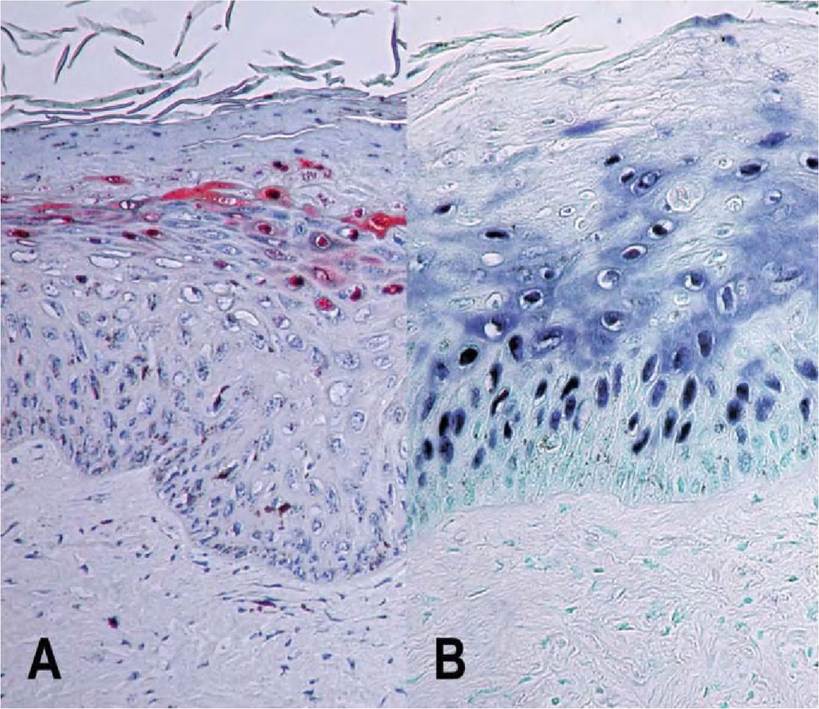
FIGURE 16.4 Roe deer papilloma, in situ hybridization (A) and histopathology (B).
ment of often extensive, benign skin tumours, typically occurring on the feet of infected birds.
The chaffinch papillomavirus, also known as Etapapil- Iomavirus 1 and the Fringilla coelebspapillomavirus (FcPV), is one of the only three avian papillomaviruses identified so far, and the only member of the Etapapillomavirus genus within the Papillomaviridae family. Its two closest relatives are the Psittacus erithacus timneh (African grey parrot) papillomavirus (PePV) and the Francolinus leucoscepus (yellownecked francolin) papillomavirus (FlPVl). The circular double- stranded DNA genome of the FcPV is 7729 bp long and its genome organization is similar to that of PePV, clearly differing from the genome of mammalian papillomaviruses.
Papilloma- like lesions associated with papillomavirus infection have been observed in chaffinch populations throughout Europe (Czech Republic, Germany, the UK, Sweden, The Netherlands)(7). Apart from chaffinches, closely related bramblings (Fringilla montifringilla) have also been found to be occasionally affected(8). As papillomaviruses are host-specific, FcPV is assumed to circulate within populations of its host species. The virus is shed with squamous cells, and the route of virus transmission is through direct contact between individuals or with a virus- contaminated environment. Generally the disease occurs at a low prevalence, but the endemic nature of the infection may lead to significant clustering of cases in some areas.
Although first described in 1959, the pathogenesis of chaffinch papillomatosis has not been studied. It is assumed that FcPV induces the proliferation of epithelial cells by mechanisms similar to those used by mammalian papillomaviruses. Viral particles have to penetrate through skin lesions into the deeper layers of the epidermis, where papillomaviruses replicate in keratinocytes of the basal layer. Papillomavirus virions are released with squamous cells shed from the surface of lesions.
Chaffinch papillomas are typical papillary lesions, characterized by the excessive proliferation of the skin epithelium over a thin core of supporting connective tissue. The epidermis exhibits acanthosis and hyperkeratosis, resulting in multiple layers of keratinocytes containing papillomavirus particles. Papillomas grow slowly, and the disease may progress over several months. Spontaneous regression of lesions probably occurs, as there are reports of ringed birds with lesions that are then not present on subsequent recapture.
The wart-like growths are found on the non-feathered skin areas, usually on the foot or the tarsometatarsus of one or both legs. The size of lesions varies from small nodules to deeply fissured massive papillary growths, which can reach up to 5% of the body mass(8). The foot, digits and claws may be distorted, eventually resulting in lameness, but the general condition of affected birds is usually good.
Diagnosis may be based on the clinical picture; however, there are several diseases causing similar lesions. Coinfection with both papillomavirus and Knemidocoptes mites, which also cause similar leg skin lesions, may also occur. The definitive diagnosis can be established by histopathology, demonstration of papillomavirus virions by electron microscopy or detection of papillomavirus DNA by molecular techniques.
Repeated sightings of individual birds with lesions suggest that the disease does not significantly affect the general condition of infected chaffinches. This is confirmed by reports of good to moderate body condition in birds with lesions and it is often also true for individuals developing more extensive foot deformities. As mortality directly associated with the condition has not been reported, it is likely that spontaneous recovery may occur in a number of cases. There are no known zoonotic risks. As the chaffinch is common in Europe, this disease is not considered to be of conservation importance.