DIGESTION
Figure 2.1 shows the essential anatomy of the digestive system of the calf. Food is taken into the mouth and swallowed, a process whereby the respiratory route is closed and the food is transferred into the oesophagus.
Once in the oesophagus, the food is propelled downwards by peristalsis, which is the name given to a wave-like muscular activity which has a similar effect to the hand of a milker on a cow’s teat. First the top of the teat is squeezed between the thumb and forefinger. Then, maintaining this pressure, the next finger is squeezed against the hand, then the next and so on. In this way milk is squeezed through the teat sphincter under pressure, the first few fingers preventing reverse flow back into the udder. Propulsion of food by peristalsis occurs throughout the digestive tract.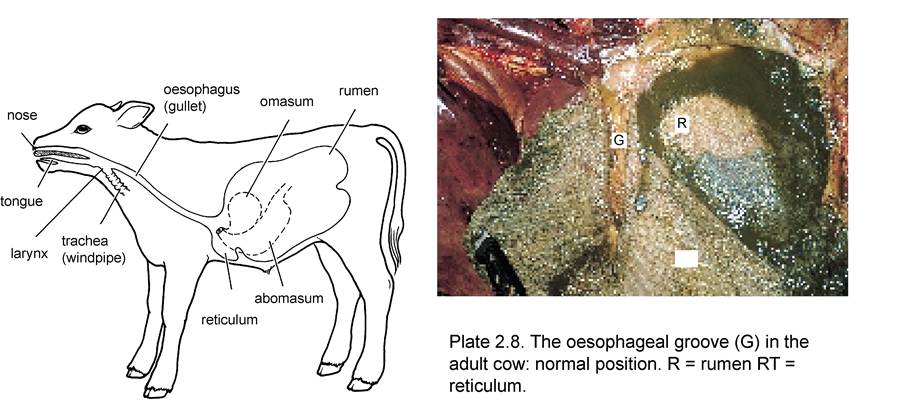
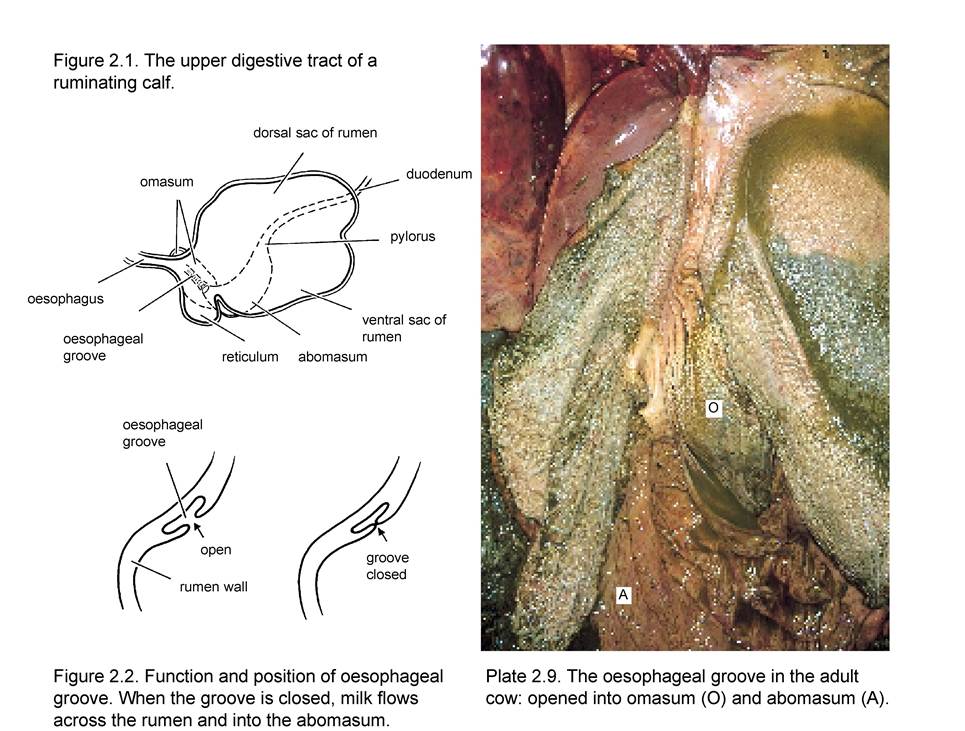
The calf is a ruminant and in common with other ruminants (e.g. sheep, goats and camels) it has four stomachs, namely the reticulum, rumen, omasum and abomasum. The very young calf uses only its fourth stomach, the abomasum, and functions essentially as a monogastric animal, that is an animal with a single stomach. Its rumen, reticulum and omasum would be proportionally much smaller than those in Figure 2.1.
Milk has to flow directly from the oesophagus into the abomasum, by-passing the rumen and reticulum, and this is done by a self-closing channel in the roof of the rumen, known as the oesophageal groove. Figure 2.2 shows the groove in transverse section, that is, as if you had cut through the wall of the rumen. When the groove is in the open position, milk passing from the oesophagus will fall into the rumen, become sour and cause a digestive upset.
When the groove closes, a ‘pipe' is formed which transports milk directly through to the omasum and into the abomasum. Plates 2.8 and 2.9 show the oesophageal groove (G) in an adult animal. In Plate 2.8 the groove runs across the wall of the rumen (R) to the top of the reticulum (RT). In Plate 2.9 the exit of the oesophageal groove into the reticulum has been opened to show the omasum (O) and abomasum (A). Note how close the exit of the oesophageal groove is to the abomasum.The Oesophageal Groove Closure Reflex
When the calf suckles there is a reflex action, activated via the bicarbonate in its saliva, which results in muscular closure of the oesophageal groove. As it gets older, simply the thought of feeding and the sight, sounds and other stimuli associated with the arrival of its milk will be sufficient to provoke closure. It is most important that closure occurs prior to feeding and hence it can be seen that the establishment of a feeding routine is vital. Calves should be wooed into the mood and be ready and expecting to be fed. They need to be anticipating a pleasurable experience. Only then will the oesophageal groove close securely and digestion proceed properly. Calves with wagging tails (Figure 2.3) and calves which butt the bucket (or teat or udder) are enjoying their food and the oesophageal groove is well closed. Within reason, calves on a teat need to work quite hard at the teat to get their milk - a pile of saliva beside the teat, as in Plate 2.10, is a good sign. If milk flow is too rapid, however, the calf may almost choke. This could result in milk spillage into the rumen.
I am certainly not in favour of the system seen on some farms, where a cut-off milking machine liner is fitted onto bottles and used as a teat (Plate 2.11). Milk flow is far too fast. Teats fitted onto machines
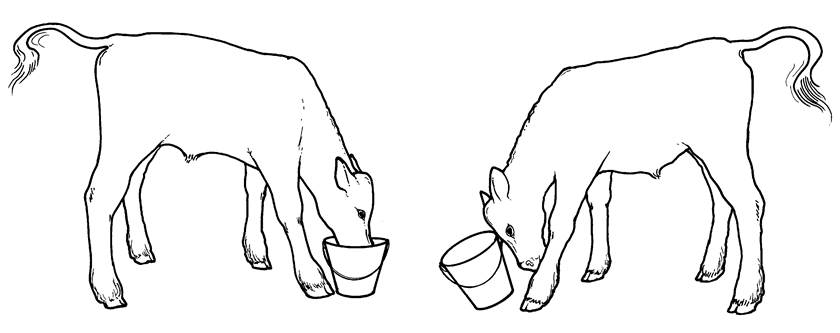
Figure 2.3. Tail wagging and ‘bunting’ the bucket or udder are good signs that the calf is enjoying its food and that the oesophageal groove is closed.
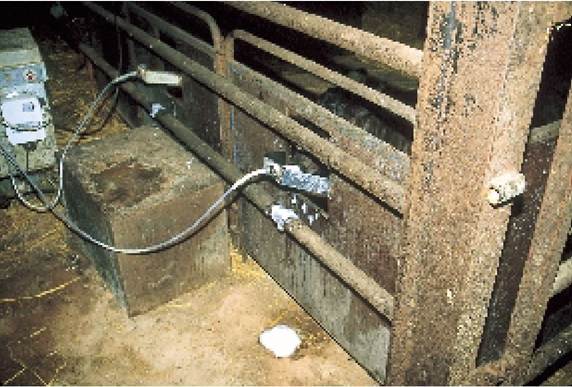
Plate 2.10. A pile of saliva beneath the teat of this automatic calf feeding machine is a good sign that oesophageal groove closure has been achieved.
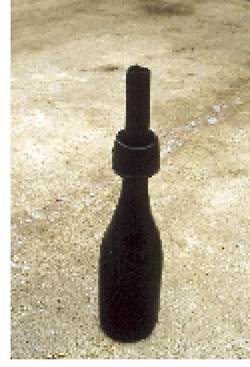
Plate 2.11. A cut-off milking machine liner does not make a good teat. Milk flow is far too rapid.
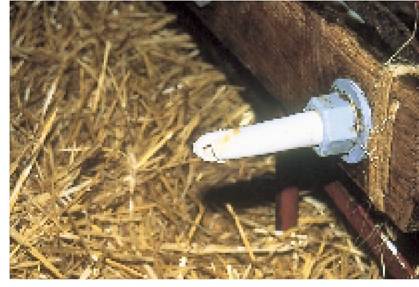
and other equipment should be regularly checked to ensure that they have not become excessively worn. Plate 2.12 shows an example of a teat which produced scour, bloated rumen and abomasal dilation in a group of calves before the problem was spotted.
Achieving Good Groove Closure
So what are some of the ways in which we can feed calves to ensure good groove closure? These include: around the calves and speaks to them before getting their milk. Mixing milk substitute in front of the calves works well.
• Feed at the same time each day, so that the calf knows when to expect its milk.
• Keep the feed the same temperature, either always warm or always cold.
• Feed similar quantities each time.
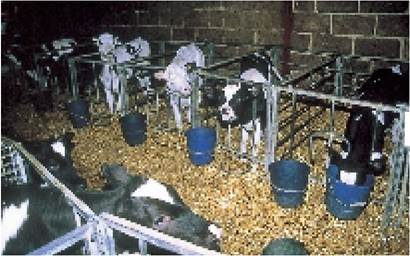
• Let the calves know they are going to be fed. Ideally they should be able to see and hear the milk being prepared for them, so that their anticipation slowly increases (Plate 2.13). One stockperson I know says she always goes
Plate 2.13. Calves waiting to be fed. Ideally they should be wooed into the mood and know they are about to undergo the pleasurable experience of feeding. This will ensure good oesophageal groove closure.
Plate 2.12. This badly damaged teat caused deaths due to scouring and abomasal bloat before the problem was noticed.
⅝^⅛J∣-,11
• Ensure that the teat or bucket is at the correct height.
It should be 30 cm above the floor level of the calf pen. We have all seen pens where straw bedding has been continually added, but the bucket is left in the same position. Eventually the calf has to get down on its knees so that its head is low enough to reach the bucket! This was a position often adopted by the calf in Plate 2.14.• Do not feed calves immediately after a stressful procedure, such as dehorning, castration or transport (perhaps arrival from mar
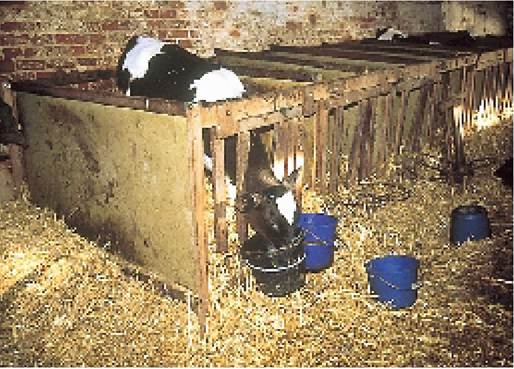
Plate 2.14. The straw in the pen has built up so high that this calf often kneels down in order to reach the milk in its bucket.
ket). Either give them a while to settle, or for market calves, give them electrolyte solutions (page 48) for their first feed. If electrolyte spills into the rumen it will not cause problems.
Poor drinkers and non-drinkers
Slow drinkers present a problem. While their milk is warm, their oesophageal groove remains closed. However, if the bucket is left in front of them and the milk cools, when they come to drink it later the groove closure may be incomplete and some milk may spill into the rumen.
Some calves simply will not drink at all, from neither bucket nor teat, nor even from a cow. If it is a temporary thing, stomach tubing with electrolytes for one to two days is the best option, because if you stomach tube with milk (Plate 2.5), there is a big risk that groove closure will not occur. However, a small proportion of calves never drink and in these stomach tubing with milk is the only option. Although problems might occur, experienced calf feeders have said that eventually some calves get to quite like the procedure and they can be reared to weaning by twice daily tubing!
Consequences of poor groove closure
Poor groove closure allows milk to fall into the rumen, rather than passing into the abomasum for proper digestion. As there are no digestive enzymes in the rumen, once the milk enters it turns sour and this can lead to a range of clinical signs.
Poor oesophageal groove closure causes• bloat, due to the gas produced by fermenting milk
• colic, caused by the pain associated with an inflamed and bloated rumen
• scour, as fermented waste products of milk pass from the rumen into the intestine and often cause chronic diarrhoea
• poor rumen development, which may produce poor growth pre weaning and often bloat and scour problems after weaning.
Plate 2.15 shows a typically affected calf. It is bloated and there is a pasty scour around its tail. With this degree of rumen distension it is not going to want to eat solid food. Plate 2.16 shows the opened rumen and abomasum of a calf which died as a result of poor groove closure. Fermenting milk is present in the rumen (R). This led to such severe inflammation of the abomasum (A) that the calf died from shock. The scissors lie in the exit from the oesophageal groove into the abomasum.
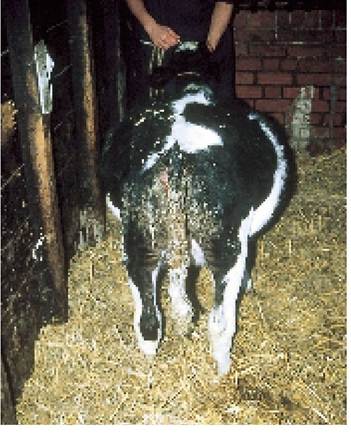
Plate 2.15. This calf has a bloated (blown) rumen and a chronic pasty scour, typical of oesophageal groove closure problems.
Bloat treatment
If only mild bloat is present, it is best to withhold milk for one to two days, feed electrolytes and dose the calf with oral antibiotics to try to destroy the bacteria causing the rumen fermentation. Reintroduce milk slowly, in small quantities, and preferably feed the calf four times daily, so that it gets an adequate nutrient intake without excessive risk. Badly bloated calves require deflating with a stomach tube or an operation to make a hole in the rumen. This is discussed in more detail in Chapter 3.
The Abomasal Milk Clot
For both whole milk and the majority of milk substitutes, formation of a milk clot in the abomasum is an essential first step in the process of digestion. However, there are some milk substitute powders, especially those associated with ad libitum acidified cold milk feeding, which do not need to form an abomasal clot.
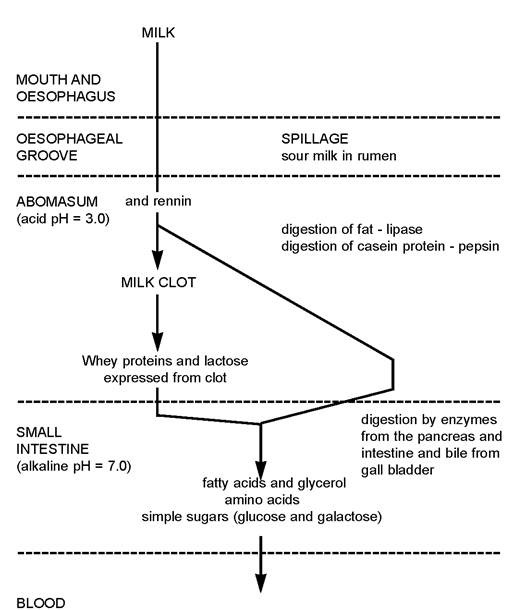
Under the influence of the enzyme rennin and in an acid environment, the protein (casein) in the milk clot solidifies and then contracts, squeezing out the liquid whey fraction (containing non-casein whey proteins and sugars such as lactose)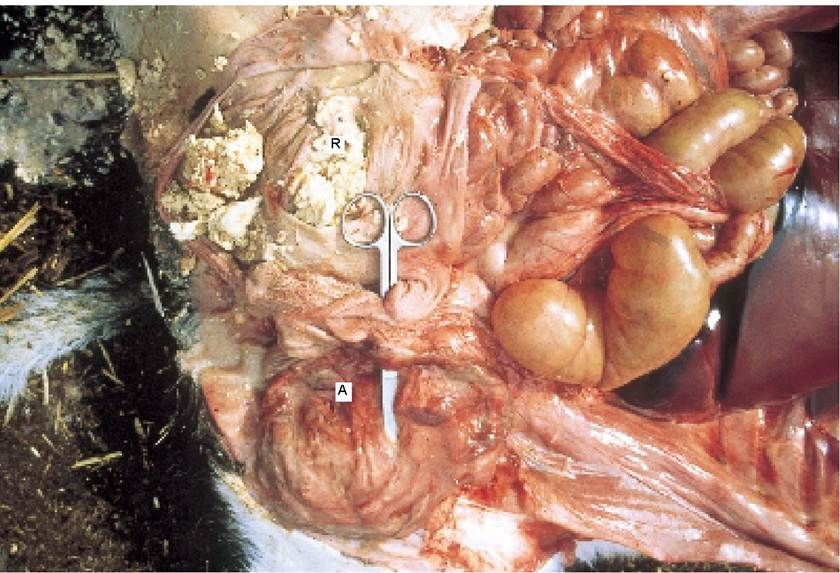
Plate 2.16. Failure of oesophageal groove closure led to souring of the milk in the rumen (R) and death due to abomasal inflammation (A).
which then passes down into the small intestine. The clot in the abomasum is slowly digested by the enzymes pepsin (digesting casein) and lipase (digesting the fat) and any remaining material forms a focus for the next milk clot. The small intestine is alkaline, digestion being carried out by enzymes produced by the villi of the intestinal wall and the pancreas. Lactose is split into glucose and galactose, two simple sugars which can be absorbed and used by the calf for energy. Protein is split into amino acids which can also be absorbed. Figure 2.4 shows diagrammatically the processes of digestion.
If abomasal milk clot formation is poor, then whole milk passes into the small intestine, where casein cannot be digested. This provides an excellent medium for bacterial fermentation, and scouring results. Some of the adverse factors associated with poor clot formation are:
absorbed by calf
Figure 2.4 A ‘flow' diagram of digestion in the calf.
• overfeeding, viz giving excessive quantities of milk at each feed. This is also important with acidified milk, although the acidification helps to prevent excessive bacterial growth
• irregular feeding times
• nervous or stressed calves
• milk fed at the wrong temperature
• milk substitute fed at the incorrect strength
• inflammation of the abomasum
Overfeeding
If the young calf was left with its dam it would suckle seven to ten times per day and probably take 0.5-1 litre per feed for the first one to two weeks of life. The volume of the abomasum in a young calf is 1-1.5 litres (obviously size depends on calf bodyweight) and so it is vital not to overfeed the calf in the initial stages. Feeding significantly too much milk will lead to undigested milk being spilled from the abomasum, which can cause scouring, or even death because of abomasal overload. You can gradually increase the amount given at each feed, and as you do so the abomasum will dilate. At the end of the first week it should be possible to feed 2 litres twice daily. If you want to grow calves very rapidly (for example to sell to market) then consider feeding them three or even four times daily.
Admittedly some people are able to achieve much higher milk intakes than this. But it’s a bit like driving a car around a corner at 90 mph: you can do it if all other management factors (good tyres, good road surface, good weather, good camber etc.) are optimal. However, if one factor (perhaps poor tyres) is less than ideal, then there is a risk that the car will slide off the corner. There are many similarities with calf feeding practices.
Consequences of poor abomasal milk clot
As already stated, the major consequence of a poor abomasal milk clot is that some whole milk passes into the intestine, where the casein cannot be digested. This leads to scouring. Other consequences include:
• Abomasal bloat. This is seen as an acutely ill calf, with a tense abdomen and sunken eyes. Fluid can be heard splashing around in the abomasum (similar to watery mouth in lambs). Veterinary treatment is required to administer abomasal motility stimulants (e.g. metoclopramide) and perhaps a bicarbonate drip, as many of these calves have a severe acidosis (see page 40).
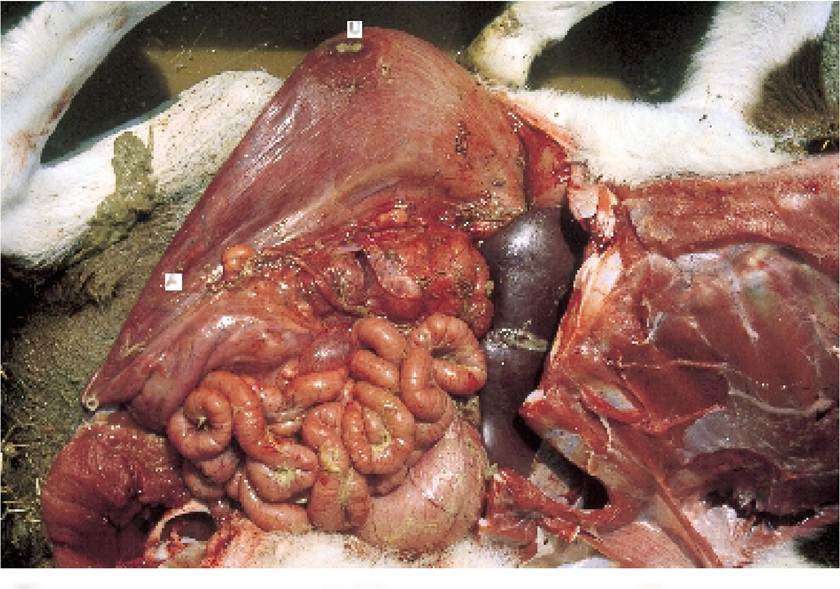
• Abomasal ulceration. Perforated abomasal ulcers lead to peritonitis, collapse and death. A typical example is shown in Plate 2.17. The ulcer (U) is seen as a brown hole surrounded by red inflammation of the wall of the abomasum (A) at the top of the picture. Abomasal ulcers in calves may also be the result of irregular feeding: excessive hunger may encourage the pre-ruminant calf to eat straw, which then passes direct into the abomasum and causes irritation. Many veal calves on whole milk diets have mild abomasal ulcers at slaughter, although this does not seem to affect them particularly.
Plate 2.17. A perforated ulcer (U) of the abomasum (A). There is a peritonitis present involving the intestines.
Problems with Milk Substitutes
There is a wide variety of milk substitutes on the market. Many are based on a high level of skim milk powder and form a clot in the abomasum, although some of the ‘zero’ replacers (so-called because skim milk powder is absent) do not form a clot. If milk powder is overheated during manufacture, then clot formation is poor and scouring may result. However, most of the problems associated with milk substitutes are ‘on farm’ in their origin.
The first rule must be to read the manufacturer S instructions. Many manufacturers recommend that milk powder is first mixed at a higher temperature (45-50°C) and then cooled to just above blood heat (42°C) before feeding. To do this a thermometer is needed. You cannot accurately judge the temperature of the milk using your hand. On a cold day you will overestimate the milk temperature and feed it too cold and vice versa on a hot day. Trials have shown that if the milk is too hot a calf simply will not drink it and no harm will be done. If milk powders are mixed and fed too cold, a variety of problems can arise:
• The fat may be poorly dispersed. It rises to the top of the milk and leaves a ring around the calf’s nose, often leading to hair loss. Atypical example is shown in Plate 2.18. If your calves develop bald noses, check your milk substitute mixing routine.
• Proteins and minerals may sediment to the bottom of the bucket and be wasted - and this is the
expensive part of the milk substitute!
• Oesophageal groove closure is poor.
• Milk clotting time in the abomasum is retarded. A reduction of only 6°C will double the time taken for the abomasal milk clot to form. There is then an increased risk of undigested milk spilling over into the small intestine.
If a long row of calves has to be fed from a single container, the milk for the last calf in the row can be appreciably cooler - again, watch for bald noses!
Inefficient mixing is probably the biggest problem. Mixing
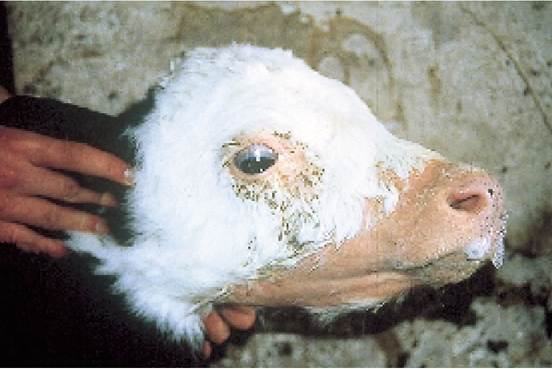
Plate 2.18. Loss of hair around a calf's face is a sign of inadequate mixing of milk substitute.
with your hand is simply not adequate - a whisk is essential (Plate 2.19). Carelessly mixed powders leave lumps, poorly dispersed fat and a protein sediment in the bottom of the bucket. Trials have shown that up to 60% of the oils in the replacer may be wasted in this way, in addition to problems arising from poor abomasal clot formation and subsequent scouring. Ensure that the milk is mixed at the correct strength. This is usually 125 g per litre, but may be increased to 150 g per litre if fed once daily. Do not dilute milk powder, for example for a scouring calf. If fed too dilute, it will retard abomasal milk clot formation. Similarly, do not allow a calf to drink large quantities of water immediately it has finished its milk, as this will have an effect equivalent to diluting the milk. When the milk bucket is empty, it is best to put in a handful of coarse mix or calf pencils.
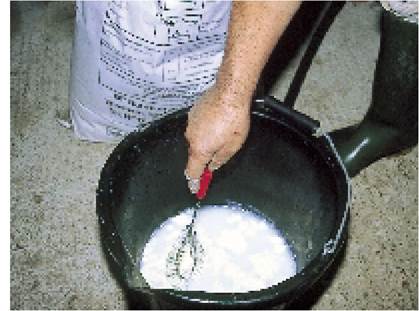
Plate 2.19. Milk substitute must be mixed at the correct temperature, using a whisk. Feeding lumpy milk is wasteful and bad husbandry.
Certain brands of electrolyte solutions can be mixed with whole milk and actually improve clotting time, but the clot formed may be less stable. In general, therefore, it is best to avoid diluting milk.
The golden rules for feeding calves with milk substitute are:
• correct temperature
• correct strength
• properly mixed
• fed in the correct amount
Finally, do not feed excessive quantities.
Most feeding schedules are designed for a
40 kg calf and suggest starting at 1 litre per feed, increasing by 0.25 litre every second day up to 2 litres per feed. If you have a smaller calf, feed less. Overloading the abomasum can lead to spillage and scouring.