DISEASES OF THE CALF
Problems with young calves generally fall into two main categories. They are conditions affecting the digestive system, of which scouring is of course by far the most common, and conditions affecting the navel.
Pneumonia can also occur in pre weaned calves, but as it is more common in the older animal, the condition will be fully discussed in the next chapter.SCOURING
Scouring is the commonest disease in young calves and it is without doubt the greatest single cause of death. It has been estimated that in the UK 140,000 calves die from it each year, which is almost 4% of the total born and 80% of all pre weaning losses. Of the calves lost, 75% were purchased through markets. In North America the same percentage applies, that is 4% of live calves die from scour, but this represents only 55% of the total pre weaning losses.
Even though mortality is high, perhaps the worst part of calf scour is the cost and frustration of treatment. One survey estimated that almost one-third of all calves are affected by scour. The costs of the disease can be listed as:
• death
• farm labour costs for dosing and nursing
• costs of drugs and veterinary fees
• costs of vaccines to prevent disease in adjacent calves
• costs of reduced growth and the frustration of not being able to sell the calf at the most economic time
In an analysis of 30 top herds in the DAISY recording system, Esslemont calculated that the average cost per scouring calf was £92 (at 1998 values) and that 7% of dairy herds had a serious outbreak of scouring each year. The problem is therefore both extensive and expensive.
Fluid Balance in a Normal Calf
In order to understand fully what goes wrong, we need to spend a few minutes discussing the normal calf. The small intestine is responsible for absorption of nutrients and water. The inner surface consists of a mat of small, finger-like projections called villi, which increase its surface area and hence its functional capacity.
These are shown in detail in Figure 2.5. Each villus is covered with a lining of epithelial cells, these being produced at the base of the villus (the crypt) and passing up towards the tip. A small blood vessel (an arteriole) runs down the centre of the villus, with small branches (capillaries) radiating out towards the epithelial lining cells. The epithelial cells at the tip of the villus pump water into the central arteriole, making the blood at this point more dilute. Salts (e.g. sodium, bicarbonate or potassium) and other nutrients (e.g. glucose and amino acids) are now drawn in from the intestine by active transport and by diffusion. This flow of material is shown in Figure 2.6. There is also a flow of water from the blood into the intestine; in fact the total amount of water passing into and out of the normal intestine isrumen (on
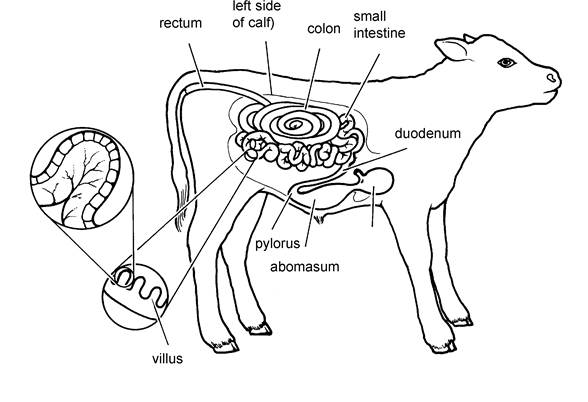
Figure 2.5. Position and function of the small intestine.
approximately 100 litres per day each way. Water therefore enters the small intestine firstly from drinking and secondly from the blood.
This flow of water into and out of the intestine is shown diagrammatically in Figure 2.7. Let us assume for this particular length of intestine that 1.1 litres/day are drunk and 4 litres/day pass into the intestine from the blood supply. In the normal calf, 5 litres/day would be reabsorbed, to produce semisolid faeces, containing only 0.1 litre water per day, i.e.
1.1 litres drunk + 4.0 litres secreted ■>
5.0 litres absorbed + 0.1 litre in faeces
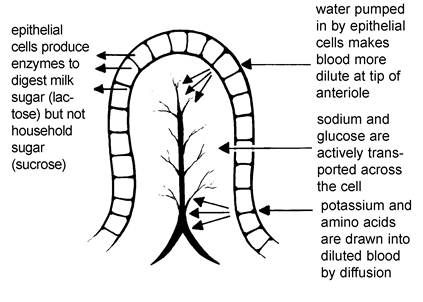
Figure 2.6. Flow of water and nutrients in an intestinal villus.
This example shows that approximately 80% of the total fluid in the intestine originates from the body itself, primarily from secretions from the salivary glands, stomach and intestines. In a normal calf around 98% of this fluid is reabsorbed, resulting in semi-solid faeces.
However, a scouring calf loses much of the fluid.Fluid Balance in a Scouring Calf
The main effects of scouring are loss of fluid from the body (i.e. dehydration), a loss of electrolytes, acidosis, and a reduced ability to digest food. Septicaemia may also develop.
Dehydration
Whatever the initial cause, the onset of scouring means that there is an increased loss of fluid in the faeces, and unless this is replaced by additional intakes by mouth, dehydration occurs. The blood becomes ‘thicker' and more difficult for the heart to pump, poor circulation develops, body temperature drops and the calf goes into a state of shock. Inadequate blood flow through the kidneys may lead to
renal failure, with a consequent buildup of toxic waste materials further depressing an already sick calf.
The extent of dehydration in a particular calf may be difficult to assess. Ideally a blood sample could be taken to measure the proportion of fluid (serum) to cells. However, this is rarely done and clinical assessments are usually made, for example:
• sunken eyes
• skin ‘tent’ time (Plate 2.20): with the finger and thumb pinch a fold of skin just above the calf’s eyelid, and then release it. The fold should disappear almost immediately. If the skin remains ‘tented’ for more than five
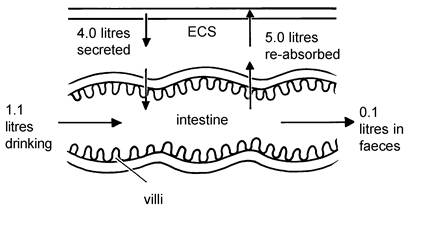
Figure 2.7. Water flow in a normal calf. (ECS = extra cellular space.)
seconds, the calf is dehydrated
• loss of suck reflex. Calves which are very dehydrated (or acidotic) simply stop sucking
Bacteria have adhesive properties. They stick to the epithelial cells of the villi and produce toxins which stimulate an increased flow of fluid into the intestine - this is the intestine’s defence to try to flush the bacteria away. The flow of fluid from the blood into the intestine increases from 4.0 litres to 6.0
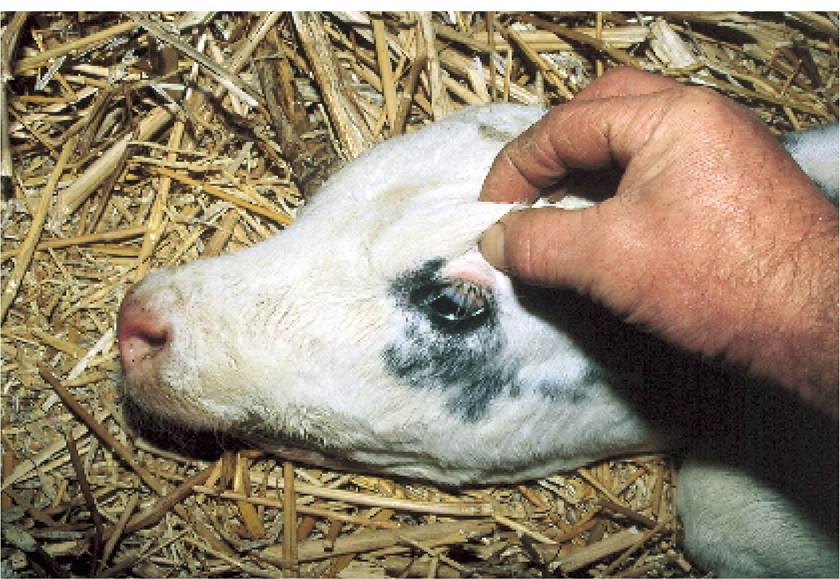
Plate 2.20.
Skin ‘tenting’. If the fold of the skin remains erect for longer than five seconds, the calf is dehydrated.litres, and so our overall fluid balance equation becomes (Figure 2.8):
1.1 litres drunk + 6.0 litres secreted ■>
5.0 litres absorbed + 2.1 litres in faeces
Reabsorption of fluid remains the same, so excess is voided with the faeces producing scouring.
Viruses, on the other hand, destroy the villi and reduce the rate of reabsorption of water. The rate of flow of water into the intestine remains normal (4.0 litres), but because the villi are damaged let us say that only 3.0 litres are reabsorbed. The fluid balance equation now becomes (Figure 2.9):
1.1 litres drunk + 4.0 litres secreted ■>
3.0 litres absorbed + 2.1 litres in faeces
Far more fluid is therefore voided in the faeces and scouring again occurs.
Loss of electrolytes
The excess water being voided in the calf’s faeces carries with it various salts (electrolytes). As the calf’s body slowly becomes depleted of salts, it loses even more of its ability to retain water in its tissues and it becomes progressively more dehydrated. The loss of body sodium is particularly significant, because the presence of sodium within the body is important for fluid retention.
Acidosis
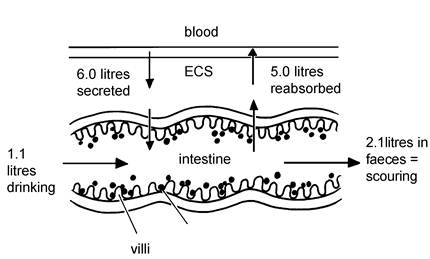
Figure 2.8. Bacteria cause scouring by sticking to the villi and causing an increased flow of fluid from the blood into the intestine. (ECS = extra cellular space.)
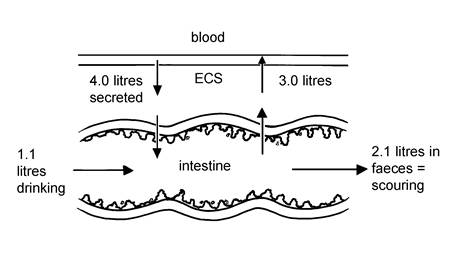
Figure 2.9. Viruses cause scouring by destroying the villi and preventing water absorption from the intestine. (ECS = extra cellular space.)
The normal pH of blood is 7.4. If blood pH falls, the calf is then said to be suffering from acidosis. This is seen clinically as an increased respiratory rate, with general dullness, lethargy and a disinclination to suckle.
When the blood pH falls to 7.1 the calf will die. Next to dehydration, acidosis is the second most common cause of calves dying from scouring and this is especially so for the slightly older calf, for example seven to fourteen days old.Acidosis in the scouring calf is caused by:
• loss of bicarbonate in the diarrhoeic faeces
• dehydration, causing poor blood circulation in the tissues and leading to a buildup of acid waste products
• fermentation of undigested milk (including lactose) in the lower gut producing acide by-products
Reduced digestive capacity
Damage to the intestinal villi caused by bacteria and viruses also reduces the ability of the villi to produce lactase. Lactase is the digestive enzyme which converts the milk sugar lactose into glucose and galactose:
Lactose ^actase glucose + galactose
The reduced digestive capacity has two effects:
• Undigested lactose passes through the small intestine and into the large bowel, where it may undergo fermentation to produce acid and further scouring.
• As sodium and glucose are transported together, the lack of glucose means that sodium is not pumped back into the arteriole in the base of the villus as effectively (Figure 2.6). More sodium is then lost in the scour and dehydration gets worse.
Septicaemia
The main consequences of scouring are:
• dehydration
• loss of salts
• acidosis
• reduced digestive capacity
• septicaemia
In cases of bacterial scour particularly, the wall of the intestine may become very inflamed and bacteria may ‘leak’ into the bloodstream to produce a generalised septicaemia (that is, bacteria growing in the blood). This can cause an even more severe illness and may lead to such secondary diseases as joint ill and meningitis.
Causes of calf scour
As dehydration and acidosis are the most important causes of illness and mortality in scouring calves, our main aim must be to control them. Perhaps surprisingly, removal of the initial infection is less important.
This is because the majority of infectious causes of calf scour are self-limiting, i.e. after one wave of infection the organisms expel themselves.The causes of calf scour may be subdivided into four categories:
• Bacterial - E. coli (white scour, coli bacillosis)
- salmonella
• Viral - rotavirus
- coronavirus
• Protozoal - cryptosporidia
- coccidiosis (usually older calves)
• Nutritional
Nutritional causes of calf scour were discussed earlier in the chapter. Their main significance is perhaps that they make the calf more susceptible to infectious agents. For example, a healthy calf could probably cope with a low dose of rotavirus, but if it were stressed, perhaps because of gross overfeeding, then the rotavirus would cause disease. Coccidiosis and nutritional causes of scouring in the weaned calf are described in Chapter 3.
Scouring in calves may be divided into categories based on the calf’s age and the prevalence of infection:
• age of the calf: Scouring at one to three days old is more likely to be bacterial (although salmonella can cause scouring at any age), whereas scouring at seven to fourteen days old is more likely to be viral or protozoal (coccidiosis can also occur in older calves, including after weaning)
• prevalence of infection: Some of the infections are present on virtually every farm all the time and it is only when the calf’s defence mechanisms are compromised, or the level of that infection on the farm increases, that disease is seen. These infectious agents are known as ubiquitous or endemic. Other infectious agents are present only on some farms. These are known as exotics.
Ubiquitous infections
• rotavirus
• coronavirus
• cryptosporidia
Exotic infections
1 K99 E. coli
• salmonella
• coccidiosis
Table 2.4. This shows that rotavirus and cryptosporidia are the commonest causes of scouring in young calves. E. coli is a much less important cause, although it is always present in calf faeces.
| Agent | Prevalence in neonatal diarrhoea |
| Rotavirus | 42% |
| Coronavirus | 14% |
| Cryptosporidium | 23% |
| K99 E. coli | 3% |
| Verotoxin E. coli | 10% |
| Salmonella | 12% |
| Other viruses | 11% |
| From J. H. Morgan |
Although it is always possible to culture E. coli from the faeces of calves (including normal calves), only very few strains of E. coli cause disease. Table 2.4 shows the results of a survey which attempted to identify the most common agents involved as primary causes of calf scour outbreaks. It clearly shows that viral causes (rotavirus and coronavirus) account for over 50% of the outbreaks of calf scour and if we add cryptosporidia, then these three agents are involved in the vast majority (79%) of cases. Bacterial infections are much less common and so when we consider treatment, antibiotic therapy, although commonly used, in many instances has only a secondary role. Before dealing with the various infections in some detail, one more general point needs to be made: it is not possible to diagnose the cause of calf scour from the appearance of the faeces alone. Samples need to be taken and tests carried out.
Rotavirus
Rotavirus is the most common cause of scouring in calves at seven to fourteen days old. This is clearly demonstrated in Table 2.4. It is particularly frustrating for the dairy farmer who may have an excellent beef-cross calf ready for sale, only to find that it is scouring profusely as in Plate 2.21. Even if it recovers quickly, it may have hair loss over the hindquarters (Plate 2.22) which will reduce its value. Calves from both dairy and beef suckler herds can be affected.
Rotavirus is present in all herds, but only under certain conditions (usually suboptimal hygiene and/or a heavy challenge) does it cause disease. Colostrum provides a very good protection, but only while it is present in the intestine; colostrum-derived antibody absorbed into the bloodstream does not give any protection against rotavirus. After four to six days, when the cow is producing normal milk (Figure 2.10) or when the calf is being changed onto milk substitute, the level of colostral antibody in the intestine wanes and this is the stage when rotavirus proliferates. After an incubation period of two to five days (viz at approximately seven to ten days old) the virus destroys the epithelial cells lining the villi of the upper small intestine, thus preventing reabsorption of water, and scouring is seen (Figure 2.9). This is often a yellow or cream coloured scour as undigested milk passes through the small intestine.
In addition to scouring, the main clinical feature is dehydration - the calf is dull, its eyes are sunken and its coat feels cold. Its body temperature may be increased in the early stages, but it soon falls. Fluid therapy is vital and although antibiotics have no effect against the primary virus infection, they may be of value in preventing a secondary bacterial attack on the damaged intestinal wall. Rotavirus is not usually a ‘killer’. Mortality is rarely particularly high and the main cost of the disease is the subsequent severe unthriftiness of affected calves.
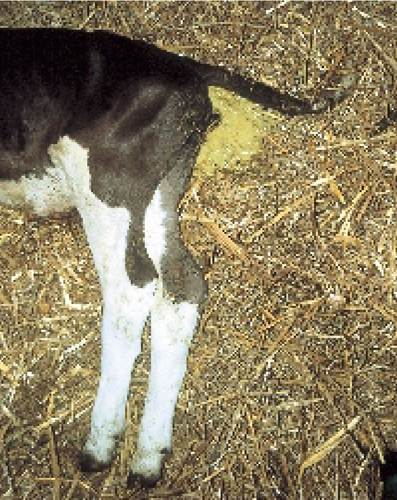
Plate 2.21. Sudden onset of scour at seven to ten days old can be due to rotavirus infection.
Many calves will be exposed to infection and shed virus at seven to fourteen days old, but show no scouring or any other adverse effects. However, as progressively more calves pass through a house and the weight of infection increases, a greater proportion develops diarrhoea. This is one reason why scouring is more common in the later-born calves from an autumn-calving dairy herd.
Prevention
The prevention of diarrhoea caused by rotavirus is based on a combination of hygiene and vaccination.
Hygiene Rotavirus is highly contagious: only small quantities are needed to infect other calves and careful isolation and separation of affected calves is therefore essential. The virus is also very resistant: it can survive in a normal farm environment for up to six months and it is resistant to many commonly used disinfectants. However, it is susceptible to drying. If an outbreak of rotavirus diarrhoea occurs, therefore, the best preventive measure is to clean thoroughly and rest the affected shed and start rearing calves elsewhere. If convenient, pen divisions can be dismantled and affected calves left loose-housed in the same shed after weaning.
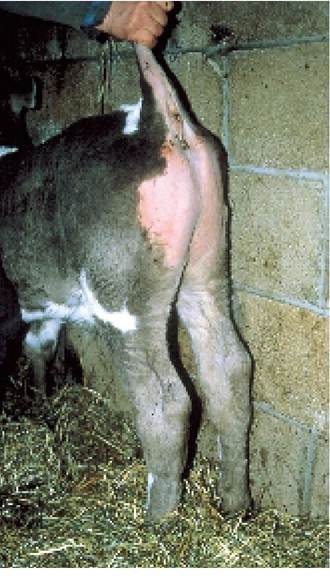
Plate 2.22. Even calves which recover from scouring may be left with hair loss over their hind legs.
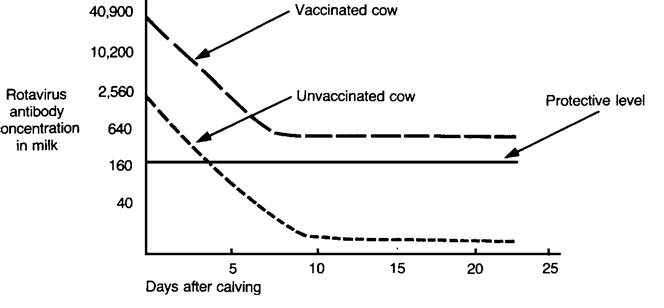
Figure 2.10. Only milk from vaccinated cows carries sufficient antibody to protect the calf from rotavirus. In a normal cow there is no protection after five days and scouring may result. (From J. H. Morgan.)
Vaccination In the UK there is a good rotavirus vaccine commercially available, combined with one for K99 E. coli. One dose is given to the cow between four and twelve weeks before calving, which means that vaccination at the normal drying off time is satisfactory. This produces a high antibody level in both the colostrum and in the milk for up to one month after calving (Figure 2.10), compared with normal cows where rotavirus antibodies have fallen below protective levels by four to five days after calving. It also follows that for vaccination to provide effective protection against rotavirus, the calf must be fed on colostrum or milk from vaccinated cows during the whole period of risk.
The feeding of stored colostrum could be very useful in this context. Because the concentration of antibody in the colostrum of vaccinated cows is well above that required for rotavirus protection, milk or milk substitute can be mixed with 10-15% of colostrum taken from vaccinated cows. This works out at about one cupful per feed and is a very simple and effective control measure. The machine shown in Plate 2.7 automatically dispenses this amount. This is one instance where great care should be taken to ensure that ‘stored colostrum’ is in fact colostrum. I have seen several breakdowns of rotavirus scour caused by excessive dilution of colostrum with mastitic and other discarded milk. Correct colostrum storage is described earlier in this chapter.
Rotavirus is a disease associated with a buildup of infection. In a batch-calving herd it may therefore be safe to allow the first cows to calve unprotected and only vaccinate later groups when the level of infection in the calf house starts to increase. Clearly if it were possible to provide several different calf-rearing houses, vaccination would probably not be necessary. This is one advantage of the calf hutches shown in Plate 2.3.
Adult cows are probably exposed to repeated attacks of rotavirus during their lives and this provides them with a good level of immunity and sufficient colostral antibody for the calf for the first three to five days. Heifers are normally reared separately from the main herd and as such they may have lower colostral antibodies and their calves may therefore be more susceptible to diarrhoea.
Coronavirus
The pattern of infection with coronavirus is very similar to that of rotavirus. Adult cows are carriers of infection and they probably increase the excretion of virus at calving. Colostrum provides protection for the first four to six days, after which a wave of infection passes through the calf. Many calves cope without showing symptoms, but a proportion will scour at ten to twenty days old (slightly later than rotavirus). Whereas rotavirus affects only the upper small intestine and the tips of the villi, coronavirus can occur throughout the intestine and will strip the lining from the whole villus.
Outbreaks of scouring caused by coronavirus are generally more severe than those caused by rotavirus. However, the virus is more susceptible to disinfectants. There is a commercial vaccine available in the UK and control is assisted by good hygiene and colostrum feeding.
Cryptosporidium
This is a small protozoan parasite which affects the lower small intestine (the same area as K99 E. coli). Affected calves may or may not develop a temperature and the clinical signs are those of scouring, dehydration, loss of appetite and, particularly, unthriftiness.
Calves with cryptosporidia may produce a very watery diarrhoea, often containing lumps of mucus, and they may strain excessively (but not as severely as with coccidiosis, see Chapter 3). Death is common. It often seems to occur in a group-feeding situation, where many calves are feeding from a single teat. Calves over three weeks old do not seem to be commonly affected. The organism is endemic in all cattle herds, i.e. it is found everywhere, and as with rotavirus and coronavirus, most calves are exposed to infection between birth and weaning, although only a proportion develop clinical signs of disease. It is highly contagious, spreading rapidly to other calves. Although it is resistant to commonly used disinfectants, it is easily killed by heat and drying.
Cryptosporidium can also cause disease in other animals and in man. Human infections are particularly important in AIDS patients, because they account for a significant proportion of their deaths.
Like coronavirus and rotavirus, there is as yet no specific licensed drug which will kill cryptosporidia. Sulphonamide injections and amprolium drenches have been tried, although success has been limited. The chemical halofuginone is currently being examined with promising results and in Australia the anti-coccidosis drug lasalocid is used at a dose of 1.0 mg per kg body weight. Alternate feeds of electrolytes and yoghurt throughout the day seem to help. Most farm houses have a warm cupboard where large quantities of yoghurt can be made (see treatment section for details). Although by no means definitely proven, prolonged feeding of colostrum could be a suitable control measure. Good hygiene is vital.
Escherichia coli (E. coli)
It was once thought that E. coli was the main cause of scouring in calves. Although the organism can be isolated from the dung of all calves, whether scouring or not, it is now known that E. coli actually causes less than 15% of all calf scour problems (see Table 2.4).
There are more than 100 different strains of E. coli and those which cause scouring in calves can be subdivided into two groups, classified on their mode of action:
• Enterotoxigenic strains. These E. coli have small projections from their surface known as K99 antigens. The projections allow them to stick to the wall of the intestine and once in position they produce enterotoxins. It is these toxins which stimulate the calf to produce excessive quantities of intestinal secretions, thus leading to diarrhoea (see Figure 2.8). As it is generally the lower end of the small intestine which is affected, there are few chances of reabsorbing this fluid, so the diarrhoea can be particularly severe.
• Enteropathogenic strains. These E. coli usually cause scouring in older calves and are often secondary to digestive upsets or infections such as rotavirus or cryptosporidia.
A verocytoxin-producing enterotoxigenic strain of E. coli, known as E. coli 0157 and said to be carried by 2-5% of healthy cattle, can cause quite serious food poisoning in man, as in the 1996/97 outbreak in Scotland when 20 people, mainly elderly, died. In man this strain causes a haemorrhagic colitis and the toxin produced can lead to death due to renal failure. Carrier animals show no symptoms. As the incidence of human disease is quite rare in vets and farmers, carrier animals cannot be particularly infectious.
In calves the clinical signs can be very variable. In some calves the dung may not be particularly loose, but affected animals become dull and listless, and in the early stages they will have a high temperature. This is due to septicaemia, which means that some of the E. coli have left the intestine and are multiplying in the bloodstream and tissues. Sometimes this is called colibacillosis, or coli septicaemia. Typically only calves in the first week of life are affected, and the majority will have received insufficient colostrum. At this stage treatment with antibiotics by injection is necessary and careful nursing, with warmth and a dry bed, is important, in addition to the fluid replacement measures which are discussed later. In some affected calves the scour is unusually white and hence the term white scour. A white scour can also be caused by rotavirus.
A variety of measures are available for prevention and the steps most suited to your unit will depend on when the problem occurs and the feeding system in use. These include:
• Careful hygiene to prevent spread. Calving boxes are an important source of infection (because disease occurs in very young calves) and particular attention needs to be paid to the calving area. Ideally start calving cows elsewhere.
• Vaccination. There is a good K99 E. coli vaccine combined with rotavirus, a single dose of which is given to cows between four and twelve weeks pre calving. As E. coli infection is contracted soon after birth, it is vital to ensure prompt and adequate colostrum intakes for vaccination to be effective.
• Antiserum. Antiserum contains preformed antibodies to E. coli and can be injected into calves immediately after birth. However, as there are over 100 different strains of E. coli, the effectiveness of the antiserum will depend on whether the commercial product you are using contains the correct strains. Antiserum mainly protects against septicaemia.
• Oral antibiotics at birth. This may be justified in the short term as a means of reducing the bacterial challenge while management and the environment are being improved. It certainly works in the treatment of watery mouth in lambs, which is also an E. coli enterotoxaemia.
Salmonellosis
Salmonella is a bacterial infection which can cause a wide range of symptoms, depending on the age of animal affected and the species of salmonella involved. There are many different species of salmonella, some of which cause severe disease, others cause mild disease and many others (the exotics) cause no problem at all. Afew of the more common species (often called serotypes) are listed below:
Salmonella typhimurium
• can infect many different animals and birds, including man
• can cause disease in all ages of animal, with a wide range of symptoms including diarrhoea, dysentery, abortion, septicaemia and death
• has a wide range of sub-species, usually referred to as phage types
Salmonella dublin
• occurs only in cattle
• causes septicaemia and meningitis in weaned calves and abortion in cows
Salmonella enteritidis
• can cause disease in cattle and man and was implicated in the infamous ‘salmonella in eggs’ scare in the UK in the early 1990s
Other species of salmonella which may cause disease include S. agama, S. arizona, S. binza and S. kedougou.
Salmonella in weaned calves is discussed in Chapter 3 and salmonella in cows in Chapter 11. This section deals with the problem in young calves only.
S. typhimurium is the most common serotype found in young calves. Disease is seen as a profuse diarrhoea, often progressing to dysentery (dysentery means a mixture of blood, intestinal lining and faeces), with a high temperature, septicaemia and, in severe cases, death within 24-48 hours, despite treatment. More chronic forms do occur, however, in which an affected calf simply has pasty dung and is unthrifty and, at the far end of the spectrum, some calves may carry the infection without suffering any adverse effects. In some ways it is these latter animals which cause the difficulties. They probably have good levels of antibody defences against salmonella, but are intermittent excretors, that is sometimes they shed salmonella in their faeces and sometimes they do not. Excretion is far more likely during or after a period of stress and this has a considerable practical significance, for example:
• the stress of transport. Carrier calves are more likely to be infecting their pen-mates when they are in the market, or if they have recently been brought home from market
• the stress of a digestive upset. The primary cause of scouring in a calf unit may have been a faulty milk mixture, or some other management digestive upset but this can lead to increased salmonella excretion and then a breakdown with clinical salmonellosis
• the stress of intercurrent disease. Carrier calves may develop navel ill or calf pneumonia and this can lead to increased activity of the salmonella, either causing disease in the carrier animal itself, or spreading it to others
A most interesting survey of 589 calves purchased from markets and supplied to eleven different farms showed how common is the problem of salmonella. Calves were swabbed for salmonella three times each week. Although only four were detectable carriers when they arrived from market, by five to six weeks later over half the calves (51%) had been excreting infection, with a peak reached at 18-19 days. This is shown in Figure 2.11. S. typhimurium was the most common serotype found. On some farms antibiotics were fed prophylactically for the first few weeks but this had no effect on the number of calves excreting salmonella. Rather surprisingly, there was a higher proportion of calves excreting infection when penned singly than in group-housed calves. Even after cleaning out and disinfection it was still possible to isolate salmonella from the environment on six of the eleven farms, so possibly carryover from one batch to the next plays a more important part than we once thought.
These results show quite clearly that because the calf is an intermittent excretor of S. typhimurium, it is not possible to take a single faecal swab for culture and on the basis of a negative bacteriological result be sure that the animal is ‘safe’ to introduce into your calf unit. Swabbing daily for five days would be a better screening, but it would still not identify all carrier calves and it would also be extremely costly. Anyone purchasing calves should therefore try to reduce the risk of salmonella by taking the following measures.
1. Buy from as few different sources as possible and try to ensure adequate colostrum intake at birth.
2. Use your own transport.
3. Avoid market calves - these have been exposed to many other possibly infected calves, all of which have been subjected to the stresses of transport, cold, lack of food etc., which would increase the salmonella excretion rate from carrier animals.
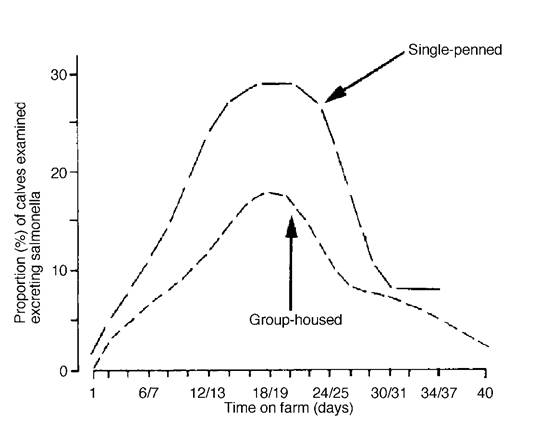
Figure 2.11. The incidence of S. typhimurium excretion in calves purchased from markets (from Wray, Todd & Hinton, Veterinary Record, 1987).
4. Buy only strong and healthy calves which could withstand a low level of salmonella challenge.
5. Treat calves very gently on arrival - separate penning, warm and dry bedding, feeding electrolytes only for the first 12-18 hours, then increase milk gradually.
6. Clean out and disinfect pens very thoroughly between batches. Burn bedding from isolation facilities. Store slurry for three months before spreading, and if it is spread on pasture, do not graze for two months after spreading.
7. Maintain vermin and bird control programme (mice commonly act as reservoirs of salmonella). Prevent wildlife access to cattle feeds. Provide clean, uncontaminated water.
8. Purchase feeds only from firms which operate salmonella control programmes.
9. Vaccinate. Excellent dead salmonella vaccines are available, often combined with E. coli. Two doses in late pregnancy will protect the cow during her highly susceptible period over calving and also the calf, via colostrum. Continued calf protection may be obtained by vaccinating at 14 and 28 days old. If the calf’s immune status is unknown, serovaccines may be used, i.e. a product containing antiserum to give immediate protection, plus a vaccine to stimulate the calf to produce its own immunity. Vaccination also reduces the rate of 5. typhimurium excretion by carrier cows and in this way decreases the overall level of contamination in the environment.
It should be pointed out that 5. typhimurium can cause diarrhoea in man and even death in young children. Personal hygiene, especially removing overalls and washing hands, is always important after handling calves and especially scouring animals. The importance of markets and calf dealing in the spread of 5. typhimurium was clearly demonstrated in 1977-8 when a chloramphicol resistant strain of the bacterium, called DT204C, was responsible for a severe outbreak of disease in calves in Somerset and the south-west of England. The organism travelled with calves to cause outbreaks of disease on farms in the Yorkshire area and even up to the north-east of Scotland.
Since the early 1990s a new type of 5. typhimurium, phage type DT104, has been increasing in importance in both man and animals. In 1995 there were 2500 human cases of infection reported in the UK, this being the second most common cause of food poisoning after 5. enteriditis. It was also by far the most common isolate from cattle, occurring at a rate of around 0.05 cases per 1000 head of cattle. It is characterised by:
• severe illness in both young and old cattle
• moderately severe illness in man, with a hospitalisation rate approaching 30%. In one survey of 200 farms having this strain of salmonella, human illness was found in 10% of them
• multiple drug resistance, in that all isolates are resistant to the antibiotics ampicillin, chloramphenicol, streptomycin, sulphonamides and tetracyclines
Other animals on the farm may be a reservoir of DT104 infection. On one farm I dealt with there was severe disease in cattle, with deaths in both adult cows and calves. Cattle deaths were controlled by vaccination, but the infection persisted on the farm, as shown by an extensive swabbing survey. The source of infection was eventually shown to be the adjacent pig unit, which was part of the farm and very close to the dairy unit. In fact slurry from the pigs was scraped across and into the cattle area. Infection was also found in mice, cats, birds, on boots and even in the foot-well of the Landrover. Vaccination of both the dairy and sow herds was carried out, using the cattle vaccine, in an attempt to reduce the excretion rate from the pigs and lower the overall challenge of infection on the farm.
Treatment of Scour
Although it is often necessary to identify the cause of calf scour, so as to prevent and control further cases, the treatment of an individual calf is very similar whatever the cause. Treatment is discussed under the following headings:
• withholding of milk
• correction of dehydration and salt loss
• correction of acidosis
• intensive intravenous therapy
• use of antibiotics
• supportive therapy
Of these, the first three are by far the most important.
Withholding of milk
Opinions vary regarding whether milk should be withheld from scouring calves. Because the intestinal villi are damaged and no longer able to digest milk (and especially lactose), most people consider that milk should be withheld for at least 24 hours; otherwise undigested milk passing into the lower intestine could cause further scouring. However, do not withhold milk for too long. It is the presence of milk in the intestine which stimulates the growth of the specialised cells which produce lactase, the enzyme required to digest milk. Therefore if you withhold milk for four to five days and then give the calf a full feed, you may cause it to scour because at this stage the intestine is unable to digest any more than a small quantity of milk. Milk should therefore be reintroduced in small feeds by the third day, even if the calf is still scouring.
Correction of dehydration and salt loss
The scouring calf is suffering a massive loss of fluid and salts and this must be replaced. In addition to replacing salts, electrolyte solutions actively promote the uptake of water. For example, if a scouring calf with a damaged gut is given 1.5 litres of water to drink, it will probably only absorb 0.75 litre. However, if the same calf is given a drink of 1.5 litres of an electrolyte solution, it will probably absorb 1.25 litres of fluid. This is because electrolyte solutions contain glucose, sodium and other substances which are actively transported across the wall of the villus. This then increases the concentration of substances within the villus and water is drawn across into the blood by osmosis (see Figure 2.6).
If dehydration is marked (e.g. the calf’s skin is tight and its eyes are sinking), electrolytes should be given frequently throughout the day, for example 1 litre per feed every two to three hours. Do not mix electrolytes with milk. Although there is some evidence that certain products increase the rate of milk clotting in the abomasum, it is likely that the milk clot formed will be less stable. There is then a risk of only partially digested milk passing into the intestine to cause further scour. When reintroducing milk, give a feed of electrolytes followed one to two hours later by a small (for example 0.75-1.0 litre) feed of milk at full strength. Diluting milk may reduce the rate of clotting and digestion in the abomasum and is best not done.
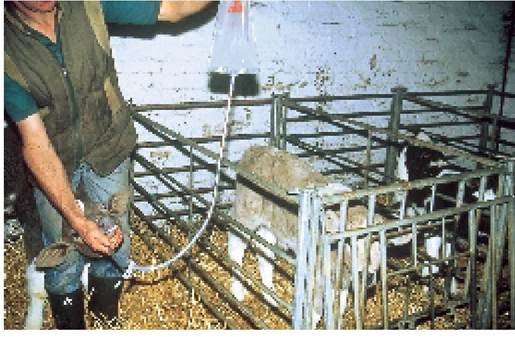
Electrolyte solutions are palatable and are generally drunk voluntarily. However, for calves which will not drink, a plastic dispensing bag combined with a stomach tube may be purchased (Plate 2.23). The tube is gently inserted so that its tip runs along the roof of the calf’s mouth. This then ensures that it enters the oesophagus, which is situated above the trachea (see Figure 2.1). The tube needs to be inserted to almost the full length of the stiffest part (Plate 2.24). Fluid will thus be administered into the lower oesophagus, or perhaps even the oesophageal groove, and can be run in under gravity.
Do not be too alarmed if scouring appears to increase in the short term. When fluids are first given, although they will be correcting the dehydration, they also allow the faeces to become more liquid, thereby increasing the volume passed. It is interesting that in the short term at least, it does not matter how much the calf scours, provided that you can maintain an adequate circulating blood volume by giving ample fluids. This might entail giving as much as 6-8 litres daily, preferably in four or more feeds.
Scouring primarily produces low blood sodium and high potassium levels and so fluids should contain high sodium and low potassium. They
should also be as close as possible to Plate 2.23. Fluid therapy: a plastic dispensing bag with a the same concentration as in blood. If stomach tube for the calf that will not drink. too concentrated they may draw fluid from the body and into the intestine and make the dehydration worse! If too weak, they may not contain enough sodium and bicarbonate to correct electrolyte imbalance and acidosis respectively. If the calf has only a mild scour, then the use of a simple home-made mixture of salt and glucose might be adequate, for example 120 g glucose plus 1 teaspoonful of salt in 5 litres of boiling water, cooled to blood heat before feeding. However, if the calf is looking sick, then much more intensive therapy is needed, with three or four daily feeds using a quality product.
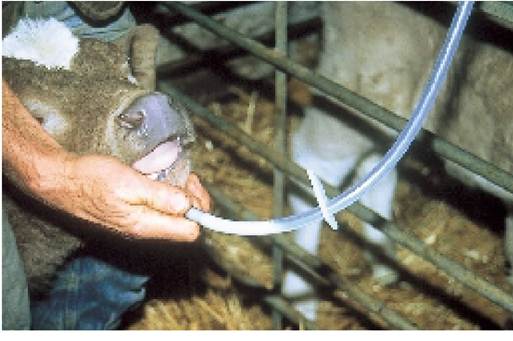
Plate 2.24. The stomach tube needs to be inserted to almost the full length of its stiffest part.
Correction of acidosis
Most of the better (and unfortunately more expensive!) electrolyte solutions now contain bicarbonate or bicarbonate precursors, such as citrate, which assist in the correction of acidosis. This is vitally important in ensuring a speedy recovery, especially in the older calf of seven to fourteen days old in which acidosis is likely to develop.
There is an increasingly wide range of products on the market and when selecting one for use consider:
• Does it contain adequate sodium? Sodium is needed to hold fluid in body tissues, and should be present at 100-120 mmol/litre.
• Does it contain adequate bicarbonate? Bicarbonate (or bicarbonate precursors) is needed to correct acidosis, and should be present at 70-80 mmol/litre.
Intensive intravenous therapy
Calves which are dull but will still suckle will almost certainly respond to oral electrolytes. Calves which are standing and able to move can be given electrolytes by feeder bag. However, calves which are collapsed, with sunken eyes and severe dehydration, are unlikely to respond unless they are given intravenous fluids. This is because they are so badly dehydrated and their circulation is so poor that they are unable to absorb sufficient electrolyte solution from the intestine. The skin ‘tent’ test is a good way of measuring dehydration (see Plate 2.20).
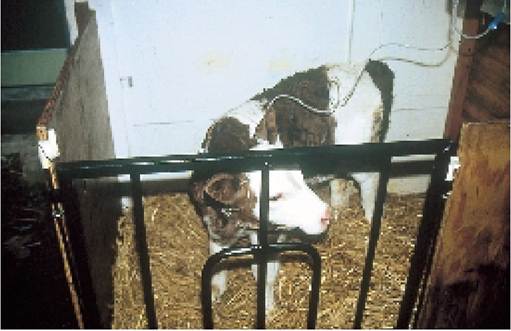
Ideally, intravenous fluid therapy needs to be given in a veterinary hospital, where the calf can be constantly monitored and blood tests carried out to ensure that the correct levels of bicarbonate are being given to correct acidosis. The calf in Plate 2.25 is receiving intravenous fluids in a veterinary hospital. Recovery can be remarkably rapid (12 hours or less) although intravenous therapy may need to be continued for two to three
days if the intestine is badly damaged. If fluids are discontinued too quickly, relapses occur, with disappointing results.
Plate 2.25. A calf being given intravenous fluid therapy. This is needed for badly affected calves.
Use of antibiotics
Although commonly used, antibiotics are perhaps over-rated in the treatment of calf scour. This is because:
• The majority of causes are not bacterial. Of the causes cited in Table 2.4, only E. coli and salmonella would be killed by antibiotics.
• Even bacterial causes are self-limiting, because the bacteria may die off quite quickly, leaving just a damaged intestinal lining (and a badly scouring calf!).
Others would say that if the gut wall is inflamed, or the calf has a raised temperature, then the use of antibiotics is justified to kill any bacteria which might leak into the bloodstream. And if bacteria are known to be the cause of scouring on your farm, then antibiotics are definitely indicated.
There is a wide range of antibiotics available. The one used needs to be:
• active against E. coli and salmonella (e.g. penicillin would not be effective)
• active in the gut (e.g. neomycin or apramycin, which stay in the gut and are not absorbed)
New drugs are constantly being developed and your veterinary surgeon will advise you on the best choice for your circumstances.
Supportive therapy
In addition to the above treatments, there is a wide range of measures which may help in the recovery of the calf. Some are discussed in Chapter 1. Supportive therapy includes:
• Nursing. Move the calf to its own pen, possibly with a heat lamp, so that it no longer has to compete with others in the group. This also reduces the spread of infection.
• Anti-inflammatory drugs such as flunixin may decrease shock if bacterial toxins are involved.
• Vitamins may assist in recovery, especially when the intestinal lining is badly damaged.
• Physical adsorbent agents such as attapulgite, activated charcoal and kaolin may be used. Bacterial toxins and other agents stick (adsorb) onto their surface and this will decrease the intensity of scouring.
• Eggs are sometimes used. A very traditional remedy for calf scour is to push an egg into the calf’s mouth and break it as it reaches the back of the tongue. The calf then swallows both egg and shell. There are many farmers who use eggs, with or without the shell, and report good results.
• Probiotics. Probiotics could be used at the end of a course of scour treatment, before or at the same time as reintroduction of milk. They are said to colonise the gut with ‘healthy’ lactobilli and other bacteria and in so doing prevent pathogenic (disease-causing) bacteria and viruses from becoming re-established.
The commonest, and probably the best, probiotic is yoghurt, which can easily be made at home. Heat a small bucket of milk to boiling point (to destroy existing bacteria), cool to blood heat, stir in a carton of natural yoghurt and stand in a warm place (e.g. by the fire or in an airing cupboard) for four to five hours. Most calves will drink yoghurt. It contains millions of lactobacilli and these are normal inhabitants of the calf’s intestine. Yoghurt can be a very useful treatment in cases of recurrent scouring. It has, of course, been traditionally used in certain unresponsive human conditions, e.g. vaginal thrush, a fungal infection in women. Probiotics are also commercially available in powder or liquid form and can be used for prevention as well as treatment. The majority contain lactobacilli, but may be mixed with other organisms such as Streptococcusfaecalum to give an overall concentration of up to one billion bacteria per gram. Probiotics may also work by producing their own antibiotics in the intestine. For example, Lactobacillus acidophilus from yoghurt produces the three antibiotics acidophilin, acidolin and lactolin.
Prevention and Control of Scour
When the stockman first sees a scouring calf it is unlikely that he will immediately know the cause. He has to treat the calf using the measures discussed above. At the same time he needs to take steps to prevent the spread of infection and control or limit the number of new cases which might occur. This is particularly so if several calves have already been affected. While the veterinary surgeon is determining the precise cause from samples taken, the following measures will help to prevent further cases.
• Separate scouring calves from the remainder of the group, thus reducing the challenge dose of infection to otherwise healthy calves.
• Pay strict attention to cleaning buckets after each feed, or ensure that each calf has its own individual bucket. Salmonella, for example, can be spread via the saliva.
• Ensure that the milk substitute is fed at the correct strength and temperature and that feeding times are regular each day. This promotes both oesophageal groove closure and subsequent abomasal clot formation and digestion.
• If it is necessary to enter calf pens, consider providing a disinfectant foot dip to prevent infection being carried from one pen to another.
• As soon as possible, depopulate the calf house for cleaning as described earlier in this chapter. Start introducing new calves into a different building with clean pens and make sure that these calves are fed and attended each day before the scouring group.
• Ensure beds are dry and warm and that calves are not exposed to draughts. Sick animals may have a fever or a subnormal temperature from dehydration and shock. In both cases a heat lamp will be beneficial.
• Pay extra attention to achieving adequate colostrum intakes for any future calves.
• Vaccinate. Once the cause of the scouring has been established, then vaccination becomes a possible option.
In addition to these control measures, there are specific measures for each disease listed in the preceding sections.
More on the topic DISEASES OF THE CALF:
- OTHER CALF DISEASES
- CALF PNEUMONIA
- This chapter deals with the health of the calf from birth to weaning, that is until approximately six weeks old.
- Chapter 3 THE WEANED CALF
- Chapter 2 THE YOUNG CALF
- The various cardiovascular diseases observed in HIV-infected patients and widely described in the literature have been predominantly coronary and peripheral arterial diseases (PAD) and remain poorly known.
- RESPIRATORY DISEASES
- BIBLIOGRAPHY FOR NONINFECTIOUS DISEASES
- INTERSTITIAL LUNG DISEASES
- THE CLOSTRIDIAL DISEASES
- WHY STUDY WILDLIFE DISEASES
- VECTOR-BORNE VIRAL DISEASES
- OTHER CLOSTRIDIAL DISEASES IN WILDLIFE
- BIBLIOGRAPHY FOR PARASITIC DISEASES