HOUSING
Undoubtedly the healthiest calves are those born outdoors, but this is impractical in the winter and presents its own problems of management (e.g. when assistance is required) in summer.
Individual calving boxes are ideal, as it is then easier to ensure that the calf is not mismothered, that is, that it suckles its own mother first and therefore receives adequate colostrum. The majority of calves from dairy herds are moved into rearing quarters after a few days and the most important criteria for their housing are:• a warm dry bed
• shelter from direct draughts and extremes of weather
• cleanliness
• preferably separation from other calves
One of the most common faults I see is wet beds. As you step in, the pen fails the squelch test: water can be heard squelching under your foot when you stand on the bedding. Not only does this lead to chilling (and therefore poor antibody production, see Chapter 1), but it also increases the ammonia in the atmosphere and predisposes to pneumonia. One of the best ways of bedding individual calf pens is to cover the floor of the pen with 10-15 cm thick wads of compressed straw taken straight out of the bale. The large 300 kg square bales are ideal for this. A conventional layer of loose straw is then scattered on the top. Yes, it uses more straw, but the improvement in calf performance is well worth the extra cost.
Although sub-zero conditions are best avoided, provided that the calf has a dry bed with ample straw, it is doubtful if house temperature is too important. However, ventilation as a pneumonia preventive is vital.
Individual penning is a great advantage in that feed intakes for each calf can be monitored and the slower drinker will not be penalised. Any sick calves are much more readily apparent and there is a reduced risk of the spread of disease, especially scouring. Pen size and construction will vary with the manufacturer but it is important to ensure that the calf has sufficient room to turn round easily.
Although the majority of commercial pens have railed divisions (Plate 2.1), I prefer to see solid sides. This gives a greater freedom from draughts and a reduced risk of the spread of disease, and at the same time the calves have some contact with each other during feeding times. The pens shown in Plate 2.2 were constructed of 2.4 m by 1.2 m sheets of 95 mm marine ply and the fronts were home made. The whole assembly can be dismantled for cleaning out. Calf hutches (Plate 2.3), widely used in North America, are gaining popularity in the UK for a variety of reasons. Their main advantages are:• individual attention
• reduced spread of disease. However, to achieve this the hutches must be sufficiently far apart so that calves cannot have any contact with one another. Licking and sucking can transmit both scour and pneumonia
• open air space and good ventilation. Hutches need to be well ventilated and in summer the backs should open to allow an adequate airflow; otherwise they become too stuffy and uncomfortable. Remember that a stressful environment reduces a calf’s ability to produce antibodies
• some say that calves tethered and reared in hutches are quieter and more easy to handle as heifers
I do not like the severe conditions provided by calf crates, as in Plate 2.4. While faeces and urine may drain rapidly away, the calf has no protection from draughts and cannot adjust its own environment. The wet floor will provide high humidity. It is not surprising that the farm had a bad E. coli scour problem.
Where fixing is required it is important to use bolts, screws or wire. String is best avoided. It will be sucked by the calves and even the most secure knots can come undone. Calves then chew and eat the string and may develop indigestion, or even a fatal obstruction from string in the gut.
Whatever the construction, it should be possible to dismantle the pens, take them outside for cleaning, then thoroughly clean out, wash, disinfect and rest the calf house.
If calves are purchased, they should be reared in groups preferably of the same age and size. When the first group is weaned, empty the whole house and clean it, then rest it for at least a week before introducing the next batch. This is known as the ‘all in, all out’ system and it is a most important factor in preventing the spread of disease between groups of calves.On dairy farms where calves may be born throughout the year, at least two different buildings should be used for calf rearing. As soon as the calves have been moved from the first building, dismantle the pens, remove all dung and bedding and give the pens and fittings a good soaking with water. Then thoroughly clean them using a detergent to remove the layer of fat which would otherwise remain as a thin film and obstruct the penetration of the disinfectant. Disinfect the pens and leave the building empty for at least a week, and preferably longer. Cleaning and disinfection must be carried out before the rest period to maximise its benefits. This routine should be followed even when healthy calves have been reared, although it is of course more important if disease has been present. It is good preventive medicine. It is aimed primarily at reducing scouring and pneumonia but it will also improve growth rates generally.
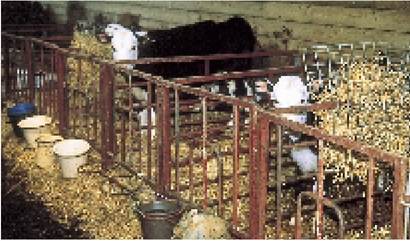
Plate 2.1. Calf pen with rail division.
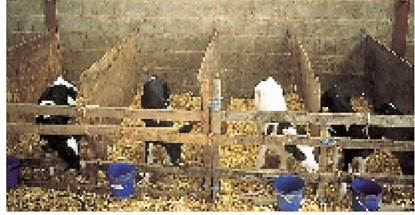
Plate 2.2. Calf pen with solid side divisions.
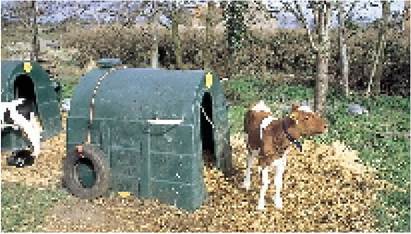
Plate 2.3. Calf hutch.
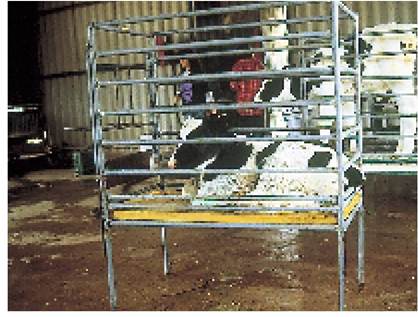
Plate 2.4. Calf crates provide a harsh environment.
More on the topic HOUSING:
- A Bubble in the Housing Market?
- Why Did Integrated Financial Firms Not Exit when Prices of Housing Started to Fall?
- This analysis focuses upon two boys, age nine and eleven, who live in two different housing estates in Northern Ireland.
- 11.41 A license or tenancy granted after the commencement of the Housing Act 1988 will normally be an ‘assured’ agricultural occupancy (below).
- 11.43 The Housing Act 1988 introduced a new regime – ‘assured’ agricultural occupancies – applicable to licenses and tenancies granted after the commencement of Pt I of that Act.
- 6 Conditions on Permitted Development Rights
- Homeownership has defined what it means to be a middle-class American since the 1920s (Megbolugbe and Linneman, 1993).
- F REHOUSING FORMER AGRICULTURAL WORKERS
- Types of Environment
- G AVAILABILITY OF PREMISES FOR TIED LETTINGS
- Conclusion