THE IMPORTANCE OF COLOSTRUM
Colostrum, the thick first milk produced by the cow immediately after calving (and sometimes called beastings), is the calf’s ‘passport to life’. Without an adequate intake of colostrum, life will be an uphill journey and a proportion of such calves will never survive.
It cannot be emphasised too strongly how extra effort after calving, leading to improved colostrum intake, will be beneficial to the calf for at least the first two to four months of its life. For example, colostral antibodies for both pneumonia and BVD may persist and protect the calf for up to four months.The main characteristics of colostrum are:
• It contains antibodies which protect the calf from the wide range of diseases that its mother has been exposed to during her recent life.
• It is highly nutritious. The high food value of colostrum is an important factor in getting the calf warmed up and moving around soon after birth. Colostrum-deficient calves are often dull, listless and hypothermic.
• Its increased fat content acts as a laxative and assists in the passage of meconium, the foetal dung.
• The presence of colostrum (or milk) in the abomasum stimulates the production of acid and digestive enzymes. At birth the abomasal pH is quite high, falling to pH 3-4 at two to three days old, when acid is produced. This acid kills many ingested bacteria and is therefore a very important defence mechanism.
The difference in composition between colostrum and milk is shown in Table 2.1. Colostrum is twice as concentrated as milk (25% vs. 12.6% solids) and contains a higher percentage of protein and the fat-soluble vitamins A, D and E. At birth the calf may have very little of these vitamins stored in its liver. That is why many farmers inject calves with multivitamins at birth, particularly when they suspect low-quality colostrum, for example because of poor dry cow feeding during the winter.
The production of antibodies was explained in Chapter 1. In late pregnancy the cow concentrates antibodies in her colostrum, so that the calf can receive immediate preformed immunity to many of the diseases to which it will be exposed. The final concentration of antibodies in colostrum is much higher than that originally present in blood, and is the reason why the protein content of colostrum is so high. The immunity given to the calf is of course only related to the infections which the cow herself has contacted (see Figure 1.6). If a cow is purchased and moved into a new herd only a few days before calving, then clearly there is a risk that the calf will be challenged by infections for which it has no colostral protection.
Table 2.1. Some of the differences between milk and colostrum, expressed on a fresh weight basis.
| Colostrum | Milk | |
| Total solids % | 25 | 12.6 |
| Fat %1 | 5.1 | 3.8 |
| SNF %1 | 19.6 | 8.8 |
| Protein %1 | 16.4 | 3.2 |
| Lactose %1 | 2.2 | 4.7 |
| Immunoglobulins (antibodies) g/kg2 | 60 | 0.9 |
| Vitamin A mg/g fat2 | 45 | 8 |
| Vitamin D mg/g fat2 | 23-45 | 15 |
| Vitamin E mg/g fat2 | 100-150 | 20 |
1 From Godsell, personal communication; 2 from J.B.H.
Roy, The Calf.Absorption of Antibodies
Antibodies are proteins and as such they would normally be digested (viz broken down) in the calf’s intestine. However, during the first few hours of life the intestine has a special ability to absorb whole proteins into the bloodstream, rather than digest them. This ability of the calf to prevent digestion of a certain fraction of its first feed of colostrum is extremely useful and is assisted by:
• specialised cells lining the intestine which are capable of pinocytosis, that is the absorption of whole molecules. These specialist cells start to fall off within 12 hours of birth and most are gone by 24-30 hours. The calf must therefore receive colostrum early
• a trypsin inhibitor in the colostrum, which prevents the digestion of proteins
• the very low activity of the pancreas in the very young calf
• the quite high abomasal pH of 6-7 which prevents the pepsin (a digestive enzyme in the abomasum) from working. By 36 hours after calving the pH falls to between 3 and 4, pepsin becomes active, and ingested milk (or colostrum) then coagulates in the abomasum before undergoing digestion (see Figure 2.2). Although the lack of acid in the stomach is an advantage in terms of colostrum, it does render the calf more susceptible to infection for the first 48 hours of life, because acid would normally kill many of the bacteria ingested with the food
Absorbed antibodies pass into the bloodstream and are immediately active and available to repel invading infections. The amount of absorbed antibody can be measured in blood samples, for example by the zinc sulphate turbidity test (ZST). The sodium sulphite test and electronic methods are now more commonly used. On some farms all purchased calves are blood sampled on arrival, to ensure that the farm of origin has been taking enough care in giving their calves colostrum.
Inadequate Colostrum Intakes
The absorption of colostral antibodies is of vital importance to the calf, not only for the first few days of life, but continuing for weeks and even months.
Calves which have not received adequate colostrum have been shown to:• have a higher overall death rate, especially from septicaemia and joint-ill
• be more likely to develop scouring (one trial reduced scouring from 12% to 2% by improving the supervision of colostrum intake)
• be more likely to develop pneumonia, even at two to three months old
Table 2.2 shows the colostrum status and subsequent performance of 1050 calves reared at the
National Agricultural Centre, Stoneleigh. On the basis of the ZST test, 50% of calves were shown to have inadequate colostrum status, which was defined as less than 20 ZST units, and this significantly influenced the incidence of scouring and pneumonia in these calves, even up to five months of age.
Table 2.2. Of 1050 calves reared at the NAC, half had inadequate colostrum status and this led to an increase in mortality, general illnesses (including scouring) and pneumonia.
Colostrum status (ZST units)
| 0-10 Low | 10-20 Marginal | 20+ Good | |
| % of calves | 18 | 32 | 50 |
| % of mortality | 9.8 | 4.1 | 3.2 |
| % illness | 31.6 | 23.0 | 15.1 |
| % pneumonia | 5.2 | 3.2 | 1.4 |
From Thomas L.H and Swan R.C. (1973), Vet. Rec. 92 454
Colostrum therefore has a profound effect on subsequent calf performance and as such it is vitally important to have some idea of the factors involved in its absorption. Whole antibodies are most efficiently absorbed during the first few hours of the calf’s life, although the facility may persist at a reduced level for up to 24 hours or more, provided that no other food is taken.
It is the first feed which acts as the trigger mechanism stimulating the digestive processes and hence preventing the further absorption of whole antibodies. As such, it is vitally important that the first feed is colostrum. If you find a weakly calf, it is far better, if necessary, to wait for an hour or two and give it colostrum, rather than give it a feed of whole milk ‘to be going on with’.As a rule of thumb I would suggest that a calf receives colostrum
• at the rate of 6% of its bodyweight (viz 2.4 litres for a 40 kg calf)
• within six hours of birth
Half a litre of colostrum may give some protection against septicaemia, but 5 to 6 litres are needed to give good protection against scouring. It is not sufficient to leave the calf with its dam. Several studies have shown that inadequate colostral intakes may result. This could be because of a weakly calf, for example due to chilling, or following a difficult calving; a nervous heifer; an older cow with a pendulous udder and splayed teats; or simply mismothering - for example, a calf born in a crowded yard which is mothered and suckled by a cow which had calved three to four days previously and whose colostral quality would be very poor. Whenever possible, the calf should be lifted to suckle as soon as it is reasonably able to stand and suckling will need to continue for 15 to 20 minutes. Because the first feed of colostrum stimulates the production of digestive enzymes, thus reducing the bucket, they were able to achieve satisfactory colostrum status in all their calves. A simple teated container made from a 5 litre plastic can is shown in Plate 2.6. The handle on the top is very useful and the small filling hole prevents spillage when dealing with an excitable calf.
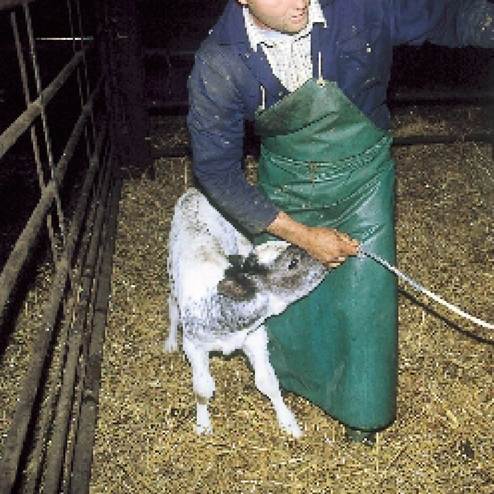
Plate 2.5. Stomach tubing colostrum.
absorption of further antibodies, this first feed needs to be as large as possible. Colostrum does not need to clot in the abomasum, so there is little risk of overfeeding and producing digestive upsets, even if it is given as a drench or by stomach tube (see Plate 2.5).
Some people consider that suckling is so variable that it is best to remove every calf from its dam at birth and provide colostrum by bucket and teat, or even by stomach tube. Table 2.3 shows the results of a trial which took 16 ZST units as the target of colostral intake. No
difference was found in the
percentage of suckled calves which achieved this target, whether assisted or not, although the range of values showed that certain individual unassisted calves achieved very poor intakes (only 3 ZST units). However, by removing the calf at birth and feeding colostrum via a teated
Table 2.3. Calves left with their dams fail to achieve adequate colostral intakes, even if assisted to suckle. Ateated bucket produces the best results.
Colostrum status (ZST units)
| Range | % calves above target of 16 ZST units | |
| Calf left with cow | 3-28 | 60 |
| Assisted suckling | 11-30 | 60 |
| Artificial suckling | ||
| (teated bucket) | 21-30 | 100 |
| From S. Furness, personal communication | ||
It is interesting to note that colostrum has a mainly preventive function and is of little value for treatment. In one trial, calves fed colostrum and then dosed with pathogenic strains of E. coli did not scour, whereas those dosed with E. coli and then given colostrum two to three hours later all developed diarrhoea and died. This further emphasises the need to feed colostrum soon after birth.
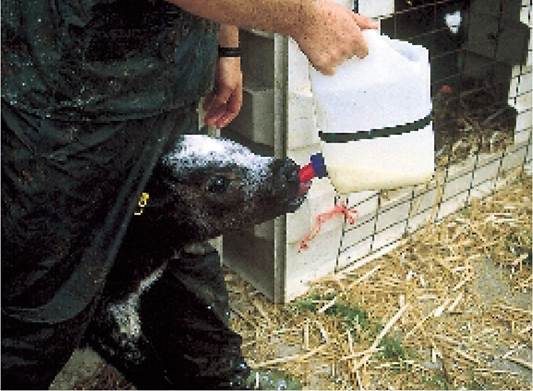
Plate 2.6. Calf drinking from a teated container, ideal for ensuring adequate colostrum intakes.
Mothering has an effect on the uptake of colostral antibodies and on subsequent circulating blood levels. Ideally the calf should suckle colostrum from its own dam. However, if artificial feeding is necessary (e.g. if the cow is recumbent due to milk fever, injury or mastitis, or perhaps because she has been pre milked), then antibody absorption is considered to be more effective in the presence of the cow, even when the colostrum is being given via a teat. When it is known that artificial feeding will be required, then every effort should be made to achieve this within the first six hours of life.
The main factors which can lead to poor colostral intakes include:
• weakly calves at birth - e.g. chilling, premature or difficult delivery
• nervous heifers: calf not allowed to suckle for long enough
• older cow with dropped udder, splayed or excessively large teats, making sucking difficult
• mismothering, e.g. a calf born into a crowded yard
• poor-quality colostrum, due to poor feeding of dry cows (usually winter), premature calvings or very recently purchased cows or heifers
Finally it has been shown that there can be a considerable variation in the antibody content of the colostrum itself. Cows which are in poor condition, affected by chronic mastitis, suffering from a debilitating disease (e.g. liver fluke) or which have been induced to calve prematurely using corticosteroids are simply unable to provide adequate protective antibodies for the offspring.
Frozen Colostrum
Colostrum retains its nutritive and antibody potency when frozen, and the deep-freeze can be a useful emergency store provided that the colostrum is reheated carefully. Boiling destroys the antibodies. A microwave oven can be used, but it must be on the low or defrost setting. Colostrum ‘banks’ can be set up by freezing it in the quantities needed for an individual calf, viz a minimum of 2 litres. There is then always a supply available for those unexpected occasions of mastitis in all four quarters, death of the cow at calving, recumbency and other such unfortunate incidents, which would otherwise render the calf colostrum deficient.
Stored Colostrum
Colostrum can also be stored. As in the UK milk from the first four days after calving must be discarded, many people store it, allowing it to ferment at environmental temperature and use this as milk to rear replacement heifer calves. It should be noted, however, that fermented colostrum does not have the same high levels of antibody as frozen colostrum.
To achieve the correct fermentation, the colostrum must be kept clean but exposed to air. Some advise the use of preservatives, e.g. 0.05% formaldehyde (1 ml formalin solution per litre of milk), but this is more important in hot climates and for milk discarded during treatment of a cow with antibiotics. There is, however, a body of opinion which says that antibiotic milk should not be fed to calves.
Stored colostrum is best fed fairly quickly, but it can be kept for several weeks, depending on hygiene and environmental conditions.
Some important factors to remember include:
• Plastic containers are better than metal.
• Keep the colostrum covered to prevent moulds and fungi blowing in and causing souring. A cloth covering allows the colostrum to breathe, as well as keeping it clean.
• Store in limited quantities. When one container is full, start storing colostrum in another clean container, thereby reducing contamination. Thoroughly clean the containers when they have been emptied.
• Do not add bloody milk. This has a bitter flavour and can lead to souring.
• Stored colostrum should be stirred regularly to break the crust and disperse the solid material before feeding it.
• Colostrum is much more concentrated than milk and if neat colostrum is being fed it should be diluted 1:1 with hot water.
The ideal system is to have two colostrum stores. The first is a store of colostrum from, say, the first 24 hours after calving only. This batch should be considered as a medicine or vaccine and used sparingly, for example in the control of rotavirus scour. The second batch is of milk from cows which calved two to
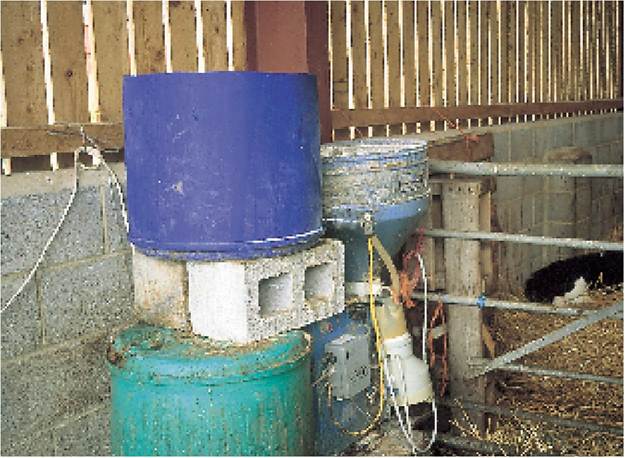
Plate 2.7 Automatic calf milk feeder dispensing colostrum.
three days or more ago, plus discarded milk from cows under treatment for mastitis, or which are being given injectable antibiotics or other drugs requiring a milk withdrawal period. This batch is a food. It is unlikely to ferment and keep properly and thus should be used up fairly quickly.
Many milk dispensing machines (Plate 2.7) have a facility for feeding 5-10% stored colostrum with milk substitute. This provides excellent control against rotavirus and coronavirus.
More on the topic THE IMPORTANCE OF COLOSTRUM:
- The Importance of Biodiversity
- First lesson: the importance of humility is limited
- The Importance of Economic System
- THE IMPORTANCE OF BEING SKEPTICAL
- Importance of Devgudis
- A The importance of status
- The Growing Importance of Cross-Strait Linkages
- THE IMPORTANCE OF HOMER IN NIETZSCHE
- THE IMPORTANCE OF HOMER IN PLATO
- PART II THE IMPORTANCE OF INTERNATIONAL