Klebsiella spp. Infection
Klebsiellae are commensal Enterobacteriae of the gastrointestinal tract, but may become opportunistic pathogens. Disease in mice has been associated with Klebsiella oxytoca and K.
pneumoniae. Klebsiella oxytoca has been associated with suppurative female reproductive tract lesions in a large population of aging B6C3F mice. Other organisms isolated from affected mice included K. pneumoniae, E. coli, Enterobacter, and others. Aged mice had suppurative endometritis in association with cystic endometrial hyperplasia, salpingitis, and perioophoritis and/or peritonitis, often resulting in the formation of abscesses and adhesions (Fig. 1.67). Klebsiella oxytoca has also been associated with a wide range of opportunistic infections in a number of different strains of mice of all ages from a large commercial supplier of mice, including perianal dermatitis, preputial abscesses, otitis, tooth infections, urogenital infections, pneumonia, and bac- teremic disease. Higher morbidity has been observed in immunodeficient female breeder NSG mice, which were prone to development of acute and chronic ascending urinary tract infections. Klebsiella pneumoniae has been associated with bacteremic disease in mice with cervical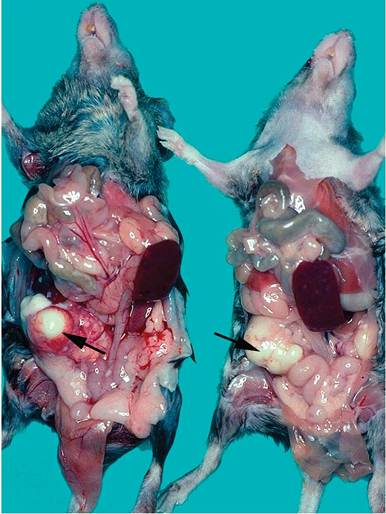
FIG. 1.67. Female mice with abscesses (arrows) involving the abdominal viscera associated with chronic Klebsiella oxytoca infection. (Source: T.R. Schoeb, University of Alabama, Tuscaloosa, Alabama. Reproduced with permission from T.R. Schoeb.)
lymphadenopathy, liver and kidney abscesses, empyema, pneumonia, ventricular endo- and myocarditis, and thrombosis. Diagnosis is based on isolation of the agent in association with lesions that are not necessarily specific for Klebsiella.
More medical literature on Medic.Studio
More on the topic Klebsiella spp. Infection:
-
Infectious diseases -
Internal diseases -
Obstetrics and Gynaecology -
Pediatrics -
Veterinary medicine -
-
Conflictology -
Ecology -
Economy -
Finance -
History -
Law -
Medicine -
Philosophy -
Religious studies -