Musculoskeletal system
The skeleton of the rabbit (Fig. 14.11 is delicate and makes up only 7-8% of the body weight. This is in contrast to the skeleton of the cal. which makes up 12-1 3% of body weight.
The cortex of the long bones is normally thinner than those of the cat and older caged rabbits may additionally develop osteoporosis from lack of exercise and low calcium intake.When handling all rabbits, particular care must be taken to prevent struggling which may result in fractured limbs or spine.
The number of vertebrae in each part of the vertebral column is: C7. Tl 2-11, L7. S4. Cdl 6.
There a fewr differences between the skeleton of the rabbit and that of the cat:
The scapula is more sharply triangular and has a pronounced hook-shaped Suprahamate process on IheacromiontFig. 14.2).

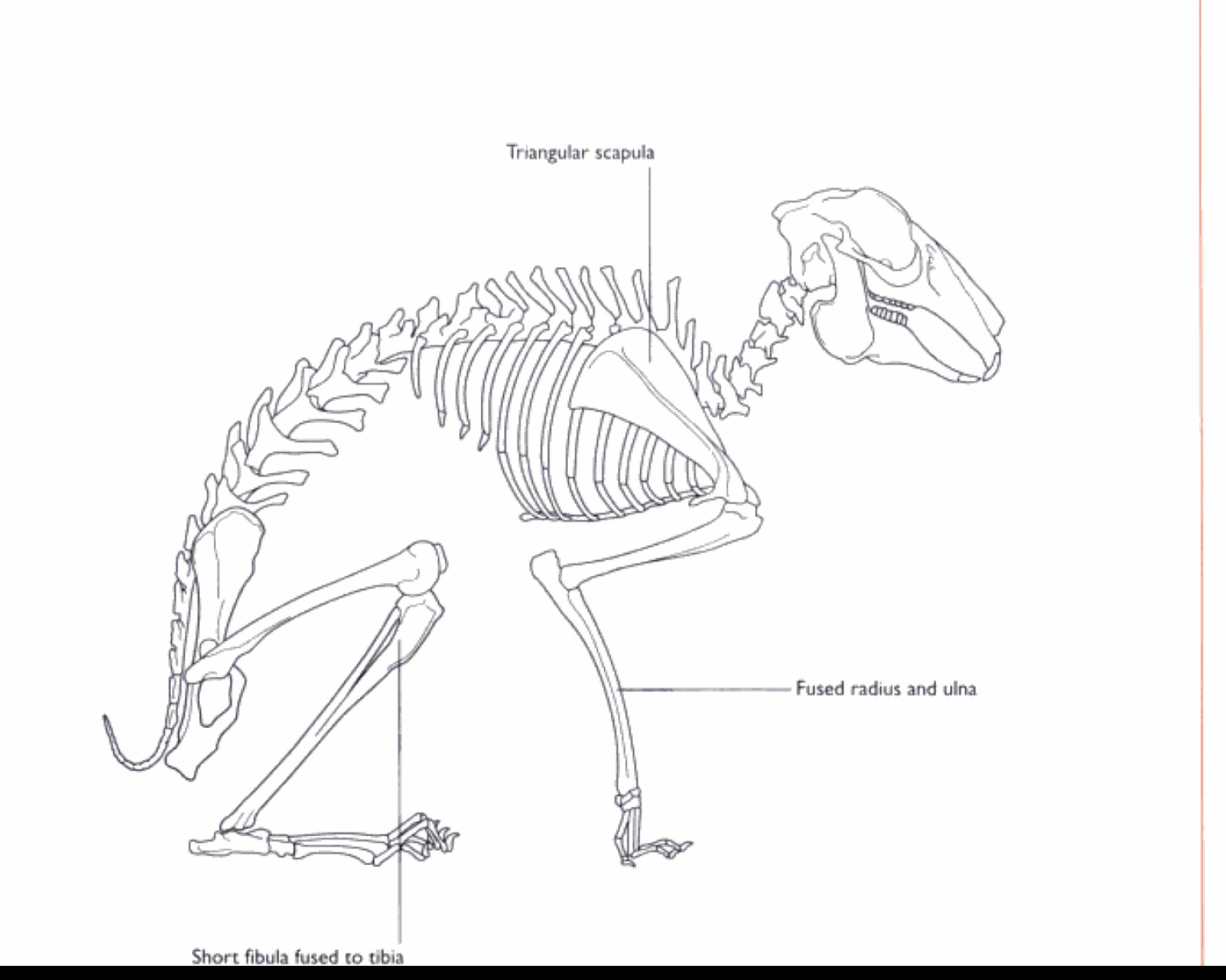
Fig. 14.1 Skeleton of the rlιbbt compared to that of that cat
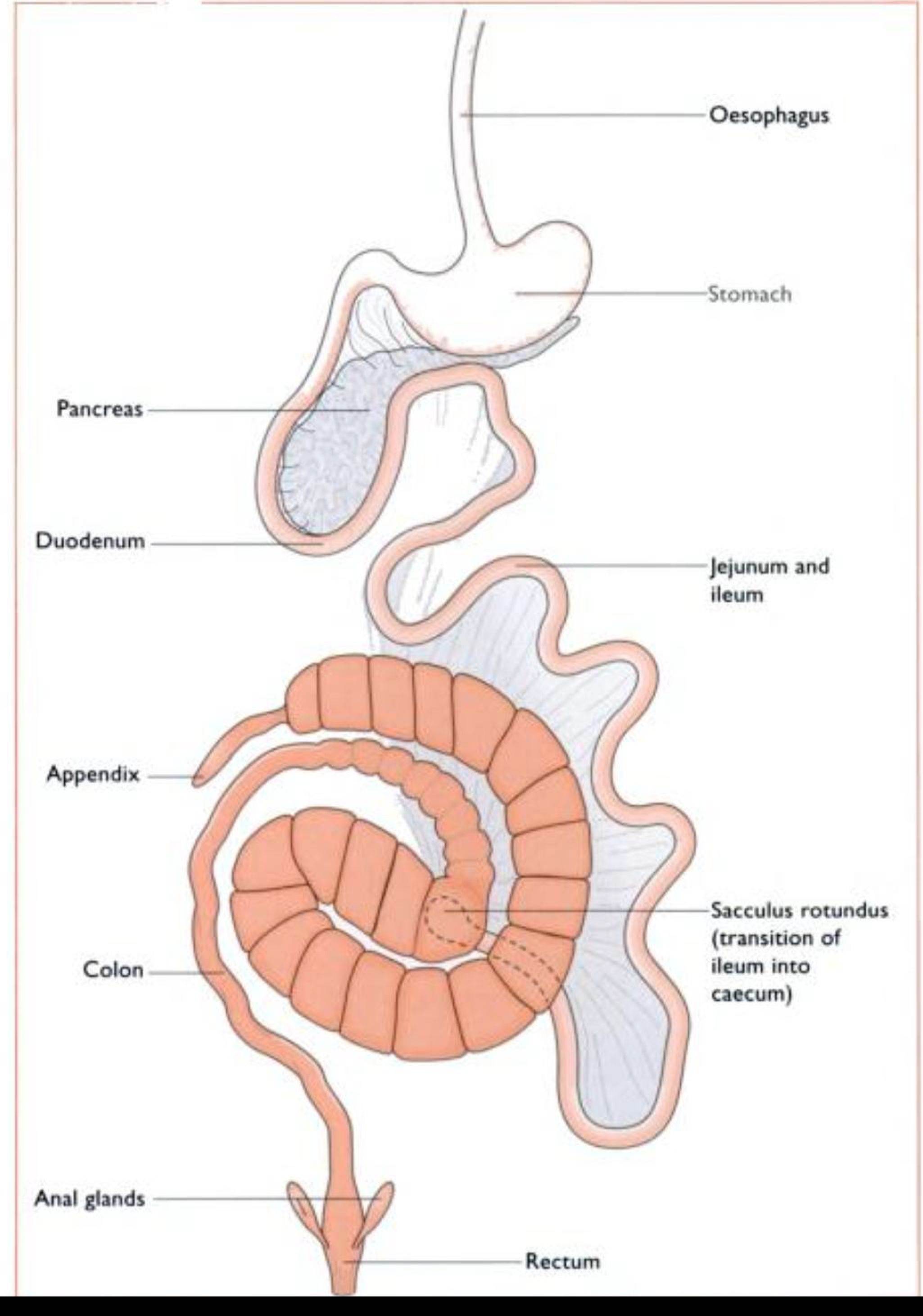
Fig. 14.3 Digestive system of the rabbrt.
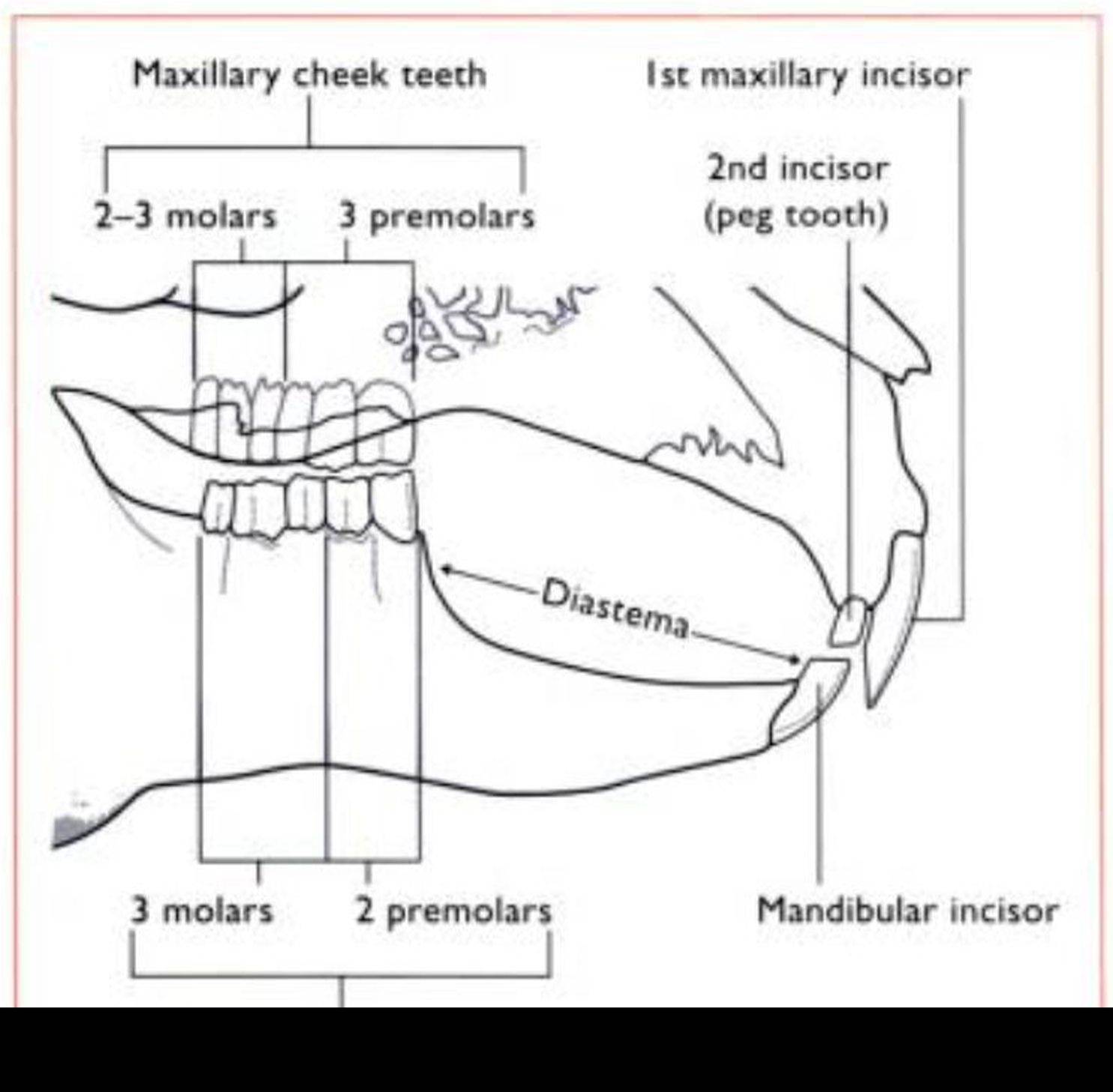
Fig. 14.4 Norma! de∏tΦon of the rabbit
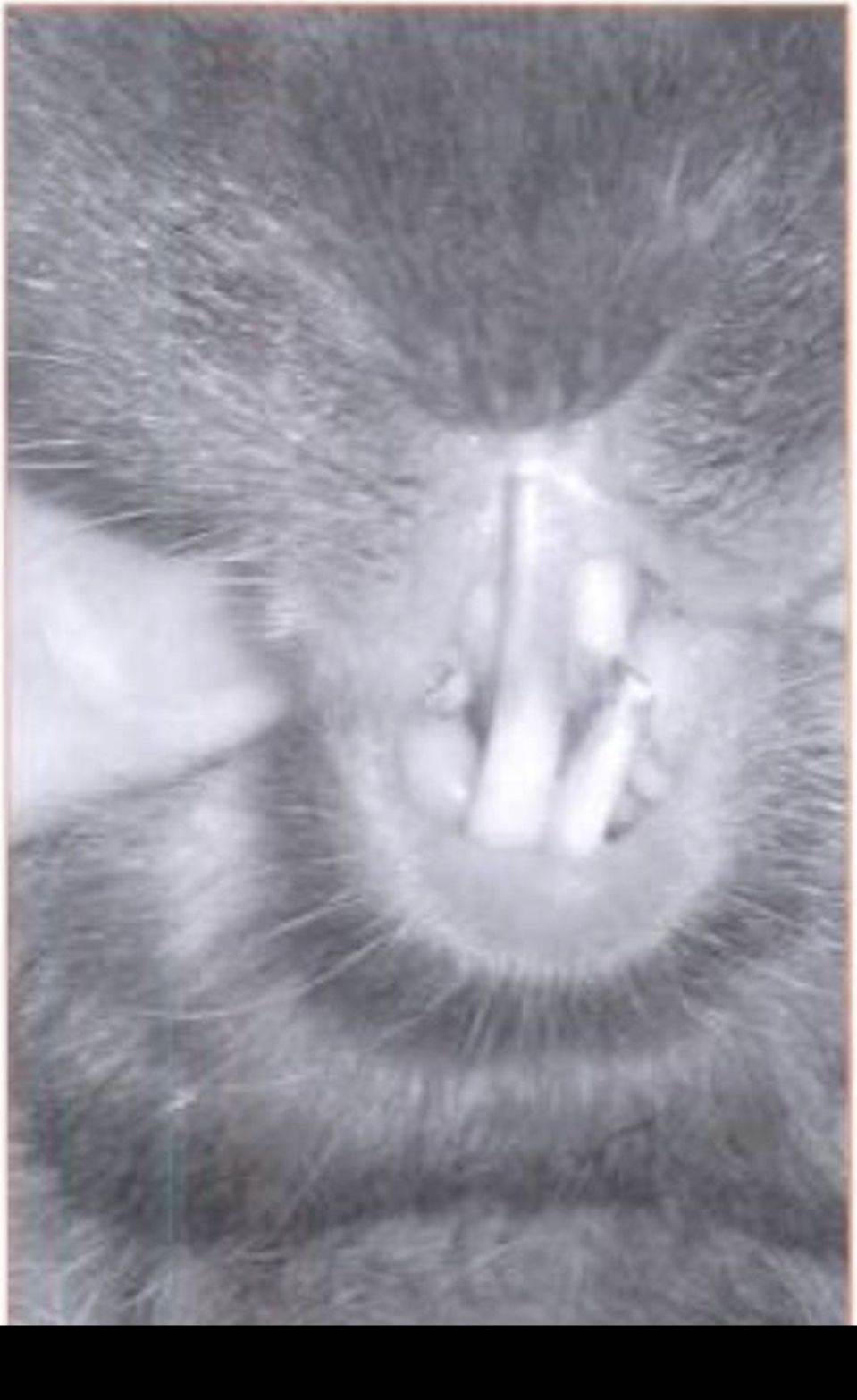
Fig. 14.5 IfXrsor malocclusion in a rabbit
If the teeth are misaligned or the diet does not include sufficient fibrous material, the teeth will not wear properly and the rabbit will suffer from a range of malocclusion problems (Fig. 14.5). Malocclusion is one of the most common reasons for rabbits being presented to vets. Malocclusion can be prevented by including large quantities of g∞d quality hay in the diet
The incisors have enamel only on lhe outer surface, which wears more slowly than the inner surface, ere- ating the characteristic chisel shape needed for nibbling plant material.
In the upper jaw the second pair of incisors are vestigial pegs and lie behind the first pair. There are no canine teeth and the space between the incisors and the cheek teeth is known as the diastema. The premolars and molars cheek teeth are flattened table teeth for grinding food. The jaw moves in a circular fashion to force the food against their roughened surfaces. Tlie lower teeth grow al a faster rate than the upper teeth.Stomach
This is a simple thin-walled chamber which acts as a reservoir for food and which is never truly empty. There are well developed cardiac and pyloric splιiιu h∙rs. Rabbits are unable to vomit because of the arrangement of lhe cardia in relation to the stomach.
Small intestine
The duodenum and ileum are long and have a relatively small lumen. The ileum terminates al the caecum, where there is a rounded structure, the sacculus rotundus. Inside this the mucosa is arranged in a network of lymph follicles and this area is often known as the Heixaecid tonsil.
Large intestine
Ilwcaetum is the largest organ in lhe abdominal cavity and lies on the right side. Il is blind-ending, thinwalled and sacculated and coils around the other organs, folding in on itself three limes. H terminates in a vermiform appendix, which contains abundant lymphoid tissue. Fixxl passes on into the colon which is also SiiCCuIated but shorter with a smaller diameter lumen.
Digestion
Rabbits arc herbivorous, monogastric, hind gut fermenters. The ingested plant material passes down the tract by peristaltic con∣πιclions and undergoes enzymic digestion in the stomach and small intestine. The Piirtially digested material enters lhe caecum where it mixes with colonies of Inicnxirganisms responsible for the Termentiition and the breakdown of cellulose w itIiin plant cell walls.
The now semi-liquid material passes into the colon. Contractions here pass Iluid back into lhe caecum for re-use in the Icrmenlalion process and also separate fibrous from non-librous material, resulting in lhe production of Iwo types of faeces:
1.
Hurd fibrous pellets - produced within four flours of eating. I ibrc passes rapidly through Ihedigestive Inict and is essential for Ihcstimulation of gut function but has no nutritive value.2. Soft ∣H,llcts or caeco∣rophs - produced within J-
8 hours of eating, often al night. They are covered in mucus, greener, low in Iibrc and high in protein, vitamins B and K and volatile fatty acids.
Caccotrophs arc eaten directly from the anus - a process known as caecotrophι∣ or eoprophatμa. They are swallowed without chewing. The mucoid
Copyrighted material
covering protects them from the stomach acid and facilitates absorption of the nutrients in Ihesmall intestine.
In this way, nutrients pπxluced by microbial fermentation are made available to the rabbit. RmmI material passes Ilirough Ihcdigestivesystem twice in 24 hours.