Proteus mirabilis Infection
Proteus mirabilis is a ubiquitous bacterium in the environment and can be isolated from the upper respiratory tract and feces of normal mice. Opportunistic infection resulting in disease has been observed in both immunocompetent and immunodeficient laboratory mice.
Based upon the pattern of histologic lesions, infection of internal organs is likely to be hematogenous. Along with P. aeruginosa, P. mirabilis is known to cause mortality in irradiated mice.Suppurative pyelonephritis has been reported in male MM mice that are prone to development of diabetes, and nephritis has also been found in male C3H/HeJ mice. In SCID and SCID-beige mice, splenomegaly and multifocal hepatic lesions are typical macroscopic findings. In some cases, fibrinopurulent exudate may be present in the peritoneal cavity (Fig. 1.71). On microscopic examination, there are multifocal areas of coagulation necrosis in the subcapsular regions of the liver and around central veins, with minimal to moderate infiltration with neutrophils. Septic thrombi may be present in vessels of tissues such as liver, intestinal serosa, and pancreas. Pulmonary lesions, when present, are characterized by serous flooding of alveoli and mobilization of
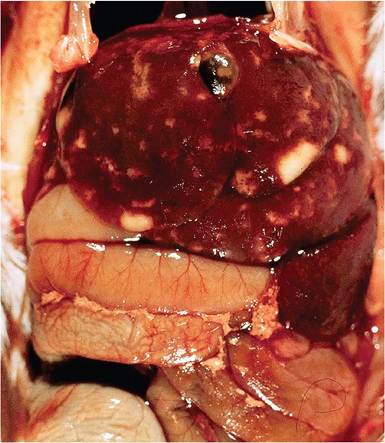
FIG. 1.71. Abdominal viscera of a SCID mouse with naturally occurring Proteus mirabilis septicemia. Note the irregular focal to coalescing hepatic lesions and the fibrinous exudate in the peritoneal cavity.
alveolar macrophages. Lung infection has also been found in NADPH oxidase deficient B6.129S6- Cybbtm10m/J mice. In addition to the presence of histological lesions consistent with bacterial sepsis, the recovery of large numbers of P. mirabilis from sites such as lung, liver, peritoneal cavity, and kidney will serve to confirm the diagnosis.