Conceptual Framework of Crisis and Crisis Management
The crisis is defined as “time of difficulty, depression in a country or between countries, observed in the life of a society or an organization” (TDK 2019). Derived from the Greek word “krisis, krit”, it is borrowed by Turkish language from the French word “crise” (depression).
Its Greek origin is used in the meaning of “judgment, ruling, turning point of the disease”, and it can be defined as “the difficult period, depression that needs to be decided immediately”.Phillips (2004: 302) defined the crisis as unexpected events that endanger the existence and continuity of the organisation and occur differently from daily activities. Tagraf and Arslan (2003: 150), on the other hand, have defined the crisis as a tension that is not expected and cannot be perceived, which needs immediate response when faced, and threatens its existence and continuity by disabling the reaction and decision mechanisms of the organisations. The crisis is “threatening situation caused by unpredictable changes in environmental conditions and the management of the organization is insufficient in intervention” (Tekin 2015: 122).
From a corporate point of view, the crisis in its broadest sense can be considered as a destructive and distressing situation with a negative impact on management, planning and decision mechanisms of the organisation, which threats the achievement of the goals and continuity of an organisation and may fail the measures determined within the scope of enterprise risk management and which requires the exposed organisation to take unplanned and sudden measures. However, when the crises are managed well, though destructive, they can sometimes create an environment that will enable the organisation to come across with new opportunities and gain experience.
Examining the conceptual and institutional definitions, it is seen that the crisis has some basic features.
These basic features can be listed as follows (Marie and Petra 2019):• The crisis is sometimes unpredictable or the organisation’s crisis prediction mechanisms are inadequate;
• The crisis threatens the organisation’s goals, assets and sustainability;
• The crisis is mostly caused by environmental factors that are out of management’s control;
• Lack of sufficient time, resources and plans to solve the events and threats that emerged as a result of the crisis;
• The crisis requires urgent intervention and if not intervened in a timely manner, it has destructive effects,
• The crisis causes stress on decision-makers and employees;
• The crisis poses threats, yet sometimes creates occasional opportunities.
The crisis is not an event or situation that occurs at a time but has a beginning and an end. Therefore, it should be considered as a process. If we divide the crisis process into phases, the phases can simply be the pre-crisis period, the moment of crisis and the post-crisis period. Some crises give clear, understandable signals before
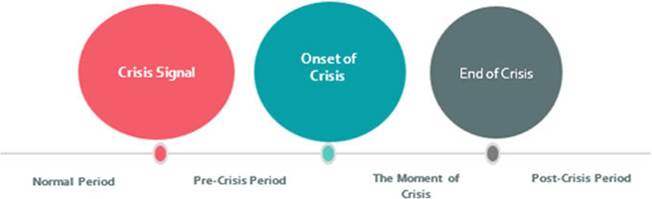
Fig. 4.1 Phases of crisis. Source Prepared by the authors
they occur. As can be understood from Fig. 4.1, if a specific, understandable signal cannot be detected before the crisis, the “Normal Period” and the “Pre-Crisis” period should be evaluated together.
4.3