Crisis Management
If the organisations cannot take any measures against the events (crises) that occur in the internal or external environment and lead to unpredictable changes, it will be difficult for them to keep up with the changing environment or survive.
For this reason, they should take some measures by evaluating the probability and effects of these events that threaten their existence in advance. The process of determining the measures as a result of this evaluation and implementing these measures during the crisis is called “Crisis Management”. In other words, crisis management is a management model that includes detecting and evaluating the signal of the crisis and designing the necessary measures in order to recover from the crisis process with the least damage to the organisation and to operate at the moment of crisis. Thus, the problems causing the crisis will be solved by operating the crisis management, and it will be ensured that the organisation will be able to survive this process with the least loss (Pearson and Clair 1998: 3-4).The main goal of the crisis management is to prepare organisations for the crisis. This process consists of five phases, as can be seen in Fig. 4.2. In cases where the proactive approach is taken by the organisations, the effects of the crisis will either last very short or there will not be any effect at all, which will increase the possibility of coming across with opportunities. Further in the study, crisis management styles that are compatible with proactive and reactive approaches will be examined separately.
Crisis management is neither a strategic formula for solving the crisis nor a plan consisting of standard processes and documents prepared to be shown upon request. Crisis management procedures prepared superficially and a perfunctory crisis management team will not be enough for the organisation to survive the crisis.
Crisis management is a complex process that requires careful and detailed planning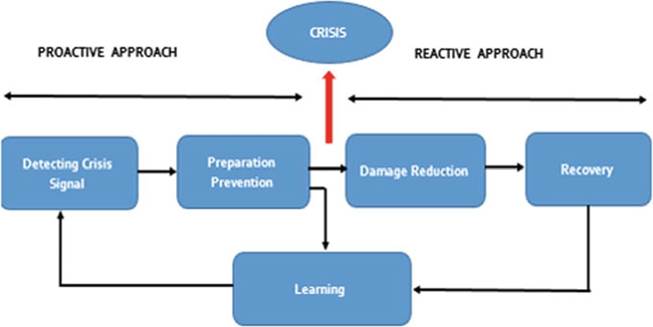
Fig. 4.2 Phases of crisis management. Source Tajtraf and Arslan (2003:152)
and a functional distribution of tasks. As such, it will ensure the efficient management of the crisis by steering the decisions and actions of the organisations during the crisis (Pearson 1997: 52).
Based on the above definitions, the characteristics of crisis management can be listed as follows (Bhasin 2020):
• It gives stakeholders and the organisation the ability to recognise and manage crises;
• Creates an experienced crisis management team that can react to unexpected situations;
• It needs to be designed and updated as specific to each crisis;
• Needs a “Risk Management” approach that can predict and evaluate the probability and impact of crises;
• It contains different plans (Continuity Plan, Remote Access and Work Plan, etc.);
• Beneficial when applied as designed.
Examining these features, the relationship between crisis management and risk management is remarkable. However, it is known that crisis and risk management are two processes that are often confused and sometimes considered the same. We mostly encounter some situations which are called risk management but are crisis management in deed or vice versa (Satilmi§ 2019).
Analysing the relationship between the concepts of crisis and risk management, it is seen that crisis management is divided into two according to the need for risk management. The first one is the onset of crisis management when any of the critical risks determined by the risk management process and whose controls are planned occur, which is called “Active Crisis Management”. The second is that the incident in question is not within the scope of risk management. In large scale and devastating surprises that the organisation is caught completely unprepared, the effort to eliminate this event with urgent and unplanned activities—at the moment of crisis—is addressed within the scope of crisis management.
This is called “Reactive Crisis Management” (Satilmi§ 2019).The most important feature of active crisis management is to predict the events that will threaten the organisations and take measures against them (Augustine 1995) In other words, “The best way to manage a crisis is to prevent it”. What makes this model dynamic is the organisation’s risk management techniques prior to the crisis, assessing the risks and being prepared for the crisis by taking a proactive approach before getting the crisis signal.
Reactive crisis management, on the other hand, is the process of reacting to the crisis in the most optimal way with the available resources, waiting for the crisis to start. It is even possible to divide the reactive crisis management into two as “Offensive Crisis Management” and “Defensive Crisis Management”. While Offensive Crisis Management means taking effort to overcome the crisis by taking measures to control the crisis at the moment of the crisis, Defensive Crisis Management can be expressed as the termination of the organisational activities, if necessary, by acknowledging the risks of crisis (Anges 2016) (Fig. 4.3).
Within the scope of the evaluations above, main activities that organisations need to do to effectively manage the crisis are; to take into account and evaluate the risks that are low in probability and high in impact, in their risk management studies; to create a “Crisis Management Plan” as specific to crisis types and support this process with complementary plans. Then, it will be possible to run these plans during the crisis, to eliminate the negative situation or to adapt, and even to turn the crisis into an opportunity.
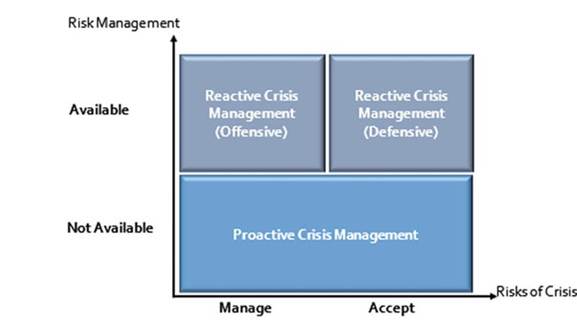
Fig. 4.3 Ways of crisis management. Source Prepared by the authors
4.4