Luxembourg
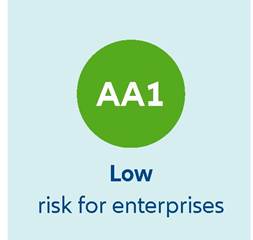
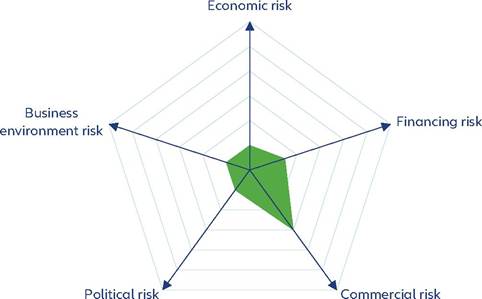
GDP growth to remain subdued in 2024 and 2025
| GDP | USD82.3bn (World ranking 71) |
| Population | 0.7mn (World ranking 167) |
| Form of state | Constitutional Monarchy |
| Head of government | Luc Frieden (PM) |
| Next elections | 2028, General |
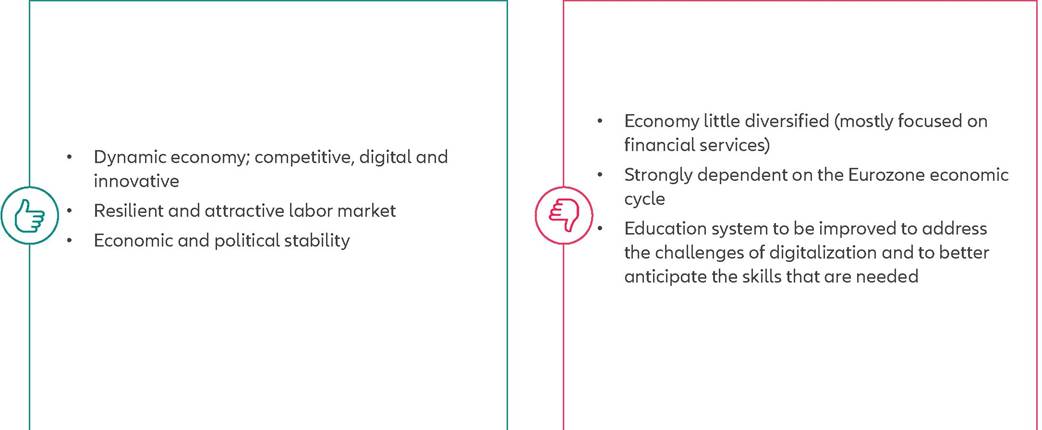
Strengths & weaknesses
Economic overview
Luxembourg experienced a strong slowdown
Weaker external demand, tighter financial conditions and confidence effects weigh on Luxembourg's growth.
Economic activity remained weak in recent quarters, on the back of a decrease in investment and exports. Domestic demand was supported by the growth in private and government consumption, also buoyed by the introduction of additional government support measures and three wage indexations in 2023. However, prolonged uncertainty and the slowdown in the labor market will further weigh on household consumption. Indeed, savings rates are now well above historical levels.At the same time, investment is expected to remain weak due to the uncertain economic outlook in combination with the impact of higher interest rates. With additional drag coming from net exports, we expected GDP to have contracted in 2023 (-1.0%) and to recover only marginally in 2024 and 2025 (+0.9% and +1.6% respectively).
Price pressures are easing but inflation is still above the ECB's 2% target. Prices growth has been experiencing a downward trend from August 2023, driven by negative base effects of energy prices.
In the meantime, the labor market proved resilient but showed first signs of weakening; we expect the unemployment rate (currently at 5.7%) to deteriorate slightly in 2024.Luxembourg's external balance is dominated by the large financial sector, which has supported current account surpluses in recent decades but has seen large disinvestment in the last quarters.
Public finances have been impacted by the pandemic and energy crisis. In 2023, the government deficit is expected to widen to 1.9% of GDP (from 0.3% in 2022) given weak activity and an increasing impact of measures to mitigate the impact of high energy prices and to support household purchasing power and the income of corporations. Public expenditure has been affected by three successive automatic wage indexations increasing compensation of employees and social transfers. At the same time, revenue growth has moderated in 2023, from the high growth rate in 2022. Revenue continues to benefit from the resilient labor market via higher personal income tax and social contributions. In 2024, we expect the government deficit to increase to 2.1% of GDP.
As part of the EU Next Generation program, Luxembourg's Recovery and Resilience Facility will be financed by EUR93.4mn in grants. The plan puts a strong focus on the green transition with 61% of the resources allocated to support climate objectives (exceeding the minimum of 37% required by the RRF Regulation) while 32% is allocated for digital objectives. Digital measures cover research and innovation, deployment of new technologies, digitalization of the public administration, territorial institutional and social cohesion, which are expected to engage the private sector in the transition. Investments are also planned in digital skills, digital connectivity and eHealth. This includes measures aimed at improving the digital inclusion of the population and workers, as well as the digitalization of SMEs.
Further diversification of economic activity is auspicable
Luxembourg's competitive advantage in financial services will support recovering growth.
The country has developed a strong competitive advantage in financial services over the past decades, turning it into the world's second-largest investment fund center after the US and the most important private banking center in the Eurozone. The government has been aiming at economic diversification for a few years and has been encouraging the development of sectors such as communication and information technologies, logistics, e-commerce and biotechnologies.However, labor productivity needs improvement in Luxembourg, given lower education levels compared to neighboring countries. The skills shortage has caused most of the jobs created in the financial sector to attract foreign nationals, causing Luxembourg's resident workforce to rely on public administration jobs or jobs in the steel sector - highly subjected to foreign competition.