Tanzania
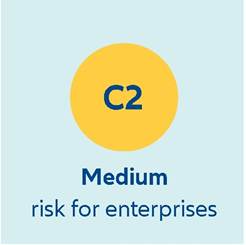
Navigating riches and challenges on a foreign-led growth horizon
| GDP | USD75.7bn (World ranking 75) |
| Population | 65.5mn (World ranking 23) |
| Form of state | Republic |
| Head of government | Samia Suluhu Hassan (President) |
| Next elections | 2025, Presidential and legislative |
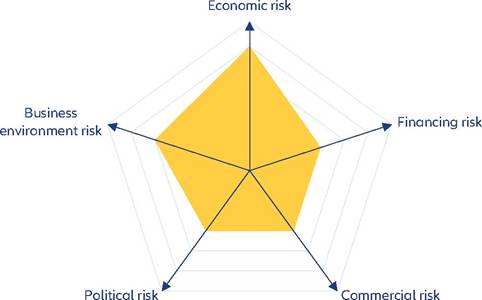
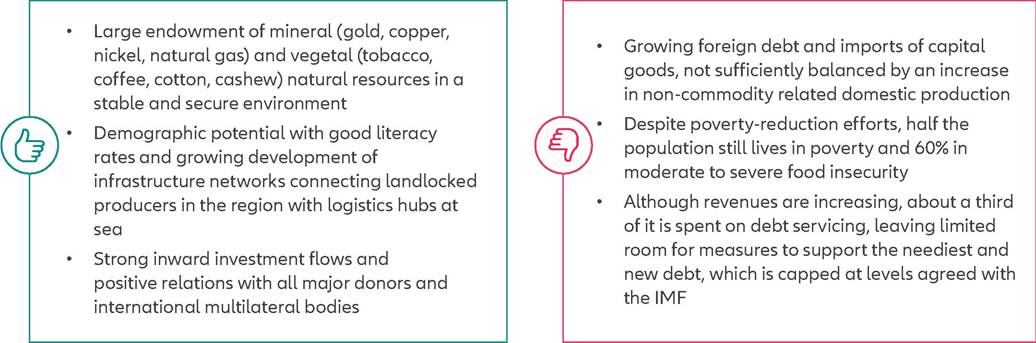
Strengths & weaknesses
Economic overview
The economy is set to grow despite challenges
Mining activity, the export of minerals and heavy investment in infrastructure have propelled Tanzania's economy to an expected +5.6% growth rate in 2023.
Due to El Nino's potential for crop losses, agricultural expansion and related exports will remain muted. Violent and frequent rains throughout the year damaged crops and infrastructure, aggravated health conditions and doubled the price of maize (the main staple crop). The government responded to inflationary pressures by temporarily subsidizing fuel and fertilizer prices and limiting financial system liquidity. This strategy stayed consistent with what was agreed on with the International Monetary Fund, which praised the fiscal prudence at play and the legislature's proactiveness in pushing forward the reforms targeted at balancing economic and budgetary imbalances. Modest increases in government spending are expected until 2027 due to rising debt-service costs and projected increases in social spending, which are likely to rise as the 2025 election year approaches.In 2024-2027, growth is projected to return to the historical average of +6% per year, also thanks to critical foreign investment into the East African Crude Oil Pipeline Project, which is expected to move more than 200 000 barrels per day from oil-rich Uganda to the port of Tanga in northern Tanzania.
French and Chinese firms sponsor the infrastructure. Phased development of cross-border trains with Rwanda, power projects and road network expansion will also support growth over the next few years. A diversified basket of goods exports, including agricultural products and gold from the North Mara and Bulyanhulu gold mines and the rise of tourism in what is perceived as a more stable environment than that of peers, will complement the economic push.A capital-intensive growth paradigm with financial and monetary constraints
Tanzania's capital-intensive growth model is highly demanding for oil and capital goods imports that feed into the structural current account deficit. The current account deficit is a result of higher capital import demand more than offsetting stronger gold exports. The trade balance alone posted a deficit of slightly more than 6% of GDP in 2022 and it is expected to remain around this level in the next few years amid currency depreciation risks.
Public debt is moderate (42% of GDP), although the share of foreign debt accounts for about two-thirds of the total and debt service exceeds 4% of GDP, also due to higher interest rates globally. The debt-associated burden thus remains high, despite higher-than-average revenue mobilization for the area (14% of GDP). Unlike its neighbors, being an oil importer does not allow additional sources of revenue, while upperend tourism is sustaining the economy to a greater extent.
External debt and investment costs may determine commercial relationships amid an aging leadership framework
lease contract of a construction company in the real estate sector in Zanzibar. At the moment, other similar cases are pending and this could lead the government to terminate or renegotiate bilateral investment treaties as unfavorable and costly to the host country. Despite the resurgence of riots and security crises in the area (the Democratic Republic of Congo, Mozambique, as well as South Sudan and the Horn of Africa), only isolated events of violence have been recorded in the northern regions around the main mining hubs, mostly by individuals or small groups of common criminals and along the border with Mozambique by terrorists trespassing in the Tanzanian regions of Rovuma and Mtwara.
With an average life expectancy at birth of 66 (seven years more than in Mozambique and five more than in Kenya), half of the country's 55mn residents under the age of 15, a literacy rate of more than 80% and long-lasting poverty, the next decade may see a huge shift in politics and grassroots demands. In March 2021, Samia Suluhu Hassan, who had served as vice president since 2015, became Tanzania's sixth president (and the first female president) after the death of President John Magufuli, who had been re-elected in 2020. Known as Mama Samia, she started to bridge the partisan divide and lifted press restrictions imposed by her predecessor, along with reissuing licenses to opposition publications. She is expected to complete her term, which runs until 2025 and then to be re-elected for another five- year term, backed by her ruling party, Chama Cha Mapinduzi (CCM), which has won all elections since 1995. In this situation, Mama Samia's initiative for reconciliation might hasten a smooth transition.
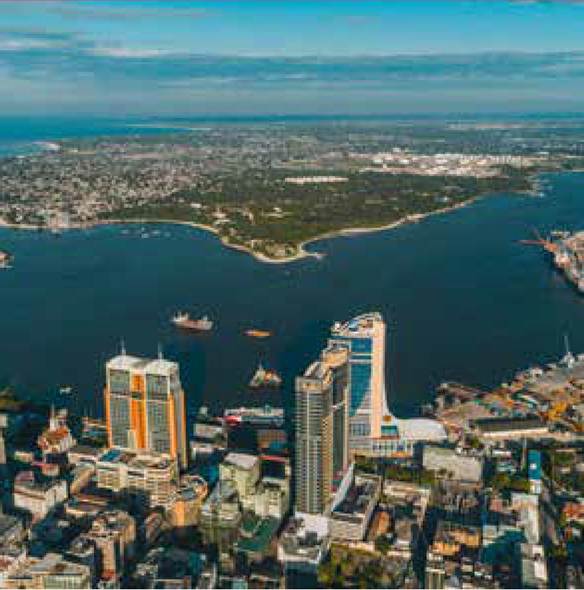
The slow but relentless build-up of external debt and investment-related costs has also come with strengthened commercial relationships with a plurality of partners that are targeting Tanzania as a hub with potential in south-eastern Africa. Tanzania's economic ties have expanded to include the United Arab Emirates, China and India, which are now the main destination markets. Tanzania's duty-free access to the Indian market, as well as a new arrangement to conduct bilateral trade in Indian rupees, will strengthen business ties with India. At the same time, long-standing bilateral relations between Tanzania and the US will be bolstered through an agreement signed with the Export-Import Bank of the US in 2023. Inefficiencies, corruption and general lags in cargoclearing processes at the port of Dar-Es-Salaam induced the government to lease four out of 11 deep-water berths to a UAE-based group under a concession aimed at tripling revenues from the facility to USD11bn over the next decade and doubling cargo traffic to more than 48mn metric tons by 2032. Protests followed the decision with repression by police and 20+ people arrested.
Contract cancellation risks remain elevated, while security risks are less prominent than among regional peers. In recent years, the state has lost several international arbitrations against foreign companies for canceling licenses for mining activities (nickel and rare earths) and terminating the