The benefits and challenges of digitalization for employee performance management in a medium-sized company in Kecamatan Lembang, West Java, Indonesia
I. Nuraida
Parahyangan Catholic University, Bandung, Indonesia
ABSTRACT: One key to successful management of agro-tourism business is performance management which should be related to service quality.
Performance management research is generally done on a profit- oriented company, but employee performance management research which is related to digitalization has never been done in the agro-tourism sector, especially for medium-sized enterprises which are not always profit-oriented. This research was set as a case study and was conducted in a middle-sized enterprise of agrotourism sector at Kecamatan Lembang. The study was aimed to complete the model of employee performance management by finding out what kind of benefits and challenges of digitalization can improve the application of the model. The limitation of this paper is the output model that can be used only to agro-tourism sector in this enterprise. However, this framework will be useful for every researcher who is interested in employee performance management for tourism-service sector.1 INTRODUCTION (2017), small- and medium-sized businesses are
often associated with limited capital and capabilities,
Digitalization is one of the most significant ongoing transformations of contemporary society and is able to encompass many elements of business and everyday life (Hagberg et al. 2016). Digitalization is the process of making all of this information available and accessible in a digital format. Digitalization means making digitalized information work for employee of the company. Digital transformation is the process of devising new business applications that integrate all this digitalized data and digitalized applications. Taking advantage of digitalization could be used to create completely new business concepts.
Digitalization can be used to support human resource management, especially in the service sector.
Agro-tourism is one of the service sectors that offers 3 S, something to see, something to buy, and something to do. The outputs of agro-tourism are (1) agricultural/plantation/livestock products, which can be sold or just exhibited/shown to be enjoyed by tourists, and (2) tourism services, and service quality. One of the keys to successful management of agro-tourism sector is in the employee performance management. Nuraida (2017) has proposed employee performance model for five research objects of small- and medium-sized enterprises at Kecamatan Lembang, Parongpong, and Cisarua. The question is how far the role of technology has been used for employee performance management of those small- and medium-sized enterprises? According to Nuraida and have fewer employees than larger businesses. Generally, they have simple organizational structure, short organizational level, narrow span of management; they also make the flow of information, communication, and distance, between superiors and subordinates, become fast. Supervision and control can be done directly. Small and medium enterprises have simpler business processes and activities so they generally do not feel the need of office media in the form of letters, forms, and reports (Nuraida 2014). Do they need to apply technology to support their business?
Usually small- and medium-sized enterprises run their business informally, unlike larger and measurable modern businesses in terms of its capacity, institutional, financial, and managerial resources. Informal means 1) allocation of work time, 2) leadership, 3) communication model, 4) unrestricted office space, can be anywhere, 5) do not use financial standard report, even when they borrow money from financial institutions (no visibility study and its reporting), 6) human resources do not rely on certification, and 7) there is no Standard Operating Procedure (Nuraida 2017). Thus, limitations of capital and employee capabilities restrict small- and mediumsized enterprises in utilizing technology in its business operations.
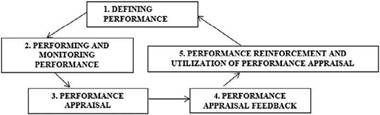
Employee performance management in the agrotourism sector could be supported by digitalization. In this digital era, with many limitations of small and medium enterprises, it becomes interesting to know how far the role of digitalization can improve this model of employee performance management. Based on previous empirical research, Nuraida (2017) has proposed employee performance management model for small- and medium-sized enterprises at Kecamatan Lembang, Parongpong and Cisarua, which consists of 5 stages that cover: 1) defining performance, 2) performing and monitoring performance, 3) giving performance appraisal, 4) giving performance appraisal feedback, 5) giving performance reinforcement and utilization of performance appraisal. All of these stages are intended to improve employee performance. Furthermore, employee performance management research which is related to digitalization has never been done in the agro-tour- ism sector, especially for medium-sized enterprises. The purpose of this paper was to find out benefits and challenges of digitalizing for employee performance management, especially in Kopi Luwak Cikole at Kabupaten Lembang, in order to support employee performance management model proposed by Nuraida (2017). The reason for selection of research object is because Kopi Luwak Cikole has been appointed by local government as a pilot model of Luwak coffee production development in Indonesia. Another reason of this selection is because Kopi Luwak Cikole is derived from natural faeces of mongoose, in contrast to other brands in Indonesia, which produce white luwak coffee from chemical processes.
2 RESEARCH METHOD
The case study was carried out in Kopi Luwak Cikole by conducting in-depth interviews with the owners to obtain data about the role of digitalizing, so that it could be added to the performance management model that had been disseminated previously.
iiThe case study which is an examination of studies done in other similar organization situations, is also a method of solving problems, or for understanding phenomena of interest and generating further knowledge in that area.
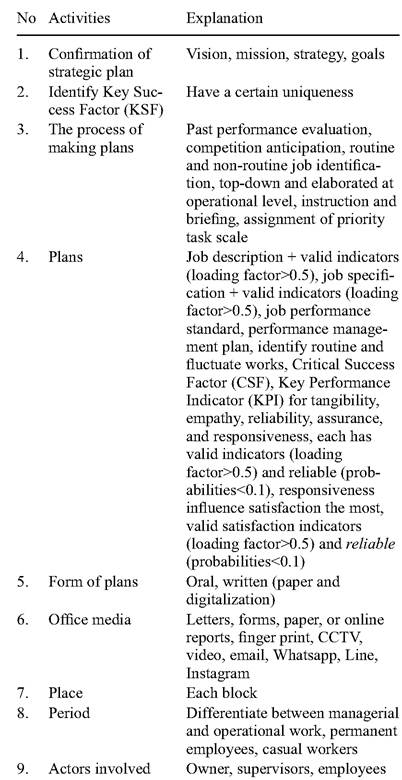
Case study involves indepth, contextual analyses of matters relating to similar situations in other organizations” (Sekaran & Bougie 2010). assumed that the early, intimate, and enduring interaction with digital technologies has shaped a new generation of people with distinctively different attitudes, qualifications, behaviors, and expectations. A second major area might be called “digital work”, referring to the content as to the organization of work. Relating to work content, the ongoing digitalization implies an increasing automation of manual and routine work and a slow but steady change of remaining tasks towards brain and information work. The third major area called “digital employee management” refers to the planning, implementation, and in particular application of digital technologies to support and network the HR profession, a phenomenon also known as electronic HRM (Bondarouk & Ruel 2009, Strohmeier 2007). Employee performance management model of Nuraida (2017) is illustrated in Figure 1. Figure 1 is explained in Tables 1-5 and each table is added with narrative explanation found in the case examples of 5 research objects. The models are made from supply side (black colour) and demand side (red colour). Supply side is obtained from owner, manager, and employees, while demand side is obtained from visitor perception on service quality and its influence to satisfaction. The performance management model is derived from quantitative and qualitative methods. Quantitative methods are differentiated with qualitative methods by adding information about loading factors in every stage.
Based on an in-depth interview with the owner of Kopi Luwak Cikole, this model was added with the application of digitalization, which is marked in blue color in each table along with the explanation. The explanation of stage 1 Defining Performance until stage 5 Performance Reinforcement and Utilization of Performance Appraisal is as follows.
Explanation of stage 1: Defining Performance covers the following issues.
1. Confirmation of vision, mission, strategy, objec- tiveThe visions are to preserve the environment andto educate nature and the. The mission is to provide land and cultivation for agriculture/plan- tation/livestock, provide an environmental education and agrobusiness (agrotourism), provide natural products of livestock/plantation/
3 RESULTS AND DISCUSSION
According to Parry & Strohmeier (2014), digital technologies play an increasingly prominent role in both the lives of employees and human resource management (HRM). This seems to be affected in multiple ways. The first major area called “digital employees” figuratively refers to assumed larger changes in the core subject matter of the HR profession: labelled with various terms such as “digital natives” (Prensky 2001), “millennials” (Deal et al. 2010), or “next generation” (Tapscott, 2008), it is
![]()
Figure 1. Employee performance management model of small- and medium-sized enterprises at Kecamatan Lem- bang, Parongpong, and Cisarua.
Source: Nuraida (2017).
Table 1. Stage 1 defining performance.
![]()
agriculture, and to increase employee welfare. The strategies were applied to make the visitor have good experience, make them satisfied, and come again. Objective goals: pay all operating expenses, achieving the target of Rupiah and number of visits.
2. Identify Key Success Factor is by providing certain uniqueness that is not found in any place. For example, Begonia flower seeds imported from Germany, Luwak coffee produced from luwak of the local forest which have been cultivated in agro-tourism.
3. The process of making plan: A) Evaluating performance in the past. B) Creating competition through promoting natural-cultural richness-typical local customs of West Java, making innovative and creative programs, conducting foreign language courses for tour guides, making informal education of employees, providing outbound services and event organizers, franchise opening, and improving facilities and work infrastructure.
C) Identification of routine and non-routine jobs (fluctuating orders). D) Broadly the tasks, duties, and responsibilities are tailored to the needs of the job and are given top-down and they are then elaborated, followed up by each unit/employee. E) Direct supervisor provides daily job description and briefing (especially for casual employees with primary education level). F) Direct supervisors provide more structured briefings to improve service quality of employees. G) Tasks are divided into priority scale, i.e., priority 1 is immediately implemented, priority 2 is consideration of time and human resources needs, priority 3 is tailored to the needs/flexible.
4. Plans.
1. Job description
- There are closely related ideas of cultivation, maintenance of the environment and its contents (gardens, farms, and livestock), service to visitors, tasks related to human resources, finance, marketing.
- Make Standard Operating Procedure.
- A valid job description indicator (loading factor>0.5): agro-tourism leaders invite employees with a minimal background of high school graduates to jointly develop job descriptions to set standards and performance weights.
2. Job specification
- Diploma/bachelor degree employee and managerial level are expected to have management skill, communication skill, leadership skill, time management skill, people management skill, analytical thinking, knowledge in Microsoft Office, and problem solving skill.
- A valid job-specification indicator (loading factor>0.5): the agro-tourism leader asks the employee’s opinon about requirements that are appropriate for the task description.
3. Job performance standard: serving happily, applying motto Concise-Neat-Care-Diligent- Clean, giving more rewards to the employees showing good performance, determining performance standards after 3 months of work.
4. Daily work plan related to routine tasks (case example: making plant maintenance schedule, planting time and harvest time, animal rearing) and fluctuating duties (case example: group visit, training request).
5. Performance appraisal plan: giving appraisal depends on supervisor’ policy, should be based on monitoring and trust of superiors to subordinates, giving appraisal personally between superiors and subordinates, giving appraisal can be done every day for freelancers or once a year for permanent employees.
6. Critical Success Factor: changing the atmosphere regularly, seeing is believing, training tour guide role to persuade visitors, facilitating agribusiness education, and providing honest products.
7. Key Performance Indicator: KPI service quality in Kopi Luwak Cikole is made based on feedback from visitors, i.e., smile, greetings, initiative, courtesy.
Based on the results of quantitative data processing of AMOS confirmatory analysis on service quality and its effect on visitor satisfaction in 5 research objects, there is feedback in the form of valid visitor satisfaction indicator (loading factor>0,5) and reliability or significance (probability0.5) and reliability or significance (probability indicators (loading factor>0.5) and reliable or significant (probability 0.5)
Guidance, motivation |
9. Actors involved: employees, direct supervisor, and the owner.
Explanation of Stage 2: Performing and Monitoring Performance stage is described as follows:
1. What is monitored? Implementation of works in terms of its processes, behavior, results, day to day operation so once a problem comes up, it can be directly corrected.
2. Monitoring methods cover A) Informal: daily monitoring meeting that was done through briefings every morning, face to face, reports, inspections of the stakeholder to the field; weekly monitoring can be done through discussion. B) The role of important and multifunctional leaders: A leader is responsible in providing feedback, coaching, counseling, job training, mentoring, feedback, the lure of providing incentives for employees who have given the best contribution. C) Monitoring method for freelancers (elementary school educational background) was done by a) calculating wages based on work contribution per day, b) reminding freelancers that they are considered as a co-worker, not telling or giving orders but asking for help, c) increasing employees supervision to encourage employees giving better service quality.
3. Parties involved: employees, direct supervisors, owner, and feedback from visitors.
4. Monitoring time: every working day, every week, or by time table, or by volume of work.
5. Monitoring place: sporadic as needed where the work is available, according to the block of each.
6. Monitoring media: office documents (daily workmanship reports, attendance, notes held by immediate supervisors) or based on the memory of superiors, recording, CCTV, Whatsapp, Line, phone call, and Instagram. These digitalization tools are useful to support the monitoring process of performance management, but sometimes employees forget to use it or to report data and information completely.
Table 3. Stage 3 performance appraisal.
| No | Activities | Explanation |
| 1. | Input of performance appraisal Purpose of performance appraisal | Implementation and performance results, latest reports, time tables, online applications, recording, CCTV, finger print, video, email, Line, Whatsapp, Instagram. Improve performance, ensure successful work, rewards, promotions. |
| 2. | Administrative procedures Socialization of performance appraisal | According to the needs. According to the needs. |
| 3. | Performance appraisal method | Interviewing, coaching, counseling, discussion, monitoring, inspection, communication way, how to assess good and bad performance. |
| 4. | Media of performance appraisal | Office documents and or non-documents. |
| 5. | Aspects, standards, and weight of performance appraisal | Aspects assessed are results, behaviors, processes. For standard and weight, there are differentiation based on manager level and operational level of primary and secondary education. |
| 6. | Valid performance appraisal indicators (loading factor>0.5) | Objectives, aspects, and measures are clear and complete; ratter is capable and fair; standards communicated; preparing supportive office media. |
| 7. | Period of performance appraisal | Based on the time table of each project, differentiated between freelancers and permanent employees. |
| 8. | Actors involved | Direct supervisor, mutual cross check in weekly discussions. |
| 9. | Output of performance appraisal | As expected or not, what factors are inhibiting or supporting good performance. |
7. Based on the results of statistical data processing in 5 research objects, a valid performance monitoring indicator (loading factor>0.5) covers A) Supervisors directly guide employees to correct inadequate assessment component. B) Supervisors directly motivate lazy employees.
Explanation of Stage 3: The Performance Appraisal aspects are explained as follows.
1. Input that is needed for performance appraisal covers: results-process-behaviours which are collected from implementation and work monitoring, weekly report accumulation, online application, time table reports, recording, CCTV, finger print, video, email, Line, Whatsapp, and Instagram. The purpose of performance appraisal is to improve employees’ performance, ensure successful work/success, determine rewards, and determine promotion decision.
2. Procedures and socialization of performance appraisal administration are adjusted to the needs: giving dissemination during observation period is not necessarily needed if daily monitoring has been performed, checking whether the work is in accordance with the instructions of the supervisor, checking whether the tasks have been done consistently and consequently, holding morning briefings, and checking attendance. Dissemination of performance regulations is conducted as needed in the field: reduce-reuse- recycle, reduce pesticide use.
3. Performance appraisal method covers: A) Reviewing assessment results followed by interviews, coaching, counseling, and conducting personal or group discussions. B) Conducting daily direct monitoring and unannounced inspections. C) Having communication: informal, personal between supervisor and employee. D) Rating good or bad performance that is conducted based on the results of the supervisor’s monitoring results, complaints, or feedback from visitors, conditions of agro-tourism products enjoyed/sold, daily work report, and based on sudden inspection to the field.
4. Media of performance appraisal that covers: A) office documents, e.g. workmanship form, attendance, supervisors note, photo, soft copy, KPI. B) non-office documents, e.g. direct communication between superiors and subordinates.
5. Aspects, standards, and weight of performance appraisal:
- Rated aspects that cover A) Operational employees who have primary level of education: work (e.g. physical quality and output), working processes (e.g. working performance when if it is not monitored, working conflicts), working behavior (honesty, friendliness of visitors). B) Operational employee who have secondary levels of education: working performance and processes (e.g. skills in work, attendance, consistent work, and responsibility), attitude behaviors (e.g. friendly, good manners, honesty, loyalty, discipline). C) Supervisors/managers level tertiary education: the working performance and working process (cooperation, consistent work, responsibility, leadership, ideas, working knowledge, decision-making, problemsolving skills), attitude behavior (friendly, courteous, honest, loyalty, discipline).
- Standard and weighted performance appraisal:
A) Operational employees who have secondary levels of education: observed directly by supervisor based on its contribution to the company, KPI. B) For supervisor/manager level tertiary education: KPI. C) Depending on the policy of the immediate supervision.
6. Performance appraisal indicators. The supervisor needs to pay attention to the necessary matters that are acceptable to the employee and are applied fairly as it has a direct impact on employees’ satisfaction and motivation to improve their working performance. The results of statistical data processing towards 5 research objects, with a valid performance appraisal indicator (loading factor>0.5), are as follows:
- Performance appraisal was intended to improve employees’ performance and needs to be conducted annually and objectively for permanent employees.
- Performance appraisal was conducted A) adequately B) to reflect the critical matters of the employees’ working performance (no contamination is not relevant); C) as measures to assess aspects of performance appraisal that are made clear and complete (no deficiency/not all assessed); D) as a description of measurable (quantitative) working aspects (productivity) that have been made clear and complete; E) as a description of the aspects that cannot be measured (qualitative); F) as an assessment towards aspects of the working process of employees in agro-tourism; G) as an assessment towards attitude aspect/employee working behavior in agro-tourism made completely.
- Appraisers of performance: A) Different appraisers provide the same assessment if the measured object does not change. B) Assessment is not much different from the assessment at different times if the measured object does not change. C) Appraisers have an understanding and ability to assess the performance. D) Fair appraisal is needed in assessing employee performance outcomes.
E) Performance appraisal standards need to be fulfilled: need to be communicated to the employees, made completely and clearly, and need to be updated.
- Employees’ performance appraisal system is understandable and applicable.
- Prepare the office media for adequate monitoring and performance appraisals (e.g. forms, soft copies, etc.).
7. Period of performance appraisal. In the case of examples in 5 research objects, the period of performance appraisal was conducted as follows: A) Freelancers: each day to determine the wages of freelancers for the day, annually for the distribution of the net income/surplus. B) Permanent employee: weekly and annually. C) Based on time table and time line for fluctuating/non-rou- tine jobs.
8. Parties involved: direct supervisors or crosscheck each other in weekly routine discussions.
9. Output of performance appraisal: the results of the evaluation of the direct supervisor reveal the effectiveness of the program, factors inhibiting good performance, factors supporting good performance, and complaints from visitors.
Explanation of Stage 4: Performance appraisal feedback was conducted as follows.
1. Performance appraisal feedback was conducted through: A) Discussion and interview, coaching, and counseling. B) Determining how to correct poor performance by reprimanding, giving personal approach through examples, giving warning letters, giving training/workshop/outbound/demo- tion/by firing, cutting incentives, asking whether performance is as expected as in the initial agreement and then asking them for the solution if it is not. Feedback is given with tolerance, meaning that less performance is still praised but the employee is encouraged to improve their performance. For freelancers who have elementary school education background or lower, supervisors encourage them to find their own answers
Table 4. Stage 4 performance appraisal feedback.
| No | Activities | Explanation |
| 1. | Performance appraisal feedback method | Discussion, interview, coaching, counseling, determining performance correction of how good and how bad performances are |
| 2. | Actors involved | Employee, direct supervisors, owner |
| 3. | Timing of performance appraisal feedback | Anytime, every day/every briefing, every week, according to the time table, distinguished for freelancers and permanent employees. |
| 4. | Valid indicators of performance feedback (loading factor>0.5) | Quickly, employees understand. |
to mistakes they make and to create a co-worker’s atmosphere. C) Determining strategies to maintain/develop good performance: trusted to find other ideas or do more complex tasks, incentives, tips, and study tour.
2. Parties involved: employees, direct supervisors, and owner.
3. Timing of performance appraisal feedback: any- time/every execution of job, every morning briefing, weekly discussion, weekly personalized feedback for freelancers, weekly and annual personal feedback for permanent employees according to time table.
4. Based on AMOS confirmatory analysis of quantitative data, a valid performance feedback indicator (load factor> 0.5) covers: A) The time interval between providing performance feedback and performance appraisal times should be short.
B) The supervisor directly informs the component of the assessment to be corrected by the employee. C) Employees understand how to improve performance that is less based on feedback from supervisors.
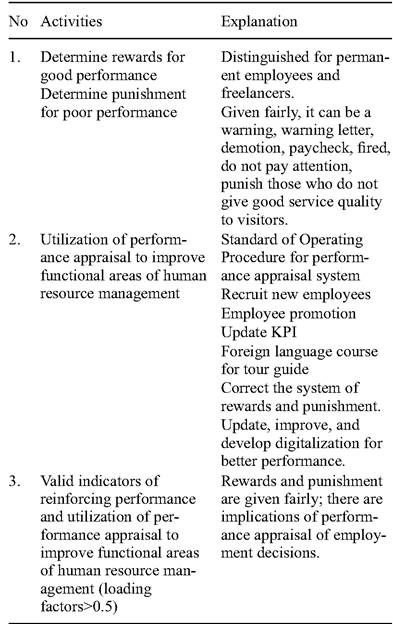
Table 5. Stage 5 performance reinforcement and utilization of performance appraisal.
![]()
Explanation of Stage 5: Reinforcement Performance and Utilization of Performance Appraisal.
1. Rewards for good performance are as follows.
- Supervisor buys some food for employees, praised, increase salaries, holidays.
- Compensation package of permanent employees are: A) Basic salary is paid according to company regulations (per week, per month).
B) Benefits: religious holiday allowance, transportation, health, attendance, and lunch.
C) Rewards for achievement above standard net income. D) Incentives awarded based on employees’ performance output in providing the best contribution or can be evaluated by the number of visitors. E) Overtime pay. F) Premiums for additional work.
- Compensation for freelancers that cover: A) Daily wage below or equal to regional minimum wage depending on capability. B) Incentives: depending on the performance of employees in providing the best service, it can be in the form of tips/premiums for additional work. C) Benefits like attendance money and lunch.Punishment for poor performance includes: A) Reprimanding, warning letters 1-3, demotions, incentives cutting, fired. B) Freelancers who have primary education level or never gone to school are given punishment in the form of soft warning or cut daily wage, being fired if they are caught stealing or harming outsiders. C) Punishment for employees who do not serve visitors well.
2. Utilization of performance appraisal to improve functional areas of human resource management: A) Adding foreign language courses, especially for tour guides. B) Adding new employees. C) Making promotion for employees with good performance. D) Creating Standard of Operating Procedure for performance appraisal system. E) Improving recruitment and selection process: recruit friendly employees, making banners, requiring applicants to write job application letter. F) Improving rewards system: freelancers should not be paid daily, but need to get paid in accordance with the resulting performance. G) Increasing training to improve service quality to visitors. H) Updating, improving, and developing digitalization for better employee performance.
3. Valid indicators of reinforcing performance and utilization of performance appraisal to improve functional areas of human resource management (loading factor>0.5) are: A) Appreciation for work performance is given fairly. B) Giving rewards to employees who are loyal to agro-tour- ism. C) Punishment sanction for poor performance and should be applied fairly. C) There are implications of employee performance appraisal of employment decisions.
4 CONCLUSION
As a medium-sized company of agrotourism sector especially at Kecamatan Lembang, Kopi Luwak Cikole employ non-digitalized employees because they have to serve visitors directly and satisfactorily. They are slightly related to digital work because they need to give services to visitors by socializing, communicating, persuading to yield visitor satisfaction. They didn’t much apply digitalization into their work and into their digital employee management.
However, use of digitalization has been widely applied by Kopi Luwak Cikole, especially in the field of marketing and has been very helpful in promoting the products and the place (marketing aspect). For the field of human resources, the owner of Kopi Luwak Cikole used the simplest first, ranging from absentee employees who use finger print at the location in Lembang, which is directly accessible at Bandung office and processed by the administration team there. The owners also tried to optimize social media facilities to monitor, assess, train, and develop employee performance such as tour guides who have an important role in educating visitors. Performance is adapted to standard operating procedure in each section. The principle of what is written is done, and what it does is what is written. Related to this matter, Kopi Luwak Cikole has a recording processed by each head of unit and reported every night to the administrative team in Bandung, via email or Whatssapp including daily reporting of stock and sales used to measure production and marketing team work. Another example is recording tour guide to educate visitors about civet mongoose, how to process mongoose to eat coffee snack to produce coffee low of caffeine from faeces, how to process and produce sterilization of civet coffee hygienist to be consumed by visitors. Videos can be used to assess the performance of the tour guides; also videos of the Cikole Kopi Luwak can be displayed on Youtube and websites, as it can promote the uniqueness of coffee product with low caffeine, etc., create brand awareness of Kopi Luwak Cikole, promote the culture of West Java with traditional instrument and custom, which thereby greatly affect the increase in the number of visitors and sales online. In addition, there is CCTV installed in the cashier, cafe, production section, which is useful as a tool to monitor team performance.
Generally, digitalization cannot be applied optimally in small and medium enterprises of agro-tour- ism sector, especially at Kopi Luwak Cikole. Kopi Luwak Cikole has its own challenge in applying it for complete digitalization. This is due to the limited quality of human resources that most of them have never studied in college. This becomes the greatest challenge for owners. But digitalization has a prominent role in supporting and helping owner and managers, especially to monitor and appraise employee’s performance. For Kopi Luwak Cikole, digitalization is used in the form of video, recording performance, online application, Whatsapp, Line, Instagram, finger print, email. These tools become useful media to help and support defining performance, monitoring performance, conducting performance appraisal, and utilization of performance appraisal to maintain or develop good performance. It’s also useful to promote the video through Youtube and website. In addition, recording performance becomes one input for performance appraisal. Manager and employees can discuss the advantages and disadvantages of employee performance by reviewing the performance that has been previously recorded. Stage performance appraisal feedback from managers to employees is more effective using face to face communication to create more harmonic relationship, improve mutual understanding, develop trust, and reinforce the employees’ performance.
References
Bondarouk, T.V. & Ruel, H.J.M. 2009. Electronic Human Resource Management: challenges in the digital era. The International Journal of Human Resource Management 20(3): 505-514.
Deal, J.J., Altman, D.G. & Rogelberg, S.G. 2010. Millennials at work: What we know and what we need to do (if anything). Journal of Business and Psychology 25 (2): 191-199.
Hagberg, J., Sundstrom, M. & Egels-Zanden, N. 2016. The digitalization of retailing: an exploratory framework. International Journal of Retail & Distribution Management 44(7): 694-712.
Nuraida, I. 2014. Administrative Office Management. Revised Edition. Yogyakarta: Kanisius.
Nuraida, I. 2017. Employee Performance Management Framework for Medium-Sized Enterprises of Agrotourism Sector. Noble International Journal of Business and Management Research 1(4): 74-93.
Parry, E. & Strohmeier, S. 2014. HRM in the Digital Age - Digital Changes and Challenges of the HR Profession. Employee Relations 36(4).
Prensky, M. 2001. Digital natives, digital immigrants part 1. On the horizon 9(5): 1-6.
Sekaran, U. & Bougie, R. 2010. Research Method for Business: A Skill-Building Approach. Fifth Edition. New Jersey: John Wiley & Sons Ltd.
Strohmeier, S. 2007. Research in E-HRM: Review and Implications. Human Resource Management Review 17 (1): 19-37.
Tapscott, D. 2008. Grown up Digital: How the Net Generation is Changing Your World HC. New York: McGraw- Hill.