Human geopolitics and imperialism are of prehistoric provenance in the sense that human groups fought with each other, made alliances, and some used coercion to extract resources from others well before the invention of writing, cities, or states.1
Moreover, territoriality is a feature of interaction among microorganisms, insects, plants, and animals, so a complete prehension of the roots of human imperialism would need to take this larger biogeographical context into account.2 But we will not try to reach for such a lofty goal in this chapter.
Rather, we will confine ourselves mainly to what is known about the sociocultural evolution of interpolity competition, conflict, and cooperation among humans since the Paleolithic Age. We focus on the emergence of imperialism and the development of geopolitics among humans since the Stone Age in order to provide evolutionary and historical perspective for recent changes in the structures and processes of global governance.Many political scientists who study international relations see a universal logic of power in the competition and conflict that occurs among ostensibly autonomous states. This game-theoretic geopolitical logic is thought to be an eternal feature of power itself. The idea is that competition among states is a dog-eat-dog churning struggle in which states seek to take territory and resources from one another. The main restriction on the big eating the small is that the small sometimes band together to re-balance power differentials enough to prevent the large from conquering them. Other political scientists emphasize the logic of the struggle for power among autonomous polities in terms of that logic's reinforcement by underlying cultural and institutional structures. These scholars are more likely to see important differences across systems and to allow for the evolution of geopolitics over long periods of time. Both of these approaches have merit.
We seek here to outline how geopolitics actually works over the long run in order to sort out those aspects that change from those that do not. We agree with those
1 Thanks to Evan Heimlich and E.
N. Anderson for helpful suggestions on an earlier draft.2 Organized warfare and competition for territory first emerged among social insects, especially ants, about 50 million years ago. In an early version of imperialism, some ants kill the queen in an invaded colony and substitute their queen for the dispatched old queen and thus harness the labor of the invaded colony for raising and feeding the offspring of the invaders. The ant/human comparison reveals a fascinating case of parallel evolution in which rather similar behaviors and social structures emerged by very different processes of selection—Darwinian in the case of insects, cultural in the case of humans (Gowdy and Krall 2015).
Christopher Chase-Dunn and Dmytro Khutkyy, The Evolution of Geopolitics and Imperialism in Interpolity Systems In:
The Oxford World History of Empire. Edited by: Peter Fibiger Bang, C.A. Bayly, Walter Scheidel, Oxford University Press (2021). © Oxford University Press. DOI: 10.1093/oso/9780199772360.003.0003. theorists of social change who view multilevel interpolity selection as an important force, with the emphasis on the transhistorical importance of warfare.[251] But we also suppose that warfare itself evolves and that a world without war is at least a theoretical possibility that could emerge in the future despite the long history (and prehistory) in which humans have legally and frequently killed one another.
Over time, as polities have become more complex and hierarchical, have human institutions and cultural constructions come to matter more, or less? Was there an age in which competition among polities was completely unmediated by shared cultures? Is there a sociocultural evolutionary trend that is analogous to the tendency in biological evolution to transition from predation to parasitism to mutualism in interpolity systems, or do they all operate according to a similar underlying geopolitical logic in which might makes right? Suitable answers to these questions emerge through considering how geopolitics remained the same or evolved as chiefdoms, states, and empires emerged and as trade networks and economic institutions became more important.
The world-systems perspective emerged during the world revolution of 1968 and the anti-war movement that produced a generation of scholars who saw the peoples of Global South (then called the “Third World”) as more than an underdeveloped backwater. Stimulated by dependency approaches to the history of Latin America and Africa, Immanuel Wallerstein, Andre Gunder Frank, and Samir Amin formulated a theoretical perspective on the emergence and evolution of the modern world-system.[252] They conceptualized the global power structure and wrote an analytic narrative in which the peoples of the non-core, by resisting and rebelling, had been active participants in the shaping of the emergent global structures of power. The history of colonialism and decolonization were seen to have importantly shaped the structures and institutions of the whole global system. A more profound awareness of Eurocentrism was accompanied by the realization that most national histories had been written as if each country were on the moon. The nation-state as an inviolate, pristine unit of analysis was now seen to be an inadequate model for understanding world history. National societies came to be understood as socially constructed parts of a larger stratified global political economy and geoculture that was itself evolving. Wallerstein sees the system as constituted by a hierarchical division of labor between core, peripheral, and semiperipheral zones, with the semiperiphery composed of mixed and intermediate forms that somewhat mollify the great polarization processes of uneven development.
The comparative evolutionary[253] world-systems perspective emerged when some of the world-system scholars became interested in the long-term continuities and qualitative transformations that only become evident when the modern worldsystem is compared with earlier world-systems.6 Important controversies still rage over the right way to spatially bound whole systems, but here we will employ the network interaction approach developed by Chase-Dunn and Hall.7
The comparative world-systems perspective is a strategy that focuses on whole interpolity systems rather than single polities.
Its main insight is that important interaction networks (trade, information flows, alliances, and fighting) have woven polities and cultures together since the beginning of human sociocultural evolution. Explanations of social change need to consider interpolity systems (worldsystems) as the units that evolve.Though interpolity interaction networks were rather small when transportation was mainly a matter of carrying goods on one's back or in small boats, globalization, in the sense of the expansion and intensification of larger and larger interaction networks, is hardly new. Indeed it has been increasing for millennia, albeit unevenly and in waves.8
World-systems are whole systems of interacting polities9 and settlements.10 System-ness here means that these polities and settlements are interacting with one another in important ways—such interactions are two-way, necessary, structured, regularized, and reproductive. Systemic interconnectedness exists when interactions importantly influence the lives of people and are consequential for social continuity or social change. All premodern world-systems extended over only parts of the Earth. The word “world” here refers to the importantly connected interaction networks in which people live, whether these are spatially small or large. All of these worlds are large from the point of view of the people living within them. While small-scale world-systems have little in the way of interpolity exploitation and domination, core/periphery hierarchies emerged and became more important features of world-systems as techniques for conquering and exploiting evolved.
The evolutionary world-systems perspective sees semiperipheral development as an important cause of human sociocultural evolution. Semiperiphery is a special zone in a world-system, which is neither as developed and structurally central as a core, nor as backward and distant as periphery. Therefore it possesses an optimal balance of resources and structural conditions for technological, military, and social innovations, which can be later scaled up wider in a world-system.
Chase-Dunn and evolution, which is a very different topic, and neither do we mean “progress,” a normative notion that is unnecessary for the scientific study of social change.6 Frank and Gills 1993; Chase-Dunn and Hall 1997.
7 Chase-Dunn and Hall 1997; see also Chase-Dunn and Jorgenson 2003.
8 Chase-Dunn 2006; Beaujard 2010; Jennings 2010.
9 We use the term “polity” to generally denote a spatially bounded realm of sovereign authority such as a band, tribe, chiefdom, state, or empire. We designate polities as subsystems of world-systems because they are easier to bound spatially than are societies.
10 The term “settlement” includes camps, hamlets, villages, towns, and cities. Settlements are spatially bounded for comparative purposes as the contiguous built-up area.
Hall11 asserted that it had most often been polities out on the edge (in semiperipheral regions) that had transformed the institutional structures and accomplished the upward sweeps. This hypothesis is part of a larger claim that people in semiperipheral locations usually play the transformative roles that cause the emergence of greater sociocultural complexity and hierarchy within world-systems.
This hypothesis of semiperipheral development is an important justification supporting the claim that world-systems, rather than single polities, are the right unit of analysis for explaining human sociocultural evolution. Semiperipheral development has taken various forms: semiperipheral marcher chiefdoms, semiperipheral marcher states, semiperipheral capitalist city-states, the peripheral and then semiperipheral position of Europe in the larger Afroeurasian Prestige Goods Network, modern semiperipheral nation-states that have risen to hegemony (the Netherlands, the United Kingdom, and the United States), and contemporary peoples in semiperipheral locations that are engaging in, and supporting, novel and potentially transformative movements.
Eschewing the politics of boosterism and progress, we nevertheless assert that the real evolution of political entities in world prehistory and world history approximates the sequence shown in Figure 3.1.
There is a rise-and-fall cycle in all interpolity systems: moreover, occasional upsweeps occur. In upsweeps, a polity of greater size and complexity emerges. Subsequently comes a process by which others catch up.
We see a general evolution in the institutions that facilitate cooperation among human groups. Small-scale human polities are egalitarian; they establish integrity primarily via kinship—that is, via an ideological construction of identities and associated rights and obligations that are understood as “blood” relations. Ethnographers
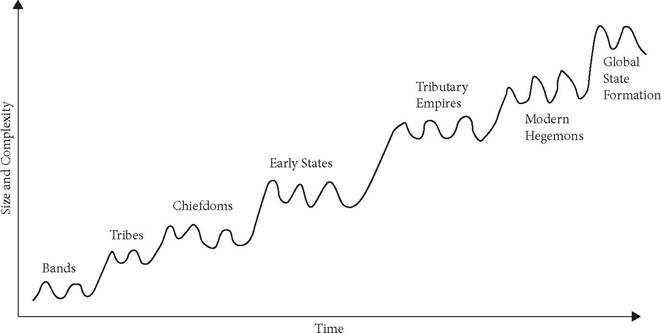
Figure 3.1. The evolution of political entities.
have established that various societies of Homo sapiens have deployed radically different kinds of kinship systems—this is why the identities are ideological rather than biological. In matrilineal systems, descent is reckoned in the female line. The mother's brother is the social father. Kinship is a socially constructed moral order based on consensus about what is proper, what is improper, and the obligations and rights associated with social roles such as mother, child, father, uncle, brother, sister, grandfather, etc. Obviously some polities use words like “cousin” or “uncle” to designate alliances or obligations, so-called fictive kin. But the main point here is that all kinship systems are fictive in the sense that they greatly rely on consensual definitions that are culturally constructed. Some anthropologists refer to societies that are primarily integrated by kinship obligations as kin-based modes of production.12 Sociologists see them as normatively integrated by a moral order, what Emile Durkheim called “mechanical solidarity.”
As polities get larger, more complex, and more hierarchical, normative integration based on consensus about what exists and what is good becomes less effective, and so institutions are invented that enforce the rules even in the absence of consensus. States with specialized mechanisms of regional control emerge. Writing allows the invention of the law—written rules that must be obeyed. Thus consensus-based norms become official written rules that can be applied to different peoples who are within the jurisdiction of the state whether or not they share the same value systems as the rulers who promulgate the laws. Taxation and tribute also become important sources of support for authorities. Normative regulation does not disappear, but it becomes shored up by institutionalized mechanisms of legitimate coercion—the state, the military, the police, courts, the law, and prisons. These institutions allow polities to become even bigger and to shore up even greater hierarchies. These kinds of systems are sometimes characterized as tributary modes of accumulation (see further Haldon in Chap. 5 of this volume).
Historically the importance of state power—as an organizing force in the economy and as an instrument in competition among states for territory and control of trade routes—increased as states became more centralized and larger. Warfare became a central mechanism of both survival and expansion, and group, rather than individual, selection became an even more important driver of social change with the rise of states.
In the Bronze Age, at the same time that institutionalized coercion was becoming predominant over the top of normatively integrated kinship structures, something like money, market exchange, and the sale of land and interest-bearing loans emerged. They were not yet the main ways that social labor was mobilized or the economy was regulated. At first, theocracies produced what is known as the “temple economy” and then battle kings emerged. But the seeds of commodification were sown. At interstices of the tributary states and empires, some city-states specialized in long-distance trade. In these trade-based city-states the rulers acquired wealth
and power by successfully organizing and facilitating the making of profits from long-distance trade. The tributary states and empires became more monetized and wage labor appeared in some sectors. Debt became a major element in class relations, and slavery and prostitution became widespread.[254] The rise of markets and money became an important element in geopolitical competition among polities for the provisioning of armies and navies.
But ruling classes of most states remained primarily dependent on the control of state institutions themselves for accumulation. A group of capitalist city-states in the Mediterranean was followed by the emergence of nation-states that were to a greater degree dependent on finance capital. Eventually came the emergence of a nation-state in which capitalists themselves held state power—the United Provinces of the Netherlands in the late sixteenth and seventeenth centuries ce. The logic of geopolitics was changed by the emergence of commodified economies, the growing predominance of profit taking over taxation and tribute, and the growing power of money. Warfare did not disappear, but it was waged for somewhat different purposes.
In addition to the evolutionary sequence from normative regulation to institutionalized coercion and then to market integration, we also see continuities that seem to characterize driving forces behind expansion and complexity in all periods. Population pressure is a relationship between population density, technology, organization, and the availability of resources. Population growth often causes increases in population pressure, but these can be ameliorated by technological change or by increases in available resources because of climate change or migration to new regions. Thus, population pressure varies, and this causes variation in the rate of within-polity and between-polity conflict. When population pressure is high, there is more conflict. So there is a cycle of increasing and decreasing warfare in all systems. Warfare reduces population pressure by killing people[255] and by giving preference to males, rather than females, as the former increase manpower while the latter generally increase population.[256] This is the kind of predator/prey demographic regulator that operates among animals and insects. Humans sometimes transcend this challenge by inventing new methods of production and new forms of organization that allow for higher population density without increasing population pressure. So the warfare rate is cyclical in all world-systems.
Geopolitical institutions emerge in periods of increased warfare, but they do not usually dissolve during periods of less warfare, so there is a ratchet effect in which polities become more and more organized to deal with warfare over time. This is one important mechanism driving the emergence of hierarchy—chiefdom formation, state formation, empire formation, etc., in which authorities emerge that regulate violence and make rules about property.