Iconoclasm
One of the most prominent and distinctive types of violence during the Reformation was acts of iconoclasm. This could take many different forms: the destruction and disposal of relics and images, the smearing of excrement on statues and altars, or the melting down of reliquaries and other ornaments.
In these assaults, the iconoclasts were ideologically driven; they were making a statement of rejection and purification of what they perceived to be Catholic idolatry. Such acts also had a political edge. Incidents could be individual or collective, clandestine or overtly public. A distinction needs to be made between those officially sanctioned instances, most obviously during the English Reformation, the Dutch Revolt and in the Holy Roman Empire, and more popular acts aimed at destroying the blasphemous aspects of Catholic worship, although overlap between the two was not uncommon. Nevertheless, it is important to note the differences between social groups, people and authorities, ministers and congregations, over the uses of iconoclasm. The wilful destruction of images went right back to the beginnings of the Reformation in the 1520s, and ‘iconoclasm was an inevitable outcome of Reformed ideology', which encouraged the subversion of the existing order.[810] Protestant ministers and officials struggled to curb and control popular enthusiasm and volatility stirred up by dramatic preaching. Ministers and lay elders feared reprisals and loss of elite support. While, on the one hand, attacks on ‘false' objects of Catholic devotion were in keeping with doctrine, municipal officials were uncomfortable with disorderly acts carried out by an unregulated populace, causing tension with congregations, as was the case in Bern in 1528. Indeed, such acts could appear ‘revolutionary' as they seemed to actively threaten established authority, as for instance in the Netherlands and France, particularly in 1560s. The contemporary perception of iconoclasm, according to preference, as due to godly zeal or furious rage, however, sets up a ‘false dichotomy'.[811] Such actions could be spontaneous, but were certainly deliberate. They were designed to shock as much as to destroy.This impact is still visible today in a striking fifteenth-century sculpture in the cathedral at Utrecht, ‘the most symbolic of all church buildings in the (Dutch) Republic', rather euphemistically labelled as having been ‘damaged during the Reformation' as if it had been done by accident (Figs. 27.1 and 27.2).[812] [813] The deliberate chiselling off of the faces of the saints, while leaving the rest of the artwork intact, still bears witness to its artistic beauty and, thus, seems more emotive and shocking than its complete destruction, as was surely the case for contemporaries at the time. Confronted by such violence against an object probably paid for by communal donations and certainly the object of communal devotions, it must have appeared to be an attack on the community, if not by the community, as well as reinforcing the impotence of these sacred objects and the triumph of Protestantism in the starkest way. In recent times, compared with the ferocious bloodshed of the wars which forms their backdrop, mourning for the destruction of the Buddha statues of Bamiyan, museum artefacts in Iraq or the ancient site of Palmyra in Syria might seem to some trivial or disrespectful. Yet it can also be argued that the lamenting of their passing is valid, as a natural reaction to cultural vandalism which represents a visceral attack on a rival interpretation of history as well as shared communal values.15 The symbolic significance of early modern iconoclasm operated in this way, too, as its perpetrators and observers were keenly aware.
The most shocking and intense wave of iconoclasm took place in the Netherlands in 1566, as the provinces sought to establish independence from the Spanish Catholic authorities and set up a Calvinist republic.
In the space of just two weeks, in the face of very little opposition,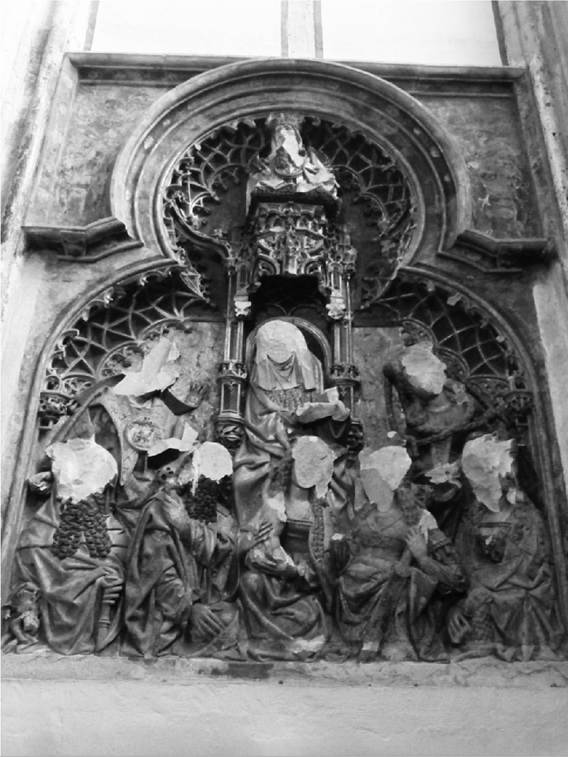
Figure 27.1 Iconoclasm: a fifteenth-century altarpiece in St Martin's Cathedral, Utrecht.
churches were sacked and images not just destroyed but tortured and mutilated. The movement spread quickly through the major towns and into the countryside. While neither condemning nor condoning it, Calvinist ministers took advantage of the momentum it provided. The purges of the Reformation and the radical tendencies in the civil war also resulted in the systematic official destruction of statues and shrines,
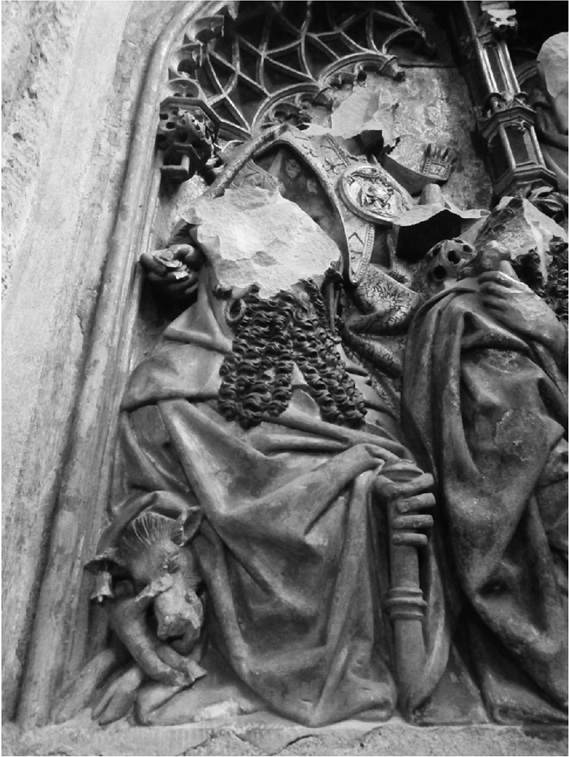
Figure 27.2 Detail of figure 27.1.
rood screens and devotional paintings in England. Revolutionary France would witness similar acts of destruction aimed at royal and ecclesiastical targets. In a culture where the execution of offenders in effigy, by hanging or burning, was normalised, and judicial procedures were heavily ritualised, it is unsurprising that images and objects were subject to symbolic assault of this sort. In addition, iconoclasm could act as both a substitute for and a prelude to more extreme acts of violence.
Iconoclasm was an act designed to be provocative and to cause scandal, but also to instruct and demonstrate the ‘true' religious path. Its specific goal, however, was ‘to disprove the (established) Church's spiritual authority'.[814] Mostly it was conducted by Protestants against Catholic devotions, whereas Puritan iconoclasm in England in 1640s reflected an ideological struggle for supremacy within Protestantism itself. Clashes and disputes between members of different groups within the same faith were not confined to such issues. Retribution for iconoclastic acts could be violent, too, with punishments for perpetrators including execution, as the righting of injustice and the re-establishment of religious supremacy and legitimacy was sought by Catholic authorities where they had the upper hand. Similarly, officials took to removing and destroying inflammatory symbols of division, including documents and monuments. Most notoriously, the Cross of Gastines in Paris, which marked the spot where a Huguenot house had been razed to the ground, was moved to another site in 1571, despite the provocation and violent response this action in turn generated. Such one-off incidents might peter out or, as in this case, contribute to an ‘explosive emotional economy' which resulted in more wide-scale and brutal violence.[815] Once again, the Reformation provided the conditions in which intercommunal disputes could flare up and lead to greater conflagration.