Ideological Power
In the early seventeenth century, a Quechua history of the Yauyo people of the coastal highlands near Lima recounted that “... the Incas worshiped the sun as the object of their adoration from [Lake] Titi Caca, saying, ‘It is he who made us Inca!’ From the lowlands they worshiped Pacha Camac, saying, ‘It is he who made us Inca!’ ”[1794] Inca ideology focused on an ethnic self-identification as maize farmers and children of the sun, but it accommodated pan-Andean pilgrimage practices revolving around cyclical patterns of universal creation, maintenance, and destruction.
The Inca ruler was intip churin (son of the sun), and he consulted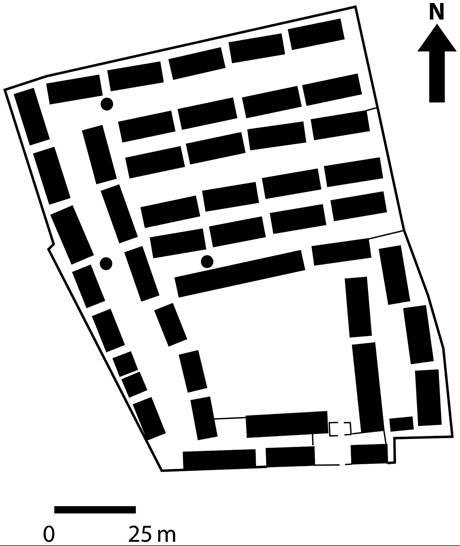
Figure 25.7. The aqllawasi at Huanuco Pampa. R. Alan Covey and Craig Morris.
a child-sized golden image of his patron in private, while also publicly making offerings to the sun and other supernatural entities. Sun temples spread in highland provinces after Inca conquest, as well as complexes called aqllawasi (“House of the Chosen Women”) (Figure 25.7). These were cloisters located in provincial centers that trained selected maidens to weave and brew in the Inca style, and taught ritual knowledge to priestesses called mamakuna, who managed the institution and served in sun temples across the empire.[1795] In Cuzco, the most restricted imperial rituals took place in the Qorikancha temple complex. The ruler also presided over public performances in Cuzco's central plaza, where he was accompanied by images of the sun and other supernatural entities, as well as the mummies of the lords and ladies of the royal dynasty.[1796]
The Inca state cult was less relevant to the everyday risks and subsistence concerns of commoners, and it was not the ultimate religious authority in all parts of the empire. Regional pilgrimage destinations—such as Pachacamac on the central coast and the mountain Pariacaca, a waka (shrine) located in the Andes above the Yauyo territory—could not always be co-opted by the Inca elite, although rulers extended their patronage over many local ritual practices as they attempted to extend influence the most important supernatural forces.
In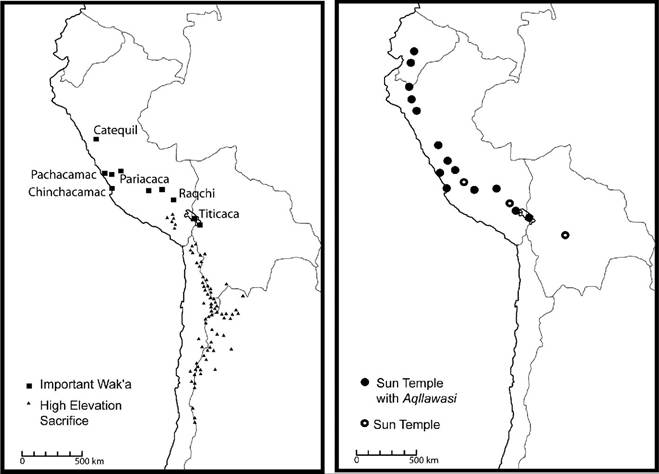
Map 25.3. Distribution of Sun Temples and High Elevation Shrines.
Copyright: R. Alan Covey, How the Incas Built Their Heartland, Ann Arbor: University of Michigan Press, 2006. Information on high elevation sacrifices from D'Altroy 2002. the Titicaca Basin, the Incas established a pilgrimage system on the Copacabana Peninsula and nearby islands where the creation of the universe was said to have occurred.[1797] An Inca noble directly administered the Copacabana area, which included a multiethnic population, as well as large numbers of male and female religious specialists who maintained temple facilities on the Island of the Sun and the Island of the Moon.
In the southern half of the empire, sun temples are not in evidence. Instead, the Incas served as patrons of local volcanic peaks, sending them gifts of human sacrifices, typically pre-adolescent children who had been selected from provincial populations and sanctified by the ruler at the capital.[1798] Many archaeologically- known child sacrifices may be manifestations of the qhapaqhucha ritual, an infrequent event where young victims were sent from the provinces to Cuzco in times of crisis, and then dispatched to key locations for sacrifice (Map 25.3).[1799]
More on the topic Ideological Power:
- Critical/Cultural Studies
- COMPONENTS OF POWER
- Pax Americana: war and peace across the globe
- In Defence of a Five-Power Constitution
- COMPONENTS OF POWER AND UNITS OF ANALYSIS
- Approaches to Identity Inquiry: From Objectivism to Activism
- Introduction
- CENTRALISATION OF POWER
- The Debate on Unamendable Articles
- Taking some of the preceding general remarks as my point of departure, I will now offer some reflections in relation to African constitutional experiences.