Memories of Empire
“Around him the whole dream-world of the East took shape and substance; of him every old story of a divine world-conqueror was told afresh. More than eighty versions of the Alexander-romance, in twenty-four languages, have been collected, some of them the wildest of fairy-tales...
no other story in the world has spread like his.”[1281] Every subsequent conqueror, and conqueror manque, has remembered Alexander III (“the Great”) of Macedon. His memory has never passed into oblivion. So many rulers of so many countries have called themselves Alexander, Iskandar, or Sikandar, after him, that it would be impossible to arrive at an exact count. The inhabitants of parts of northwest India, Pakistan, and Afghanistan still claim descent from him and his soldiers. Rudyard Kipling's The Man Who Would Be King gains much of its plot and popularity from this conceit. In Kipling's youth, Kafiristan was the subject of intense colonial interest because Britons perceived a connection, which was encouraged by many locals, between the Kafirs and Greco-Macedonian settlers in the region. Perhaps Alexander's only historical rival is Julius Caesar, but already for Romans such as Caesar, Alexander had set a demanding precedent.Some Romans tried to walk in the footsteps of Alexander; a few of the inhabitants of Pompeii walked on him, or rather, on his likeness. The Alexander Mosaic is a floor mosaic that was originally part of the exedra of the first peristyle in the so- called House of the Faun (Casa del Fauno) in Pompeii; it dates to the late second century bce and now forms part of the collection of the National Archaeological Museum in Naples. The Mosaic was discovered in October 1831. At the time, the House of the Faun was known as the House of Goethe (Casa di Goethe), in honor of the poet, who had visited the site in 1787, “just when German Romanticism had transformed the classical world in its image, largely through the agency of Goethe's
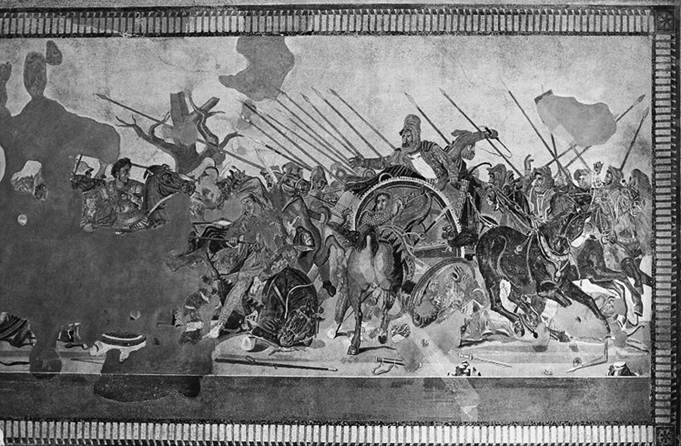
Figure 15.1.
The Alexander Mosaic, ca. 100 bce. Museo Archeologico Nazionale di Napoli.Source: The British Library.
genius.”[1282] Goethe added a drawing made by Wilhem Zahn of the mosaic to his collection in Weimar not long before his death. The words he wrote down on receiving the drawing are frequently quoted: “The present and the future will not succeed in commenting in a manner worthy of this artistic wonder, and we must always return, after studying and investigating it, to simple, pure admiration”[1283] (Figure 15.1).
Goethe thought that attaching his own name to this house in Pompeii was “an echo from the past meant to temper the loss of my son.”[1284] The casa of Alexander for the death of a son—what would Freud say? In fact, the young Freud had been enthusiastic about Alexander and advocated, successfully, that his younger brother be named after the Macedonian conqueror. Much later, Freud was to write to Carl Jung, “Just rest easy, my dear son Alexander, I will leave you more to conquer than I myself have managed, all psychiatry and the approval of the civilized world, which regards me as a savage!”[1285] The “deeply oedipal undertones” of this remark are evident; the remark also casts an informative light on “Freud's original desire to name his own brother Alexander in the first place, as if to displace his own oedipal feelings toward his father.”[1286] Freud's statement illustrates to us that Alexander often appears in oedipal relationships and that he is used to address issues of power, conquest, and desire.
It is simplistic to say that the Romans' fascination with Alexander had an oedipal element to it. Yet, whatever “commenting in a manner worthy” of the Alexander Mosaic might look like, any such commentary would have to take into account the interpretive ambiguity of the image, an ambiguity that renders the image at once admiring and hesitant in its stance toward Alexander.[1287] On the one hand, the Mosaic “represents” a scene from a battle that Alexander won and pays tribute to the victor and to his subjugation of the Persians, at Gaugamela and elsewhere.
On the other hand, the Mosaic undercuts Alexander's triumph and calls into question the value of his conquests. The prominence given to the Persian king Darius is extraordinary. Critics such as Ernst Badian have said that he “dominates the action,” and Darius assuredly seems to rise above the fray in his chariot.[1288] The “look of horror on his face” is brought on by the “self-sacrifice of his fellow nobles” and shows him as a sympathetic ruler, distraught at the loss of his countrymen.[1289] By contrast, Alexander is “leaning away from his enemy,” and his helmet has been knocked off his head: “he is, to put it bluntly, a man who has lost his hat.”[1290] Badian writes, “The representation as a whole may justly be called not merely not heroic, but deliberately unheroic....”[1291] Moreover, the figural counterpart to Darius is not Alexander but a dead tree. Badian reads the tree as a symbol of “the destruction and denudation caused by Alexander's war” and for “the vanity of human, and especially of heroic, effort”;[1292] for him, the centrality and symbolism of the tree is suggested not by Greek or Roman artistic precedent but by “Persian hunting scenes in paradeisoi depicted in Asia Minor.”[1293] Far from promoting Alexander's success over the Persians, the Mosaic emphasizes the sorrow of the Persians and the emptiness of the conqueror's accomplishment.The location of the Mosaic complicates our understanding of the work's reception in antiquity. Pompeii was notionally not a “Roman” town in the late second century bce, and the Pompeiians obtained Roman citizenship only in the first century bce. The owner of the house may have been from Samnium, as some have suggested, and may have had pro-Roman or anti-Roman views, or views that were ambivalent about Rome.[1294] Even the fact that the Mosaic was on the floor of the peristyle adds to the indeterminacy of meaning. In her book about the Roman Alexander, Diana Spencer says,
[T]he most fundamental instability for this mosaic is its openness to a multiplicity of angles of gaze.
It is on the floor, beneath the feet of any who enter the room from the peristyle from which it opened. This vast mosaic provides an Alexander who can be trampled upon, turned on his head or sideways, who can be a decorative addendum to a garden, or its focal point, all at the whim of the course strolled by the viewer. One could even, potentially, excise Alexander altogether and gaze from one garden to the next without dropping one's eyes to the floor.[1295]It hardly needs to be added that Darius, too, could have been trampled upon by anyone in the room. That the Mosaic presents so conflicted a response to Alexander indicates that on the Italian Peninsula, by the first century bce, he was being remembered not solely as an invincible soldier, but also as a symbol of vanity and the transience of military success.
Let us place another image alongside the Alexander Mosaic, a painting not from the Roman era but made by an empire that never ceased to recall the Romans and their imperial accomplishments. The East Offering Its Riches to Britannia (1778) (Figure 15.2), which was painted by Spiridione Roma, used to be part of the ceiling of the Revenue Committee Room, in East India House, and now can be found near the top of a stairway in the Foreign and Commonwealth Office (FCO), in
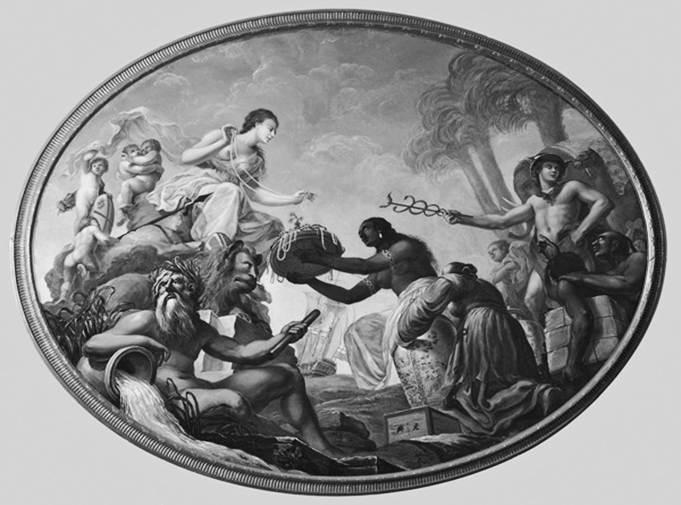
Figure 15.2. Spiridione Roma, The East Offering Its Riches to Britannia, 1778. Foreign and Commonwealth Office, London.
Photo: Wikimedia Commons. https://commons.wikimedia.org/wiki/File:The_East_offering_its_riches_to_Britannia_-_Roma_ Spiridone,_1778_-_BL_Foster_245.jpg
London. When the East India House building in Leadenhall Street was torn down, the painting was removed from the ceiling and relocated to the India Office, which was itself later absorbed into the FCO complex. It is not a surprise that a painting commissioned by the officers of the East India Company occupies a position in an official building of the government of the United Kingdom.
The government of the twenty-first century continues to use many of the insignia, institutions, and monuments that were created in the days of its empire, and, in that sense, the government keeps alive the memory of an old empire. Nor is it a surprise, of course, that a former imperial capital such as London is filled with memorials to empire, and in that sense the city resembles Beijing, Istanbul, or Madrid. Roma's painting is merely one of many imperial creations that has continued into the postcolonial present, where it resonates with contemporary concerns and serves as a reminder of an epoch when the Company was a going concern.The painting's classicizing features refer its viewers back to ancient Rome; these are typical of the late eighteenth century, but in this case are put at the service of the ambitions of the powerful Company. A description offered by Gentleman’s Magazine, in 1778, is worth appreciating at length:
The principal figure represents Britannia seated on a rock, to signify the firmness and stability of the empire; and as guardian and protectress of the Company, who are denoted by children behind Britannia, and overshadowed by her veil.
The union of the old and new Companies is expressed by two children embracing each other, and one of them placed sitting on the upper part of the rock, to show the firm basis on which the present Company stands; on the other part of the rock the child climbing up towards the summit is intended to express the prospect of the Company's continuance.
Britannia is characterised by the usual emblems of the shield and spear, and guarded by a lion, which lays tamely by her side, pleased with the offerings made her from the different East-Indian provinces.
At the foot of the rock lays the genius of the Ganges, in a majestic attitude, pouring out his whole stream on Britannia's footstool.
The various provinces are represented under the Conduct of Mercury, the god of merchandise, eagerly pressing to deposit their different produce and manufactures before the throne of Britannia.
Calcutta (the capital settlement of the Company in Bengal) presents a basket with pearls and other rich jewels, which Britannia receives.
China is characterised by jars of porcelain and chests of tea; the produce of Madras and Bombay by a corded bale; Bengal is denoted by an elephant, palmtrees and a camel.
Persia appears at a distance bringing silks, drugs, and other effects, and with her are to be supposed all the rest of the provinces; which the artist could not describe on the canvas without crowding or destroying the whole composition, and harmony of the picture.
At a distance is an Indiaman under sail, laden with the treasure of the East, an emblem of that commerce from which both Britain and the Company derive great and singular advantages.[1296]
Few images illustrate more dramatically the “gentlemanly capitalism” of the Company, its self-image as a national enterprise, and its political and mercantile ambitions across the seas. As the riches of India, China, and Persia are made available to Britannia, who, from her elevated perch, looks down on the other characters, no trace of force or violence is manifest in the picture, the Company's arms and sepoys being wholly effaced from the tableau. The gestures of the Eastern figures are those of presentation, that is, obeisance and offering, as if these riches were being eagerly and respectfully tendered to the Company: Calcutta presents, Britannia receives, as the magazine's description has it. The movement across the painting's horizontal axis is thus of giving and taking, with jewels and pearls on offer, and Mercury, the god of commerce, extending his staff in the direction of Britannia. Hovering discreetly in the back and center is the ship that conveys these valuable commodities back to Britain, while Ganges, an almost indifferent figure, in the foreground allows his waters to flow beneath the elevated Britannia (For comparison, see also cover image for volume 2: a Qing dynasty version of the 10.000 tributary peoples bringing their rich gifts to court).
Roma's painting was commissioned by the Company and aimed to please its patron. A preliminary drawing, made in pencil, pen, wash, and signed by Roma, suggests that he was asked to make certain changes to his original design, presumably to accommodate the wishes of the Directors.[1297] The design was brought closer to an existing marble chimney frieze, which was about a related theme (“Britannia receiving the riches of the East”) and which had adorned the Director's Court Room in Leadenhall Street since about 1730. One critic writes, “The finished painting is altogether more classical in conception with a greater degree of symbolism.............................................................................................................. The
theme has also changed; and Britannia now dominates the scene.”[1298] The preliminary drawing is missing Britannia, Mercury, and the lion, among other things, and does not show Calcutta offering its riches either. The Directors were plainly seeking a more classicizing idiom for the painting and they chose to emphasize their contribution to the nation by asking Roma to alter his initial plans. They wanted to be remembered by a painting that was more classical, more evocative of older histories, than the initial design of the artist.
The painting used to be a fixture in a building that had been constructed over another image, an image which served as a marker of the Roman Empire in Britain. A mosaic dating from the Roman era was found underneath the premises of the East
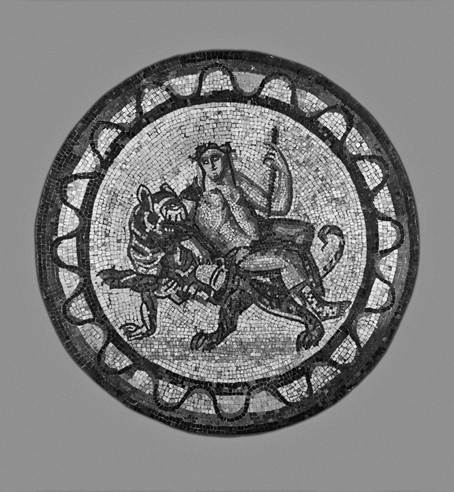
Figure 15.3. The Leadenhall Street Mosaic.
Copyright: © Trustees of the British Museum.
India Company, to the surprise of nineteenth-century observers. “Appropriately enough,” notes the British Museum, to which the work was transferred in the 1860s, the mosaic shows the god Bacchus riding or reclining on a tiger and alludes to the story of the god's journey to India (Figure 15.3). Appropriately enough, the mosaic shows a memory trace of the Roman presence in Britain coming back to the surface in a century when Britons increasingly compared their own empire to the Roman Empire, when they came to think that they were displacing the Romans as the most powerful empire-builders on earth, and when they were consolidating their hold over the Indian subcontinent.
More on the topic Memories of Empire:
- Why did Sigmund Freud abandon his Roman example?
- Melancholia
- Repetition Compulsion?
- Alexander’s Invasions
- Basilevsky Alexander. Early Ukraine: A Military and Social History to the Mid-19th Century. Jefferson, North Carolina: McFarland & Company, Inc., Publishers,2016. — 397 p., 2016
- Assessing the Ming Empire
- Pilgrimages: Remembering the Holocaust through Travel
- The Theory (and Practice) of the Mughal State
- CONTRIBUTORS
- Vaughn Marc M.. The History of Ukraine and Russia: The Tangled History That Led to Crisis. History Demystified,2022. — 164 p., 2022