Prolegomena
Peter Fibiger Bang
It was my hope to give expression to the restlessness, the deep disorder, which the great explorations, the overthrow in three continents of established social organizations...
this great upheaval has brought about... It was my hope to sketch a subject which, fifty years hence, a great historian might pursue. For there is no such thing as history nowadays; there are only manifestos and antiquarian research; and on the subject of empire there is only the pamphleteering of churls... in that dream of writing I was attracted less by the act and the labour than by the calm and the order which the act would have implied.1Half a century has passed since V. S. Naipaul penned these sentences in The Mimic Men, his examination of the postcolonial condition; and now it is time, time to write the history of empire. Yet the order and calm that he anticipated are nowhere in sight. The legacies of colonialism are as hotly contested as ever, while empire has defied expectations by returning to current agendas.2 It used to be part of received wisdom that empires were a thing of the past. History had taken a decisive turn from empire to nation. By the end of the Cold War, Fukuyama could even declare that history had come to an end. The future would belong to freedom and national democracy. This was the highpoint of the postcolonial dream, but also its last gasp. Such utopian hopes have since been dashed as history has returned with a vengeance. Humanitarian military interventions, neocolonialism, the culture of historic commemoration, institutionalized racism, and ethnic conflicts in former imperial territories (including Europe) are but some of the issues that reveal the lingering legacies of empire in the present. Although antiimperialist in rhetoric, all the leading powers of today—the United States, China, as well as Russia—may be thought, for better or worse, to pursue their own policies of domination.
Humanity has moved beyond the postcolonial moment, marked by the dissolution of European overseas possessions, and imperialism has resurfaced as a global force. When the Roman poet Virgil made Jupiter promise “empire without end” either in time or space, he was more prophetic than he could have known.3 Empire, it turns out, is truly protean and its long and deep history continues.1 Naipaul 1967, 38-39.
2 Ward and Rasch 2019 for a window on the many public debates still raging around the legacies of the British Empire.
3 Virgil, Aeneid I, vv. 278-279: his ego nec metas rerum nec tempora pono: imperium sine fine dedi.
The Oxford World History ofEmpire. Edited by: Peter Fibiger Bang, C.A. Bayly, Walter Scheidel, Oxford University Press (2021). © Oxford University Press. DOI: 10.1093/oso/9780199772360.001.0001.
Most theories of empire, however, remain wedded to the experience mapped out in the brief period when European powers dominated the world. This perspective, it is clear now, must be contextualized, the template widened and situated within a proper world history of conquest and domination. After all, a long time has passed since Europe could claim to dictate the course of world history: our intellectual horizon must be adjusted accordingly. This is what these volumes seek to do, by tracking the phenomenon of empire from its earliest beginnings in the third millennium bce up until the twenty-first century and in all its global reach and variety. They cover a story that contains the usual and familiar suspects of Rome, the dynasties of China, the Mongols of Chinggis Khan, and the British, but also veer far outside the historical mainstream to capture the experience even of fairly nebulous entities such as the Songhay Empire of western Sub-Saharan Africa or the Srivijaya perched across the Strait of Malacca. Not every power that has been, or could be, labeled an empire is included here: a selection had to be made with due attention to size and impact as well as cultural and geographical variety.
Some will undoubtedly find fault with our choices; but the 45 chapters in Volume 2 that survey the histories of different empires across the millennia and around the planet should be enough to allow the contours of a truly global story to emerge with clarity. This is not a random collection of examples; it focuses on the three principal clusters that structure the study of empire: the vast realms of Western Afro-Eurasian antiquity, the grand agrarian dominions of Asia, and the colonial overseas possessions of Europe.These empires are of central importance, not only because of disciplinary conventions, but because in terms of their scale, durability, and modes of rule, they affected the lives of more people than other types of states and decisively shaped the course of much of human history. Paradoxically, reliance on “blunt” criteria of centrality rather than on perhaps more fashionable traits, such as marginality, makes it much easier to organize a less Eurocentric history of the imperial experience. Even our vision of the early modern period, frequently regarded as characterized above all by the formation of European colonial and commercial imperialism, perceptibly changes once this principle is applied. During that period, Asia was by no means in the grip of stagnation, as the historiographical myth used to have it. On the contrary, it witnessed vigorous and dynamic formation of new empires and dynasties with the Ottomans, the Mughals, and the Qing. Between them, these imperial monarchies governed far larger populations than anything the contemporary European polities could aspire to control. Consequently, they lead the part devoted, in Volume 2, to those centuries.
If calm turns out to be an elusive aspiration, the necessary labor invoked in Naipaul's prescient observations has proven real enough. This project was conceived in Rome a decade ago and has been long in the making. As a couple of the peer reviewers who assessed our original proposal remarked, long delays had to be expected and successful completion would require repeated search for substitutes as some authors pulled out.
The hard-headed realism of these comments has by now been fully confirmed. Any endeavor that involves as many people as this project is bound to run up against life as it inevitably bursts into the ivory tower to upset even the best laid plans and the firmest of commitments. The only remedies against this unruliness are patience, a charitable approach to one's colleagues—all of us chronically overburdened with writing assignments—a little innocuous deception—and the odd, good-humored use of unconventional editorial stratagems. One tardy author, for instance, had to put up with his editor turning up in person almost quite literally on his doorstep, from halfway around the globe, to coax the contribution out ofhim.Yet even the connective power of modern planetary transport and communication technology could not overcome every obstacle. Two-thirds into the project, our editorial triad was sadly reduced to a duo by the untimely and unexpected death in 2015 of C. A. Bayly, or Chris. Just a few weeks before the fatal day, we spoke on the phone and one of his last remarks to me was “when will I see you next,” after which we began briefly to discuss plans for another workshop in Copenhagen to continue our conversation about comparative world history. We never got to finalize these plans, however, before silence fell. Now I am glad that I never got around to sending him my editorial comments for his chapter, still in the shape of a lecture, on the British Empire during the long nineteenth century. They would only have served to standardize what now reads as the final and very personal statement on the British Empire by one of its greatest historians. One can almost, as Nicolas Canny remarked to me in correspondence, hear Chris's voice when one reads the chapter; and so the dialogue and the quest continue.
It was precisely during one of our conversations that this project was born. We had worked together for some years on an attempt financed by COST (European Cooperation in Science and Technology) to develop comparisons of very large pre-colonial or tributary territorial empires.
After the end of the final conference in Rome we met up, to enjoy a glass of wine and reflect on the whole comparative endeavor together with Walter (Scheidel), who had been running a parallel project comparing the ancient Roman and Chinese empires.[4] The state of affairs was paradoxical. While many historians were sympathetic and happy to engage in comparative dialogues, few were prepared to take the final step and actually write comparative history. In that respect, the participants in our project truthfully mirrored both the condition of imperial history and the organization of the wider discipline. Academics are still mostly employed to write the history of single societies. There is no field of imperial history, but many histories of empires. Instead of going against the grain, we then decided to work with what was there. While the COST program had not generated a group of full-fledged comparativists, it had built up an extraordinarily wide network of imperial historians and sociologists. Here was a solid basis from which to work, widen scope and ambition even further, and reach out for a genuine world history.A lingering deep-seated skepticism toward comparative analysis and macro- historical synthesis remains common among most historians. For many practitioners of a discipline that prizes archival research and meticulous study of documents, a focus on cross-cultural comparisons and broad-ranging developments remains dubious, an activity prone to error and unable fully to do justice to the specifics of the circumstances, cultures, and societies in question. The comparativist labors under heightened suspicion. A transgressor, no generalist can hope to command the range of languages and plumb the depths of local antiquarian knowledge required to compete with the traditional area specialists who inhabit and often jealously guard the various territories across which comparative inquiry must roam. The continuing strength of this sentiment may, at least in part, explain the recent rush, in some quarters, toward connected histories at the expense of comparison, within the field of global and world history.[5] The microscopic study of border-crossing activities and cultural exchanges seems to offer a way to accommodate the agenda of globalization within a safely familiar disciplinary environment.
“Se vogliamo che tutto rimanga come e, bisogna che tutto cambi/if we want everything to remain as it is, it is necessary that everything changes.” It is difficult not to be reminded of the famous words from Il Gattopardo, the novel by Giuseppe Tomasi di Lampedusa set in nineteenthcentury Sicily. Expressing the hope of a member of the nobility to capture and annul the nationalist revolution of Mazzini and Garibaldi by joining the cause, their charm and cynicism have become emblematic of the capacity of “ancien regimes” of all kinds to endure and reassert themselves.[6]Against these concerns of traditional historiography, we must object, comparative world history has something far more important to offer than merely a less skilled take on the same material that is already being handled with greater expertise by others. Reading through the pages of William McNeill's Plagues and Peoples from the 1970s, for instance, it is striking just how visionary his discussion of the significance of the Antonine and Justinianic plagues for the Roman Empire now appears. More than a generation later, these pandemics have come to occupy a central place in accounts of the empire composed by ancient historians.[7] By contrast, McNeill's understanding of the late Roman state apparatus, as an unbearably top-heavy structure, does at a first glimpse seem a little out of touch—but only until one remembers that it used to be mainstream among the specialists to denounce the multiplying offices of the late antique imperial state as emblematic of a corruption that eventually strangled the body politic.[8] If part of McNeill's analysis may now seem to be off the mark, this is not in any substantial way because his description of the past necessarily had to be more cursory and perhaps more likely to fall prey to mistakes and misunderstandings of details than more narrowly focused studies. Quite the reverse, by attempting to identify a broader picture it uncovered a dimension of past life and society that was not accessible to more traditional, seemingly safely anchored scholarship.
1. Traditional Historiography:
Societies, e.g. empires, studied as individual, separate sets

2. Comparative Contextualization:
Comparison reveals how the individual sets, e.g. of empires, connect and overlap with other sets to form clusters or even subsets that may be part of a wider set, e.g. colonial empires or universal empires within the wider set of all empires. This perspective is inaccessible to students at step 1.
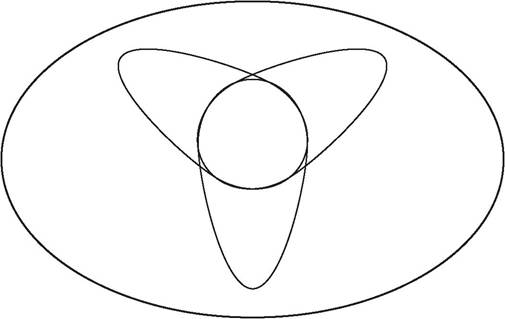
Figure 0.1 Traditional historiography and comparative contextualization
A short tour around set-theory will help express this insight in general terms. Some may remember that K. N. Chaudhuri failed to win many kudos from his colleagues when his ambitious Asia before Europe ventured onto this theoretical terrain a generation ago;9 but it is part of the folly of human nature happily to repeat the errors of others, usually in a more simplified version. Figure 0.1 tries to illustrate the argument. Step 1 shows the time-tested, and institutionally predominant way of writing history. Here every society, however internally divided, tends to be conceived of as a single isolated set. Much speaks in favor of this approach, but as step 2 in Figure 0.1 illustrates, this is only one way of analyzing a social formation. Some significant aspects of reality remain hidden from sight: how the separate societal sets relate to each other, overlap, connect and form bigger sets. It is to recover this dimension of past existence that we need to compare and make visible the properties that are shared between individual societies, the commonalities.
In a particularly influential social science version of this approach, comparison serves to sharpen causal analysis. Detection of a point of divergence makes it possible to address differences in outcomes between otherwise similar societies. An explanatory cause would seem to have been isolated. Yet, cases are commonly too few in number, past phenomena too imperfectly known, and human affairs generally too messy to permit solid, law-like causal explanations to be formed.[10] Comparison, however, not only falls short of its promise, it also accomplishes much more. In a very fundamental way, it breaks the isolation, illustrated in step 1 of the figure, to reveal how social formations form part of wider historical contexts, step 2. By identifying broad similarities between societies, comparison provides pointers and serves to contextualize individual cases by establishing parallels and identifying wider patterns.[11] Differently put, the identification of analogies between social formations, with some shared characteristics, rearranges our singular examples as part of larger sets, empires for instance. That is urgently needed and a precondition for the pursuit of world history.
To be sure, the commonalities and connections that become visible in this exercise will oftentimes be dismissed by the area specialists as too general and imprecise; but these qualms are, at least much of the time, misplaced. Rejection should not follow automatically from the fact that comparison presents a case in a different light and resolution than is customary. Why would we simply want epistemologically to privilege step 1 to the exclusion of step 2, confining our understanding solely to one perspective instead of the other? The value of pointing to parallels does not depend on absolute identity. Should an overlap of say 50, 60, or 80% between societies, by definition, be any less interesting than their differences? After all, few societal settings exist under such a pressure of forces that arrangements develop as completely predetermined, with no room left for inconsequential variation. As often as not, the real danger is rather that minute differences are elevated to a high explanatory position when what has really happened is that analysis has succumbed to the prejudice of small differences. On the issue of national identity, no one today could credibly maintain that each nationalism, in spite of all its predictable quirks, must be treated as unique and in isolation. Why should imperialism, a much older and even bruter force, the quest to conquer and dominate the resources of other societies and their populations, be viewed any differently?
Contrary to the disciplinary inclination of our profession toward particularism, it must be emphasized that comparison simply allows us to see a social formation in a wider context, revealing a more general dimension of the past, invisible to the historian studying a society in the singular. That dimension is not any less real. Some phenomena emerge only when you take a step back and observe them from a distance sufficient to make the clutter of life look hazy and prevent infinite details from obscuring the broader pattern. Few historians of the Persian Empire wonder about the extraordinary, revolutionary geographical expansion of imperial power that was so quickly achieved by the Achaemenids, few ask about the formation of the standing imperial army of Rome in a wider world historical context, or relate the role of Confucian literary elite-culture in the stable government of vast expanses of territory to other imperial cosmopolitan cultures. Even the view, still not uncommon among students of European colonialism, that this phenomenon was of its own kind, the really defining form of imperialism, remains for the most part a more or less tacitly accepted assumption, rarely examined in the wider and deeper context that would be necessary to justify this position.
These volumes refuse to choose between the two alternative perspectives on the past. They seek to harness the capacity of more conventional historiography to survey the phenomenon of imperialism in much of its sprawling variety, but also to situate this variety within wider contexts and thus reveal the bigger picture by observing the formation of empire over the very longue duree and the broadest geographical sweep. This is what the design of Figure 0.1 seeks to illustrate, with its image of individual empires forming a set of interlocking sets. The basic ambition of these volumes, then, is firmly to place the histories of empires in the context of other imperial formations, to form a world history and develop a new picture, paradoxically by the radical pursuit of traditional means.
To this end, this work has been organized in two volumes, the first comparative and analytical in scope, the second, a history of histories. The opening chapter of Vol. 1 attempts to survey both definitions and the dominant theories of empire and range them into an analytical matrix which can be used to structure a world- historical synthesis. This is followed by a set of 15 comparative, thematic chapters, each of them seeking to explore a specific dimension of the multifarious experience of imperial societies across the centuries. No general theoretical framework holds sway among students of empire. The field is characterized by a fair number of schools, often competing and at loggerheads. However, rival theories need not necessarily be treated as mutually exclusive. Formation of empire has been too all-encompassing a force in history, not to demand a heterogeneous approach. In fact, theoretical diversity may more profitably be understood as illuminating and interrogating different aspects of the operation of power and the imperial experience. Recent interest in the construction and negotiation of cultural and gender identities, for instance, does not so much supplant as complement earlier work on economic exploitation. Existing bodies of theory have, therefore, served to guide our identification and treatment of analytical themes. But it is a key point of these thematic chapters that they do not simply seek to introduce a set of abstract theory. They aim to put the historical experience more firmly into play. As no theories are on offer that encompass the imperial experience across the entire span of world history, the authors have been asked to revert to comparison to build from the ground up, so to speak, to reveal broader patterns for a wide range of thematics, covering a broad spectrum from resource extraction and social hierarchies to knowledge production, memories, and decline.
Volume 2 of this work moves on to survey the development of empires through time and around the globe. It seeks to assemble a world history from a set of individual imperial histories, divided into eight periods of world-historical time. Each phase is introduced by a short synthesis, fleshing out the main developments in a global context and perspective. As the individual histories chart the emergence and evolution of several kinds of imperial polities through different historical epochs and basic technological regimes, it would have been unreasonable to force each chapter into a single, narrow mold. A uniform template would have functioned rather as a straightjacket than as an efficient means of ensuring coherence—a certain recipe for schematic results that would undo one of the most fundamental benefits of comparison, the inspiration arising from the confrontation of the habitual and well-known with other less familiar experiences and ways of addressing a topic. Authors accordingly enjoyed considerable leeway in shaping their chapters in order to allow for both individual creativity and historical variation. Nevertheless, a few basic minimum requirements have been broadly adhered to. The chapters on particular empires are expected both to provide a chronological overview charting the historical course of their polities and to offer analysis of the military and economic foundation, the political organization of government and administration, as well as social and cultural history. These themes have provided a frame strong enough to give direction and allow a global vision to emerge from the many single studies included in these volumes. Overall, our history chapters converge on a view ofthe problem of imperial power that may be summarized in the historical sociology of Michael Mann as one of organizational capacity and logistical constraints.12 And in the combination of perspectives represented in the work as a whole, we hope to have placed the individual imperial histories firmly within a variety of comparative, interlocking world historical contexts.
Now, at the end of the long, and it should be said, exciting labor which has gone into the completion of this work, it is a dear duty and great joy to acknowledge the help and advice generously offered by so many friends, students, and colleagues over the years. First of all, we must express our gratitude to the many contributors who agreed to join us on the journey, with much patience required from some, from others, to work under no little stress. In the final stages of the project, Alex Gron Johnsen acted as an invaluable and exemplary research assistant, keeping track of contracts, permits, illustrations, standardizing the manuscript, and much, much more. Sven Wind Larsen and Emilie Sort Mikkelsen each joined him for periods in his manifold tasks, while Nicolai Bagger took on the challenge of creating the index. Jonathan Weiland and Peder Dam drew up a good number of maps for our volumes, executing them with efficiency and flair. Mark Pyzyk took care of revising the language of contributors whose first language is not English. Anni Haahr Henriksen, Thomas Otvald Jensen, and Peter Berthelsen gave much valued practical help at the very end of the production process. At Oxford University Press, Stefan Vranka has been a safe editorial anchor for our efforts while Raj Suthan, with a steady hand, steered the manuscript through production. Professor Susan Bayly graciously trusted us to handle Chris's contribution after his passing. COST (European Cooperation in Science and Technology) must, yet again, be thanked for its original support of the foray into comparatiVe history which has now culminated in this publication. So must Independent Research Fund Denmark, Culture and Communication, which financed a collective project that has made it such a delight to engage in thought about world history for the last few years at the Saxo Institute in Copenhagen. At a felicitous conjuncture, Jacob Tullberg, Karsten Johanning, Kristian Kanstrup Christensen, Lars-Emil Nybo Nissen and Martin Müller came together to provide me with a vibrant conversational community around the study of empire. Finally, a very special thanks, to Elaine Yuan who has decided to travel through world history with me.
12
Mann 1986.
These volumes represent the fruits of a dialogue between ancient and modern, Western and Asian history that started 20 years ago. Today, some would like to confine the agenda of global and world history to the nineteenth and twentieth centuries, the era that saw our planet spun into an ever-thickening web of communication, commerce, and conflict woven, at first, by European colonialism. But, as humanity is progressively moving away from the days when the world was centered on Europe and history marched to its tune, this would be the wrong direction for our discipline. Quite the reverse, only precolonial society grants our imagination access to a life before Western hegemony. This is an experience that we can hardly afford to ignore in our efforts to come to grips with the seismic changes of our present. More than ever, history needs to cultivate a broader and longer view. Across centuries and cultures, the experiences of the past can still be made to speak to the concerns of our times. We leave the final words to Polybios, the Greek politician whom empire tore out of his own society more than 2,000 years ago and prompted to take up the pen and embark on the study of world history:
From this point onwards history becomes an organic whole... all events bear a relationship and contributes to a single end... The fact is that we can obtain no more than an impression of a whole from a part, but certainly neither a thorough knowledge nor an accurate understanding... it is only by combining and comparing the various parts of the whole with one another and noting their resemblances and their differences that we shall arrive at a comprehensive view, and thus encompass both the practical benefits and the pleasures that the reading of history affords.[12]
Copenhagen, November 2018.
Bibliography
Bang, P. F. 2014. Irregulare Aliquod Corpus? Copenhagen.
Bang, P. F., and C. A. Bayly, eds. 2011. Tributary Empires in Global History. Basingstoke, UK.
Bang, P. F., and D. Kolodziejczyk, eds. 2012. Universal Empire. Cambridge.
Chaudhuri, K. N. 1990. Asia before Europe. Cambridge.
Conrad, S. 2016. What Is Global History? Princeton, NJ.
Forsen, B., and G. Salmeri. 2008. The Province Strikes Back: Imperial Dynamics in the Eastern Mediterranean. Helsinki.
Harper, K. 2017. The Fate of Rome. Princeton, NJ.
Jones, A. H. M. 1964. The Later Roman Empire, 2 vols. Oxford and Norman.
Lange, M. 2013. Comparative Historical Methods. London.
MacMullen, R. 1988. Corruption and the Decline of Rome. New Haven, CT, and London.
Mann, M. 1986. The Sources of Social Power, Vol. 1, Cambridge.
McNeill, W H. 1976. Plagues and Peoples. New York.
Naipaul, V S. 1967. The Mimic Men. London and New York.
Polybius. 1979. The Rise of the Roman Empire. Translated by I. Scott-Kilvert. London.
Scheidel, W., ed. 2009. Rome and China: Comparative Perspectives on Ancient World Empires. Oxford and New York.
Scheidel, W, ed. 2015. State Power in Ancient China and Rome. Oxford and New York.
Sewell, W H. 2005. The Logics of History. Chicago.
Skocpol, T 1979. States and Social Revolutions. Cambridge.
Tomasi di Lampedusa, G. 2002. Il Gattopardo, nuova edizione riveduta. Milan.
Ward, S. and A. Rasch (eds.) 2019. Embers of Empire in Brexit Britain. London.
More on the topic Prolegomena:
- Three Prolegomena
- Prolegomena
- Conceptual prolegomena
- Mommsen’s Encounter with the Code
- Critical Analysis
- Notes
- Contents
- Contents
- Boon Andrew. The Ethics and Conduct of Lawyers in England and Wales. Hart Publishing,1999. — 808 p., 1999
- Griffiths-Baker Janine. Serving Two Masters: Conflicts of Interest in the Modern Law Firm. Hart Publishing,2002. — 227 p., 2002
- Grisso T.. Evaluating Competencies: Forensic Assessments and Instruments. 2nd edition. — Springer,2002. — 564 p., 2002
- Luban David. Legal Ethics and Human Dignity. Cambridge University Press,2007. — 350 p., 2007
- Ayupova Z.K.. Theory of state and law: textbook. - Almaty: Kazakh University,2015. - 192 pages., 2015
- Allen Danielle, Benkler Yochai et al. (eds.). A Political Economy of Justice. The University of Chicago Press,2022. — 416 p., 2022
- Barnes Rudolph C.. Military Legitimacy: Might and Right in the New Millennium.Frank Cass,1996. — 198 p., 1996
- Bedner Adriaan (ed.).. Real Legal Certainty and its Relevance: Essays in Honor of Jan Michiel Otto. Leiden University Press,2018. — 261 p., 2018