Violent Neanderthals?
A number of minor non-lethal injuries are identified on Neanderthals and their ancestors as well as on early modern humans from Europe and the Near East between 30,000 and 40,000 BP.
Similar to the Homo erectus and Homo heidelber- gensis cases, these lesions are only evident on the outside surface and did not penetrate the skull. In 1995 Thomas Berger and Erik Trinkaus published the results of a study that showed that lesions on Neanderthals are focused on the skull and upper extremities. A comparison with recent and archaeological material revealed high similarities with lesions from American rodeo riders. Their explanation for this pattern of lesions was a risky hunting strategy resulting in close encounters with larger game.[94] In a later study these results were modified; the pattern of traumatic lesions was not only restricted to Neanderthals but was also found in later hunter-gatherer communities. In addition, hunting strategies were not the only reason identified for this pattern of trauma; the study showed that interpersonal violence could not be excluded as an explanation and might have played an important role.[95] All the injuries show bony reactions, indicating healing without any complications. Besides these injuries there are also a number of cases that show a more severe pattern of trauma on the post-cranial skeleton, mostly concentrated on the lower arms, ribs and shoulder girdle.[96] [97] These injuries had also healed without complication but certainly would have limited the daily life of the affected person. As in earlier cases, it remains a general problem to distinguish between an accidental nature and interpersonal violence as a cause for a lesion or trauma.A whole series of traumas both on cranial and post-cranial remains is present in the Neanderthal remains from Krapina in Croatia (Figure 2.1).
About 900 skeletal elements representing a minimum of twenty-three individuals makes this site one of the most important with Neanderthal remains. Analysis of these remains shows that trauma frequency and localisation on the skull and the post-cranium is similar to recent hunter-gatherer groups where violence is usually seen as the reason for skull trauma.11 The comparison is, however, limited due to the high degree of fragmentation of the Krapina remains. Nonetheless it seems plausible that the trauma present, especially on skull fragments 4, 5 and 20, in terms of shape, size and localisation, is caused by interpersonal violence. Only one further trauma (Krapina 34.7) is below the so-called hat-brim-line. Because this is an uncertain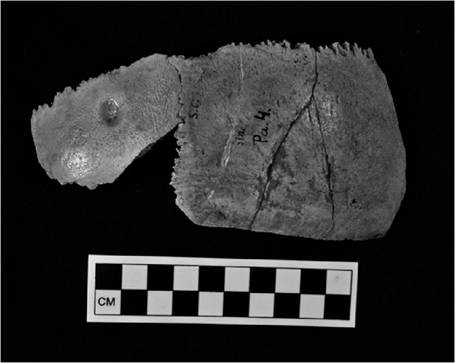
Figure 2.1 Krapina, Croatia, frontal-parietal fragment K20 with a small, healed lesion on the upper part of the frontal bone.
criterion, it cannot be ruled out that these lesions were also caused by personal violence and not by accidents or other circumstances.
Another case is the Neanderthal from Saint-Cesaire, Roche-a-Pierrot, France, represented as a partial skeleton. Here the fragmentary skull reveals a well-healed lesion on the left parietal (Figure 2.2). It has been suggested that a blow with a sharp object caused this skull fracture. It is unclear whether the blow came from the back or front, but the affected individual must have been standing upright. The blow seems to have penetrated the skull at least partially as the skull was fractured and parts of the affected bone were dislocated. The effects of the injury were probably serious, with heavy bleeding and probably temporary impairment. It seems to be plausible that assistance and help from other members of his group would have been necessary for this individual to survive.[98]
Clear evidence of interpersonal violence among Neanderthals seems to be present on the skeletal remains of burial 3 from Shanidar in northern Iraq.
The ninth rib on the left side of the body shows a deep cut and callus formation indicating that the process of healing was ongoing at the time of death. Death seems to have occurred about two months after the injury, but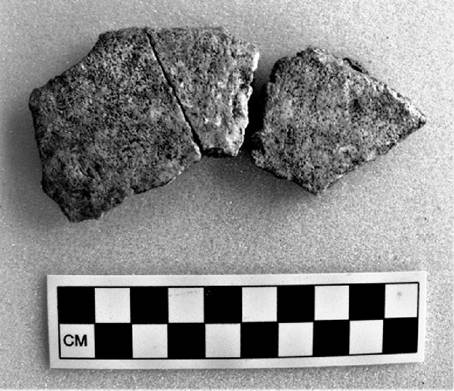
Figure 2.2 Saint-Cesaire, France, left parietal fragment with healed injury.
any correlation is unclear. Experimental approaches showed that a sharp instrument with a low kinetic energy and a low mass probably caused the incision.[99] [100] Although a hunting accident or an attack with a thrusting spear cannot be ruled out, it seems to be more plausible to suggest a stabbing weapon like a knife-like flint artefact. The effect on the individual was probably severe as the weapon not only penetrated the rib but entered the thorax and perforated the lung. The circumstances that led to the death of the individual are unclear, as no inflammatory processes are present on the preserved remains. The injuries, however, strongly suggest a case of personal aggression among Neanderthals.
Another case from the Middle Palaeolithic is juvenile burial 11 from Qafzeh in Israel, dated between 90,000 and 100,000 BP, which presents a healed skull injury. A young adolescent of about 12-13 years was buried in a pit with deer antlers.14 According to previous studies and a recent analysis using three-dimensional imaging methods, the juvenile died some time after suffering a major skull and brain trauma to the frontal bone. The location and shape of the depression fracture leaves open the possibility of an accidental injury or interpersonal violence. The individual most likely suffered from significant neurological and psychological disorders because of the injury, including problems with communication. However, despite these limitations the community in which they were living took care of them during their lifetime and in death. The deliberate and ceremonial burial was equipped with accompanying goods (red deer antlers), which are rare in the Middle Palaeolithic. This might indicate that despite their young age and disabilities following the skull trauma, this individual was important for the community and was buried in a special way.