38 Whose Seas?
I
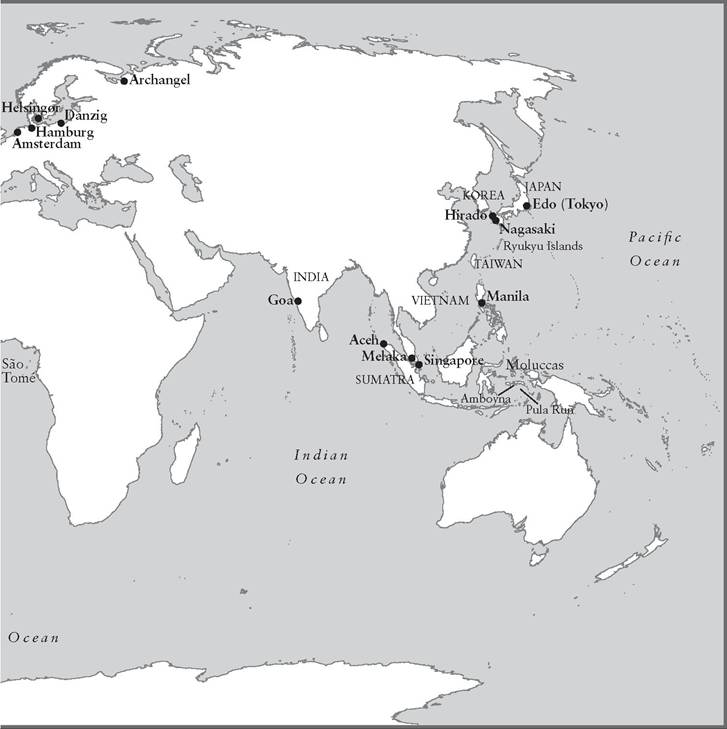
Who has mastery over the sea itself? The question was posed in 1603 after a Dutch ship despoiled a heavily laden Portuguese carrack, the Santa Catarina, in the strait near Singapore, and carried its magnificent cargo of bullion and Chinese goods off to Amsterdam, where it sold for more than 3,000,000 guilders.
The Portuguese appear to have been betrayed by the king of Johor (the southern tip of the Malay peninsula), who told the Dutch that the carrack was on its way and unprotected. Claims and counterclaims went back and forth. But the Dutch challenge to the Portuguese was theoretical as well as practical.1 The question that the Dutch raised has still not gone away: in the twenty-first century the South China Sea has become the focus of intense legal debates in which theoretical claims and practical realities are closely intertwined.2 In 1609 the Dutch scholar and lawyer Hugo Grotius argued learnedly and forcefully that the seas were free spaces where all had the right to come and go.3 Admittedly, he began with the argument that ‘it is lawful for the Hollanders... to sail to the Indians as they do and entertain traffic with them’;4 and his views ran up against opposition in Great Britain, where the argument that English or Scottish seas were an English or Scottish preserve was forcefully advanced, notably by another writer on the law of the seas, William Welwod, professor of civil law at St Andrews University.5 Even so, Grotius’s tract, written when he was a young man and first published anonymously, established itself as the starting point for discussion about claims to maritime dominion and continues to exercise influence. No one, Grotius argued on the basis of classical and biblical sources, had the right to forbid free passage, and refusal to do so had justified wars between the ancient Israelites and the Amorites as they attempted to pass through their lands on the way to the Promised Land.6 The Portuguese had arrived in the Indies not as masters but as supplicants, their presence dependent on the willingness of local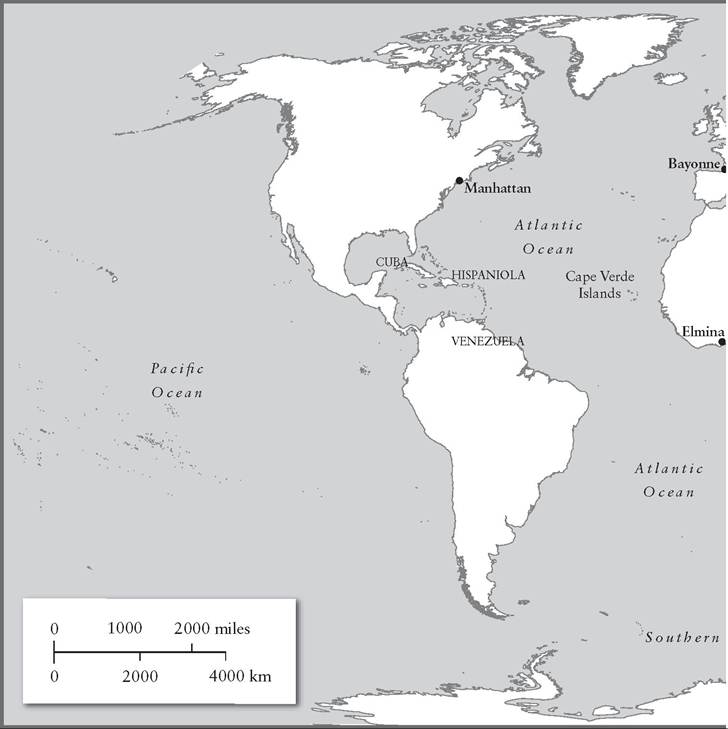
rulers to let them live there ‘by entreaty’ (this underestimated the bludgeoning that the Portuguese applied to anyone who resisted their attempts to create trading stations).7 They maintained forts and garrisons, and did not control entire territories.
Besides, the Portuguese could not even claim to have discovered India - it was known to the Romans.Citing Thomas Aquinas, from the thirteenth century, and the eloquent Spanish writer of the early sixteenth century Vitoria, Grotius insisted that Christians have no right to deprive infidels, such as the Indians, of dominion unless they can show that they have suffered some injury from them. As a Dutch Protestant, Grotius gave no credit to the pope for dividing the world between Spain and Portugal, insisting that papal authority did not extend over those who were not members of his Church. As for the sea,
this is a common or public domain: ‘it can no more be taken away by one from all than you may take away that from me which is mine.’8 It is not as if you can build upon the sea. No part of it belongs to any people’s territory; when you take fish from the sea, you draw from the common resources that the seas provide; he ticked off William Welwod, whose prime concern was the rights of Scottish fishermen to have unchallenged use of their own waters, with the words: ‘the use of that which belongs to no one must necessarily be open to all, and among the uses of the sea is fishing.’9 Grotius emphasized that he was speaking about the wide oceans rather than inland seas or indeed rivers, for the ocean encompasses the whole earth and is subject to the great tides that man cannot control - this ocean ‘more truly possesseth than is possessed’.10
Grotius’s arguments were not simply concerned with theoretical issues concerning sovereignty over open seas. He was keen to press the case for free navigation and free trade, arguing that the Dutch had a perfect right to enter and trade in Spanish and Portuguese waters.11 Although Grotius’s tract on the free seas became a standard point of reference in what later developed into international law, one should not blind oneself to the simple fact that Grotius was arguing his own partisan case in favour of his compatriots who had not merely challenged the Spaniards on land, but were now challenging them and the Portuguese (who were ruled by Philip III of Spain).
In his other writings, Grotius could show himself to be a tenacious defender of Dutch trading rights in the Indies, insisting that where European nations had planted their flag they had established their individual and exclusive right to dominion. Moreover, it is hard to describe the capture of the Santa Catarina off Singapore as anything but an outrageous act of piracy. So there was something opportunistic about his tract on the free sea, which was moulded as much by circumstances as by logic or idealism.II
The last decade of the sixteenth century and the first decade of the seventeenth century saw the Dutch entry on to the world stage. Both the Dutch and the Flemings began to show their face in the Mediterranean, filling gaps in the market when grain was in poor supply. In the early 1590s up to 300 Dutch ships were unloading grain in Italy each year. How much the Italians appreciated Baltic rye is a moot point; this was not their preferred grain. But the Dutch brought other goods into Italy all the way from Archangel, including beeswax and caviar. They made deals with the merchants of Genoa, Venice and Tuscany (where the newly enhanced port of Livorno welcomed people of all nations), enabling them to bring currants from the Ionian Islands and exotic goods such as Turkish mohair back to Amsterdam. It would be a mistake to exaggerate the impact of the Dutch, who were only at the start of their remarkable ascent, and were not always welcome. Conflating Dutch and Flemings, English merchants in the Ottoman Empire complained that ‘Flemings merchants doe beginne to trade into these countryes which will clean subvert ours’; the English already saw the Dutch as rivals on the international trade routes, and their sympathy for the Dutch revolt was muted by the awareness that the Dutch were, unexpectedly, making themselves into a world force. Another sign of success was the way they increasingly cornered the market for spices in Lisbon, turning themselves into major suppliers across northern Europe.
Hopes for the future were soon dashed. At the end of the century King Philip III renewed the ban on trade between his Iberian kingdoms and Holland, with the result that the number of visits to Lisbon plummeted. In 1598, 149 Dutch ships visited Portugal. The next year there were only twelve. Just as telling is the sharp decline in Dutch traffic heading straight into the Baltic: over 100 in 1598, and twelve the next year. The Hanseatic merchants enjoyed something of an Indian summer as they eagerly filled the gap, sending 153 ships along that route in 1600.12The lesson of the conflict with Spain was that the Dutch would have to extend their ambitions a long way beyond either the Baltic or the Mediterranean. One of the peculiarities of the Spanish and Portuguese embargo on Dutch ships was that it did not seem to apply to Portuguese possessions overseas, and the Dutch were sending about twenty ships each year to the Portuguese trading stations in west Africa at the start of the seventeenth century. The Portuguese had done them the favour of creating the infrastructure they needed, so that when Dutch ships put in at Sao Tome there were sugar plantations in place, and plenty of Portuguese settlers keen to shift their sugar.13 Meanwhile, the near impossibility of loading Portuguese or Spanish salt so long as the embargo obtained prompted the Dutch to look ever further afield. Without salt, there would be no edible herrings. It had to be the right type of salt - French supplies often contained manganese, which turned the herrings black and damaged their flavour. There was plenty of salt on the island of Sal in the Cape Verde archipelago, Portuguese colonies, it is true, but the inhabitants, such as they were, were quite willing to shift it. Better still, the Dutch thought, might be the seizure of some of these islands. They attempted to capture the Cape Verde Islands towards the end of the sixteenth century, and Sao Tome in 1600.14
The search for salt took the Dutch all the way to the coast of Venezuela, and over six and a half years, starting in the summer of 1599, 768 Dutch ships sailed to the salt lagoons of Punta de Araya; many of these ships sailed out on ballast, simply aiming to load up with salt and take it back to Holland.
The outer edges of the Spanish and Portuguese empires were safe enough and the Dutch even carried on business in Cuba and Hispaniola, anchoring well away from Havana or Santo Domingo and carrying away large numbers of animal hides, but discretion was the rule; woe betide interlopers who were captured near the major Spanish settlements. They were likely to be slaughtered without mercy.15These initiatives, and attempts to create small settlements in the Caribbean, would eventually lead to the foundation of the Dutch West India Company (WIC), but the most lucrative breakthrough that the Dutch achieved lay in the East, beginning at the end of the sixteenth century with the establishment of a ‘Long-Distance Company’ in Amsterdam in 1595. Nearly all of those who set up this company were actually Dutch, even though the immigration of large numbers of businessmen from Flanders, Portugal and elsewhere was gradually transforming the face of what was fast becoming the economic capital of the United Provinces. Just as the search for Venezuelan salt was prompted by exclusion from Iberia, the search for markets in the East was the result of exclusion from the spice market of Lisbon. In the beginning, this seemed to be a very profitable business, and the Portuguese were being pushed into a corner by their aggressive new rivals. Having been excluded from Lisbon, the Dutch went one better and blockaded Lisbon in 1606, preventing Philip III from sending out his spice fleet that year. This was more than the Dutch could hope to do every year, but when the Portuguese, along with the Spaniards, tried to force the Dutch out of the East Indies they soon found that the Dutch were no weaklings and could not be budged.16
If there was ever an example of an economic policy that backfired, it was surely the decision to place a trade embargo on the Dutch. By 1601 sixty-five ships had reached the East Indies from Holland, divided up among fourteen separate expeditions launched not just by the LongDistance Company but by several rivals.
Everyone wanted pepper, with the result that suppliers in the East Indies were able to double their prices. However, so much pepper was reaching Holland that the opposite effect was felt: prices began to fall within Europe, and it became obvious that the East Indies trade was already in crisis, producing negligible profits. Investors were bound to pull out of the pepper trade, and what had begun so gloriously would simply peter out. The answer was to consolidate the efforts of all the different companies, and, with plenty of prompting from the States General of the United Provinces, one company, in which representatives from Amsterdam had a near majority, was at last formed: the United East India Company, generally known by the Dutch acronym ‘VOC’, standing for Vereenigde Oost-Indische Compagnie. From 1602 onwards the VOC became the official arm of the government of the United Provinces in the East Indies, and (taking into account the rivalry with Spain and Portugal) it was encouraged not just to conduct trade but to patrol the seas and to set up forts in the Far East. Within three years the Dutch had occupied Tidore and Ternate in the Moluccas, the source of cloves, nutmeg and mace, and much-prized possessions of the Portuguese.17 The assault on and occupation of Portuguese bases across the world followed throughout the first half of the seventeenth century. Portugal only had itself to blame for closing its own spice markets to the Dutch. And, although they were not founders of the VOC, the growing community of Portuguese merchants in Amsterdam and other Dutch cities, often refugees from the Inquisition, gave active support to the creation of a Dutch overseas empire. This group will deserve separate examination later.Early successes were not easily maintained. The Dutch conflict with Spain was renewed in 1621, with turbulent effects on the Dutch merchant navy. Once again the Dutch had to look far afield for salt and for the dried fruits that had become a staple of the middle-class diet across northern Europe; and the Spaniards were alert to this, building a fort to block access to the salt pans the Dutch had been using in Venezuela and swamping salt pans in Haiti that the Dutch hoped to use. Once again the Catholic Flemings became a serious nuisance, as the struggle with Spanish power was brought home to the very coasts of the Low Countries. In 1628 privateers from Dunkirk sent 245 Dutch and English ships to the bottom of the sea, or seized them. It is no surprise that the cost of insuring ships and cargoes rose steeply. As before, the main beneficiaries were the Hansa merchants. In 1621 they sent twenty-two ships from Iberia to the Baltic, and the Dutch sent thirty-six. The next year they sent forty-one and the Dutch managed to sneak out two ships (in several later years, none at all). For a time the Danes also did well out of this situation, bringing goods from Iberia through the Sound, which, after all, they controlled. As the conflict with Spain deepened, the Dutch found themselves short of herrings - no salt, no herrings. This was not just a problem for the Dutch, as consumers further afield who had relied on them were also badly hit, for instance the burghers of Danzig. Difficulties were compounded by the decision of the king of Denmark, in 1638-9, to increase the Sound toll levied on ships passing through the narrows at Helsingor. The Danes entered into an understanding with Spain, Protestant and Catholic working together to suffocate the Dutch. Only a Swedish invasion of Jutland in 1643 distracted the Danes from their hostility to the United Provinces. The Dutch decided that the time had come to face the Danes, and sent an imposing fleet of forty-eight naval vessels plus 300 merchant vessels into the Baltic past Helsingor Castle, where the king had taken up residence. King Christian was hardly in a position to stop them, and before long the Dutch had made an agreement with him that offered lower tolls on shipping passing through the Sound.18
One group of people who were willing to act on behalf of the Dutch were the Portuguese settlers in Bayonne, in south-western France, New Christians of Jewish origin who found their new home a good place in which to escape the ministrations of the Inquisition, although they also kept up contact with fellow Jews who remained welcome at court in Madrid, so long as they led Catholic lives in public. Large quantities of goods were smuggled through the Pyrenean passes to Bayonne. No embargo in this period was watertight. The inhabitants of Viana do Castelo in northern Portugal had prospered from Dutch trade and were not going to enforce the rules now. The Spanish government tried to improve its supervision of visiting ships, arresting vessels found in Spanish ports on the grounds that their voyage had been financed by the Dutch, and entering into agreements with Denmark, England and Scotland to make sure that their ships did not carry Dutch goods. They seem to have found it difficult to distinguish between the Danes and the Dutch, confiscating goods that had already been approved by their own officials based in Danish territory close to Hamburg.19 Still, it cannot have been easy to determine who was in the pay of the Dutch merchants, with so many Portuguese milling around, a mobile population moving constantly between Iberia, south-western France, Holland, and, in due course, England and Hamburg.
For a time it seemed that the rise of the Dutch had been a mere flash in the pan. According to Jonathan Israel, ‘the Dutch lost an eighth of the Baltic traffic’ in the 1620s and 1630s.20 However, the economic crisis was by no means limited to Holland. This was a period of internecine warfare in Germany; later, England and France would experience severe tumult. In reality, the Dutch were able to make advances, but they took place far from home. They consolidated their position as masters of bits and pieces of the Portuguese trading empire, even installing themselves for a time in Brazil; they were pushed out in 1625, but this was a harbinger of better things to come. When Piet Heyn captured the Spanish treasure fleet carrying bullion from Mexico to Spain, the West India Company found itself 11,000,000 guilders richer, and other great prizes included 40,000 chests of Brazilian sugar, which were said to be worth 8,000,000 guilders. The Dutch were a significant presence on the Gold Coast of Africa, and even (though not for long) held Elmina. Considering that Elmina had been the jewel in Portugal’s African crown, or rather the source of gold for that crown, this was an impressive achievement. With this temporary conquest the Dutch served notice that they were serious competitors on both sides of the Atlantic. The West Indies Company, it is true, was overspending, which is hardly surprising: they had to maintain a fleet, forts, foot soldiers and a whole trading network, and the value of shares in the WI C dipped and dived during the 1630s and 1640s; they were a bad short-term investment. And yet from the Moluccas to Brazil the captains and merchants of the United Provinces were steadily taking charge of the most precious territories in the Portuguese seaborne empire. The awareness that their empire was being whittled away was one factor in the uprising that brought Portugal renewed independence from Spain in 1640.21 Thus the Dutch advances were not simply important for the global economy; they were also very important in global politics.
Ill
Many histories of early modern maritime trade and exploration neatly separate the Portuguese, the Spaniards, the Dutch, the English, the French and other rivals into parallel histories. In reality, though, one cannot understand the rise of the Dutch without weaving into that story the rise of English trade in the same period, aiming at the same objectives: trading bases in lands as remote as the Moluccas, Japan and the coast of India. At first, the English attempted to reach the Spice Islands by way of a western route. Francis Drake’s circumnavigation, on which he set out in 1577, was planned in part as a sustained assault on Spanish shipping in the Caribbean and along the Pacific coastline of the Americas. A second voyage, led by Thomas Cavendish, or Candish, circumnavigated the globe between 1586 and 1588, but these two voyages only confirmed that the Strait of Magellan was difficult water, a maze of icy and stormy channels. That was the bad news; but the good news was that Cavendish returned home with the spoils of an entire Manila galleon, including 122,000 gold pesos, a rich store of silk and spices and two Japanese boys who could read their own language - this implies that he was thinking of trying to reach Japan and of opening up trade there, though in the event he headed for the Moluccas instead. It is said that on their arrival in Plymouth the English sailors were arrayed in silk doublets seized from the enemy. Cavendish was clearly an honourable man, since he set the crew and passengers of the galleon onshore in a place called Porto Seguro, and gave them supplies, including enough wood to make a small ship of their own. Some of his contemporaries would, instead, have been after their blood.
The next English attempt to reach the East Indies, by James Lancaster in 1591, took what contemporaries called the Portuguese route, round the Cape of Good Hope and then across the Indian Ocean.22 Lancaster decided to follow up rumours that the Portuguese were close to discovering a North-East or North-West Passage above China, which remained an obsession. But his crew was worn down by scurvy and his pilot (picked up in the Indian Ocean) had obviously lost his way, with the result that Lancaster failed to penetrate beyond Penang in western Malaya. Lancaster’s one great prize was ‘the ship of the captain of Malacca’, a Portuguese vessel travelling from Goa to Melaka, loaded with Canary wine, palm wine, velvets, taffeta, an ‘abundance of playing cardes’ and Venetian glass, as well as a ‘false and counterfeit stone which an Italian brought from Venice to deceive the rude Indians withal’, but there was no trace of the treasure the English sailors confidently expected to find on board. After that the English lay in wait for the Portuguese fleet due to arrive from Bengal, which was said to carry diamonds, rubies, Calicut cloth ‘and other fine workes’, but before long, with their captain now sick, the crew insisted on waiting no longer and on returning to England.23
Only the news that the Dutch were sending ships to the East Indies revived English plans to carve out a place for their kingdom in the spice trade. It was particularly galling that the Dutch lured the English explorer John Davis into their service as expert navigator; they also began to bid for the purchase of English ships to increase their capacity. Here was a man who could be relied upon to make an accurate record of the route to the East and of the characteristics of the islands the Dutch visited. Mapping out which islands were rich in cloves and nutmeg became an obsession, since these products could only be obtained from a small area, and the Dutch - as also the English - planned to penetrate right into those areas and gain control of them, rather than relying on local merchants to bring them to bases on Sumatra, Java or other, more accessible places. Within a few years of Lancaster’s first expedition, the Dutch had established a ‘factory’ at Bantam in Java, and then they penetrated as far as Neira, which has been called ‘the nutmeg capital of the Moluccas’.24 In response, a ‘Company of Merchants of London trading into the East Indies’ came into being, and its first expedition to the East Indies was, perhaps surprisingly, entrusted to Lancaster. His attempt to reach the East Indies had whetted the appetite of the London investors, rather than being seen as a costly disaster. That was the immediate outcome of the formation of what would eventually develop into the English East India Company, but the long-term outcome was a long tussle between the Dutch East India Company and the English one.
Scurvy had wreaked havoc on Lancaster’s first voyage. On a second expedition to the East Indies, in 1601, Lancaster foresightedly insisted that each sailor was to be fed three spoonfuls of lemon juice every day, but only aboard his flagship; on the accompanying ships scurvy was rampant. By the time his four ships reached southern Africa, Lancaster had lost over a hundred men to disease, which equalled the complement of one ship.25 The curative role of fresh fruit was understood, but its preventative role was not noticed. Yet an important observation did result from Lancaster’s second expedition, though it was something the Portuguese had known for a century. On arriving at Aceh, on the northern tip of Sumatra, facing the Indian Ocean, Lancaster found ‘sixteen or eighteen sail of shippes of diverse nations’; these were Gujaratis, Bengalis, Mala- baris (from southern India), Pegus from Burma and Patanis from Siam.26 Lancaster had several productive interviews with the sultan, Ala-uddin, to whom a letter from Queen Elizabeth was carried by an elephant twice as high as a tall man, ‘which had a small castle like a coach upon his back, covered with crimson velvet. In the middle thereof was a great basin of gold, and a peece of silke exceedingly richly wrought to cover it, under which Her Majestie’s letter was put.’27 Ala-uddin’s feasts were sumptuous, and he paid no attention to the Islamic prohibition of alcohol; but one of his requests was not easy to satisfy, his wish to be sent ‘a fair Portugall maiden’. Moreover, the price of spices in Aceh was higher than Lancaster had bargained for. If one wanted to obtain spices cheaply the answer was to penetrate to the lands where they grew. Even in Bantam, on the western tip of Java, spices could be bought much more cheaply than in Aceh.28 In both places the English secured the right to a factory and other trading concessions, so that the investment made by members of the East India Company seemed likely to earn good returns over the years, so long as rivals could be kept at bay. Lancaster returned home very satisfied with pirate raids on Portuguese shipping, but he left behind a small pinnace and instructed its crew to search deeper into the East Indies, all the way to the sources of the best spices.
This brought the English, even if only a small number of them, into conflict with the Dutch. It was an odd situation: the Dutch sometimes declared how grateful they were for the support England had (though not consistently) given the United Provinces in their struggle against Spanish rule, but the fact that they were at peace in the North Sea did not mean that the English were automatically welcome in the South Seas. They saw them as interlopers; as an English factor in the East Indies named John Jourdain wrote:
The Hollanders say we go aboute to reape the fruits of their labours. It is rather the contrarye for that they seem to barre us of our libertie to trade in a free countrye, having manie times traded in those places, and nowe they seeke to defraud us of that we have so long fought for.29
So much for Grotius. Jourdain would die in a skirmish with the Dutch out in the East Indies in 1619, in what has been called ‘flagrant disregard’ of yet another Anglo-Dutch truce.30 The Dutch scored major successes against the Portuguese, gaining control of the island of Amboyna in 1605. The Dutch intended to keep the proceeds for themselves, and on island after island they resolutely sought a monopoly. English adventurers attempted to secure the tiny island of Pula Run for the English Crown, so that King James I was described as ‘by the grace of God, king of England, Scotland, Ireland, France, Puloway and Puloroon’, these being the spice islands of Ai and Run.31 This, however, set off a dirty battle for control of Run in which the Dutch shamelessly cut down all the nutmeg trees on what was the nutmeg island par excellence; it was better no one should have the nutmeg of Run than that the English should. The main English defender, Nathaniel Courthope, was shot and killed in 1620, and the Dutch took charge of the island, expelling the native population for good measure; but negotiations about its future dragged on for forty-seven years, until the Dutch and English governments finally agreed that the Dutch could keep Run if the English were allowed to hold on to Manhattan island far away in North America, which they had seized from the Dutch three years earlier.32 To the inhabitants of the East Indies one lot of Western barbarians was much the same as another, and they easily confused the Dutch with the English.33
Even after they captured Run, outrageous acts of violence were still being committed by the Dutch, to intimidate all English interlopers present and future: in 1623 a group of innocent traders based at the English factory in Amboyna were arrested, tortured within an inch of their lives and then executed, on the specious grounds that they had been conspiring with Japanese mercenaries, who met the same fate, to take over this island.34 The ‘Massacre of Amboyna’ soured Anglo-Dutch relations, as did the high-handed manner of the Dutch governor-general of the Indies, Jan Pieterszoon Coen, a singularly unattractive figure who had no compunction about wiping out native peoples, European rivals or anyone who stood in his way, and sometimes ignored the instructions of his own government in the Netherlands. Coen rejoiced in the killing of his old foe Jourdain. Such methods did, however, greatly strengthen the Dutch position in the East Indies, particularly after the transfer of their headquarters to the well-placed town of Jakarta, renamed Batavia, the Latin name for the Netherlands.
English attention turned away from the East Indies towards the Indian subcontinent. In part, it is true, English interest in India was generated by the need to find products that would appeal to the inhabitants of the East Indies, because heavy English woollen cloths were not exactly what the near-naked inhabitants of these islands craved. Indian calicoes, though, were lighter and could find a market. Thus the English, like the Portuguese before them, became intermediaries between the far-flung coasts of what they broadly called ‘India’. There was already a lively inter-regional trade by sea, and it was not just clever but necessary to insert themselves into it if they were to make themselves welcome in the Indian Ocean and beyond.35
The human cost of conflict with the Dutch was high enough; but the financial cost was also difficult to bear. The East India Company already functioned in a rather different way to the other English trading companies, such as the Muscovy Company and the Levant Company, which was active in Smyrna and other parts of the Mediterranean. Whereas the other companies were, in essence, umbrella bodies facilitating and licensing trade by syndicates of members, the East India Company traded as a single operation, ‘one body corporate and politick’, to cite Queen Elizabeth’s charter of 1600. The board made the decision when and where to trade, and investors were not permitted to fit out their own expeditions in parallel with official ones.36 Over time, and following a number of crises, it evolved into a j oint-stock company, much strengthened after 1657 by a generous new charter granted by Oliver Cromwell that attracted record investments, exceeding £7oo,ooo.37
IV
The most remarkable success achieved by the Dutch was not their series of victories over the Portuguese, for the Portuguese trading empire was already under severe strain by 16oo, or their victories against the English, but their installation in Japan. Between 1641 and 1853 the Dutch merchants based in Nagasaki were the only European merchants present on the soil of Japan, and even then they were based on the offshore island of Deshima.38 Their presence there around 18oo has been beautifully portrayed in a work of fiction by David Mitchell.39 The idea that this was the channel through which the Japanese acquired scientific knowledge, dealing with navigation, medicine and much else, has been much discussed; the Japanese knew this western knowledge as Rangaku, ‘Dutch learning’, which implies that it was seen as a coherent system, though the tendency nowadays is to stress the higgledy-piggledy nature of the acquisition of Western science and technology over more than 2oo years.40 This seems much more characteristic of the way knowledge was transmitted along maritime trade routes: a slow osmosis, as one can also see with the spread of religious ideas, whether Christian, Muslim or Buddhist.
The Dutch presence in Japan can be traced back to 16oo, to the voyage of De Liefde, whose pilot was William Adams, the Englishman who later won the trust of the Japanese shogun.41 Other English merchants managed to win privileges from the shogun, and there was an English factory in Hirado from 1613 to 1623; however, it was regarded as unprofitable, a source of copper to be sure - but taking copper to England was like carrying coals to Newcastle. Later, the Dutch would realize that good profits were to be made by hawking Japanese copper round Asian seas.42 Since the Portuguese and Spaniards still had some influence in Japan, they did all they could to poison the relations between the first Dutch visitors and the Tokugawa administration. But the Dutch had a particular selling point: they explained how they had thrown off the shackles of Catholic Spain, which, in the eyes of the Japanese, made them into non-Christians. This was enormously helpful just when the Japanese government was becoming increasingly hostile to Jesuit and other missionaries. Prince Maurits, the Stadhouder, sent a polite letter to leyasu, which arrived in 1609; and a remarkable correspondence between the Stadhouder and the shogun continued for a while - the Stadhouder took the opportunity to berate the Portuguese and the Spaniards for their ‘cunning and deceit’, and portrayed King Philip as a power-crazed megalomaniac who planned to use the Christian converts to spearhead revolution in Japan. Oddly, leyasu did not respond to the damning indictment of King Philip and his subjects, but diplomacy worked and the Dutch secured trading rights at Hirado.43 Even so, the Dutch presence remained precarious during the next thirty years: a hasty request for the renewal of their rights following the death of leyasu was viewed with deep displeasure at court, since it implied that his son and successor was so disloyal to leyasu’s memory that he would quash his father’s decisions. The Dutch clearly needed to be taught a lesson, and the shogun began to restrict their freedom to trade in raw silk. The governor-general of the VOC, based at Batavia, had a good understanding of how the Dutch should behave:
You should not get into trouble with the Japanese, and you have to wait for a good time and with the greatest patience in order to get something. Since they cannot stand being retorted, we should pretend to behave humbly among the Japanese, and to play the role of poor and miserable merchants. The more we play this role, the more favour and respect we receive in this country. This has been known to us through years of experience.44
He wrote these words in 1638, by which time he could see clear proof that it paid to be patient. By 1636 the Portuguese had been cleared out of Japan, apart from the trading station at Nagasaki on Deshima Island. This was not a permanent factory: the Portuguese were to bring their goods, do their business, and leave, until they came back the following year. At the same time the Japanese were banned from sending ships overseas. The penalty for doing so was execution. Care was also taken to prevent Portuguese travelling on Dutch passports, which by this time was happening all the time - the New Christians of Amsterdam were well installed in Macau and even Manila.45
In reality, the Japanese did want to keep a door open, but only by a small crack. They were deeply insulted when the commander of the Dutch fort on Formosa, or Taiwan, Pieter Nuyts, impounded some Japanese ships; rather than breaking off all relations, the Japanese demanded that Nuyts should be sent to Japan, where he was held hostage until 1636. But the shogun was careful not to cut himself off completely by expelling the Dutch. Equally, the Dutch were perfectly aware that they needed to prove that they were nothing like the Portuguese. In 1638 they were happy to support the shogun against rebels, including many Japanese Christians, backed by the Portuguese, and, since the defeat of the rebels culminated in the massacre of maybe 37,000 victims, the Dutch were for ever after blamed for their cynical betrayal of their fellow believers. Yet this confirmed the belief at court that the Dutch were not really Christian, or at any rate were a very different sort of Christian who would not try to spread their faith. In Gulliver’s Travels, the hero visits Japan, pretending to be a ‘Hollander’, and in Edo (Tokyo) he witnesses the Dutch trampling on a crucifix, a standard ritual for the Japanese, but obviously rather more questionable for a Dutch Christian.46 The shogun was shocked to learn that the newly built and elegantly gabled Dutch warehouse at Hirado carried a date on its facade according to the Christian calendar. Forewarned of a plot to massacre the Dutch merchants in Hirado, the Dutch quickly demolished the offending building, while the government, anxious to keep all traces of Christianity at bay, forbade the Dutch merchants from observing the Sunday rest that had become part of the Calvinist religious routine.47
In the end, the stand-off was resolved when the Dutch were ordered to go and occupy the former Portuguese base at Deshima. Once again the Japanese government spoke dismissively of the Dutch presence in Japan, in language that, if anything, betrays that the Japanese did value having some access, but mainly for the court, to the exotic goods of the world beyond - whether European guns or Chinese silk:
His Majesty [the shogun] charges us to inform you that it is of slight importance to the empire of Japan whether foreigners come or do not come to trade; but in consideration of the charter granted to them by leyasu, he is pleased to allow the Hollanders to continue their operations and to leave them their commercial and other privileges, on the condition that they evacuate Hirado and establish themselves and their vessels in the port of Nagasaki.48
Deshima means ‘Fore island’, since it lies in front of Nagasaki proper, although the modern extension of the city has completely enveloped it in metropolitan Nagasaki. The island was an artificial one, a curved trapezoid shaped like a fan, supposedly because the shogun replied to the question of what shape it should be by snapping open his fan. No larger than Dam Square in modern Amsterdam, Deshima measured 557 feet at the top and 706 feet at the bottom, while the sides were 210 feet long.49 Such a confined space was rendered even more claustrophobic by its railings of iron spikes and the sentries posted on the stone bridge that linked Deshima to the mainland, checking every entry and exit. The Dutch tried to build houses as similar as possible to what they knew from home, and, being Dutch, they naturally found space for a flower garden on their tiny island. There were few permanent residents: some Japanese officials, and the Dutch captain, the chief merchant, a secretary, a bookkeeper, a doctor and other essential support staff, and a few black slaves and white artisans. They were vastly outnumbered by the Japanese officials, not just guards but a vast horde of interpreters - around 150 at the end of the seventeenth century. The numbers were so swollen because the Dutch had to pay for the upkeep of the Japanese officials. Not surprisingly, then, there were many sinecures. On the other hand, there were other officials who took their job extremely seriously, carefully inspecting all goods that arrived, with special attention to Christian literature - the Dutch were not even permitted to hold church services on Deshima. Meanwhile Nagasaki flourished on the back of Dutch trade and maritime trade within Japan itself - around 1700 the city possessed about 64,000 inhabitants.50
Why, it might be asked, did any Dutch merchants agree to live there? The answer lies in the profitability of trade with Japan. During the late seventeenth century Nagasaki proved more profitable than any other VOC base in the Dutch trading world: during the decade 1670-79 Dutch merchants were making a 75 per cent profit on their trade through Japan, though this was a high point. For no one else was on hand to offer everything from sugar and shark-skins to buffalo horns and brazilwood to microscopes and mangoes, not to mention pickled vegetables, lead pencils, amber and rock crystal; but the greatest demand was for Chinese silk. All these paid for gold, silver, copper, ceramics and lacquer-ware, though the Dutch did not neglect sake or soy sauce too. And one can see from the nature of the goods they sold in Japan that the Dutch were by no means specialists in European goods. They brought together goods from India, the Spice Islands, east Africa and the Atlantic - that was the source of narwhal tusks, which had a similar fascination to rhinoceros horns, another product that they eagerly sold through Deshima.51 So Deshima gave them a Japanese monopoly, and they were prepared to put up with the humiliation of living in a virtual prison in order to maintain access to the court of the shogun.
One of the many curiosities of life in Deshima was that the Dutch captain was treated as an honorary daimyo, or high vassal of the shogun, and was expected to make an annual visit to the court at Edo, bearing presents and conducting himself with meticulous attention to the exacting etiquette of the Japanese court. Once he had reached the ceremonial hall and been sonorously announced as the Oranda Kapitan, ‘captain of Holland’, the Dutch captain was required to crawl past the piles of gifts his embassy had brought towards the platform on which the shogun was seated (though behind a lattice, so he could not actually be seen); that done, he crawled back ‘like a lobster’ as a European observer wrote - although later in the day a relatively informal session often took place in which the shogun and his courtiers, still out of sight, cross-examined their exotic visitors about the world they had come from.52 Historians have debated whether the treatment of the Dutch embassies at Edo was a humiliation or a sort of honour, since the VOC had received favours from leyasu, and his successors were keen to see those privileges continue. Moreover, the chance to learn about Western science was too good to miss. Intellectual contact was also maintained through the work of interpreters and translators, and this contact became more intense over time, so that by the late eighteenth century Japanese authors were expounding Western medicine in their own books.53
A Japanese historian has made the valid point that Japan was not alone in closing off access to European merchants, and in trying to suppress the spread of Christianity. Similar moves can be seen in China, the Ryukyu Islands, Vietnam and Korea.54 The violence of the Portuguese, the Spaniards and the Dutch had earned them poor reputations. The arrival of the Dutch while the Portuguese were at a weak point in their fortunes and under the rule of the Spanish king gave the Japanese the chance to maintain limited links with European trade. Contrary to common assumptions, they did not cut themselves off completely from the outside world; rather, they chose exactly what sort of contact they wanted, and confined it within narrow parameters.