39 Nations Afloat
I
The complex rivalries among those who aspired to control the ocean routes (whatever Grotius might say about free trade and navigation) can too easily be reduced to an image of national empires in conflict with one another.
In public, noble Spaniards scorned trade, as if they were ancient Roman patricians, and left the dirty business, officially at least, to the Genoese and German financiers without whom not just the Crown but the city of Seville would have found themselves short of resources. In reality, financiers and aristocrats were keen to form powerful teams, whose links were strengthened by marriage alliances. This was visible in the close links tying the New Christian families of Spain and Portugal to the Iberian noble houses. When money began to run dry, an injection of funds from wealthy families of Jewish origin made sense, until the doctrine of limpieza de sangre, ‘purity of blood’, began to spread in the sixteenth century, making such marriages undesirable; every attempt was then made to cover up evidence of Jewish or Muslim ancestry.Frontier regions tend to attract chancers, hustlers, ne’er-do-wells, but also those looking for new and potentially lucrative business opportunities. In the late sixteenth century the Spanish and Portuguese empires acted as hosts to a myriad of different ethnic groups: there were Bretons and Basques, Scots and French Huguenots, Galicians and Corsicans; Basques are found as far away as Potosi in Peru, the source of the apparently endless quantities of silver that were sent to Spain and China. Some, such as the Huguenots, were refugees, leaving their native country to avoid religious conflict. Others were looking for new economic opportunities. Some left their homeland en famille, while Portuguese migrants tended to be male and were drawn from a wide range of backgrounds and social classes.
It was the classic combination of those fleeing persecution and economic migrants, with a fuzzy boundary between those two groups.1 However many they were, the European migrants did not come alone - shiploads of slaves diffused black Africans right across the two Iberian empires, in places as far from home as Lima and Manila.2 By the late seventeenth century, so many slaves were delivered to the Americas as contraband that no one was bothering to buy the asientos, or licences, that had long been required in this revolting trade.3 The European coloni zation of the lands claimed by Spain and its rivals was not, then, an orderly imposition of authority, though Spanish and Portuguese bureaucrats and soldiers abounded, but a haphazard movement of merchants, religious dissidents, criminals fleeing justice, impoverished peasants and artisans, and slaves. Yet it was hard to find a safe haven: an apparently settled life in the smaller Canary Islands could not guarantee immunity from attention, as those accused of secret adherence to Judaism in the seventeenth-century Canaries were to find.4Solidarity within migrant groups was often maintained by the existence of a community church, typically, in the Portuguese case, dedicated to St Anthony of Padua, a companion of St Francis, who was and is much venerated in Portugal, having been born in Lisbon. These were not just places of worship - after all, some of the Portuguese were more sympathetic to Judaism than to Christianity - but sources of charitable support, and places where one could exchange news and make useful contacts. In Cartagena de las Indias, in what is now Colombia, the Portuguese were prosperous enough to build a substantial hospital.5 The Genoese and the English tended to name their churches overseas after their common patron saint, St George, and the Huguenots built Protestant chapels wherever it was safe to do so.
In the final analysis, trade generally trumped distaste towards other religions: the Portuguese monarchy tolerated the existence of Jewish communities in the Moroccan towns over which it ruled, even though the open practice of Judaism had been banned in Portugal in 1497.
II
Portuguese settlers had helped set up sugar industries across the Atlantic from the fifteenth century onwards. But the Portuguese diaspora of the late sixteenth and early century seventeenth had a distinctive character. The Portuguese merchants in the Atlantic, Indian Ocean and Pacific attracted suspicion because a high proportion - exactly how many it is
Havana
pana:
Rio de Janeiro
Cartagena c las Indias
Mexico City Acapulco'
• Porto de Ale Buenos Aires
Atlantic
Ocean
Southern
Amsterdam
Barbados
SENE<
Cape Verde Islands
London1 Rouen-— Bayonne Madrid Lisbon· · Seville^ Cadiz C^y CeU
euta Islands
Pacific
Ocean
| 0 1 | 1000 | 2000 miles 1. |
| 1 0 | 1 2000 | 1 4000 km |
impossible to say - had Jewish forebears. That does not mean they were Jewish in both the patrilineal and the matrilineal line; and, whereas the leading Sephardic families, like the Arab elites of al-Andalus and the hidalgos of Castile, carefully preserved their genealogies going back very many generations, this was only worth doing if one could live as a Jew and take pride in one’s Jewish ancestry - the image of past times in Spain and Portugal as a golden age in which Sephardic Jews had risen to eminent positions at court was too attractive to be easily forgotten. For the New Christians, most of whom had adopted Portuguese or Spanish names, often as inconspicuous as Lopez or da Costa, Jewish ancestry was better not advertised. By the middle of the sixteenth century, the practice of Judaism in secret within Spain had largely disappeared, under
pressure from the Inquisition.
But in Portugal the king had promised the Jews that he would wait for a whole generation until the Inquisition was unleashed, when he forced the great majority to convert in 1497 - these were not just native Portuguese Jews but Spanish Jews who had arrived as refugees only five years earlier after the Jews were expelled from Castile and Aragon. Portugal therefore became fertile ground for the practice and dissemination of crypto-Judaism. Then, as the Portuguese New Christians became more and more involved in trade and finance, they turned up at the court in Madrid and elsewhere in Spain, seeding a revival of interest in the religion of their ancestors among Spaniards of Jewish descent.Even though the Portuguese merchants were by no means all of Jewish descent, contemporaries sometimes assumed that all Portuguese merchants were really Jews, and in the seventeenth century those who wrote about the Na^ao, or ‘Nation’, of the Portuguese might even add the adjective hebrea.6 By then the term made some, though not total, sense, because increasing numbers of New Christians were openly returning to their ancestors’ religion in Livorno, Amsterdam and London, and there existed a strong sense of brotherhood binding together these scattered communities that had managed to defy the Inquisition. To this day the Spanish and Portuguese Synagogue in London, founded by members of the Na^ao, offers prayers in Portuguese each Day of Atonement for os nossos irmaos prezos pella Inquisi^ao, ‘our brethren taken by the Inquisition’.
The new Portuguese trading network came into being after the extinction of the native Portuguese dynasty and the succession of Philip II of Spain to the throne of Portugal in 1581. The shock of losing King Sebastian in the sands of north Africa while he pressed ahead with a vain attempt to conquer Morocco was commercial as well as political. Portugal had benefited for two centuries from its close trading relationship with England, and now the country was hitched to England’s most potent enemy.
Yet the Portuguese hit the ground running: earlier generations had already accumulated handsome profits from the trade in spices, sugar and slaves, and so they were as well placed as the Genoese to invest in voyages across Spanish waters. Portuguese merchants, who had already been supplying large numbers of slaves to the Spanish possessions in the Caribbean and the American mainland, diverted their attention towards the well- developed trading empire of the Spanish Atlantic. This occurred with the approval of King Philip: ‘the entire traffic of all that has been discovered, in the East as in the West, will be common to the two nations of Castile and Portugal.’7 The Portuguese also became masters of the contraband traffic that brought Peruvian silver down from the mines at Potosi in the Andes and across the plains of South America to a small but bustling Atlantic harbour at Buenos Aires. After all, it was cheaper to trade without having to pay for asientos, or licences, if one could get away with that. On the other hand, this did not make the Spanish officials love the Portuguese, particularly in the early seventeenth century, when competition from European rivals such as the Dutch led to a noticeable reduction in Spanish trade across the Atlantic.8 There was still the sense that they were foreign interlopers, chancers skilled in exploiting loopholes, never really loyal to the Habsburg monarchy both as Portuguese and as secret members of another faith - exactly what one might expect, in the anti-Semitic language of early modern Spain, of the Jews.In this way, Jewish or not, they were often seen as Jews; in any case, there was plenty of intermarriage between New Christians and members of Old Christian trading families, which meant that defining who was a Jew was not straightforward.9 The Sephardic rabbis in Amsterdam and London were not too worried if the new members of their community could not prove Jewish ancestry in the female line, as orthodox Jewish law requires, or if they knew next to nothing about Jewish practices.
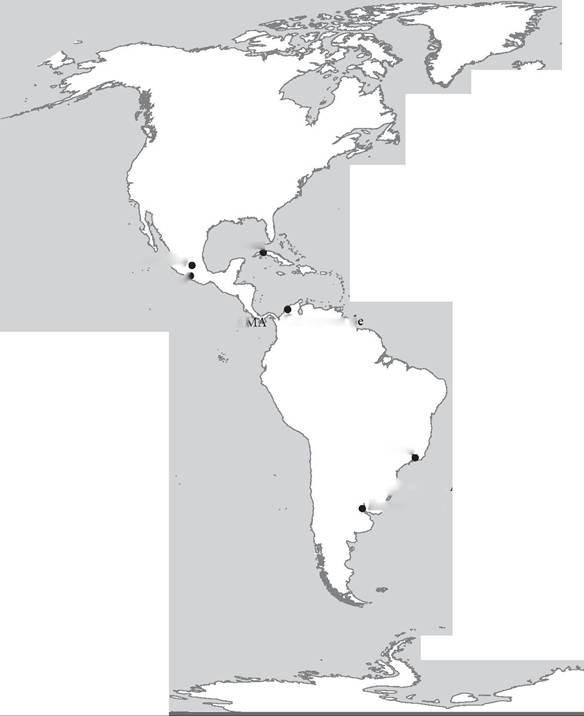
The sense of common experience as members of La Nagao was good enough. Their observance might be limited to the avoidance of pork and shellfish and the occasional fast, practices that it would be possible to keep alive without attracting too much attention.10 And what is one to make of families such as the Nunes da Costa, where one brother died in Safed, the great centre of Jewish mysticism in Galilee, and another brother, Fray Francisco de Vitoria, became archbishop in Mexico City?11 The New Christians crossed a fuzzy boundary between Judaism, crypto-Judaism and Catholicism, and the beliefs of the crypto-Jews were often an apparently unholy mix of prayers, observances and theologies drawn from both Judaism and Christianity, generated in part by their movement back and forth between lands where they had to pose as Christians and lands, such as Holland and Italy, where it was possible to live as Jews if they so chose.12Jewish or not, these Portuguese merchants created worldwide networks that linked all three great oceans. Manuel Bautista Perez made his fortune after he transported hundreds of slaves from southern Africa to Peru in 1618, thanking God and his uncle (a co-investor) for the fact that he made a profit of over 50,000 pesos. Although his centre of operations lay in Lima, he did business with correspondents in Panama, Mexico City, Cartagena de las Indias, in the Americas; in Luanda in Angola; in Lisbon, Madrid, Rouen and Antwerp. In Peru he handled Chinese silk, European textiles, Caribbean pearls and even Baltic amber.13 These contacts were by no means unusual. Around 1630 Portuguese merchants were also doing business in Acapulco (linking them to the Manila galleons), Havana, Bayonne (an important centre of New Christian settlement) and Hamburg, whose citizens had begun to welcome Portuguese Jewish merchants into their midst.14 There they built relations with the rulers of Denmark and Sweden, to whom the Teixeira family provided credit; and eventually a Sephardic settlement sprang up in Gluckstadt, a royal foundation in the contested territory of Schleswig-Holstein, and after that in Copenhagen too. That is just to speak of their local business, which extended into the Baltic; but in the seventeenth century the Hamburg Sephardim had links with the Portuguese possessions in India, with Mediterranean ports such as Venice and Smyrna, with Ceuta and the other Portuguese possessions in Morocco, not to mention Barbados, Rio de Janeiro and Angola.15
The wealthier Portuguese merchants settled comfortably into the urbane business worlds of Amsterdam and Hamburg, dressing like the local elites and living in equally gracious homes. But the Portuguese network brought their partners to very different societies across the globe. The Portuguese Jews who settled in Porto de Ale, near Dakar in west Africa, from 1606 onwards also took note of local habits and customs, and, just as they managed to win favour at European courts, they gained the protection of Muslim kings in and around Senegal. They were mainly a male community, so they took local women as their wives, and managed to convince the rabbis of Amsterdam that their families should be accepted as Jewish; they observed Jewish rituals and received advice from a Portuguese rabbi sent out from Amsterdam to minister to their needs. Their open profession of Judaism alarmed the other Portuguese in west Africa, who supposedly threatened to kill them; but the king told their enemies ‘that his land was a market where all kinds of people had a right to live’, and those who caused trouble would have their heads cut off. Just like the Portuguese merchants elsewhere, they rapidly built ties across the trading world of their ‘Nation’, as far afield as Brazil.16 By the seventeenth century the New Christians were in the ascendant both on the Guinea Coast and in the Cape Verde Islands. Some became involved in one of the major activities on these dusty islands: the collection of slaves sold by African rulers to Portuguese merchants, and their transmission via the islands to Brazil or the Caribbean. But it would be a grave mistake to treat this as in some way a Jewish speciality.17
III
Historians who have written about the Portuguese merchants, particularly those of Jewish origin, have generally concentrated on one ocean or another. Even though this reflects the way historians have divided themselves into Atlanticists, Pacificists, Indian Oceanists and Mediterraneanists, this is a pity, because the really impressive feature of their network is the way it embraced the entire globe. Portugal itself recedes from view as ships move between Africa and South America, or goods are sent up the coast of South America for trans-shipment to Macau. Maybe half the Portuguese traffic in the Indian Ocean was operated on behalf of New Christians. The royal monopoly on trade in this region proved to be only theoretical. The wealth and influence of the New Christians increased exponentially as private trade in the hands of merchant houses became the mainstay of Portuguese prosperity - with effects, as will be seen, on the prosperity of the Habsburg monarchy as well.18
All this happened despite attempts to stamp on the New Christians in precisely this area. The mass conversion of 1497 left former Jews free to engage in overseas trade, their involvement having been tightly circumscribed while they were still practising their old religion. Yet in 1501 King Manuel was already trying to exclude New Christians from positions of responsibility in the new trading stations that were being established in Asia, and the decrees became ever harsher - eventually they were banned from travelling there in any capacity, but they continued to arrive nonetheless, giving the Inquisition in Goa a fierce headache. Risks were worth taking when the proceeds were so impressive: the annual trade around the Cape was worth about 5,000,000 cruzados by 1600, and the king realized which way things were going, so he levied especially high customs dues on the most precious spices carried along this route, nutmeg, cloves and mace. But the private trade also brought diamonds from India, fine eastern cloths, lacquered boxes and porcelain. Needless to say, all this was managed by very effective, well-connected networks, by and large constructed around families and marriage alliances. There were New Christians in Mexico City such as the brothers Vaaz, who dominated trade to Manila around 1640. Then, in Manila, there were other New Christians who maintained close contact with fellow New Christians in Macau and Mel- aka.19 These operations were conducted on behalf of investors far away in Lisbon and Seville.
The Portuguese diaspora included, importantly, Madrid, even though Spain was hardly a safe place for anyone who did attempt to practise Judaism. The Spanish monarchy, having relied heavily on German and Genoese bankers in the past, began to see the Portuguese as ideal financial agents. As with the Genoese bankers, the Crown required advance payments against the income it could expect to receive further down the line, largely from the silver mines of the Americas. In the 1570s the funds advanced by the Genoese had been used to pay the salaries of soldiers serving in Flanders, and an attempt to write them out of existing contracts by Philip II, in 1576, left the troops bereft of funds and sparked a mutiny among the Spanish troops in Flanders.20 Genoese capital could not appear out of thin air, and as the transatlantic trade between Seville and the Americas declined at the start of the seventeenth century, the ability of the Genoese to service the needs of the Crown also declined. The Genoese were overstretched; they already dominated the banking of the kingdom of Naples, another Spanish possession of great strategic importance where the Habsburgs could not let their control slip.21 As the Portuguese also found, the role of bankers to the king engendered xenophobia, which in the case of the Genoese was already visible in the age of Columbus. Genoa did develop an interest in the Indian Ocean, but only from the 1640s onwards, and attempts to fund a Genoese East India Company came far too late to enable them to challenge the Dutch or the English.22 By contrast, Portugal had become master of trade routes in all the oceans, and the political link to Spain meant that the Portuguese had been able to intrude themselves in the Spanish trading world as well. For anyone looking for a source of large amounts of capital, this was where to turn.
However, there were suspicions about the political loyalty of the Portuguese towards the Habsburgs and about their religious loyalty towards the Catholic Church. When it came to politics, the Portuguese merchants doubted whether spending vast sums on a war with the Dutch rebels, renewed in 1621, made sense; from a commercial perspective war with the Dutch rendered contact with their fellow Portuguese, the Sephardim of Amsterdam, much more difficult. Worse still, the existence of sugar-rich Portuguese colonies on the coast of Brazil acted as a magnet drawing Dutch naval forces towards South America. The feitorias and little towns in Brazil, as well as Portuguese shipping out of Africa, were much more exposed than the Spanish treasure fleets, for the Spaniards had learned some lessons from Francis Drake and his friends, and made sure their fleets were well armed. Even so, the Portuguese were so keen to gain the contracts offered by the Spanish Crown that they managed to reach an agreement in 1626, and the king’s favourite, the Count-Duke Olivares, was not seriously worried about employing New Christians. Indeed, he took the view that Spain should openly encourage wealthy New Christians to settle in what for many was the land of their Spanish Jewish ancestors.
The Portuguese who worked with Olivares in the financial offices of state in Madrid were not all New Christians, but many were: Manuel Lopes Pereira was born in Lisbon to a New Christian family and went to live in Seville in 1621, before Olivares’s rise to power; and then he worked under Olivares as contador, or auditor, during the 1630s, which left him little time for commercial business of his own.23 In many respects the New Christian elite replicated the role that the Jewish elite had played in medieval Castile and Aragon, as royal financial advisers and as tax farmers. Public display by New Christians aroused envy, and the fact that some of them lived in the most fashionable parts of Madrid was not appreciated by their often virulent critics, who included the poet Francisco de Quevedo and the playwright Lope de Vega. Despite its heavy dependence on them, the Crown was reluctant to offer leading bankers noble titles or membership of the great Military Orders, for these positions were supposedly reserved for Old Christians of pure blood; but even here exceptions were made. Inevitably there were constant complaints about their political and financial influence, heavily coloured by traditional antipathy to those of ‘impure’ blood, even where there was no evidence that these people had an interest in the Jewish religion; and the New Christians themselves did not like to be called by that name - still less by the common nickname Marranos, which meant ‘pigs’.24
As with the Genoese and the Germans, these intimate ties to the royal court could not be maintained in the face of constant crisis. Olivares fell from grace in 1643, meaning that the Inquisition was once again able to stake out powerful victims who lacked a protector. Moreover, Portuguese rebellion against the Habsburgs and the re-establishment of a national monarchy in Portugal in 1640 undermined the strong economic base on which the relationship between the New Christians and the Crown had rested. Portugal found itself under increasing pressure from the Dutch, especially in Brazil, and lacked the resources to defend its empire effectively.25 The Portuguese merchants had moved beyond maritime trade into public finance, but their capacity to keep the Spanish Crown in funds depended on the operation of the Portuguese trading network that encompassed the globe. The collapse of their influence was hastened by the decline in influence of Portugal itself, in the face of Dutch and other competition. Many of the most talented Portuguese businessmen now lived in the Dutch United Provinces. As members of this diaspora in many cases found their way back to Judaism, the Portuguese diaspora began to revolve around Amsterdam rather than Lisbon, Seville or Madrid.
IV
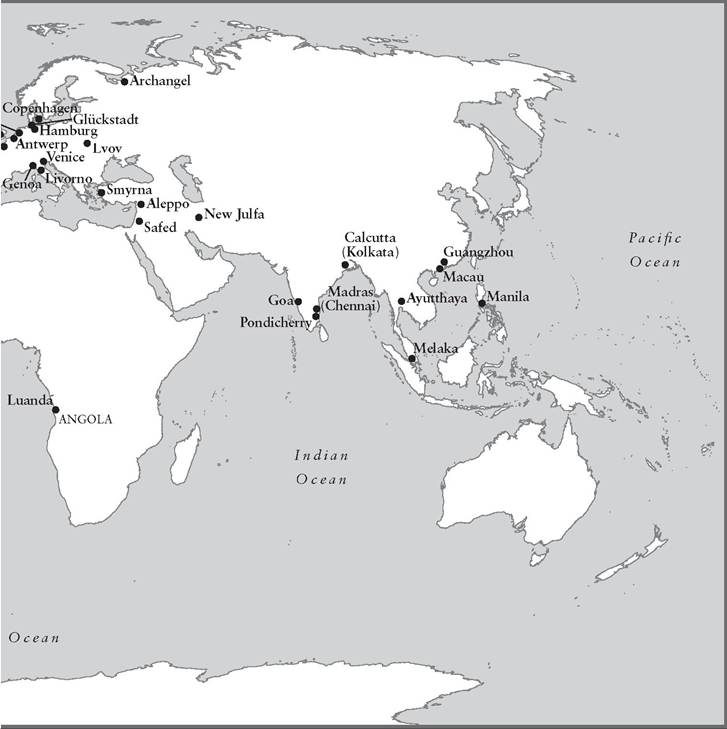
Trading diasporas are found across the world, and they often consist of people distinctive by religion as well as ethnic origin. Another example of a religious and ethnic minority is the Armenians, though it too is a complex one, as the Armenians were split between those who had, since around 1200, accepted loose papal authority and those who rejected it. As exotic Christians within Muslim and Christian states they were able to avoid being sucked into the internecine strife between Sunni and Shi‘a or Catholic and Orthodox.26 Their trading networks were less exclusively maritime than those of the Sephardim, reflecting their very long history of both deportation and trading enterprise. Their major base was at New Julfa, a suburb of Isfahan in the Iranian hinterland. Shah Abbas, the great Safavid ruler of Persia, invited them there in 1605, after he deported about 300,000 Armenians from territories he had conquered during one of his wars with the Ottomans. Many of those who settled in Isfahan came from a town in the Caucasus already called Julfa, and the Julfans had traded in silk as far as Aleppo and even Venice, where the Armenians were so well installed that they were able to set up their own monastery that can still be visited on the island of San Lazzaro.27
From New Julfa, Armenian merchants had access to the Persian court, while the relative proximity of the Indian Ocean drew them towards the trade of India - there Madras (Chennai) was their most important centre of operations. The shah conferred commercial privileges on the New Julfans, knowing that they were heavily dependent on his goodwill; particularly valuable was the right to export Persian silk. However, the New Julfans diversified into Indian textiles and jewels. Although they did not ignore other opportunities, such as the cinnamon of Ceylon or the coffee of Arabia, silk, textiles and jewels dominated their activities, with the result that their trading network, despite its impressive physical extent, was always narrower in its focus than that of the Sephardim, who handled spices, sugar and hides among many other goods. All the same, Shah Abbas achieved his aims, which made New Julfa into ‘one of the most important mercantile centres in Eurasia’.28
The geographical spread of their interests is impressive: by sea, as far west as Cadiz, and as far east as Mexico; by land, as far north as Archangel, London and Amsterdam - overland connections to Russia were generally manageable, as the Englishman Anthony Jenkinson had discovered while travelling on behalf of Queen Elizabeth; they even appeared in Tibet in the 1690s.29 At the start of the sixteenth century, Tome Pires had already found Armenians who traded in Melaka by way of Gujarat.30 Burma and Siam were also familiar ground; they could hardly ignore the commercial attractions of the great Siamese trading city of Ayutthaya. New Julfans turned up in Guangzhou in the 1680s, at a time when India was thirsty for China tea, which they exported to Madras. Mateos ordi Ohanessi, who died at Guangzhou in 1794 (half a century after the New Julfa network had largely fallen apart), took a Portuguese passport and based himself in Macau; he was said to be so wealthy that the annual budget of Macau represented a fraction of his resources. From Macau, New Julfan merchants looked eastwards towards its great trading partner, Manila, and made use of the Manila galleons plying towards Acapulco. In 1668 an Armenian merchant named Surat sent his ship the Hopewell to Manila on its maiden voyage.
These Manila voyages were something of a scam. The Armenians sent their own ships across the waves, flying the red, yellow and red flag of the Armenians, decorated with an image of the Lamb of God. This was in effect a neutral flag, respected by the Spaniards and the Portuguese. Indeed, Armenian-owned ships as a rule travelled without cannon, which may sound like folly, when one takes into account the violence between the colonial powers and the widespread piracy in the Indian Ocean, but this practice was understood as a guarantee of their inviolability. Sometimes the English took advantage of this neutral status and used the Armenians to negotiate on their behalf with tricky parties such as the Safavid shahs or the Mughal rulers of India. Yet these Armenian ships were often trading on behalf of the English or the French - the English East India Company entered into an agreement with the New Julfans in 1688, in the hope that the Armenians would send their silks to London around the Cape of Good Hope, rather than using a route through Turkey and the Mediterranean, in return for which Armenians were encouraged to settle in English forts and trading stations in India, ‘as if they were Englishmen born’, to cite the agreement. In 1698 an Armenian khwaja, or merchant, named Israel di Sarhat, arranged for the English East India Company to receive a rent farm in south-western Bengal; this eventually became the site of Calcutta (Kolkata); and they performed similar services for the French, as well as using the longstanding French base at Pondicherry in their south Indian trading operations - these were particularly lucrative, because they opened up the route to the diamond mines of Hyderabad.
The Spaniards had already got the measure of the Armenians and attempted to crack down on what they saw as contraband trade conducted on behalf of the English and other rivals. They confined the Armenians living in Manila to the area outside the city walls given over to the Chinese, the ‘Moors’ and others they wished to keep at arm’s length. Probably there were never many Armenians in Manila, but they did make use of the port to reach Mexico, where the distinctive nature of Armenian Christianity attracted unwelcome attention from the Inquisition. Silver drew them to Mexico: by selling their goods there and acquiring American silver, they could fund their purchases of Chinese silk in Macau or Manila. Occasionally too international rivalries made things awkward; rather than being treated as neutral, the Armenians were classified as Persian, or in some cases Turkish, subjects; if the latter, they were banned from bringing silk to Marseilles in 1687, but the answer was to pose as Persians, since the French had no quarrel with the shah.31 Ultimately, what counted was the hunger of consumers in western Europe and other markets served by the New Julfans for the goods they brought from India and beyond.
In their vast diaspora, nowhere compared with Madras in importance; the New Julfan merchants were there by 1666, and they had their own church in Madras from 1712 onwards, even providing aldermen who helped run the city council. They could not set up a church everywhere, for fear of arousing the suspicion of the Christian authorities or because of scanty numbers; on the other hand, they seized what opportunities they could; in the eighteenth century they possessed several churches in Burma, and they also acquired the right to use a chapel in one of the churches of Cadiz, testimony to their ability (at the best of times) to convince Spanish Catholics that they were not heretics, just very different in their practices. And, although the Calvinist Dutch placed tight limits on Catholic worship, the Armenians of Amsterdam were able to exploit their distinctive identity, acquiring a church of their own in 1663-4 - in this period the Amsterdam authorities were keener to allow Jewish worship than Catholic. Most of the Amsterdam Armenians were New Julfans, and they are thought to have numbered only about a hundred people, with a similar figure for other major Armenian bases around the world. Their strength did not, therefore, reside in numbers; but the fact that this rather small number of merchants and their dependants could build a church, and rebuild it early in the next century, suggests no lack of resources. In the same years they set up an Armenian printing press in Amsterdam; setting up these presses was a trademark of the Armenians, as it was of the Sephardic diaspora, and Armenian printing houses were found across the Julfan world, in Venice, Calcutta, even Lvov.32 However, the Armenian communities were predominantly male, so one reason it was often an advantage to accept normative Catholicism, in Catholic cities such as Venice, was that they could then take local wives.33
Looking at the Sephardim and the Armenians, one can see that these diasporas did not conform to a strict model. The Portuguese could bury themselves within a host society when it was safer to do so, notably when the Inquisition was stalking outside; the Armenians were conspicuous in their identity, because they faced less severe threats. Even so, when given the chance to come out into the open, a good number of Portuguese New Christians, even many of mixed ancestry, did declare themselves to be Jewish, in the safety of Amsterdam, London and other places of welcome - even in far-off Senegal. Yet by far the largest diaspora was that of African slaves, a very diverse mix of peoples, mainly from west Africa and Angola, who were to be found not just within the Atlantic world but on the shores of the Pacific. At the same time, there were plenty of other diasporas that added to the variety and enterprise of trading cities around the shores of the oceans that were not particularly exotic: Bretons and Basques and Scots, all (apart from the slaves) seeking the opportunities that the emergence of the great trading empires of the early modern world had brought into being. Willingly and unwillingly, the peoples of Europe and Africa were on the move across vast tracts of sea.