APPLYING THE CULTURAL GRID TO INTERPERSONAL CONFLICT
The Cultural Grid has relevance in the context of culture-centered conflict resolution. A separate Interpersonal Cultural Grid is demonstrated in Figure 29.2, describing the relationship between two people or groups by separating expectations or intentions from behaviors.
The Interpersonal Cultural Grid includes four quadrants. Each quadrant explains parts of a conflict between two individuals or groups, recognizing that the salience of each quadrant may change over time and across situations.In the first quadrant, two individuals have similar behaviors and similar positive expectations or intentions. The relationship is congruent and harmonious and there are positive shared expectations or intentions behind the behavior. Both persons are smiling (behavior) and both persons expect friendship (expectation). There is little conflict in this quadrant.
In the second quadrant, two individuals or groups have different behaviors but share the same positive expectations or intent. There is a high level of agreement in that both persons expect or intend trust and friendliness. However, each person or group is likely to incorrectly interpret the other’s behavior as different and possibly/probably hostile, when that behavior is interpreted out of context. This quadrant is characteristic of cultural conflict in which each person or group is applying a self-reference criterion to interpret the other’s behavior. The conditions described in the second quadrant are very unstable and, unless the shared positive expectations are quickly found and made explicit, the salience is likely to change toward the third quadrant. It is therefore important in cross-cultural conflict for at least one of the two persons to discover and
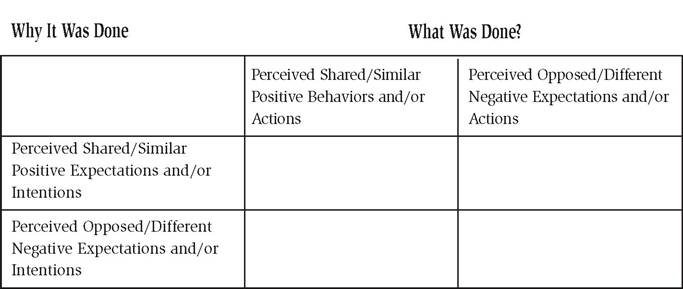
Figure 29.2 Between-Persons Cultural Grid
Source: P.
Pedersen (2004) 110 Experiences for multicultural learning, Washington DC, American Psychological Association p. 217.identify the presence of shared positive expectations for trust, respect, fairness, and so on, which may be expressed through quite different behaviors. This second quadrant is the ideal context for multicultural conflict resolution to occur, focusing primarily on the shared positive expectation or intent and only secondarily on different behaviors.
In the second quadrant, two people may both share the positive expectation of TRUST but one may be loud and the other quiet; they may share RESPECT but one may be open and the other closed; they can both believe in FAIRNESS but one may be direct and the other indirect; they may value EFFICIENCY but one may be formal and the other informal; they can seek EFFECTIVENESS but one may be close and the other distant; or they may want SAFETY but one may be task oriented and the other relationship oriented. Each example of common ground becomes a “plank” in building a “platform” and only when the platform is strong enough for both conflicting parties to stand on it and be assured that there is at least a potential for developing friendship with this former enemy can the discussion shift to which behaviors are most likely to achieve the shared common-ground outcomes valued by both parties. Only when each behavior is assessed and understood in its own cultural context does that behavior become meaningful. Only when positive shared expectations or intentions can be identified will two individuals or groups be able to find common ground without sacrificing cultural integrity.
Why have sports groups so frequently been culturally inclusive? Because players from different cultures all share the positive expectation of winning. Why did business communities in the Ottoman Empire of the Middle East include Christians, Muslims, and Jews working in harmony? They all shared the positive expectation of making money.
Why do battle groups successfully integrate soldiers from different cultural backgrounds? They share the positive expectation of staying alive. During the bloody race riots of 1968 in Malaysia I was driving an ambulance because Caucasians were the only group not being attacked. In one trip carrying supplies to the government headquarters I saw the heads of the Malay, Indian, and Chinese political parties playing cards to pass the time. They shared a positive expectation for the future.In the third quadrant, the two persons have the same behaviors but now they have different or negative expectations or intent. The similar behaviors give the “appearance” of harmony and agreement through displaying the congruent or desired behaviors, but the hidden different or negative expectations or intent will ultimately destroy the relationship. Although both persons are now in disagreement, this may not be obvious or apparent to others. One person may continue to expect trust and friendliness while the other person is now negatively distrustful and unfriendly, even though they are both presenting the same smiling and glad-handing behaviors. If these two people can be guided to remember an earlier time when they shared positive expectations they might be able to return to the second quadrant and reverse the escalating conflict between them. If the difference in expectations is ignored or undiscovered, the conflict will ultimately move to the fourth quadrant.
The fourth quadrant is where two people have different and/or negative expectations or intent and they stop pretending to be congruent. The two persons are at war with one another and may not want to increase the harmony in their relationship any longer. They may just want to hurt one another. Both persons are in disagreement and that disagreement is now obvious and apparent. This relationship is likely to result in hostile disengagement. It is very difficult to retrieve conflict from the fourth quadrant because one or both parties have stopped trying to find shared positive expectations.
Unfortunately, most conflicts between people and groups remain undiscovered until reaching the fourth quadrant. An appropriate prevention strategy would be to identify the conflict in behaviors—as indicated in quadrant two—early in the process when those differences in behaviors might actually be a positive resource (as long as there is a context of shared positive expectations) allowing both parties to build on the common ground they share without forcing either party to lose integrity.Each cultural context is complicated and dynamic, influenced by many cultural teachers from the individual’s cultural context, who take turns being salient according to the time and place. An awareness of one’s cultural identity requires being able to recognize how each action is the expression of specific expectations, how each expectation developed from specific values, and how each value was learned from one or more cultural teachers in the cultural context.
Some Case Examples Applying the Cultural Grid
Think of your “best friend” and ask yourself if your best friend is similar to you in her/his behaviors, dress, talking, working, and other ways. Typically, you may find great differences in behaviors between you and your best friend. If a total stranger said or did to you what your best friend does would it be acceptable? Typically, it would not be acceptable. However, because you share the common ground, positive expectation of “best friend,” differences of behavior become less troublesome and can even enhance the relationship.
A man sits next to you on an airplane seeming very anxious, constantly walking around the plane and looking at the other passengers. You become concerned and ask if he has a problem. He responds saying “birds!” and continues his strange behavior. You ask him twice more during the flight if you can help and he responded in a similar unrelated manner. As the flight lands the man turns to you and explains that he is a federal marshal who had information there may be a problem on this flight so he needed to survey the passengers.
He had been trained to discourage distracting conversation with other passengers by responding in a single and totally unrelated word. While the man’s behavior might have been very different from yours, you shared the common ground of “safety.”A couple comes to you who plan to divorce one another. As long as you talk about changing the husband’s or wife’s behavior, the conflict continues to escalate. However, when you ask them to discuss how they first met and fell in love they are able to “build a platform” of positive memories that provide the common ground on which to “stand” and rationally discuss whether or not they should proceed with their divorce.
Yoo (1996) presents one of the twenty-three case examples using the Cultural Grid to resolve conflict in Jandt and Pedersen (1996). “Hyundai Resources Development Company had a contract for logging operations in the old-growth boreal forests of the Russian Far East. International environmentalists planned to stop Hyundai’s logging operations. A Korean nongovernmental organization, the Citizen’s Coalition for Economic Justice (CCEJ), was pressured by international environmentalists to intervene” (p.145). The turning point in negotiations with the Hyundai chairman, who was a presidential candidate in the Korean government, occurred when he was reminded that these forests were the last refuge for the Korean tiger, which is the chairman’s political party mascot. The common ground for both sides became the protection of the Korean tiger, but for entirely different reasons.
More on the topic APPLYING THE CULTURAL GRID TO INTERPERSONAL CONFLICT:
- APPLYING THE CULTURAL GRID TO INTERPERSONAL CONFLICT
- References
- References
- References
- TRAIT APPROACHES