SEVEN WORKSHOP MODULES
With this overall learning perspective in mind, we will present a description of the seven modules of the Coleman Raider workshop training with accompanying pedagogical commentary.
Focus on each of the seven modules in the training sequence is adjusted according to the learning objectives of the audience.Module One: Overview of Conflict
The first module presents an overview of conflict. The focus is on exploring the participants’ existing attitudes. The exercises chosen are intended to create internal conflict within each participant, so that he examines his own attitudes toward conflict, competition, and collaboration. The main activities include a diagnostic case, a physical game, and an interactive video-based mini lecture illustrating various methods of conflict resolution.
Collaborative negotiation and mediation are introduced by locating them along the spectrum of conflict resolution approaches that range from avoidance to war.
If your general strategy is...
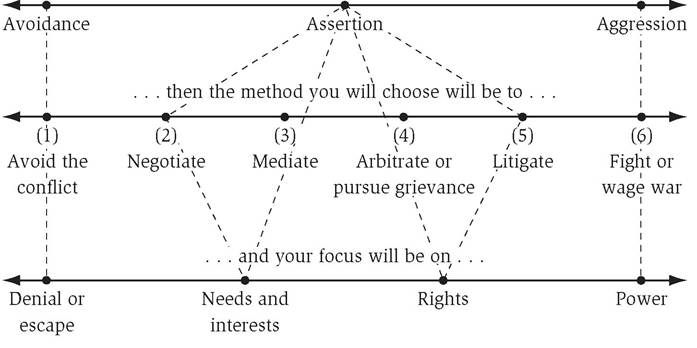
Figure 31.1 Coleman Raider Conflict Resolution Continuum
Source: Copyright © 1992, 1997 E. Raider and S. Coleman. Permission has been given for use in The Handbook of Conflict Resolution. Other use is prohibited without written permission of the copyright holder.
Both negotiation and mediation are explained as consensual alternatives that focus on the parties’ underlying needs and interests and require their buy-in to try to reach an agreement. This is contrasted with quasijudicial and power-based methods such as arbitration, litigation, or war. (See Figure 31.1.) In the mini lecture we connect these strategies to important theories, such as Deutsch’s Crude Law (see Chapter One) and the dual-concern model (see Chapter Fifteen).
A diagnostic case is the first experiential learning exercise.
Small groups of four to six people are divided in half to represent each side of the dispute. The groups negotiate for twenty-five minutes—competitively for ten minutes, then collaboratively for fifteen. A frequently used diagnostic situation, the “Ossipila Case,” is a conflict between international developers who, with local government backing, want to strip-mine on the ancient farmland used by villagers (who have support from environmental groups).The exercise is recorded on audio (or video) and played back to the small groups; it is also used in module three for an in-depth analysis of negotiation behavior. There is a short debriefing immediately after the exercise.
The diagnostic case serves six functions:
1. It immediately involves both skeptics and believers in our process.
2. It generates a baseline assessment for participants to discern those specific skill areas they need to work on during the rest of the training.
3. It brings out the inherent discrepancy between what we propose and what participants are actually doing.
4. It demonstrates that the learning exercises in the workshop are highly participatory.
5. It allows learners to experience the difficulty of switching from one negotiation strategy to the other, as well as the possible consequences of each approach.
6. It initiates a positive atmosphere of shared learning.
The power of this experience comes from the direct challenge to the participants’ views of competition and collaboration. As they listen to themselves and hear the group’s feedback, the participants contrast their behavior with their own implicit theories and self-perceptions. This creates a discomfort that is the pivotal stimulus for change during the training. We have found that even if people cognitively grasp the principles of collaboration and want to use them, many will still act out a competitive or avoidant orientation without further practice and motivation to change.
Module Two: The Elements of Negotiation
In module two, the goal is to introduce a framework we call the elements of negotiation.
The elements serve as the underlying grammatical structure of a negotiation. Just as parsing a sentence for verbs, nouns, and adjectives fosters understanding in any language, so too understanding the elements of negotiation fosters analysis of a conflict prior to and during a negotiation. We identify six structural elements: worldview, climate, positions, needs and interests, reframing, and bargaining “chips” and “chops.”One’s deeply held beliefs, attitudes, and values comprise a worldview. They are derived from one’s culture, family, and other important groups with which one identifies. Worldview is a central component of one’s identity. It is almost always nonnegotiable, although it can change over time.
Climate is the mood of the negotiation. It reflects the competitive or collaborative orientation of the parties in the negotiation.
Positions are the specific demands or requests made by each party as negotiation commences—the party’s preferred solution to the conflict. If someone is competitive in her orientation, she may inflate her position or state it as non- negotiable. A collaborative approach requires positions that are specific, clear, and honest with respect to negotiability.
Needs and interests are what each negotiating party is looking to satisfy. If the position is “what you want,” the need is “why you want it.” Collaboration sometimes requires sorting through layers of positions and needs to arrive at a place where both sides’ salient needs can be adequately addressed and met.
Reframing is a way to refocus the conflict issue on needs—not positions. It is essentially the question how can we satisfy the priority needs of the parties to the conflict?
“Chips” and “chops” are bargaining offers or threats that each side can use to influence the negotiation. Chips are positive “need satisfiers” that one side proposes so as to meet the needs of the other. They are effective only if perceived as valuable by the other party while also not undermining one’s own interests.
Chops are negative “need thwarters,” such as threats or insults. They may be useful to counter threats or to level a power imbalance between the disputants. However, they can encourage competition and undermine the trust needed for collaboration, so we discourage their use.This shared frame of reference, with its common language, becomes a tool to make clear what the students often know intuitively. They learn to analyze the elements of each conflict presented and to use this analysis to prepare for negotiation. A key learning goal is to be able to distinguish needs from positions and to reframe conflict from a competitive clash of positions to collaboration based on understanding and acknowledgment of underlying needs and worldviews. The theoretical discussion underlying reframing in Chapter One of this book constitutes the intellectual context of our emphasis here. The main learning activities include analysis of simple or complex cases to practice recognition of needs, positions, and reframing (see Figure 31.2) and use of the elements as a prenegotiation planning tool. We describe an example shortly.
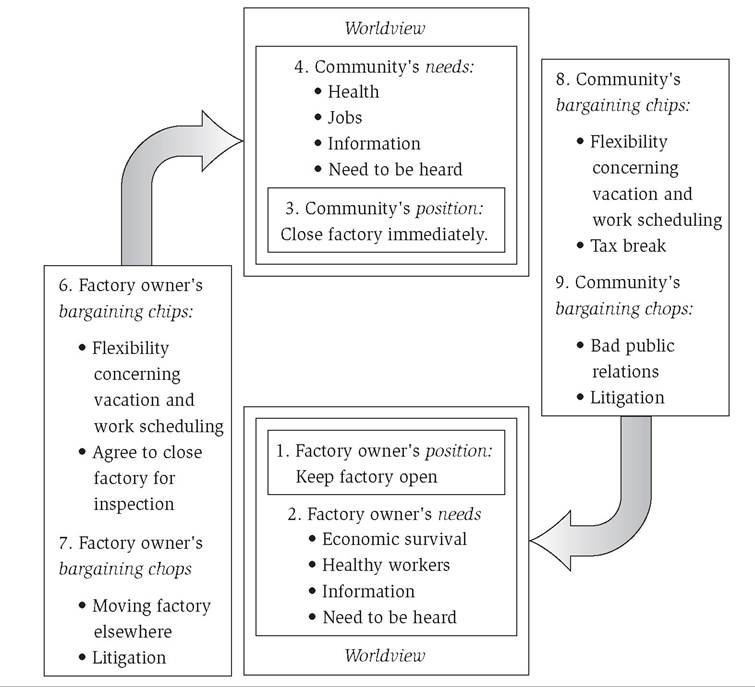
After a mini lecture explaining the elements, the trainers lead the group through analysis (using a form similar to Figure 31.3, the “negotiation planning
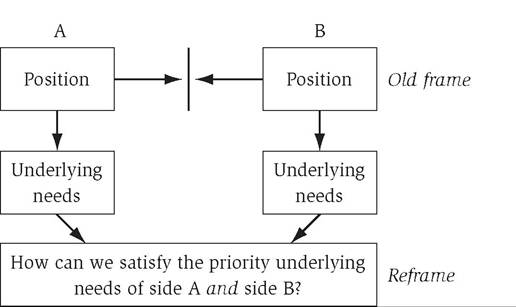
Figure 31.2 Coleman/Raider Reframing Formula
Source: Copyright © 1992, 1997 E. Raider and S. Coleman. Permission has been given for use in The Handbook of Conflict Resolution. Other use is prohibited without written permission of the copyright holder.
5. Reframe
How can we clear up the source of the symptoms and keep the factory and the economy of the town financially viable?
Figure 31.3 Coleman Raider Negotiation Planning Form: “A Community Dispute”
Source: Copyright © 1992, 1997 E. Raider and S. Coleman.
Permission has been given for use in The Handbook of Conflict Resolution. Other use is prohibited without written permission of the copyright holder.form”) of a conflict presented in two parts on video. Part one shows a heated conflict, and part two shows one possible resolution. Using a video to display the conflict grounds the discussion in a specific real-world context. The choice of which case to use is an important design decision and is made with understanding of its suitability for a particular client group. One case, “A Community Dispute,” has proved useful in many contexts, so we briefly describe it here to illustrate the definitions given earlier.
The mayor of Centerville has called a meeting to address citizen complaints that a factory in the town is emitting powerful toxins that are causing respiratory illness. The owner of the chemical plant, the town’s main employer, is present, as are three members of Concerned Citizens of Centerville (made up of plant workers and community members). The mayor cautions that the cause of the illness is as yet undetermined but announces that the results of a preliminary environmental report require the factory to close for one week to see if it is the source of the problem.
As the video begins, it is not immediately clear whether this conflict is a clash of worldviews or an apparent conflict of interests. Assumptions abound, however, during class discussion. Is the factory owner a “greedy capitalist” unconcerned with the well-being of the town? Are the concerned citizens merely “environmental crazies” out to destroy the factory, as the owner implies? The workshop discussion generated by the ambiguity helps participants distinguish among position, interest, and identity-based conflict and to better understand the concept of worldview.
In part one of the video, the climate is very hostile and competitive. The disputants interrupt, yell, contradict, and accuse one another as well as make it clear that each side sees the other as unreasonable.
The position of the community group is to close the factory immediately. The owner’s counterposition is to keep the factory open, and he asserts that his plant is not causing the infections.Through analysis, the class members come to understand that the community needs health and jobs. The owner needs to protect the economic viability of his factory and healthy workers to run it. In addition, all have the need for accurate information about the source of the infections, as well as having their perspective acknowledged and understood. Much common ground is uncovered in what initially appears to some as a worldview clash. The rhetoric of the competitive climate simply makes it difficult to see what calm analysis reveals.
After part one, the trainers lead the class in forming a reframing question. When they view part two of the video, they are able to compare their own reframe with the one used by the mayor: “How can we clear up the source of the symptoms and keep the factory and the economy of this town in good shape?”
In part one, community members’ chops include the threat to take the environmental report to the local newspapers, thereby undermining the factory owner’s reputation and bottom line. Among the owner’s chops is the implied threat to move the factory to another town, taking jobs with him.
In part two, after hearing the mayor’s reframing question, the group exchanges chips. At the psychological level, both sides listen to one another as they meet their mutual needs for respect and understanding. On the tangible level, the chips from the worker-and-community side are the workers’ willingness to take paid vacation time all together during the same week in July and an agreement by the community to consider a tax break if the inspection finds that the factory is not the source of the problem. The factory owner’s chips include his willingness to close the factory for the inspection and to be flexible concerning the workers’ vacation and work scheduling.
After analyzing the video, the participants divide into dyads to continue practicing the skills of identifying positions and needs and forming reframes, using a series of small cases. Through repetition, these drills pose the opportunity to try, err, and retry applying cognitive learning until learners thoroughly understand the skill. Mastery may or may not occur during the workshop. We hope that sufficient value and understanding are experienced so that the learning can continue to be practiced and applied in the participants’ lives.
The participants then use a similar format (see Figure 31.3) as a planning tool for further conflict simulation. The planning process helps each party not only clarify its own side of the conflict, but also begin to understand the other side better. We caution participants that identifying the other’s positions, needs, and so on can only reveal party A’s assumptions about party B and vice versa and that these assumptions must be tested during the upcoming negotiation. We also ask parties to think of all their chops, and the other’s, in this planning process so they can prepare not to use or react to them negatively, which would nullify the attempt to be collaborative.
Module Three: Communication Behaviors
In an ideal collaborative negotiation, each side thoroughly communicates its perspective and arrives at an understanding of the other side. In reality, the unique and particular worldviews of individuals and groups often make our interactions very complicated. Even though two people speak the same language and know each other well, they may feel that they do not really understand one another. Furthermore, conflict can exacerbate misunderstanding. When our buttons are pushed, our ability to communicate can become quite imprecise and problematic.
To develop collaborative skills and enhance understanding of the communication process, we introduce a second frame, which is grounded in a research tool known as behavioral analysis (Rackham, 1993; Situation Management Systems, 1991). We identify five communication behaviors that occur during negotiation:
1. Attacking
2. Evading
3. Informing
4. Opening
5. Uniting
The mnemonic for these behaviors is the familiar English language vowel series AEIOU. These categories encompass nonverbal as well as verbal communications. We employ only these five types of communication behavior because they amount to an easily learned framework for understanding core communication behavior in conflict.
At the beginning of the module, the trainers present and role-play a two-line interchange. An example of a context-relevant mini skit frequently used with groups of managers is an employee reminding his boss about his upcoming vacation. Each time the interchange is repeated, the boss responds by demonstrating another behavior. The trainers elicit from the group a description of the kind of behavior they are observing. Then the trainers label the behavior:
• Attacking (A) includes any type of behavior perceived by the other side as hostile or unfriendly: threatening, insulting, blaming, criticizing without being helpful, patronizing, stereotyping, interrupting, and discounting others’ ideas. It also includes nonverbal actions such as using a hostile tone of voice, facial expression, or gesture.
• Evading (E) occurs when one or both parties avoid facing any aspect of the problem. Hostile evasions include ignoring a question, changing the subject, not responding, leaving the scene, or failing to meet. Friendly or positive evasions include postponing difficult topics to deal with simple ones first, conferring with colleagues, and taking time out to think or obtain relevant information.
• Informing (I) includes behavior that, directly or indirectly, explains one side’s perspective to the other in a nonattacking way. Information sharing can occur on many relevant levels: needs, feelings, values, positions, or justifications.
• Opening (O) invites the other party to share information. It includes asking questions about the other’s position, needs, feelings, and values (nonjudgmentally); listening carefully to what the other is saying; and testing one’s understanding by summarizing neutrally what is being said.
• Uniting (U) emphasizes the relationship between the disputants. This behavior sets and maintains the tone necessary for cooperation during the negotiation process. The four types of uniting behavior are (1) building rapport, (2) highlighting common ground, (3) reframing the conflict issues, and (4) linking bargaining chips to expressed needs.
After a presentation of AEIOU, the class returns to the small groups that were formed for the diagnostic case in module one. The participants listen to the audio (or video) of the case. Together they fill in an AEIOU coding form
Table 31.1. Coleman Raider AEIOU Coding Sheet (abridged)
Negotiating Styles
Attack: threats, hostile tones or gestures, insults, criticizing, patronizing, stereotyping, blaming, challenging, discounting, interrupting, defending
Evade: ignore, change subject, withdraw, postpone, table issue, caucus
Inform: reasons, justifications, positions, requests, needs, underlying positions, feelings Open: listen quietly, probe, ask questions nonjudgmentally, listen actively, paraphrase, summarize understanding
Unite: ritual sharing, rapport building, establish common ground, reframe, propose solutions, dialogue or brainstorming
Source: Copyright © 1992, 1997 E. Raider and S. Coleman. Permission has been given for use in The Handbook of Conflict Resolution. Other use is prohibited without written permission of the copyright holder.
(see Table 31.1) by identifying each comment as an attacking, evading, informing, opening, or uniting behavior. Within their groups, each member receives very specific feedback on how his or her statements are perceived. Importantly, the type of behavior is identified by its impact on the receiver rather than by the intent of the speaker.
Each group has its own insights and, as a result, is often motivated to try on new skills after people hear how they themselves sound. They also learn to give safe feedback by focusing on the impact the behavior has on them, rather than assuming the intent of the sender. Self-awareness is also heightened when a speaker finds that her actions have an unintended effect. This disparity gives her the opportunity to clarify or rectify her message. It also gives her a chance to think of how she generally comes across to others. It is clear from the debriefing of this exercise that the participants learn about the complexity of the communication process and its importance in maintaining a collaborative process.
We believe that for most trainees this experiential learning is necessary, beyond cognitive understanding, for behavioral changes to take place. Multiple skills exercises combined with personal feedback motivate learners to produce the effort needed to change conflict behavior habits (Raider, 1995). Learners often describe this part of the course as a life-changing event. But because we know how difficult it is to integrate these skills and change one’s behavior, we believe that continued learning requires a supportive postworkshop environment, heightened self-motivation, and follow-up programs wherever possible. Empirical research into the long-term effect these workshops have on participants, in the context of supportive or resistive environments, would be very helpful.
Module Four: Stages of the Negotiation
For life and for training purposes, we think it is useful to have a sense of the general order of an ideal collaborative negotiation. Even though there is usually a back-and-forth flow to the negotiation process, it is useful to break it down into stages for training purposes. In module four we posit four stages:
1. Ritual sharing
2. Identifying the issues (positions and needs)
3. Prioritizing issues and reframing
4. Problem solving and reaching agreement
Although we present the stages linearly, we acknowledge that unless both parties want to be collaborative and are equally competent in collaborative skills, most real-life negotiations do not follow this simple pattern. However, this is not to say that they cannot.
The mini lecture by the trainers starts this segment, using a video of a rehearsed “bare-bones” negotiation (see Figure 31.4): one in skeletal form that places each element and behavior in its ideal spot within the framework of the four stages.
Ritual sharing involves preliminary and often casual conversation to build rapport, establish common ground, and pick up critical background information (such as the other’s values), which may affect the negotiation. Uniting behavior predominates during this stage.
Identifying the issues has two phases: identifying the positions that frame the conflict and clarifying the needs that drive them. Informing and opening behaviors predominate during this phase, the first being used to tell where you are coming from and the second to understand the other.
Prioritizing issues and reframing has two parts. Prioritization is needed if there is more than one key issue, and an order must be established (through a mini negotiation) for manageable problem solving. Reframing invites the parties to engage in creative problem solving around needs. It is characterized by a neutral and inclusive question, such as how can we satisfy the needs of A while also satisfying the needs of B?
Problem solving and reaching agreement, the final stage, are characterized by brainstorming (using the informing, opening, and uniting behaviors) that facilitates fresh, novel solutions to the now shared problem. Humorous and even apparently absurd ideas are encouraged because they increase open-mindedness and often inspire clever solutions. Uniting and opening behaviors are used to diffuse any perceived attacks, highlight common ground, and reiterate the objective: to find mutually satisfying solutions. The negotiators then choose from the
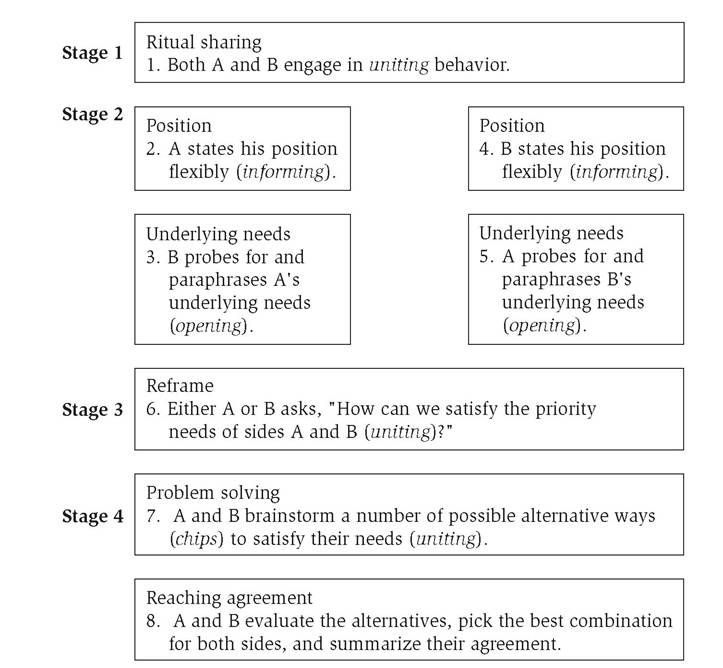
Figure 31.4 Coleman Raider “Bare-Bones” Model.
Source: Copyright © 1992, 1997 E. Raider and S. Coleman. Permission has been given for use in The Handbook of Conflict Resolution. Other use is prohibited without written permission of the copyright holder.
brainstormed list those solutions that are feasible and timely and that optimize the satisfaction of each party’s needs and concerns. Success depends, in part, on maintaining a continued collaborative, positive climate that encourages creativity.
As stated earlier, the trainers present the stages as a linear progression, but real-life negotiations rarely flow so predictably. A good negotiator develops the ability to identify the essence of each stage to diagnose whether the essential tasks embedded within it have been accomplished and to feel comfortable with the surface disorder. As certain needs are addressed, others may surface. Recognition and processing of all of these needs is necessary for a good and sustainable agreement.
After the stages have been covered, participants practice their own bare- bones negotiation. Trainers explain metaphorically that this is more like a map of the territory than the territory itself. As with maps, we must make a mental leap from a symbolic portrayal to what is seen when navigating the real landscape. The more clearly the underlying structure and process of bare bones are embedded in our thinking, the more effectively we as negotiators can deal with the variations that occur in actuality.
The bare-bones framework is the most prescriptive in our training. Therefore, great caution has to be used by the training team to make sure that examples used to illustrate this module are context-relevant in form and substance, so that the model is seen as doable in various cultural contexts. The participants analyze conflict cases taken from their own lives and then present a skeletal and ritualized performance in front of the whole group (see Table 31.1). Each step is abbreviated, thus revealing whether the role players really understand the essence, or bare bones, of the conflict. The trainer coaches the role-players and gives feedback at each point of the process. It is in this way that the role-players and other participants begin to internalize all the previously learned material.
Module Five: Culture and Conflict
From its inception, our training model has woven the topic of culture throughout the process of teaching and learning negotiation skills. Our original audiences were made up of managers from multinational organizations eager to learn how to negotiate across borders. Building on the work of Weiss and Stripp (1985), Hofstede (1980, 1991, 2001), Ting-Toomey (1993, 1999, 2004), and others, we facilitated the trainees’ learning through readings, video clips (for example, “Going International, Part Two,” Griggs, 1983; The Multicultural Workplace, Wurzel, 1990; Cross-Cultural Conference Room, Wurzel, 2002), and role-plays to understand and internalize cultural variables such as high- or low-power distance, high- or low-communication context, individualism or collectivism, uncertainty avoidance, and polychronic or monochronic time.
One role-play exercise has been particularly instructive and enjoyable for the participants. The group is divided into small groups of four. One pair from the foursome is instructed to create a fictitious cultural ritual based on the Hofstede dimensions. The other pair comes to the role-play unaware that they are entering a “new culture” and, as a result, experience a simulated form of culture shock as they interact with the classmates who have taken on different persona. The experience is videotaped and then reviewed by each foursome, with much laughter. The educational point is made that it is ideal to know the rules and norms of another culture and, at a minimum, to avoid negative judgments in order to have a successful negotiation.
Video clips and exercises like this are debriefed by using our “filter check model” (see Figure 31.5). For example, one of the video clips from “Going International,
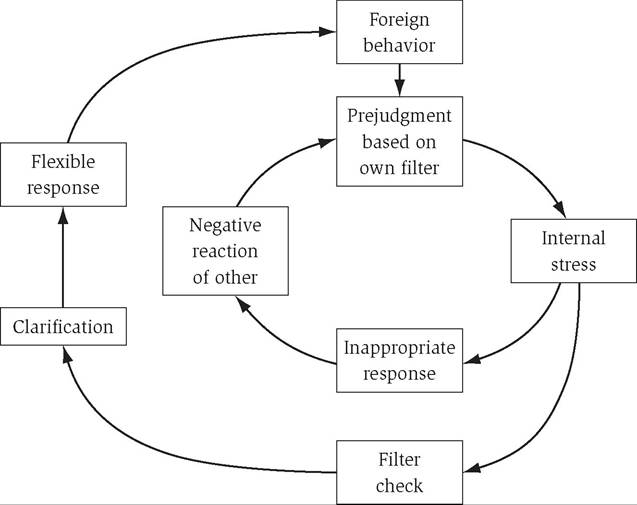
Figure 31.5 Coleman Raider Filter Check Model.
Source: Copyright © 1992, 1997 E. Raider and S. Coleman. Permission has been given for use in The Handbook of Conflict Resolution. Other use is prohibited without written permission of the copyright holder.
Part Two” shows a businessman from the United States (Mr. Thompson) waiting for his Mexican counterpart (Sr. Herrera) in an outdoor cafe in Mexico City. Mr. Thompson reacts negatively to the late arrival of Sr. Herrera (to whom he is trying to make a sale), apparently assuming the lateness is some form of disrespect or power play.
The video captures elegantly and with humor how monochronic and poly- chronic2 individuals can misunderstand each other. Sr. Herrera, the polychronic of the two, is late because he is greeting important people along the way. He also does not want to get down to business until he has gotten to know something about the man with whom he is doing business. Mr. Thompson, though, is driven by the task, always looking at his watch and pushing to get the contract signed—so then he can go out and have a good time!
By working through the filter-check chart, participants come to see that the misunderstanding displayed is based on cultural assumptions (filters) of the meaning of time, task, and relationships. Neither way is the right way; they are just different. Of course, it is noted that “when in Rome, do as the Romans do,” certainly so if you are in a lower power position, as a seller typically is relative to a buyer.
For audiences of educators, we use role-play simulations such as Melting Pot or Salad Bowl to surface issues of class, race, and gender. The disputants in this case are two groups: the Black Teachers Caucus (BTC) and the predominantly White school governance committee at an urban high school in New York City. (This case is based on a real conflict mediated by Raider; it is also discussed in the Introduction and Chapter One of this volume.) The BTC demands a Black seat on the governance committee, claiming that the student population is predominantly “of color.” The governance committee rejects this demand for a “race-based” seat, countering that representation should be by academic department, not by racial or ethnic identity group.
One way to use this case is to divide a group of four into sides A and B. In round one of the negotiation, each side presents its point of view while the other side tries hard to listen and paraphrase the underlying needs it is hearing. In round two, sides A and B switch and repeat the negotiation, following the model of academic controversy (Johnson and Johnson, 1987). This technique helps not only to move the conflict toward resolution but to get participants to realize how difficult it is to step into the shoes of the other side. This technique might be unworkable if the gap in worldview’s is too vast perhaps due to the participants’ emotional attachment to the issues or their inability to take another’s perspective.
Module Six: Dealing with Anger and Other Emotions
To effectively work with emotions that arise during conflict, a negotiator must have good listening, communication, and problem-solving skills. This section outlines how these skills can be employed to direct emotions into a positive and productive component of the negotiation process. Anger is our main focus because it presents one of the biggest challenges to resolving conflict.
A Philosophy for Dealing with Anger. The philosophy we present to participants is that if someone blames you, states his position inflexibly, confronts you, or attacks you:
1. Avoid the defend-attack spiral and ethnocentric and egocentric responses. Assume that the other has a perspective different from yours and that you need to find out where he is coming from.
2. Listen actively. Your needs are more likely to be heard by the other if he knows through your active-listening behavior that you have understood his needs.
3. Continue to change the climate from competition to cooperation by acknowledging that there are differing perspectives at play, each with part of the truth.
4. Work with the other as a partner to solve the problem.
To build awareness on this topic, participants read an essay in the training manual covering such topics as the relationship of anger to unmet needs, anger as a secondary response that masks more vulnerable emotions, the attack-defend spiral, and additional destructive and constructive responses. Sometimes in the workshop participants form groups of four to discuss the essay. Members offer examples from their own lives, sharing situations in which they themselves were angry or were dealing with another person’s anger.
Skills Practice. A key exercise we use in building skills in this area is a round-robin, with one side of each negotiation team working competitively and the other collaboratively, and with one side moving from group to group and the other staying put. In the first round, the traveling partners are competitive. This means they can use attacking and evading behaviors to act angry, patronizing, and unfair. They are encouraged to make their attacks personal if possible. The stationary partners take on the role of skilled collaborative negotiators. They work to change the climate by using predominantly opening, and some uniting, behaviors to draw out the needs, feelings, and concerns of the others. This round lasts for ten minutes. The goal of the exercise is not to reach an agreement but simply to build readiness for negotiation by changing the climate. In the second round, all the traveling pairs rotate to the next table. The group reverses roles so that the stationary pair is now competitive and the traveling partners are collaborative. In the final round, the traveling pairs move to a third table, where a new foursome attempts to solve the conflict by having both sides use collaboration.
The whole group debriefs after each section so that the participants learn as they proceed. The rounds are often tape-recorded for review. The trainers guide the discussion with questions: “How did the emotions affect the process?” “Were the negotiators able to draw out emotions, unexpressed perspectives, and underlying needs?” “Were they able to create distance between the other’s position and needs in their paraphrases?” and “What could they have done better?”
In this exercise, participants experience how difficult it can be to manage another’s attacks, emotions, and blaming behavior. Many acquire the insight that people have little control over someone else’s responses apart from developing their own collaborative skills. This is when they become “consciously incompetent”—beginning to know what they don’t know. We consider this an important learning milestone because handling another’s anger is a common motivating concern for participants coming to the workshop. This exercise further motivates them to develop their own skills of listening and “going to the balcony,” or rising above the conflict to see it objectively from all perspectives (Ury, 1993).
Module Seven: Introduction to Mediation
In the Coleman/Raider model, we often introduce a brief, one-hour overview of mediation in our three-day workshop. The longer version teaches mediation skills. Here we briefly discuss the longer program (see Figure 31.6).
The negotiation model already learned forms the framework for understanding mediation. We might move into the mediation segment of the program by asking participants to create a model for mediation based on what they already know about collaborative negotiation. This task is surprisingly simple as students realize how closely mediation is related to negotiation.
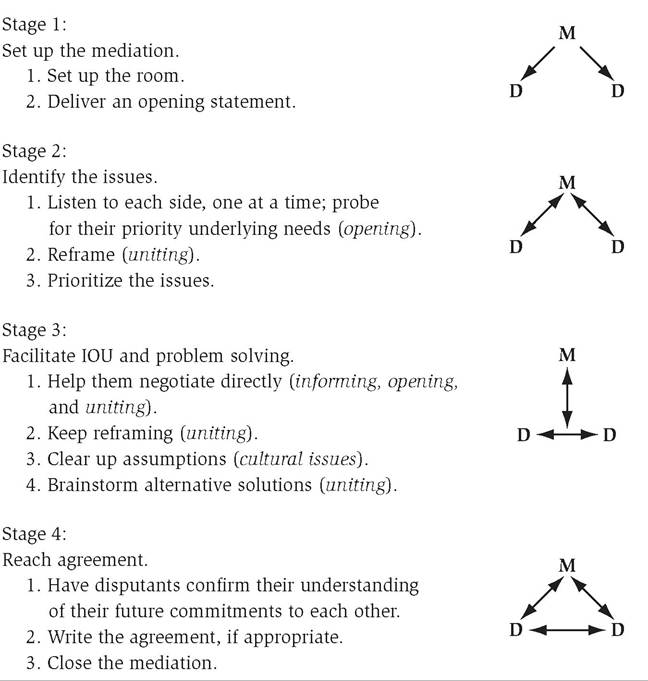
Figure 31.6 Coleman Raider Mediation Model.
Source: Copyright © 1992, 1997 E. Raider and S. Coleman. Permission has been given for use in The Handbook of Conflict Resolution. Other use is prohibited without written permission of the copyright holder.
Participants are introduced to four stages of the mediation process (which almost parallel negotiation): (1) setting up the mediation, (2) identifying the issues, (3) facilitating informing, opening, and uniting (IOU) behaviors, and (4) problem solving and reaching agreement. The vehicles used to practice these stages are skill practice and role-playing, the latter constituting the bulk of the activity.
The role-plays offer the participants the opportunity to practice everything learned in both the negotiation and mediation segments of the course. Each mediation stage is practiced in trios, rotating the role of mediator. In debriefing, the mediator receives feedback from the trainers and the disputants themselves— how they felt the mediator moved or blocked the process, and how specifically the mediator could have helped their role-play character. (For further discussion of mediation, see Chapter Thirty-Two.) Cases are either furnished by the trainers or elicited from the audience. In addition to small-group mediations, trainers may facilitate the role-plays in the center of the room, fishbowl style, with the class watching. Audio- or videotape is often used in various ways and in any segment of the program.
Throughout the program, trainers present numerous videos of experienced mediators, each with a distinctive style. These show differences in pacing, amount of questioning or silence, and a variety of techniques. The message we intend to impart is that there is no one right way to mediate. We present our model like training wheels on a bicycle: as soon as the learner-mediator grasps the process, he can begin to discover how to make it his own.
Relevant topics (such as caucusing, shuttle diplomacy, getting the parties to the table, organizational context, and culture) are discussed at intervals throughout the program. Prepared videos are used wherever available and relevant to elaborate on these topics and enrich the participants’ learning.