Social Ecological Layers: Analytical Levels
More specifically, in utilizing a social ecological multilevel theoretical framework, there are four levels of research analytical units: macro-, exo-, meso-, and microlevel analysis.
Brofenbrenner (1979) viewed these four social ecological contexts as nested Russian dolls with reciprocal causal effects influencing each sphere (see Figure 29.2). The “macrolevel” analysis refers to the larger sociocultural contexts, histories, worldviews, beliefs, values, and ideologies that shape the individual outlooks and the various embedded systems under this broad umbrella. The “exolevel” (i.e., external environment emphasis) analysis refers to the larger, formal institutions (e.g., government agency system, courtroom system, police system, religious institution, health care system, or school system) that hold power resources and established personnel (with clear roles and responsibilities) to create, enforce, or modify policies and standards and to execute institutional rulings or doctrines that shape the various conflict ideologies, viewpoints, and experiences.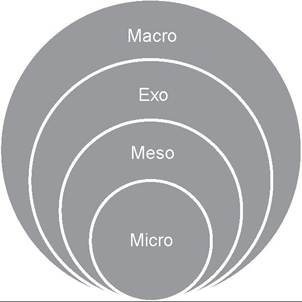
Figure 29.2 Social Ecological Framework of Primary Orientations
The “mesolevel” analysis refers to the immediate units’ influence such as a local neighborhood, a local church group, an extended family unit, and a workplace setting that have some direct or indirect informal impact on the developmental conflict interactions. Finally, the “microlevel” analysis refers to both the intrapersonal-level (i.e., individuated and sociocultural identity-based issues on the personal level, meanings, attributions, and conflict emotions) and interpersonallevel features (e.g., the ongoing team conflicts, conflict eyewitnesses, or the actual face-to-face or mediated conflict encounters) plus the actual physical settings in which the individuals live out their daily lives. It also emphasizes the importance of how individuals can act as active agents to construct or reframe meanings and interpretations of a given intercultural conflict communication event.
In addition to the macrosystem, exosystem, mesosystem, and microsystem of analysis, Brofenbrenner (1979) also later added a fifth context, the “chronosystem level” of analysis, which refers to the evolution phases, transitions, patterns, and consequences of developmental conflict changes over time. Unfortunately, the chronosystem level of analysis concerning longitudinal conflict development in different conflict settings has been a sorely understudied area.In addition, the mass media occupies an interesting position in the social ecological model. While the traditional mass media (e.g., BBC news, CNN news) can be located at the exolevel of social institutional level of influence (e.g., in some countries, the governments run and control the media broadcasts, and in other countries, the media may occupy a more informal yet still widespread persuasion role). Alternatively, the contemporary social media role can also be located at multiple levels of analysis (e.g., on the exo-, meso-, and microlevel), depending on how the social media is being used (institutionally, communally, or interpersonally) and in what particular layered relational and spatial situation. These exo contexts often have filtered (as vs. direct) influence on the community-level or individual-level conflict responses and reactions. However, with the prevalence of social media usage (e.g., Twitter, Facebook) via both filtered and direct channels on a global scale, researchers using the social ecological framework may need to develop additional theoretical lens to account for the role of social media or new media on conflict communication.
More on the topic Social Ecological Layers: Analytical Levels:
- Oetzel John, Ting-Toomey Stella. The SAGE Handbook of Conflict Communication: Integrating Theory, Research and Practice. SAGE Publications,2013. — 912 p., 2013
- IMPLICATIONS FOR TRAINING