Summary
The study of knowledge structures continues to provide important insights into conflict. Moreover, the methods being used are becoming more sophisticated (e.g., longitudinal designs are common as are dyadic designs), and research seems more theory based.
However, each area remains segregated with little awareness of how the various forms of social knowledge might be interrelated. To some degree, the boundaries between the constructs seem fuzzy. For example, there are elements of beliefs embedded within cognitive scripts, and scripts might themselves be part of conflict frames and problem appraisals. Assuming that the constructs are indeed mutually exclusive, it is unclear how the various constructs might be related to one another. So we do not know the extent to which beliefs increase the likelihood that certain conflict frames and problem appraisals will emerge.Figure 5.1 contains a tentative, descriptive model that demonstrates the interdependency among the structures. It has three important features. First, beliefs, scripts, partner memory, and rules constitute specific elements that should be related to general conceptions of a conflict, such as how it is framed and appraised. Second, all variables are intercorrelated. Hence, specific elements could influence and are influenced by each other (e.g., scripted actions can become part of partner memories, which in turn influence scripts), and the same is true for general conceptions (i.e., how a conflict is framed can influence how it is appraised, and vice versa). Finally, specific elements can influence general conceptions of a conflict, and the frame and appraisal of an interpersonal conflict are experiential elements that can influence beliefs, scripts, partner memory, and rules.
Cognitive Processing and Interpersonal Conflict
Knowledge structures focus on the content of cognition, but conflict researchers have also been interested in whether the process of thinking might be related to conflict. In doing so, they investigated whether processes mediate the relationship between other variables (e.g., attachment styles cause individuals to ruminate more about a conflict, which influences their conflict actions), whereas other researchers have examined the direct relationship between cognitive activity and conflict behaviors (e.g., imagining a conflict influences how individuals try to resolve it).
Cognitive Processes as Mediators
Researchers have studied six mediating cognitive processes: (1) expectation violation/ confirmation, (2) attribution making, (3) accommodation, (4) influence goals, (5) sentiment override, and (6) self-regulation.
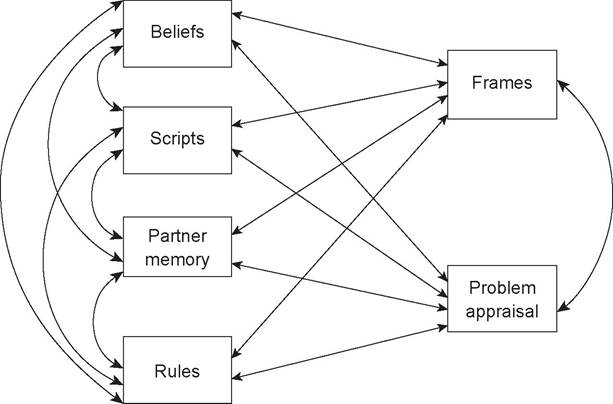
Figure 5.1 Possible Interrelationships Among Knowledge Structures