THREE TYPES OF LARGE-GROUP METHODS
In our original formulation (Bunker and Alban, 1992, 1997), we found that a useful way to organize these methods is by the outcomes that they produce. A brief description of each type with an anecdote that illustrates one of the methods follows.
Methods that Create the Future
Future Search (Weisbord and Janoff, 1995), the Appreciative Inquiry Summit (Ludema, Whitney, Mohr, and Griffin, 2003), the Search Conference (Emery and Purser, 1996), the Institute of Cultural Affairs Strategic Planning Process (Spencer, 1989), Real Time Strategic Change (also called Whole-Scale Change) (Jacobs, 1994; Dannemiller Tyson Associates, 2000), and AmericaSpeaks (Lukensmeyer and Brigham, 2005) are six methods that gather systems to define and set goals for the future. (See Figures 33.1, 33.2, and 33.3 for brief summaries.) “What kind of school system do we want to be by 2005?” “What new market niche can we create in the next three years?” “What decisions shall we make about the Social Security system in the United States that will ensure its financial viability?” “How can we be a community with housing for all by 2010?” “How can agencies and funders collaborate to provide better mental health care in our community?” All these are appropriate theme questions for these future-oriented conferences.
Each future-oriented event is carefully planned by a group representing the sponsoring system working with a consultant who is expert in the method. For example, when I ran a Future Search for a small Jesuit college business school on what they needed to do about their curriculum to create a successful future for the MBA program, the planning committee included representatives from the dean’s office, faculty, staff, students, alumni, and business community. If the planning committee includes all the stakeholders, there is better understanding of what the system is like and helps anticipate conflicts that may emerge in the
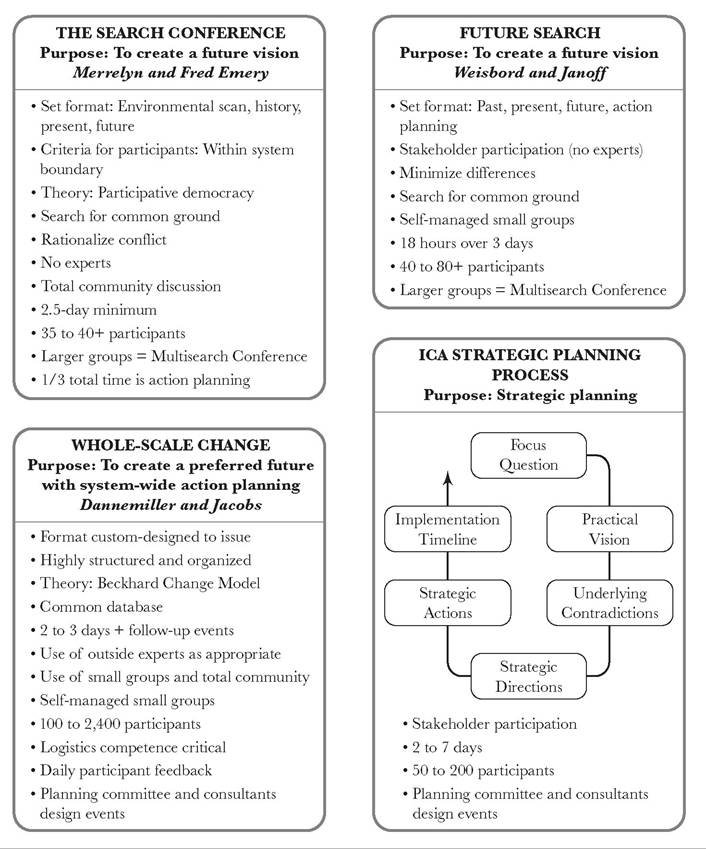
Figure 33.1 Large-Group Methods for Creating the Future.
Source: B.B. Bunker and B.T Alban, Large Group Interventions. San Francisco: Jossey-Bass, 1997. Reprinted by permission.
large-group meeting. If there are unions, it is essential that they are part of the planning committee. Sometimes, some of the conflicts can even be resolved in the committee so that they do not emerge on the floor of the large group.
What are the meetings like? Here I wish I could show a video, but let me try to create the image in words. I am going to describe a Future Search that
AMERICA SPEAKS
Purpose: To engage community/citizen groups in a process of learning and discussion around important issues affecting these groups CarolynJ. Lukensmeyer
• Format designed to engage the issues
• Participative democracy
• Full spectrum of stakeholders a basic requirement
• Laptop computers at each table to record discussion themes
• Keypads for voting for every participant
• Table facilitators structure discussion
• Overhead screens to display discussion themes and voting tallies
• Subject matter experts on call to discussion tables
• Several hundred to 5,000 participants
• Usually one day
• Extensive prep and setup work
Figure 33.2 A Large Group Method for Creating the Future
Source: B.B. Bunker and B.T. Alban, The Handbook of Large Group Methods: Creating Systemic Change in Organizations and Communities. San Francisco: Jossey-Bass 2006. Reprinted with permission.
^APPRECIATIVE INQUIRY SUMMIT MEETING^ Purpose: To build the future on recognizing and expanding existing strengths David Cooperrider
• Format similar to Future Search
• Participation not limited by number, includes stakeholders
• May be done over several days
• Four phases:
Discovery: Interviews and storytelling surface positive strengths.
Dream: Based on stories and interview data, group builds a desired future.
Design: Group addresses the system changes needed to support the desired future.
Delivery: Group plans for implementing and sustaining the change.
Figure 33.3 Another Large Group Method for Creating the Future
Source: B.B. Bunker and B.T. Alban, The Handbook of Large Group Methods: Creating Systemic Change in Organizations and Communities. San Francisco: Jossey-Bass 2006. Reprinted with permission. occurred in Danbury, Connecticut. The initiating concern that brought the community together was the rapid increase in violence in schools as well as in the community as a whole. Realizing that “Reducing Violence” was too limited an emphasis for the future they wanted, they finally agreed on “Creating a Community Free from Fear” as the theme.
Imagine 180 people arriving at a big hall and picking up name badges that assign them to one of twenty-three five-foot round tables that seat eight. They are purposely assigned as heterogeneously or “max-mix” as possible. This means that they will meet and work with representatives of all the other stakeholder groups at their assigned tables. Each table is designed to be a microcosm of the system in the room.
Future Search begins with a statement of purpose from the sponsors and then everyone is asked to participate at their tables in an activity that reviews the history of the community, the world, and each person over the last thirty years. Using a work sheet, people think about the important events in these histories first. Then, everyone gets up and writes their important events on long sheets of butcher paper that have been posted on the walls and labeled by decade. After everyone has put up their thoughts, the facilitators assign each table to do an analysis of the patterns they see and report their analysis to the whole assembly. This activity gets people involved and working together at the tables. In the course of the analysis, the history of the system is shared with everyone, the impact of the environment on the system is better understood, and people get to know each other personally.
The Future Search method has developed a “design” or series of activities that is standard and can be used with very little modification.
They involve discussion, self-disclosure, imagining, analyzing, and planning. These activities have both an educational and an emotional impact on participants. They represent the major steps in any open systems planning process. Thus, there are activities that scan the external environment and notice the forces impacting the organization or community. Next, there are activities that look at the capacity of the organization to rise to the challenges it faces. Then, there are activities that ask people to dream about their preferred future in the face of the reality that they confront. Finally, there is work to agree on the best ideas for future directions and action planning to begin to make it happen. Although the overall plan is rational, the activities themselves are also emotionally engaging, fun, and challenging. The interactions that occur among people create energy and motivation for change.In two days, the conference in Danbury discovered in their history that the sense of community had been disrupted by the loss of industry that moved out, the building of a new superhighway that bisected the town, and the loss of the well-known community fairgrounds that brought the community together. In addition, new groups were moving into the area. They learned that forty-two languages were now spoken in the high school, creating new educational issues. When they assessed the resources of the community, they found that many groups did not know what other groups were doing and that there were untapped opportunities for synergy, coordination and cooperation. The skits that groups created developed themes about housing, racism, hospital services in underserved areas of the city, and summer recreation transportation for children. Action planning groups were formed and began work. In two days, 180 people created over a dozen major initiatives to improve life in that community. Two years later, a number of these task forces were still at work and a number of major initiatives had been completed.
Three other future methods, Search Conference, ICA Strategic Planning Process, and Real Time Strategic Change all have elements in common with Future Search. They vary in design activities, in the structure of decision making, in how many people they can accommodate. Currently, practitioners often combine or modify methods to deal with specific organization and community needs.
The work of AmericaSpeaks, one of the more recently developing methods, is of particular interest. In the aftermath of 9/11, there was furious debate about what was going to happen to the World Trade Center site in lower Manhattan. Many stakeholders had divisive and competing ideas about what they wanted to see there: the people who lived in the area, the owners, the leasers of the site, the survivors of the disaster, the families of the victims, people from nearby states who worked in lower Manhattan, the transportation authority, police, firefighters and more. AmericaSpeaks created a one-day meeting in the Javits Convention Center in New York City to which five thousand representative stakeholders came to express their views on how the site should be developed. Using voting keypads and computers to enter the group and individual products of discussion at maxmix round tables, their views were presented to the decision makers at the end of the meeting and clearly affected the subsequent decision making. AmericaSpeaks is committed to creating processes that help citizens find their voice and be heard in projects at the national, regional, and city level. They describe their events as “21st Century Town Meetings.” In them, they make available to stakeholders expert knowledge on the selected topic from a range of points of view. After exchanging views at the tables, individuals express their own opinions by voting, which is simultaneously displayed on big screens for all to see. These votes are a valid representation of the views of all the stakeholders to an issue because great effort goes into assuring that people attend in numbers that represent the prevalence of their stakeholder category.
Thus, it is possible to see what the majority wants even when the loud voices of interest groups may dominate the available airtime. Large-group methods have led to creating new innovations in participative democracy.The Appreciative Inquiry Summit also deserves special comment since it has more recently come into prominence and is very popular. This method takes only a positive approach to change. In examining history, for example, it looks for the very best experiences from the past in order to carry that best into the future and amplify it. No attention is given to negative experiences which, if they emerge, are required to be translated into future desires. Appreciative Inquiry has been extraordinarily effective in organizational mergers because it provides a process for affirming the best of both organizational cultures rather than the usual “takeover” by one culture of the other. However, whether it can be effective in deeply divided systems where conflict is rampant remains a question.
Dealing with Differences About the Future. One would think that when you bring together people from many different interests and perspectives you are bound to have conflict or at least major differences about perceptions and future directions. What keeps these methods from blowing up? So many aspects of organizational and community life disintegrate into bedlam. Why don’t these events?
First, of course, there are differences, real differences and many of them. But all of these events operate under a different assumption from, say, a traditional town meeting or a hearing in front of the city council. The key here is the search for common ground. People are asked to focus their minds and energy on what is shared. Early activities in all of these events create a shared data base of information as well as knowledge about the views of those present; sometimes, invited experts and relevant outsiders provide information which contributes to the shared data base. People are encouraged to notice and take differences seriously, but not to focus on them or to give a lot of energy to conflict resolution. Rather, they try to discover what they agree on and this becomes the base for moving forward. Usually, people are surprised by how much agreement there actually is when they look for it. This is because the usual process of noticing and focusing on differences is disrupted.
When groups gather or individuals meet, there is a tendency, at least in Western cultures, to feel comfortable with others who share their views, values, and attitudes. We notice when people are different or when groups do not seem to share our assumptions. When that happens, the tendency is either to withdraw and ignore the difference or to become competitive and attempt to change the other over to your view. In the latter case, the more competitive the situation becomes, the more win-lose the atmosphere. When people are focused on making their points stick, on winning, they tend to loose sight of what they have in common with others and only see the difficult differences.
Some years ago, National Public Radio had a story that illustrates this different approach. It was reported from St. Louis where the Pro-Life and Pro-Choice forces were certainly not in agreement except that some leadership in both groups wanted to avoid violence. They asked the question is there anything that we agree on that could become a source of common ground? And, although there is much that they will never agree about, they discovered that there was common ground in their mutual concern for pregnant teenagers. As a result of this discovery, they created a successful jointly sponsored project to help pregnant adolescents that did a great deal to manage the incipient violence in that city.
Merrelyn Emery’s thinking about the relationship between conflict and common ground in her writing about The Search Conference makes these issues very clear (Emery and Purser, 1996). She sees the conference setting as a “protected site” where people can come together and search for commonalties despite their fear and natural anxiety about conflict. She believes that “groups tend to overestimate the area of conflict and underestimate the amount of common ground that exists” (p. 142). “Rationalizing conflict” is the important process that takes conflict seriously when it arises so that the substantive differences are clarified and everyone understands and respects what they are. If the conflict is rationalized and everyone is clear about exactly what the agreements and disagreements are, it is possible to allow a short time to see if it can be resolved. If it cannot be resolved, it is posted on a “disagree list” meaning that the issue will not receive further attention but the differences are acknowledged.
At the Seventh American Forestry Conference held in 1996, using the Real Time Strategic Change method, the importance for conflict management of the principles and processes we have just discussed is further illustrated. Beginning in 1882, Forestry Conferences were convened by the President of the United States to set forest policy for the upcoming decades. They included nurserymen, forest scientists, lumbering interests, and citizen advocates. Early congresses created the momentum for the system of forest reserves set aside for public use and the creation of the U.S. Forest Service. In more recent years, the American Forestry Association had enough credence to be able to call for congresses that were held in 1953, 1965, and 1975. Since 1975, however, the various interests have been so conflicting that no one group had been strong enough to call the seventh congress. Finally, in 1995, the Yale Forest Forum brought together a roundtable of fifty stakeholders from environmental groups, industry, public agencies, small owners, community-based groups, research, and academia. Despite their diversity, using participative methods, they were able to agree on visions and principles to guide the next congress. They became strong in their commitment to making the congress happen and formed the nucleus group that called the Seventh American Forest Congress.
Before the congress was convened, over fifty local roundtables and collaborative meetings were held all over the United States to develop draft visions for the next ten years and principles to support them. These meetings were structured and sponsored by a Citizens Involvement Committee. In addition, there was an Internet Web site for the congress and some visits to other countries to benchmark best practices. In this prework, it became clear to the conference planning committee that they could not use the traditional “talking heads” conference format. They chose Real Time Strategic Change and Kristine Quade and Roland Sullivan of Minneapolis, Minnesota to design and facilitate the conference.
When the fifteen hundred people invited to the three-and-a-half-day conference convened in Washington, D.C. in 1996, the draft visions and principles already created by these local meetings formed the basis of discussions at the tables. Their table task was to incorporate the various visions and principles into one set that most people could endorse as the desirable policy for the next decade.
In order to avoid the win-lose confrontations so typical of public issues with diverse stakeholders they adopted several ground rules:
1. The leadership did not take positions on controversial issues even though there were interest groups present that wanted them to do so.
2. Voting or showing where you stood used colored cards. Green signaled agreement; yellow indicated uncertainty or ambivalence; red meant disagreement. Agreement was declared when more than 50 percent of the congress was green. This method created space to explore people’s views, especially the meaning of a yellow vote.
3. Some potentially explosive issues such as divisive pending legislation were avoided as part of the agenda for the congress. In other words, the level of conflict was managed. (Practitioners of large group methodology have “rules of thumb” for dealing with conflict like “don’t open up anything you don’t have time to work with and resolve” and “don’t open up conflicts late in the event when there is no time to adequately deal with it.”)
Much of the first day was devoted to diverse table groups of ten working together and getting to know each other. Then, at the end of the first day and beginning of the second, many information sessions by knowledgeable experts and conversations about that topic were offered. Tables decided where they wanted members to go and these members came back and reported what they had learned to their table team after each of these sessions. During the second and third days, table deliberations were integrated, creating visions and principles that more than 50 percent of those assembled agreed upon. Finally, time was devoted to planning next-step initiatives to carry forward the vision and principles.
The processes that create this kind of agreement across diverse interests occur within individuals as well as at the group and system levels. Individually, people arrive seeing the world and the future from the perspective of their own interest. At this point individuals are “egocentric” meaning that they are not fully understanding of other views or interests. In the course of discussions, acquiring new information, trying to move toward agreement, they begin to understand if not agree with others at the table. Their boundaries become less rigid, and they become more flexible in looking for solutions that might provide gains both for themselves and for others on their table team. As they engage in this more cooperative process, the atmosphere at the group level becomes supportive and affirming. The group begins to feel successful. One symptom of this
shift in perspective is that rather than saying “I,” there is a noticeable increase in the use of “we.”
Interestingly, at this congress, there was a group of about two hundred people who did not like the participative way the congress was organized and met in rump sessions to plan the disruption of the congress although they too were delegates. They wanted the leadership to take specific positions and they were prepared to picket and heckle in order to influence others to join them. As the table groups worked together, fewer and fewer of the original dissident members were willing to go to rump meetings or participate in disruptive demonstrations. They realized that they could get some of what they cared about through this more collaborative process. Toward the end, only a single person, the leader of this movement, was still walking around the floor picketing and trying to arouse others! The process had clearly captured and involved all of the others.
Methods for Work Design
The second group of methods involves stakeholders in the redesign of work. (See Figure 33.4 for a summary.) The 1980s and 1990s were a time when United States manufacturing and service businesses were under severe pressure to be more productive and efficient in the developing global economy. Work design methods were very popular in this period because they helped accomplish these goals. Today, with so many manufacturing and service jobs offshore, there is
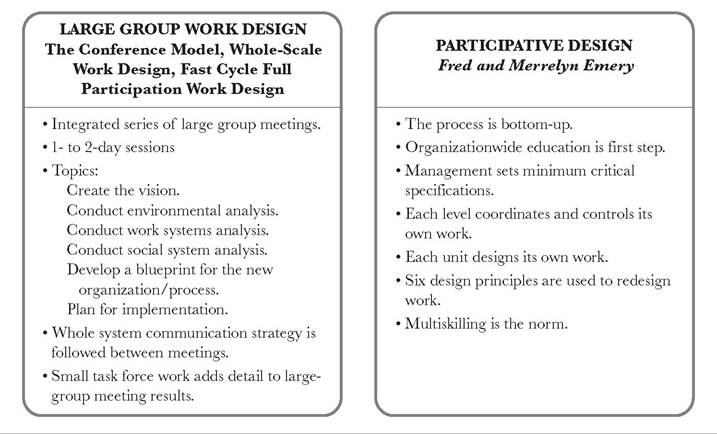
Figure 33.4 Large-Group Methods for Work Design
less demand for these activities. Now, there are two methods. The first, large- group work design, focuses on optimizing the fit between efficient technology and a responsive and motivating human environment for workers.
Rather than only top management understanding the business environment, today everyone needs to have a picture of the business environment in order to use their best talents to analyze the most efficient and socially productive way to do the work of the organization. This form of work design appears under several different names: The Conference Model, Whole Scale, or Real Time Work Design. What seems to occur now is that large conferences or meetings are interspersed with smaller task forces or work by the steering group in a pattern that makes sense for each client. This always includes addressing future goals both for the organization as a business and as a social system, an assessment of the impact of the environment on the organization, a technical analysis of the core work process, and a redesign of that process and the structure that supports it. This participative process is used in all types of organizations from hospitals to manufacturing plants and usually takes about six months to complete the full process.
In the Mercy Healthcare system in Sacramento, California, for example, five hospitals needed to redesign their patient care delivery processes, a core process in a hospital. They needed to save a lot of money and at the same time to improve patient care. The first two conferences, the Vision Conference and the Customer Conference create a vision of the goal of patient care and consults with customers (in this case, former patients and the community) about their desires. (Recently, these two conferences have often been combined.) Then there is an analysis of the current patient care process and where it needs to be improved (the Technical Conference) and a Design Conference to make changes and create an improved process and the organizational structure to support it. Finally, the decisions are refined and acted upon in an Implementation Conference. The Technical Conference was held in five adjacent ballrooms, one for each hospital, so that, when needed, there could be coordination among the hospitals. For example, at different moments in the process, selected members of each hospital went on a “treasure hunt” to the other four ballrooms to look for good ideas that they could incorporate that others had created. These conferences are usually held about a month apart, which gives time for a specially designated team to go back into the system and present to those not attending what has happened at the conference and get their input. When Mercy Healthcare surveyed three thousand people in the hospital system, 85 percent said that they felt involved and able to give input to the process. This is rather remarkable since only about 150 people from a hospital attended any conference.
The underlying principle here again is that there is a great deal of wisdom and experience in the people who do the work and deliver the service. They, better than others, often know where the problems are and what goes wrong at work. Therefore, they need to be involved in the analysis and redesign process.
Even if jobs are at stake, and they were at Mercy Healthcare, people would ordinarily rather have a voice in what is changing than simply to have it done to them. In situations like these, anxiety runs high. It is very helpful to people during anxious times if there is openness about the process of change as well as lots of communication about how decisions will be made.
The other work design method is distinctively different. Participate Design, created by Fred and Merrelyn Emery (1993), is a method that redesigns work and the work organization from the bottom of the organization up. It is based on the idea that the people who do the work need to be responsible for, control, and coordinate their own work. This is in sharp contrast with the bureaucratic principle where each level controls the work of those below them. Work is redesigned to conform to the six critical human requirements that create meaningful and productive work. Management decides in advance what constraints or minimum critical specifications the unit must work within, for example, that they cannot add jobs or exceed certain budgetary levels. Then, within these limits, the whole work unit analyzes what skills are needed to get the work of their unit done and who has them. Next, they redesign the unit to meet both the objective criteria for satisfying work and their own requirements. After the bottom of the organization is redesigned, the next higher level then asks, “Given this new work design, what is our work?” and proceeds to redesign their work. Theoretically, this continues to the very top of the organization. To be successful, Participative Design requires top management to understand and endorse this very democratic approach to working with employees (Rehm, 1999).
Interpersonal conflict occurs most often in the Participative Design Workshop when people in the work unit are analyzing their work and creating a new organization that they will manage and be responsible for. According to Nancy Cebula, an experienced practitioner doing work with this method, about halfway through the redesign process the group wakes up to the fact that in the new world that they are creating, they will have to deal with and manage their own conflicts. This is usually a new experience because in hierarchically controlled organizations, people can run to the boss and complain and expect her to do something. In a self-managing unit, the unit must develop processes for dealing with conflicts in their own team and with other teams. It has been observed that interpersonal conflict that festers on and on in teams often is a cause of death. For this reason, consultants suggest that teams work out a script for the steps they will take when conflict appears. They may start by having the affected parties try to talk it out, then it may become team business. Some teams have rotating roles for mediators. The steps can include calling in Human Resources to mediate as a last resort. When the process is defined in advance, it helps people openly deal with issues.
In one team on the verge of becoming self-managing, the process faltered when the group seemed not to be able to select people for the two new teams that were proposed. Someone finally blurted out to the inquiring facilitator: “Our problem is that we have two slackers in the group and no one wants them on their team.” The facilitator asked, “What’s the best way to deal with this?” The group decided to go off into a room and deal with it without their manager or the facilitator. The facilitator said they could take one hour. They retired to the room, from which angry sounds emerged from time to time. Thirty minutes later, however, they emerged with two teams each including one of the slackers who had been told that they would have to shape up or depart. They had had their first experience at managing their own conflict. Interestingly, one of the slackers quit within a few days. The other turned herself around. She could no longer be mad at the system. Now there were peers in her world to whom she was accountable.
Training in conflict management, particularly in systems where there is a strong history of conflict, is often part of the prework that gets a system ready to do Participative Design.
Conflict and the Redesign Process. Unlike methods for future planning that can be used in many types of groups, such as communities, associations of like interest, organizations, methods for work design are always used by organizations to improve their own processes. This means that the people who come to these events belong to the same organization and have a stake in its future. Even if labor relations have been troubled and there are intraorganizational battlefields, it is not in anyone’s self interest to let the organization die. Thus, there is always a certain level of energy for change and improvement available in these settings.
One of the first issues to understand when doing this kind of work is the organization’s conflict history and the climate in which redesign will occur. Participative methods such as these offer people an opportunity to get engaged and have input into how their job life is structured. For some organizations with a long history of mistrust between labor and management, such an invitation will not be easily believed (and management needs to seriously consider its own willingness to accept participation before they embark on this course).
This history is likely to be in evidence in the large-group meeting. It appears in a number of forms. Often it is carried by outspoken individuals who make themselves known on the floor. Although the rules of large-group events are that people and their views will be listened to and treated with respect, what do facilitators do when someone grabs a microphone and produces a tirade against management? On the one hand, they deserve to be treated with respect. On the other, they are not authorized to speak and their speech violates acceptable behavior. Often such a person will instigate others with similar axes to grind. In all likelihood, they represent only a small percentage of those present, but their aggressiveness is often intimidating to those whose views are more moderate and are more hesitant to express themselves in front of five hundred other people.
One theory that governs this kind of emotional display is catharsis theory. The idea is that you let these people have their say, even if it disrupts the time schedule that you planned, but you do not let them have the day. They are not allowed to filibuster or totally disrupt proceedings. After a reasonable time, if they do not seem to be finished, you may call a short break (everyone else will depart for the coffee and restrooms) and then go on to the next activity.
I had an experience of this process in one plant in the Midwest with a troubled labor history. The vocal group of disbelievers in management’s good intentions was holding forth on the floor and it was affectively very negative and very strong. I had my fill after about fifteen minutes and wandered out into the hall, where to my surprise, I found a lot of people grousing. They said things like: “It’s always the same people and they always say the same things. Why don’t they shut up and let’s see what happens. I am tired of listening to them.” After the break, when people went back to work on the next activity, the energy level in the room was high and very positive. People were deeply engaged and making suggestions for changes that would improve work at the plant.
A second strategy that is sometimes useful is to respectfully engage the whole group in reacting to what is being said by the vocal minority. For example, a facilitator might ask for an indication of those that agree with what is being said and then ask for those with different views to make themselves known. Facilitators often ask questions that bring out other points of view. Moderates need encouragement to express their views, but when they do, a clearer picture of the views of the whole system begins to emerge. As others get into the discussion, the community begins to manage it. People will say things to the people hogging the floor like, “Joe, you know you are taking advantage of this and that we don’t support you. Why don’t you sit down and shut up?” Working in this context, the facilitator senses when the group has had enough and is ready to move on and guides the process to the next steps.
There are times, however, when the frustration and aggravation with the organizational situation and with management is very strong and for good reason. When people really have a right to be angry because they have not been treated well, they need to be able to say this publicly to management and hear their response. This level of conflict has the potential of escalation and of taking a destructive turn. If voices from the floor become personally accusative and cross the invisible line of acceptable public behavior toward superiors, a bad situation could occur. This is everyone’s black fantasy about large groups, that there might be an irreparable explosion that would do permanent damage.
Although this possibility always exists, it is interesting to consider the other forces working in this setting to keep conflict within responsible limits. An organization is not an association of persons with no particular bonds. There is a history, a present, and hopefully a future. It is in everyone’s self-interest that things come out better rather than worse. These are forces that encourage collaboration and help to keep the conflict responsible. In a large-scale event, conflict is a public process that occurs with the whole system present. The public nature of the conflict is also a force for responsible management of the conflict. The facilitator’s
skill to martial the positive forces while at the same time allowing the expression of the conflict is key to its successful management.
Methods for Discussion and Decision Making
The third category of methods developed as ways to diagnose and find solutions to problems. They are predominantly oriented toward fixing specific problems that have developed in the past.
The large-group methods used for these purposes are substantially different from each other (see Figures 33.5 and 33.6). Work-Out is a method developed at General Electric that is being used in numerous companies to solve serious organizational
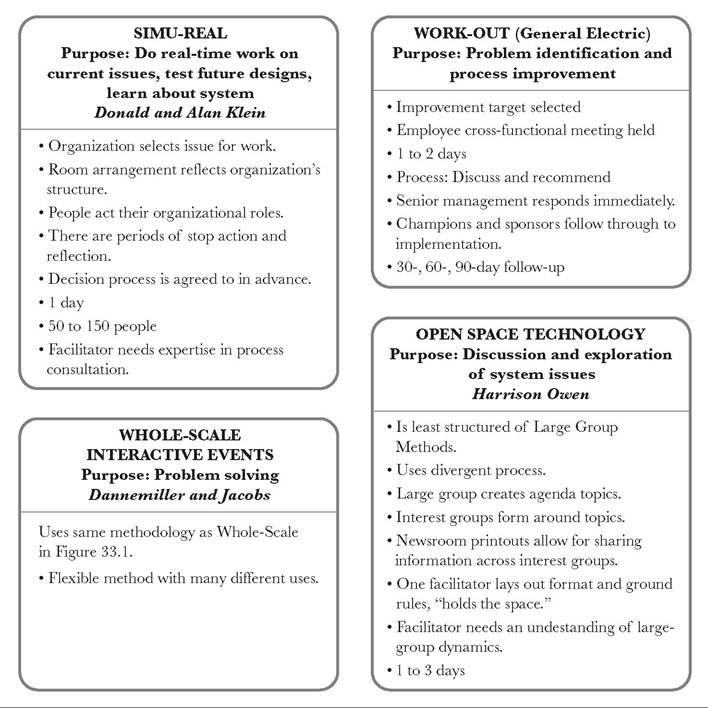
Figure 33.5 Large-Group Methods for Discussion and Decision Making
THE WORLD CAFE Purpose: A conversational process that helps a group explore an important issue Juanita Brown
• Overarching theme or question to be explored
• May be done in a half day to 2 or 3 days, depending on issue
• Large space set with cafe tables that seat 4 people, a cafe environment
• Tables covered with butcher paper with markers and crayons available
• No limitation in numbers of people, more is better than too few
• Consists of a number of rounds lasting 20-30 minutes
• After each round 3 people move to another table; 1 person remains to host the arrivals from another table.
• New groups share previous insights and continue exploration.
• Periodic community reporting of ideas and insights
• Listening to diverse viewpoints and suspending premature judgment encouraged
Figure 33.6 Large Group Method for Discussion and Decision Making
Source: B.B. Bunker and B.T. Alban, The Handbook of Large Group Methods: Creating Systemic Change in Organizations and Communities. San Francisco: Jossey-Bass 2006. Reprinted with permission.
problems by bringing together all of the stakeholders in a time-limited problemsolving format. Simu-real (Klein, 1992) creates a simulated organization with the real role holders acting their own jobs in order to understand problems or even to test out a new design for a new organizational structure. Large Scale Interactive Events (Jacobs, 1994) uses the Real Time Strategic Change framework to solve many types of problems from diversity issues to intergroup coordination problems. For example, to get police, emergency rooms, agencies, homeless shelters to better deal with the rise of tuberculosis among homeless people in New York City.
In terms of conflict resolution, these three methods use many of the principles of creating common ground, acknowledging but not dwelling on conflicts, rationalizing conflict, and creating new conditions for resolution as previously described.
Recently, an interesting new method, the World Cafe, was created (Brown and Isaacs, 2005), which is quite useful for creating discussion among diverse stakeholder groups. People are seated at heterogeneous small round tables of four to five in a large room. Their tables are covered with white paper where ideas can be recorded with markers or crayons. A theme for the discussions is introduced and then each table engages the topic for twenty to thirty minutes.
At the end of that time, half of the people at the table are asked to find another table (while maintaining the diversity of the tables) and at least one person stays behind to explain what the previous group was talking about. At least three rounds of conversation occur before reports are given to the whole. This method is useful in settings with potential conflict because it does not allow people to cluster in their interest groups, but continually exposes them to different viewpoints but in a very personal and relationship-oriented setting.
Open Space Technology (Owen, 1992, 1995) is unique among these methods. Instead of using designed activities in preplanned groupings, it places the responsibility for creating and managing the agenda on the participants. Its founder, Harrison Owen, describes it as a method that is effective in highly conflicted situations. For this reason, I will focus the discussion in this section on Open Space.
Briefly, this method creates a simple process in which people who come to an Open Space create their own agenda for one, two, or three days of discussion of a chosen topic or issue. For example, the Presbyterian Church USA invited five hundred people to an Open Space to discuss some difficult and contentious issues before the church just prior to their annual national meeting. A series of Open Space meetings were held in Canada to consider the Quebecois issue. A hospital system in California faced with the need to cut costs held an Open Space in each hospital community to get input from the community about their concerns and priorities. This method has been used in hundreds of different venues to create good conversations about a wide range of issues.
What is Open Space? The simplest way to put it is that it is a self-managing meeting in which the people who come create their own agenda in the first hour of the event. Everyone sits in a large circle with “open space” in the middle. The facilitator introduces the theme of the meeting and describes the norms for participation. Then, people are invited to come forward and declare a topic that they have strong feelings about so that they can convene an issue group to talk about this topic. They write their topic and their name on a piece of newsprint, announce their topic to the total group, and post it on a wall called the “Community Bulletin Board.” As they post their topic, they select a time and place from the choices organized for them and written on Post-it® notes. They stick the “time and place” Post- its on their topic sheet and hang it on the wall. The posted topics create the visual agenda for a meeting of several days. People can add new topics whenever they want to by tacking a notice on the bulletin board. Each person who proposes a topic, agrees to show up to start the discussion and, after it is over, to go to the “newsroom” and type a summary of what was said using a simple computer template. These meeting reports are printed out and immediately posted on another long wall so that everyone can keep up with what is being said in other groups.
After the initial agenda setting meeting, the only meetings of the total group are brief gatherings in the morning and evening for comments and new topic announcements. The group discussion periods are usually about one hour and a half long. This means there can be four or five sessions (with multiple groups convening at each session) during a day and more if the evening is also used.
A unique feature of Open Space is its rules and norms. Rather than being an uptight event where everyone is supposed to attend everything and people play hooky and feel mildly guilty, it encourages self-management and freedom to do what is needed to maintain individual focus and energy. The Law of Two Feet suggests that if you are not engaged in the group you are attending, you get your two feet under you and go somewhere else that you will find more productive. There is a lot of floating around and in and out, which is quite freeing and energizing. Other norms suggest that things begin to happen when people have energy to make them happen so that: “Whenever it starts is the right time.” “Whoever comes is the right people.” Whatever happens is the only thing that could have.” And “When it’s over, it’s over.”
Open Space removes the “oughts,” “shoulds,” and “musts,” and suggests that you “follow your bliss” to quote Joseph Campbell. What happens is usually quite interesting, even remarkable. An example may be helpful in getting a better feel for this unusual methodology and how conflict is dealt with. In this example, an intact organization uses Open Space three times over a period of a year to deal with long-term conflicts in the system.
Business School in a Public College. The dean, now in her third year, believed that the school had fallen behind in its ability to produce “job-ready” B.A. graduates because faculty were using old methods, texts, and technology. Shrinking government funding intensified the competition for resources and exacerbated the already present interdepartmental rivalries. The faculty was unionized, as was the staff. This was a faculty that was angry at each other, at the dean, and at the administration.
Harrison Owen has said that Open Space should be used (1) for issues that affect the whole organization/system, (2) in situations of high conflict, and (3) when you cannot think of anything else to do. It is possible that all three reasons were part of the dean’s decision to try Open Space. The theme to be explored was “Issues and Opportunities for the Future of the Faculty of Business.” The event was held during working hours at the college over two and a half days. Fifty of eighty faculty attended, plus staff and administration. The first two days were Open Space as previously described. The final half day was a convergence process often added to the Open Space experience in order to plan for action.
In the opening agenda setting circle, the facilitator was struck by the fact that no one looked at anyone else (often a symptom of deep conflict in a system). Although the topics posted were about the expected number, they were superficial given the theme (for example, “the cleanliness of the college” and “academic excellence”). There was a general air of anger toward the administration. The evening news at the end of the first day was bland.
The overnight soak time clearly had an effect. The next morning, new issues were posted that were quite different from the first day such as “conflict and conflict resolution” and “the strategic direction to get out of this mess.” The dean posted a topic, “The human face of management,” which was attended by everyone present. In that discussion, she talked personally about her role and views and became a person to those present. As the day progressed, a number of individuals approached the facilitators saying things like, “You wouldn’t believe what is happening in our group!” There was excitement and energy on the second day as compared with flat affect and withdrawal on the first day.
The Open Space exploration was closed at the end of day two with a “talking stick” circle (a version of a Native American custom). The stick is passed around the circle. When you have it, you may speak if you choose to and others are expected to listen respectfully. These are not group reports but just what people are thinking and feeling at the end of the day. From the comments, it was clear that the faculty had begun to move from being frozen in conflict to another posture. Examples were, “I haven’t spoken to [another faculty member] for fifteen years because of a disagreement we had, but that is going to change.” A number reported the first meaningful conversations in years. Others talked about the need to sort out relationships and move on.
Open Space is a divergent process for allowing ideas to emerge and develop. It creates really good conversations. Many people, particularly Westerners with our need for visible results and actions, add a half day convergent structure to it in order to plan and take action. In this case, everyone voted on the issues as they emerged in the group reports and then it was possible to name the top vote getters and form voluntary task forces around them. The group decided to hold another Open Space in four months to hear reports from the task forces and to continue the conversation.
Four months later, forty-five members reassembled for another two-and-a-half- day Open Space event. This time, it opened with a one-and-a-half-hour session of reports from the task forces. Then the facilitator opened the space for new agenda and the meeting continued in the form described. This time there was much more willingness to address the complex and difficult issues that they faced as a faculty trying to create a better future. Many more academic issues were addressed as were the difficulties of dealing with departments where everyone is both tenured and out of date. Again, the last half day was used to prioritize and organize new task forces with a four-month reporting date.
The final Open Space was run completely by the faculty. They had learned to use the methodology and made it a way of working together. Many changes have occurred and the faculty is continuing to work with the dean to create a secure future. One marker event that happened between the second and third Open Space is diagnostic. A dismissed faculty member tried to rally support for ousting the dean. When he went to his former antiadministration supporters, he was rebuffed and told that “This dean is the best one we have ever had.”
What principles might explain this shift in energy from being dug into conflict, blaming, and attacking to being able to problem solve and work together? One major dynamic is the removal of the hierarchical authority structure in Open Space. There is no “they.” It is all “we.” Facilitators wait for people to create their own agenda. They believe that what is on the wall is what that group needs to talk about. Nothing is imposed. Although there is a theme, participants decide what issues they will address. The dean was there but as a member of the group.
When hierarchy is absent, the well-worn patterns of manipulation and control are disrupted. There is no decision structure or way of getting power. The normal way of doing business is suspended and people are asked simply to follow their own energy and commitments so that they both get and give. In Open Space, the Law of Two Feet and the Four Principles replace hierarchy with guidance for individuals that creates huge freedom to act that is both delightful and can make people a bit anxious... but everyone else is in the same situation and people enjoy exploring their freedom, they work it out. It leaves the participants with one very important question: what is it that we have energy and the will to do?
What is the impact of participatory meetings of the whole system after the event is over? What happens back at work? There is anecdotal evidence that one meeting of this type can create new plans and get action going that strongly impacts the system. Another big effect of all of these methods is to create new networks and relationships that are useful. In the case of the business school, they began to use Open Space as a way of working together. When this happens, hierarchy and the bureaucratic processes in the organization are modified. I want to strongly point out that senior management’s understanding of the collaborative nature of these meetings is crucial. They need to understand and agree to this method of working and provide strong sustained leadership of the process from the beginning.
Embedding New Patterns of Collaboration
What we see in the business school case just described is the transfer of or embedding of new patterns of working together and relationship management from the large group event into the workplace. This truly is a culture change. In the case just described, the movement was from hostility and suspicion to collaboration and a more productive and satisfying workplace. Since writing this chapter for the first edition of this book, experience with the use of these methods has grown both in the West and around the world. As my colleague Billie Alban and I have collected new cases of the uses of Large-Group Methods for the special issue of Journal of Applied Behavioral Science (Bunker and Alban,
2005) and also for The Handbook of Large Group Methods (Bunker and Alban,
2006), we have found a number of polarized or conflicted settings in which these methods have been used regularly to shape and change the culture of the organization in the direction of more focused collaboration. For example, in Florida, two teachers unions merged but the history of competition remained in the functioning of the newly merged union, resulting in distrust and suspicion. Over a period of a year, using these methods in a series of large and small meetings that modeled a more participative process, the culture gradually addressed the sources of mistrust and began to collaborate and develop an effective culture for the organization. In another example in Great Britain, a Primary Care Trust, part of the National Health Service, which involves many types of agencies with different functions, has just emerged from a three-year planned process of involving stakeholders in decision making to change the quality of patient care and create a collaborative and effective culture. Notice that this is a process over time, not a single event. What we think happens is that people have a new and positive experience in these large-group meetings. Then, they want to take that back and experience these new patterns in their own organization. With strong, persistent leadership over time, there is growing evidence that it is possible to shift the culture of organizations from polarized and conflicted to much more collaborative and productive.
More on the topic THREE TYPES OF LARGE-GROUP METHODS:
- REVIEW OF FORENSIC ASSESSMENT INSTRUMENTS
- Agrawal M.. Textbook of Pediatrics. 3rd ed. — CBS Publishers,2025. — 973 p., 2025
- The uses of social science in a legal system
- North Korea's Cultural Revolution in 1972
- CONCLUSION
- Major Issues and their Resolution
- Precolonial Antecedents
- The constitution’s civil administrative direction
- Control of BTB in Ethiopia
- Molecular Epidemiology of Bovine Tuberculosis in Uganda