The paradox of analysis
In the last chapter, I raised this question: If we know what the word “know” means, why can't we just say what it means? Now that we have an account of meaning under our belts, so to speak, we can reconsider this question.
To know what “know” means, according to the thesis of the primacy of the sentence, is to know how to work out the meaning of sentences containing that word. According to the Fregean account, that will mean knowing under what circumstance sentences containing that word would be true. Well, suppose that knowledge is true belief produced by a reliable process. Then, presumably, anyone who knows English knows under what circumstances the sentence “Knowledge is true belief produced by a reliable process” is true. So far, so good. But now we seem to be caught on the horns of a dilemma.Every true sentence must either be analytic or synthetic (this follows from the fact that “synthetic” was just defined as “not analytic”). Suppose that “Knowledge is true belief produced by a reliable process” is analytic, true solely in virtue of the meanings of the words it contains. Then there seems to be no need to reflect on anything other than meanings in order to decide whether it is true. Indeed, this follows from the compositionality thesis for meanings. If “know” and “believe truly by a reliable process” mean the same, then we should be able to substitute them for each other and preserve meaning. So
K: Somebody knows something if they know it
and
K': Somebody knows something if they believe it correctly by a reliable process
should mean the same.
But if they mean the same, how come people who understand English can immediately understand that K is true but can't immediately understand that K' is? Surely if two sentences mean the same, then if one is obviously true, the other should be. And if that is so, why didn't the first philosopher to think about it immediately see that reliabilism was correct? After all, according to the hypothesis we are now considering, he had all the knowledge he needed: he knew the meanings of the words. Since he didn't see reliabilism was correct, we must conclude that the sentence is not analytic.But if it is synthetic, then there must be some other analytic truth that defines the meaning of the term “know.” And then that truth is the one we are after in a philosophical analysis. Call some English- language sentence that states that truth “K*” We can now ask about K* the question we asked about reliabilism just now: If it is analytic, why hasn't anyone recognized it to be true, given that its truth follows from the meanings of the words it contains and everyone who understands English understands the words in K*?
This problem is an instance of what G. E. Moore called the “paradox of analysis.” In general, Moore pointed out, in a philosophical analysis, one ends up saying something like “To know is to believe correctly on the basis of a reliable method.” But if this is true, the concepts of knowledge and reliably produced true belief are the same and therefore should be intersubstitutable. In other words, “To know is to know” must state the same proposition as “To know is to believe correctly on the basis of a reliable method.” The paradox, of course, is that one of these statements looks informative and the other does not: yet, if the analysis is correct, they are the same statement.
There is only one assumption in this argument that looks like a candidate for being given up, and that is that the assumption that there is some analytic truth that can be stated in English that defines knowledge.
If the meaning of the word “know” cannot be given (except, vacuously, by saying “‘Know' means ‘know'”), then it isn't surprising that no one has yet found a way to state it! Perhaps surprisingly, a number of philosophers in the twentieth century, WVO. Quine most prominent among them, did in fact argue that there were no analytic truths. Quine argued (though not for these reasons) that any sentence at all could, in principle, be given up in the face of experience, even a logical or mathematical sentence. No sentences were true solely in virtue of meaning.But there is a much less radical way out of the problem. The fact that we have the tools for working out whether a sentence is true does not mean that we will do so or that we will do so correctly. I know how to carry out the reasoning necessary to decide whether 2 to the power of 10 is 1024. There is nothing more that I need to know to work this out; but until I have done so and done so correctly, I will find the information that it is, in fact, 1024 informative.
When I defined “analyticity,” I said that someone who knows the meaning of an analytic sentence must know (or be able to work out) that that sentence is true without relying on any nonsemantic information. Now, we don't ordinarily say that two expressions have the same meaning unless it is obvious to all competent speakers of the language that they are equivalent. But sentences can be true in virtue of their meaning and it can still be very hard to see that they are. All you need to know how to figure out whether
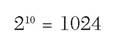
is what “2” means, what “1024” means, and what it means to raise a number to the tenth power. But it can still take a bit of thought to check that it's true.
So we might want to distinguish between two senses of analytic. In one sense, it's a sentence that's obviously true in virtue of its meaning. (I gave earlier the philosopher's favorite example: “A bachelor is an unmarried male.”) In another, it's a sentence that you can work out is true without relying on nonsemantic information. That analytic truths in this second sense can be informative follows from the fact that it may take a lot of intellectual effort to work out what follows from a sentence's meaning.Notice that, if this is right, the compositionality thesis for meanings needs to be interpreted carefully. The thesis says:
CT: If two words or phrases have the same meaning, then we should be able to replace one of them with the other in any sentence S without changing the meaning of S.
If by “have the same meaning” we mean “obviously have the same meaning,” then CT applies. But two expressions can have the same meaning in a less obvious way. “E” and “F” can mean the same in the sense that “E is F” is analytic but not obviously so. CT won't be true if we interpret “meaning” in this way. For in this sense, “210” and “1024” mean the same. But we won't be able to check whether a replacement of E with F has changed the truth conditions simply by comparing the resulting sentences. For it isn't obvious that they mean the same. That means that someone can believe that 210 is 512 (because they miscalculated, failing to multiply by 2 enough times) but not believe that 1024 is 512. And so, of course, replacing “210” with “1024” into the open sentence “Joe believes that--------------------------- is 512”
certainly changes meanings.
In many arguments, philosophers have assumed that if something is true in virtue of meaning, we must be able to tell that it is true pretty easily.
I am just pointing out that this isn't so. And, to the extent that philosophical work involves discovering analytic truths, it does not follow from the fact that they are analytic that they are trivial or easy to discover. We already had some evidence of that in the search for a definition of knowledge in Chapter 2. If we define “analytic” in this way, it is also less clear that even complex mathematical theorems are not analytic. For while a mathematical proof may be a very difficult thing to discover or construct, it may still be true that the materials for its construction are available to all those who understand the terms used in stating them. But mathematicians have now shown that there are mathematical truths that are not provable, so they may not be analytic even in this extended sense.3.14
More on the topic The paradox of analysis:
- Further Analysis
- The Paradox of Self-Killing
- Resolving the paradoxes
- Using logic: Truth preservation, probability, and the lottery paradox
- Beyond Liberalism: The General Paradox of Evaluative Neutrality and Normative Theory
- Appiah Kwame Anthony. Thinking It Through: An Introduction to Contemporary Philosophy. Oxford University Press,2003. — 425 p., 2003
- name=bookmark346>Montague's Paradox
- Contents
- Weighing the Value of Messages Against the Value of Content-Neutral Regulations
- Chapter XXVIII Epilogue: Denaturing Cultural Violence